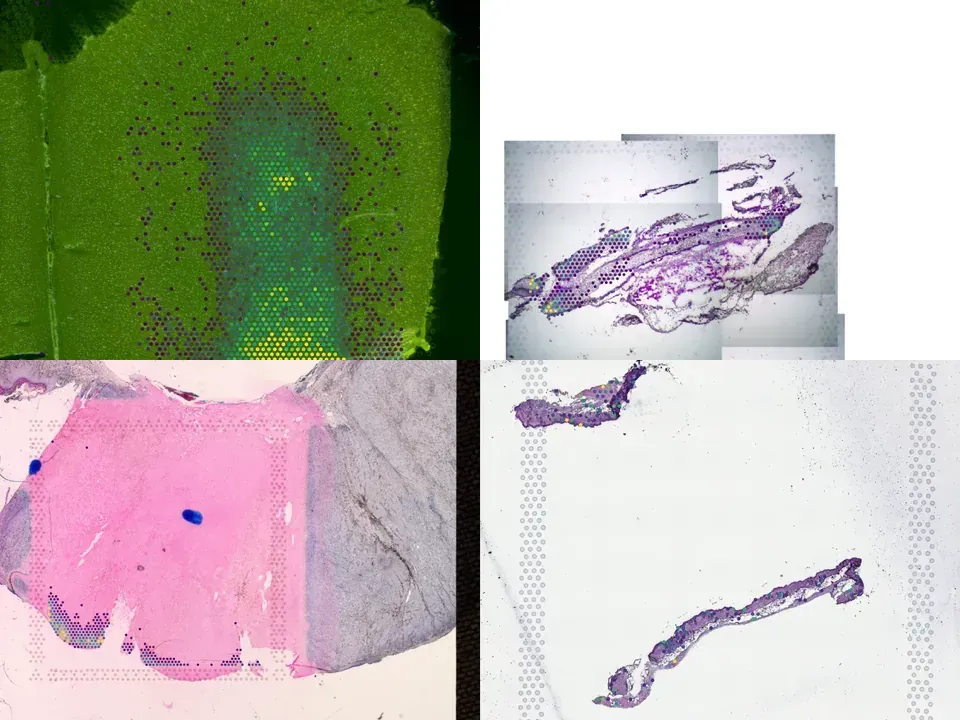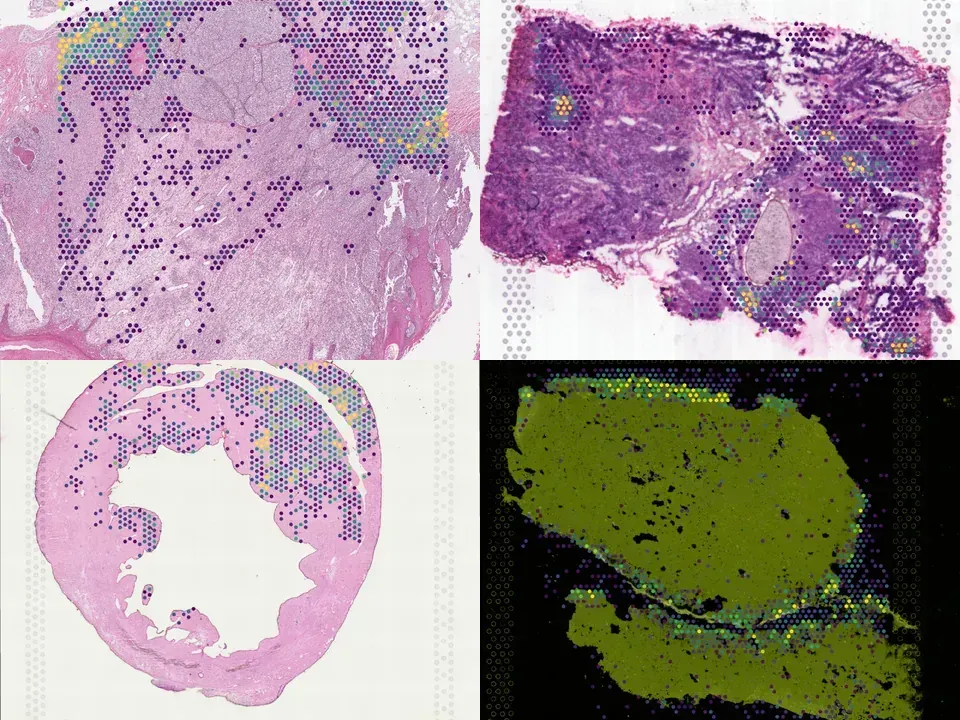
Collections / A targetable developmental program co-regulates angiogenesis and immune evasion [Spatial Transcriptomics]

A targetable developmental program co-regulates angiogenesis and immune evasion [Spatial Transcriptomics]

Ultraviolet (UV)-induced DNA mutations produce genetic drivers of cutaneous melanoma initiation and numerous neoantigens that can trigger anti-tumor immune responses in the host. Consequently, melanoma cells must rapidly evolve to evade immune detection by simultaneously modulating cell-autonomous epigenetic mechanisms and tumor-microenvironment interactions. Angiogenesis has been implicated in this process; although an increase of vasculature facilitates the immune response in normal tissue, solid tumors manage to somehow enhance blood flow while preventing immune cell infiltration. By comparing the expression of transcription factors (TFs) across early-stage melanoma, naevi, and other cancer types, we found the homeodomain-containing TF HOXD13 drives a melanoblast-like developmental program, which is upregulated in melanoma and strongly correlated with angiogenesis and immune cell exclusion. Using transcriptomics, 3D chromatin profiling, and in vivo models, we demonstrate that HOXD13 upregulation promotes tumor growth in vivo by concomitantly enhancing angiogenesis and suppressing T-cell infiltration. HOXD13 orchestrates 3D chromatin contacts between distal enhancers and promoters, simultaneously activating VEGFA, SEMA3A, and CD73. VEGFA and SEMA3A remodel the tumor vasculature and CD73 elevates extracellular levels of adenosine, a vasodilator and immune suppressor that binds adenosine receptors (AdR) on endothelial and T cells. In line with these findings, HOXD13-induced growth advantage in vivo was significantly reversed by the concomitant administration of VEGFR and AdR inhibitors. By revealing a dual pro-angiogenic and immunosuppressive HOXD13-CD73/VEGF gene regulatory axis, we identify a subset of patients who might benefit from combinations of AdR and VEGFR inhibitors which are currently being tested in clinical trials.

Datasets2
Size~188 MB
AssayVisium
Samplehuman · skin of body
KindOther
Flag a data issue
PMID:41631877 ↗
Python · sddb client
from sddb import Catalog

cohort = Catalog().collection("geo-gse311909")
cohort.members        # the 2 datasets as a table

print(cohort.licenses())              # check the terms before you download

sdatas = cohort.to_dict()             # {uid: SpatialData}, cached locally
# or keep the .zarr files in a folder of your choice:
# sdatas = cohort.to_dict(dest="data/")
Python · lamindb

Needs pip install lamindb and network access to the Lamin database, which is limited during the alpha. If it fails, use the Client tab.

import lamindb as ln

db = ln.DB("scverse/spatialdata-db")
coll = db.Collection.get(key="geo-gse311909")
coll.ordered_artifacts.to_dataframe()   # the 2 members, ordered

# download every member .zarr to the local cache:
paths = [a.cache() for a in coll.ordered_artifacts.all()]
Shell
# sddb client: download every member .zarr into data/
sddb-cli download --collection geo-gse311909 --dest data/

Licenses: 2 NCBI GEO policy

Open in Vitessce
Visium
Human skin of body
GSM9334385
human skin of body cutaneous melanoma 133 MB 4,795 spots bronze H&E NCBI GEO policy
TechnologyVisium
Organismhuman
Tissueskin of body
Conditioncutaneous melanoma
Size133 MB
Spots4,795
bronze H&E NCBI GEO policy Open in Vitessce
Open in Vitessce
Visium
Human skin of body
GSM9334384
human skin of body cutaneous melanoma 54.3 MB 4,619 spots bronze H&E NCBI GEO policy
TechnologyVisium
Organismhuman
Tissueskin of body
Conditioncutaneous melanoma
Size54.3 MB
Spots4,619
bronze H&E NCBI GEO policy Open in Vitessce

Cite this collection

No linked publication found — please cite the data source.