
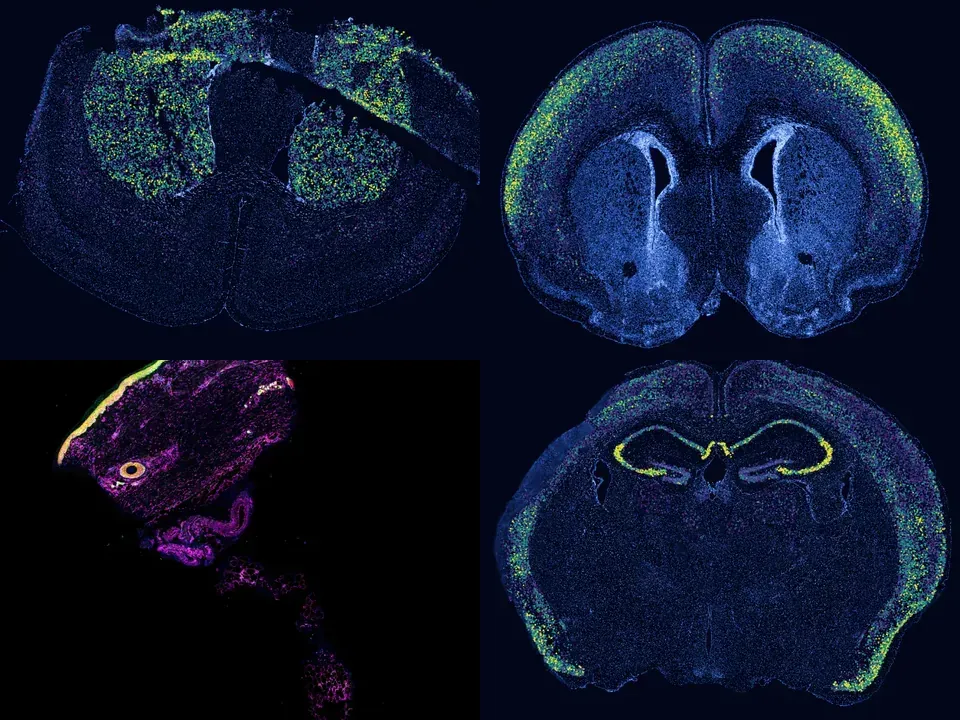
Mouse forebrain
GSM8965608
mouse forebrain 5.8 GB 93,700 cells silver NCBI GEO policy
Technology10x Xenium
Organismmouse
Tissueforebrain
Cells93,700
silver NCBI GEO policy
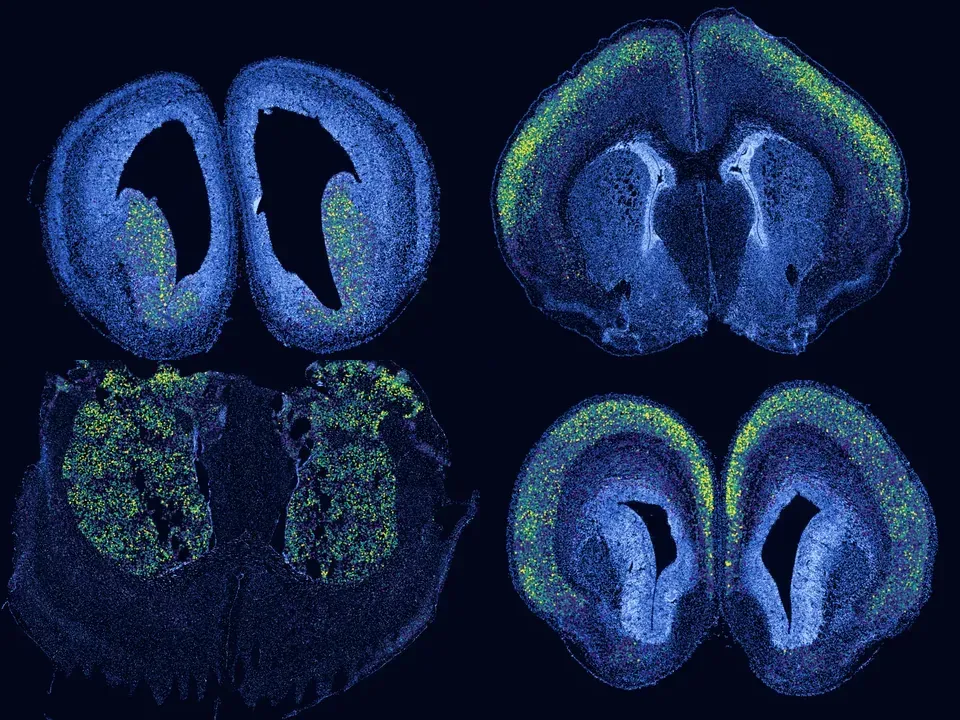
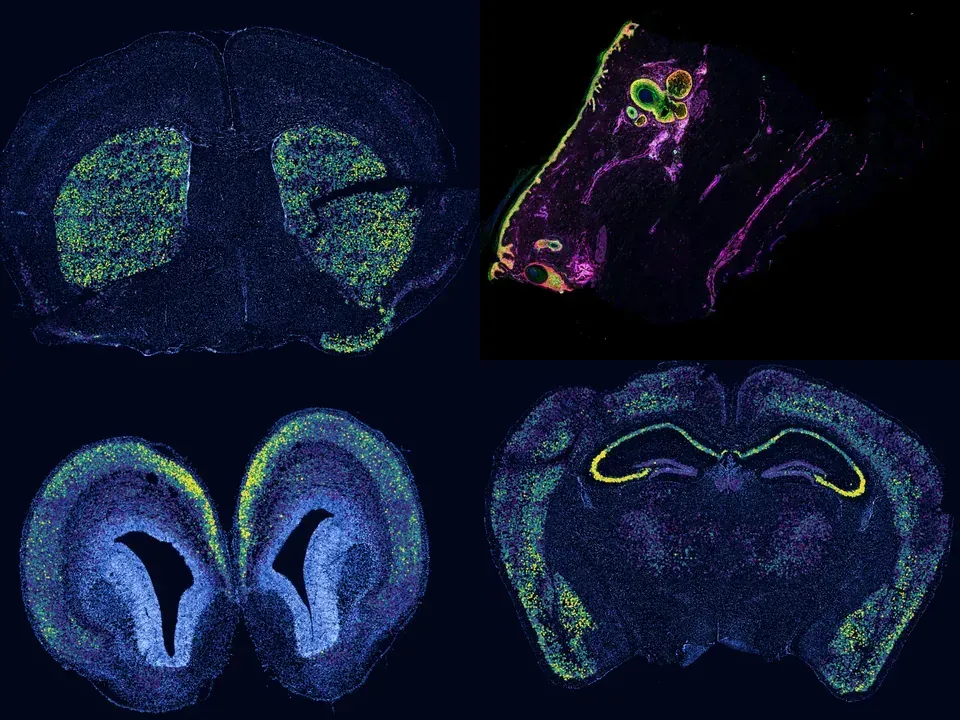
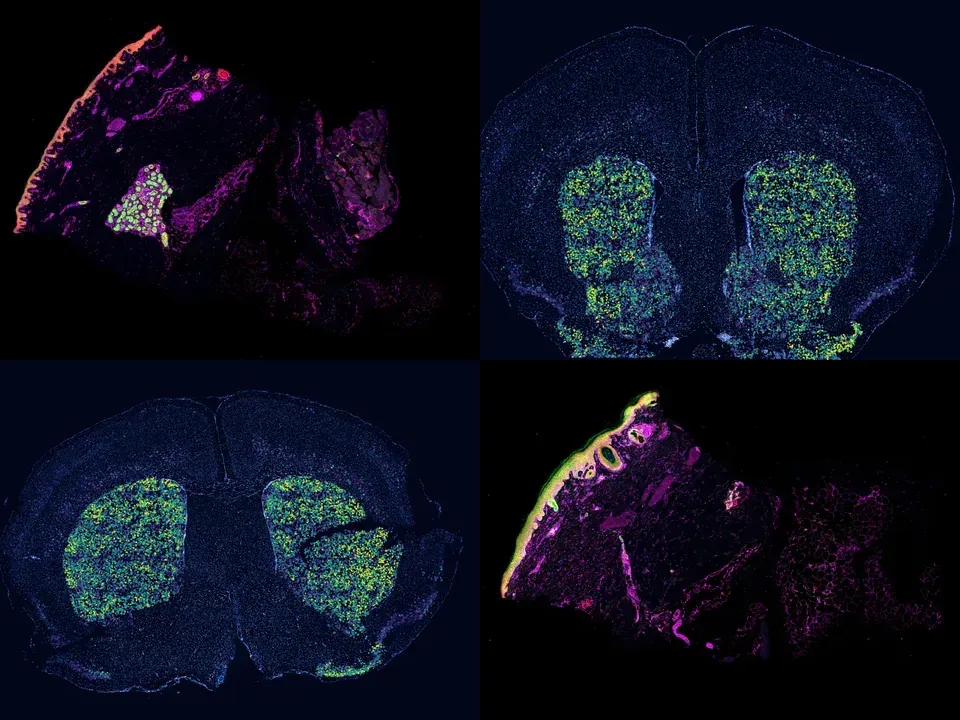
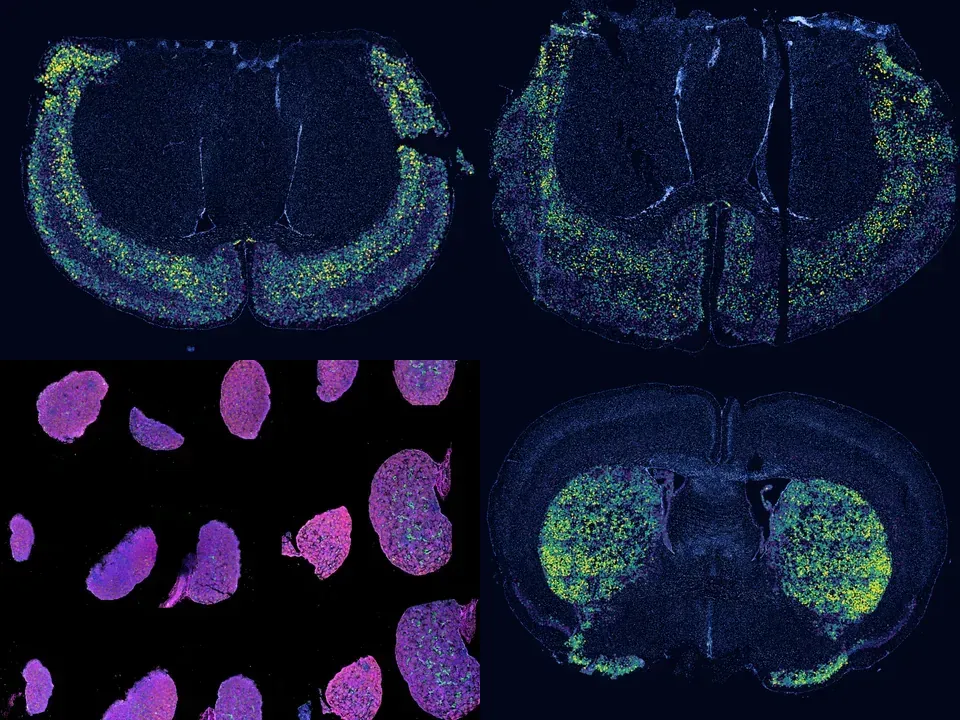
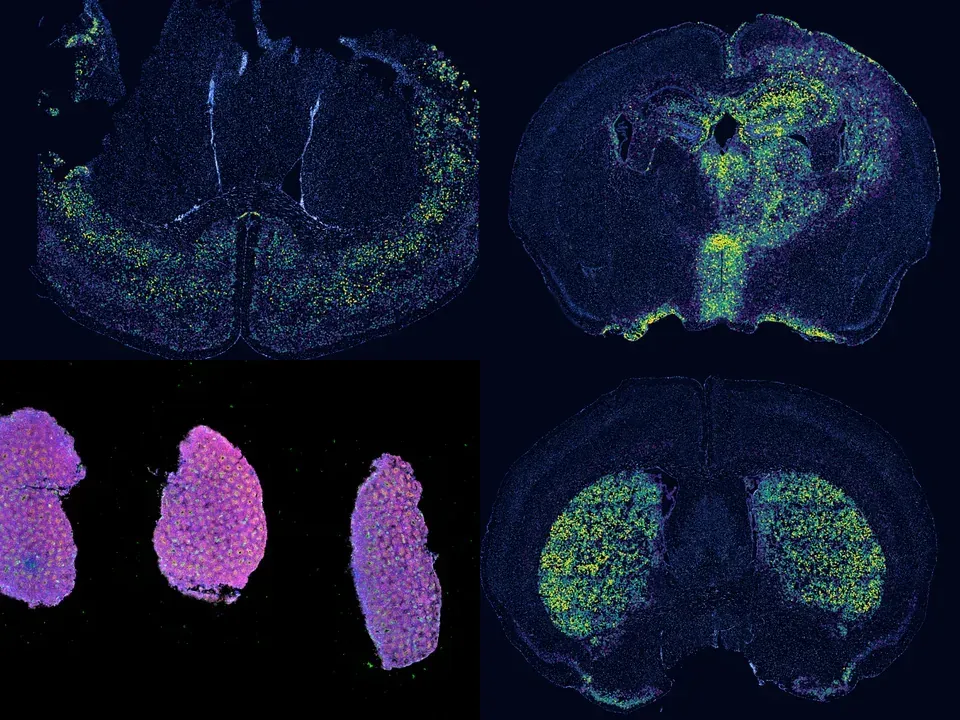
The interface between the brain surface and the adjacent meninges is a selective barrier regulating fluid, protein and immune cell exchange between the CNS and periphery. However, the cell types that form this important interface are not yet fully defined. To address this limitation, we have used single cell RNA-sequencing (scRNA-seq) and single cell spatial transcriptomics together with morphological lineage tracing and immunostaining to analyze the adult murine cortex. We show that the cortical interface is comprised of three major cell types, leptomeningeal cells, border astrocytes and tissue-resident macrophages. On the peripheral side the interface is comprised of transcriptionally-distinct PDGFRα-positive leptomeningeal mesenchymal cells that are intermingled with macrophages. This leptomeningeal pial layer is lined by a population of transcriptionally-distinct border astrocytes. The interface neighborhood is rich in growth factor mRNAs, including many leptomeningeal ligands predicted to act on both the border astrocytes and macrophages. On the CNS side of the interface is the relatively cellsparse cortical layer one containing interneurons, microglia, parenchymal astrocytes, oligodendrocyte precursor cells and oligodendrocytes. Except for the border astrocytes, layer one cells are not closely-associated with the interface, suggesting that secreted ligands may be the major way the brain interface communicates with the underlying cortical parenchyma. Thus, our data provide a molecular/cellular resource describing the brain interface cell types and their interactions, thereby enabling future studies asking how this distinct cellular compartment regulates CNS:periphery interactions.
from sddb import Catalog

cohort = Catalog().collection("geo-gse296134")
cohort.members        # the 7 datasets as a table

print(cohort.licenses())              # check the terms before you download

sdatas = cohort.to_dict()             # {uid: SpatialData}, cached locally
# or keep the .zarr files in a folder of your choice:
# sdatas = cohort.to_dict(dest="data/")Needs pip install lamindb and network access to the Lamin database, which is limited during the alpha. If it fails, use the Client tab.
import lamindb as ln

db = ln.DB("scverse/spatialdata-db")
coll = db.Collection.get(key="geo-gse296134")
coll.ordered_artifacts.to_dataframe()   # the 7 members, ordered

# download every member .zarr to the local cache:
paths = [a.cache() for a in coll.ordered_artifacts.all()]# sddb client: download every member .zarr into data/
sddb-cli download --collection geo-gse296134 --dest data/Licenses: 7 NCBI GEO policy
@article{Ebert_2025,
  title = {Single-Cell Approaches Define the Murine Leptomeninges: Cortical Brain Interface as a Distinct Cellular Neighborhood Composed of Neural and Non-neural Cell Types},
  volume = {12},
  ISSN = {2373-2822},
  url = {http://dx.doi.org/10.1523/eneuro.0046-25.2025},
  DOI = {10.1523/eneuro.0046-25.2025},
  number = {8},
  journal = {eneuro},
  publisher = {Society for Neuroscience},
  author = {Ebert, Sarah N. and Eisner, Christine and Karamboulas, Konstantina and Bernier, Louis-Philippe and Kaplan, David R. and MacVicar, Brian A. and Miller, Freda D.},
  year = {2025},
  month = Aug,
  pages = {ENEURO.0046–25.2025}
}