
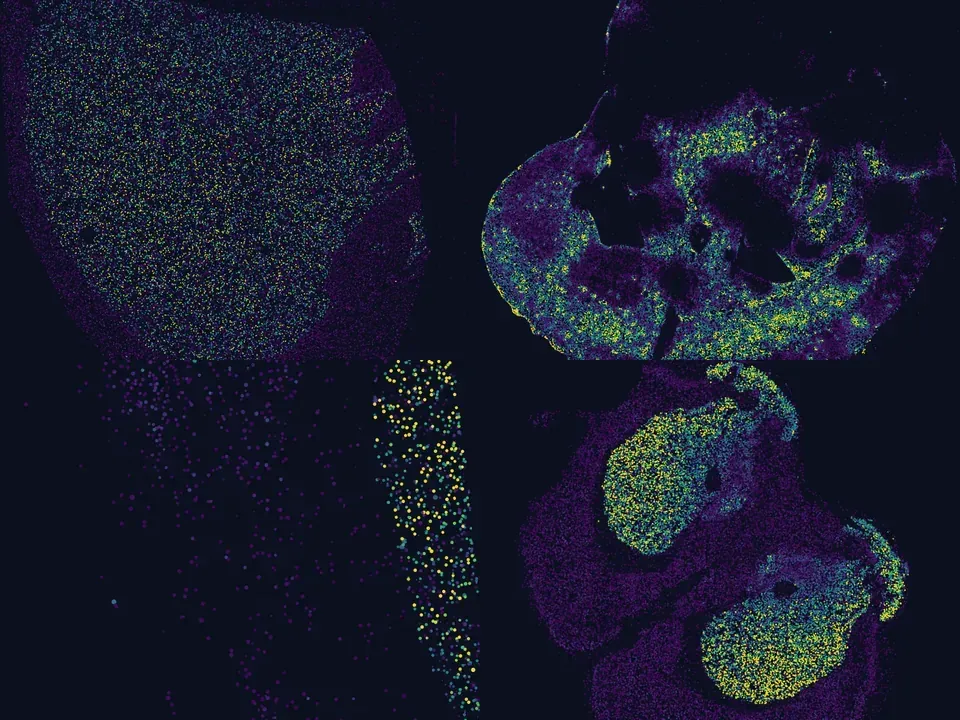
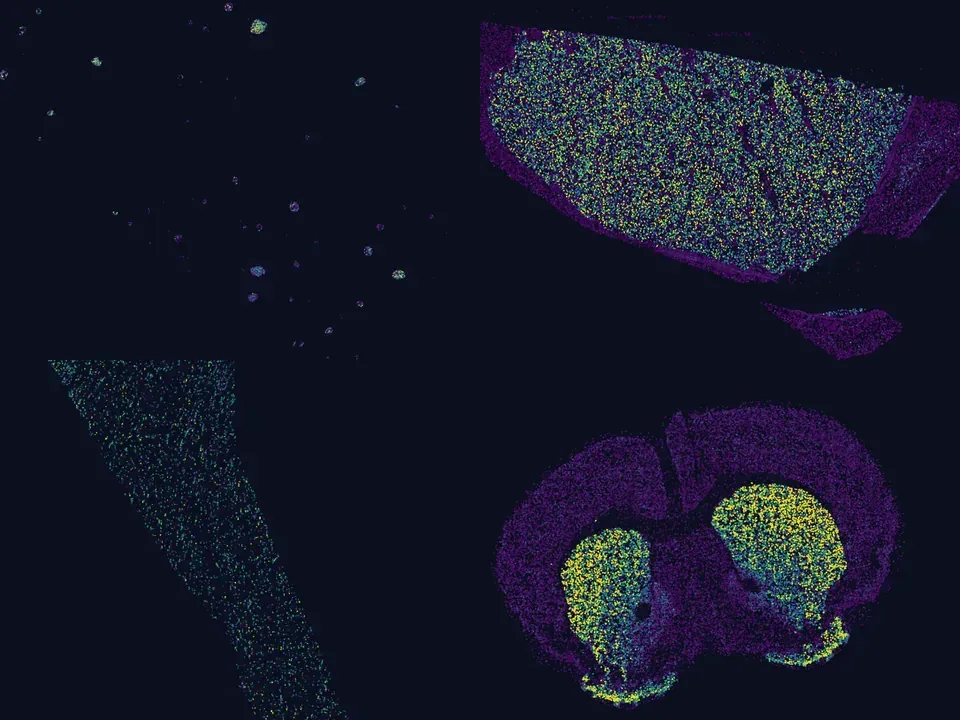
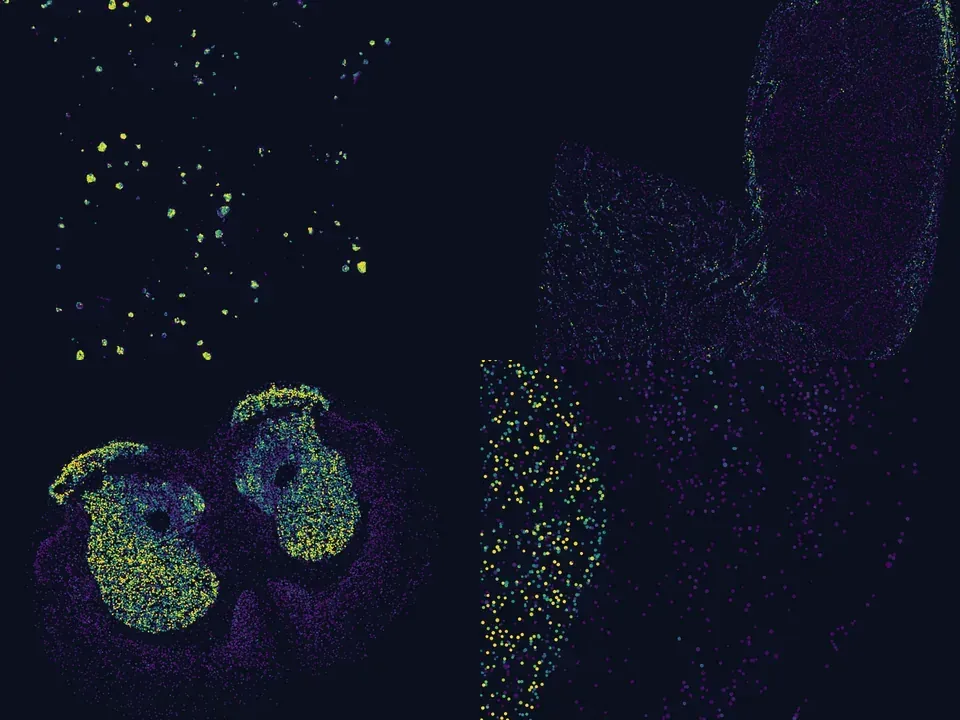
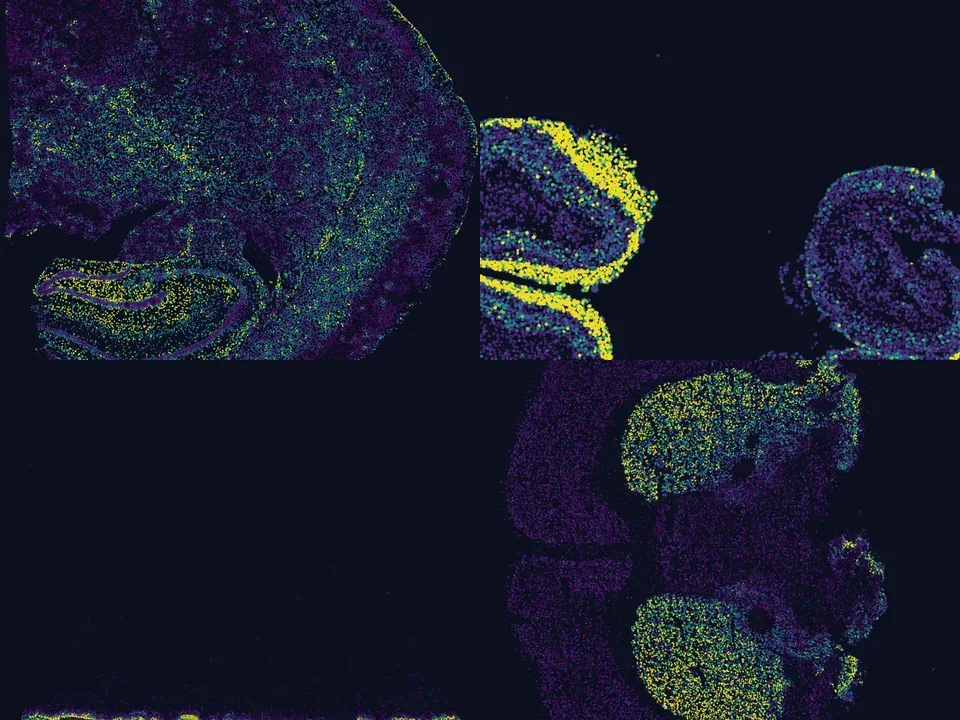
Mouse striatum
GSM8157270
mouse striatum 38.3 MB 73,872 cells bronze NCBI GEO policy
TechnologyVizgen MERSCOPE
Organismmouse
Tissuestriatum
Cells73,872
bronze NCBI GEO policy
from sddb import Catalog

cohort = Catalog().collection("geo-gse262083")
cohort.members        # the 4 datasets as a table

print(cohort.licenses())              # check the terms before you download

sdatas = cohort.to_dict()             # {uid: SpatialData}, cached locally
# or keep the .zarr files in a folder of your choice:
# sdatas = cohort.to_dict(dest="data/")Needs pip install lamindb and network access to the Lamin database, which is limited during the alpha. If it fails, use the Client tab.
import lamindb as ln

db = ln.DB("scverse/spatialdata-db")
coll = db.Collection.get(key="geo-gse262083")
coll.ordered_artifacts.to_dataframe()   # the 4 members, ordered

# download every member .zarr to the local cache:
paths = [a.cache() for a in coll.ordered_artifacts.all()]# sddb client: download every member .zarr into data/
sddb-cli download --collection geo-gse262083 --dest data/Licenses: 4 NCBI GEO policy
Aging affects multiple organs and within the brain drives distinct molecular changes across different cell types. The striatum encodes motor behaviors that decline with age, but our understanding of how cells within the striatum change remains incomplete. Using single-cell RNA sequencing from young and aged mice we identify molecularly distinct astrocyte subtypes. We show that astrocytes change significantly with age, exhibiting downregulation of genes, reduced diversity, and a shift to more homogenous inflammatory transcriptomic profiles. By exploring where striatal astrocyte subtypes are located with single-cell resolution, we map astrocytes enriched in dorsal, medial, and ventral striatum. Age increases inflammatory marker transcripts in dorsal striatal astrocytes, which display greater age-related changes than ventral striatal astrocytes. We impute molecular interactions between astrocytes and neurons and find that age particularly reduced interactions related to Nrxn2. Our data show that aging alters regionally enriched striatal astrocytes asymmetrically, with dorsal striatal astrocytes exhibiting greater age-related molecular changes.
No linked publication found — please cite the data source.