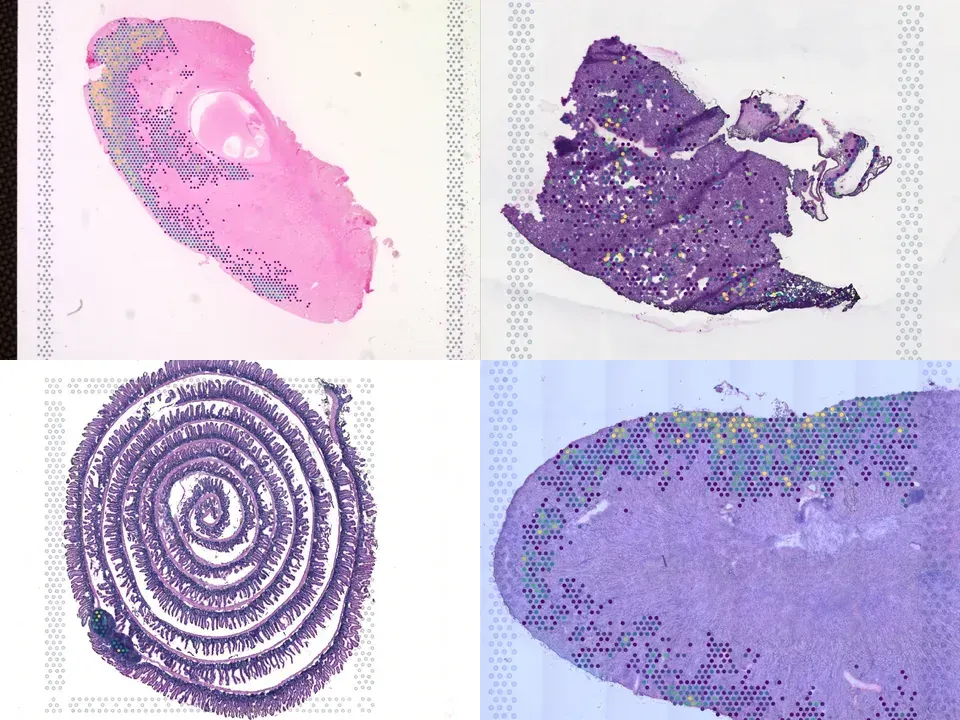
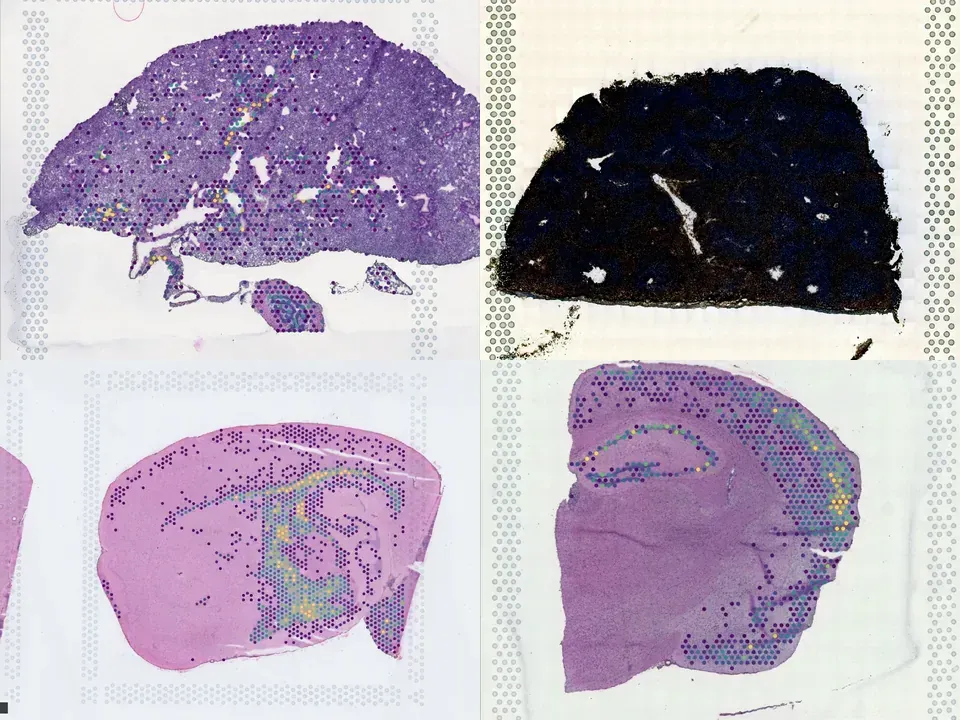
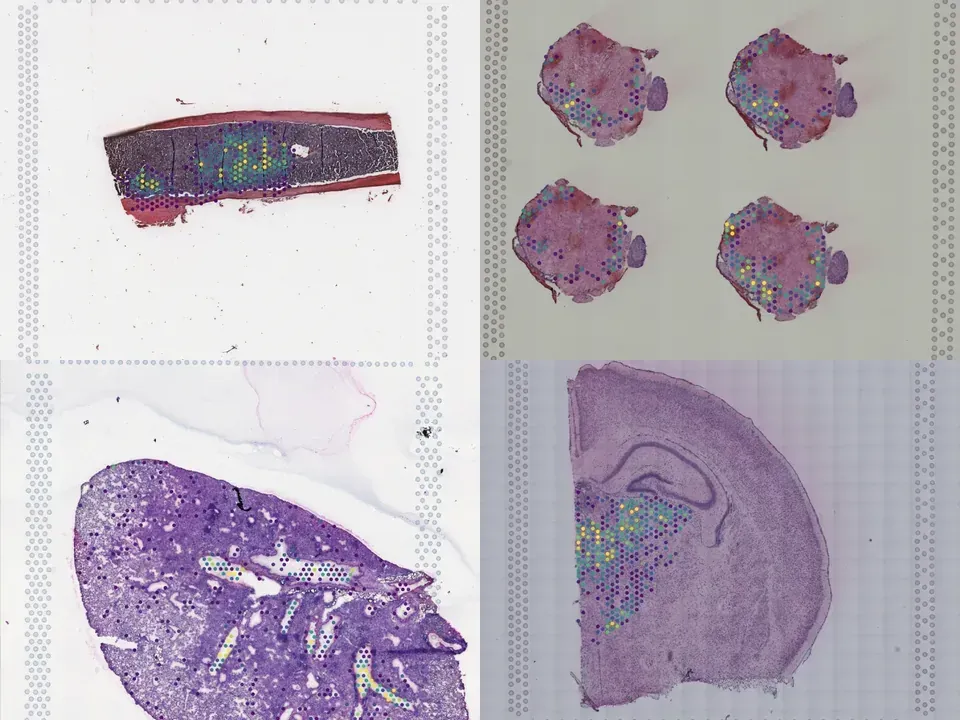
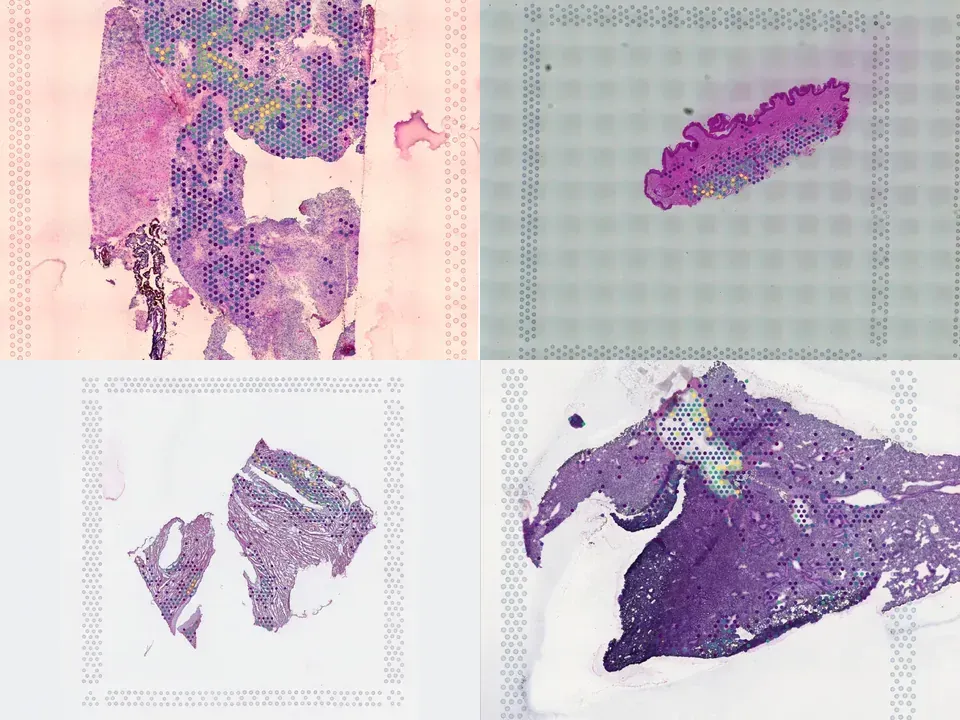
Collections / Histological Signatures Reveal Anti-Fibrotic Factors in Mouse and Human Lungs [Visium]
Histological Signatures Reveal Anti-Fibrotic Factors in Mouse and Human Lungs [Visium]
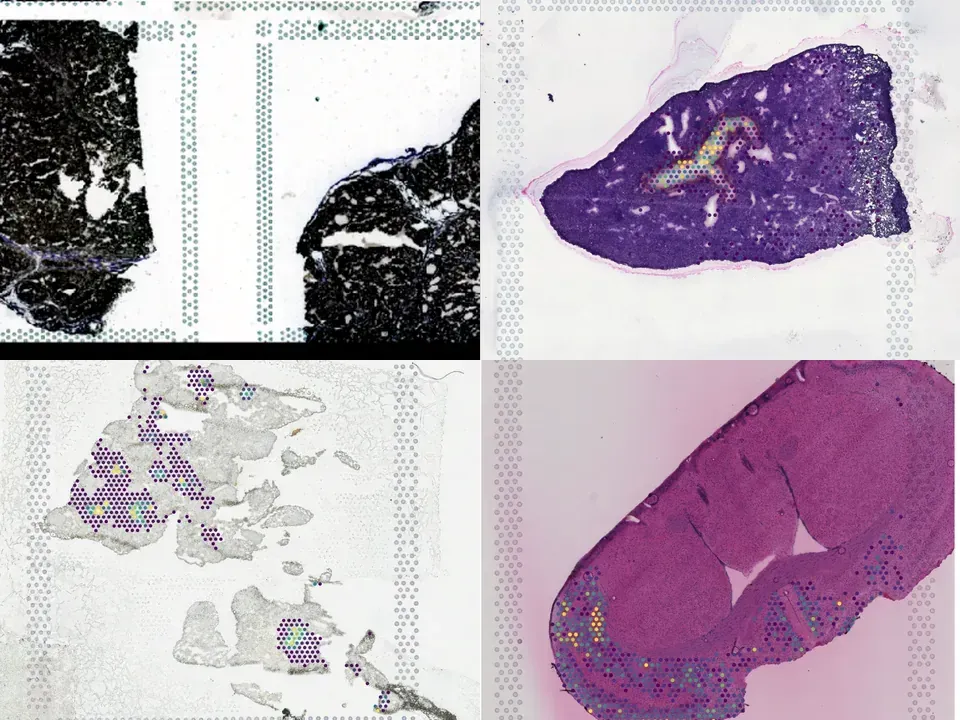
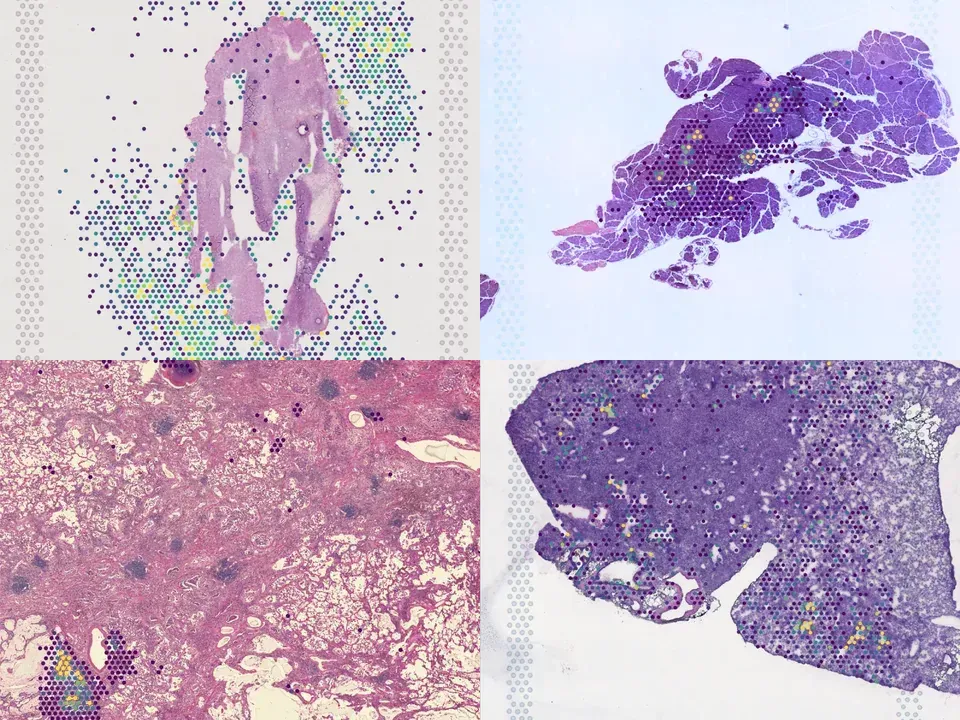
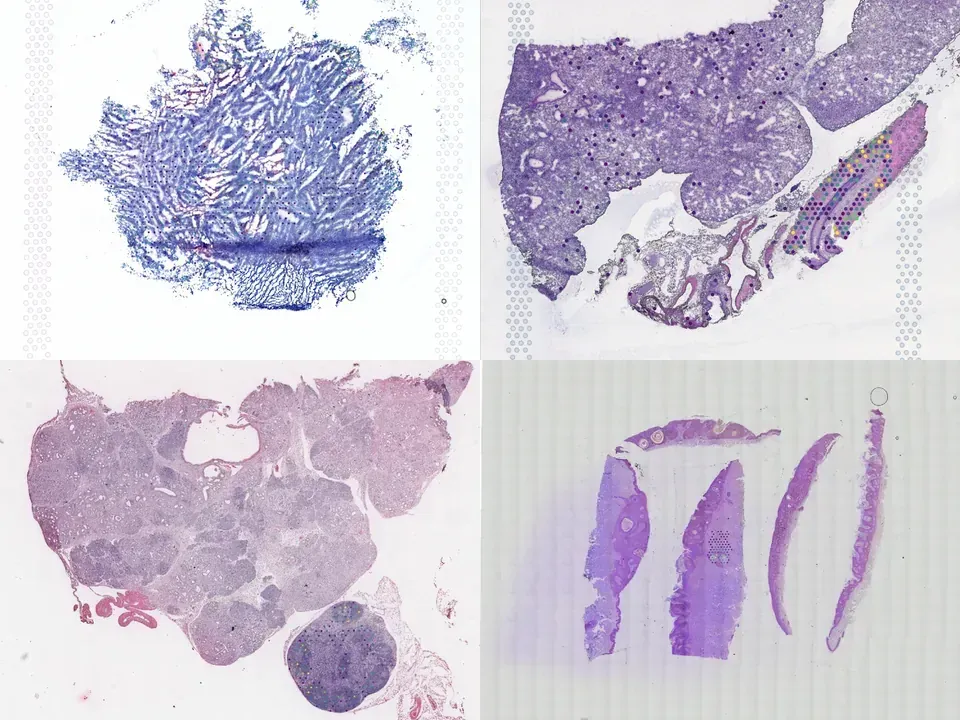
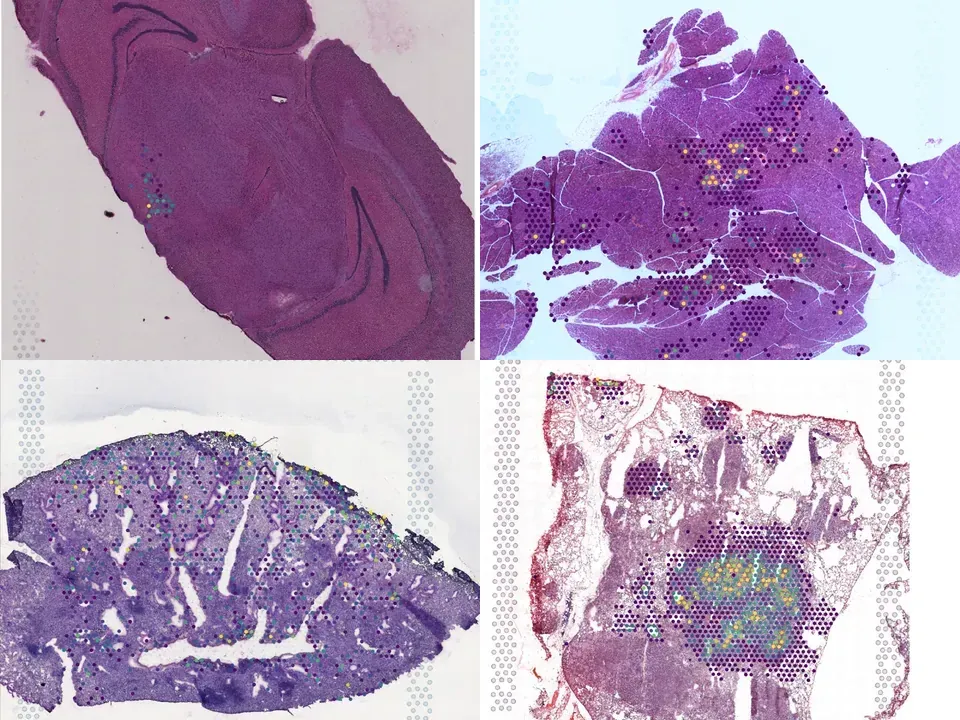
Fibrosis, the replacement of healthy tissue with collagen-rich matrix, can occur following injury in almost every organ. Mouse lungs follow stereotyped sequences of fibrogenesis-to-resolution after bleomycin injury, and we reasoned that profiling post-injury histological progression could uncover pro- vs. anti-fibrotic features with functional value for human fibrosis. We mapped spatiotemporally-resolved transformations in lung extracellular matrix (ECM) architecture to spatially-resolved, multi-omic data. First, we charted stepwise trajectories of matrix aberration vs. resolution using unsupervised machine learning, denoting a reversible transition in uniform-to-disordered histological architecture. Single-cell sequencing along these trajectories identified temporally-enriched “ECM-secreting” (Csmd1+) and “pro-resolving” (Cd248+) fibroblasts, for which Visium inferred divergent histological signatures and spatial-transcriptional “neighborhoods”. Critically, pro-resolving fibroblast instillation helped ameliorate fibrosis in vivo. Further, fibroblast neighborhood-associated moieties, Serpine2 and Pi16, functionally modulated human lung fibrosis ex vivo. Spatial phenotyping of idiopathic pulmonary fibrosis further uncovered analogous fibroblast subtypes and neighborhoods in human disease. Collectively, these findings establish an atlas of pro-/anti-fibrotic factors underlying lung matrix architecture and implicate fibroblast-centered moieties in modulating fibrotic progression vs. resolution.
from sddb import Catalog

cohort = Catalog().collection("geo-gse250395")
cohort.members        # the 8 datasets as a table

print(cohort.licenses())              # check the terms before you download

sdatas = cohort.to_dict()             # {uid: SpatialData}, cached locally
# or keep the .zarr files in a folder of your choice:
# sdatas = cohort.to_dict(dest="data/")
Needs pip install lamindb and network access to the Lamin database, which is limited during the alpha. If it fails, use the Client tab.
import lamindb as ln

db = ln.DB("scverse/spatialdata-db")
coll = db.Collection.get(key="geo-gse250395")
coll.ordered_artifacts.to_dataframe()   # the 8 members, ordered

# download every member .zarr to the local cache:
paths = [a.cache() for a in coll.ordered_artifacts.all()]
@article{Guo_2025,
  title = {Histological signatures map anti-fibrotic factors in mouse and human lungs},
  volume = {641},
  ISSN = {1476-4687},
  url = {http://dx.doi.org/10.1038/s41586-025-08727-3},
  DOI = {10.1038/s41586-025-08727-3},
  number = {8064},
  journal = {Nature},
  publisher = {Springer Science and Business Media LLC},
  author = {Guo, Jason L. and Griffin, Michelle and Yoon, Jung-Ki and Lopez, David M. and Zhu, Yili and Lu, John M. and Mikos, Georgios and Parker, Jennifer B. L. and Mascharak, Shamik and Brenac, Camille and Guardino, Nicholas J. and Abbas, Darren B. and Li, Dayan J. and Valencia, Caleb and Liang, Norah E. and Januszyk, Michael and Chang, Howard Y. and Wan, Derrick C. and Desai, Tushar J. and Longaker, Michael T.},
  year = {2025},
  month = Mar,
  pages = {993–1004}
}