from sddb import Catalog

cohort = Catalog().collection("doi-10-1016-j-cell-2020-05-039")
cohort.members        # the 16 datasets as a table

print(cohort.licenses())              # check the terms before you download

sdatas = cohort.to_dict()             # {uid: SpatialData}, cached locally
# or keep the .zarr files in a folder of your choice:
# sdatas = cohort.to_dict(dest="data/")
Needs pip install lamindb and network access to the Lamin database, which is limited during the alpha. If it fails, use the Client tab.
import lamindb as ln

db = ln.DB("scverse/spatialdata-db")
coll = db.Collection.get(key="doi-10.1016/j.cell.2020.05.039")
coll.ordered_artifacts.to_dataframe()   # the 16 members, ordered

# download every member .zarr to the local cache:
paths = [a.cache() for a in coll.ordered_artifacts.all()]
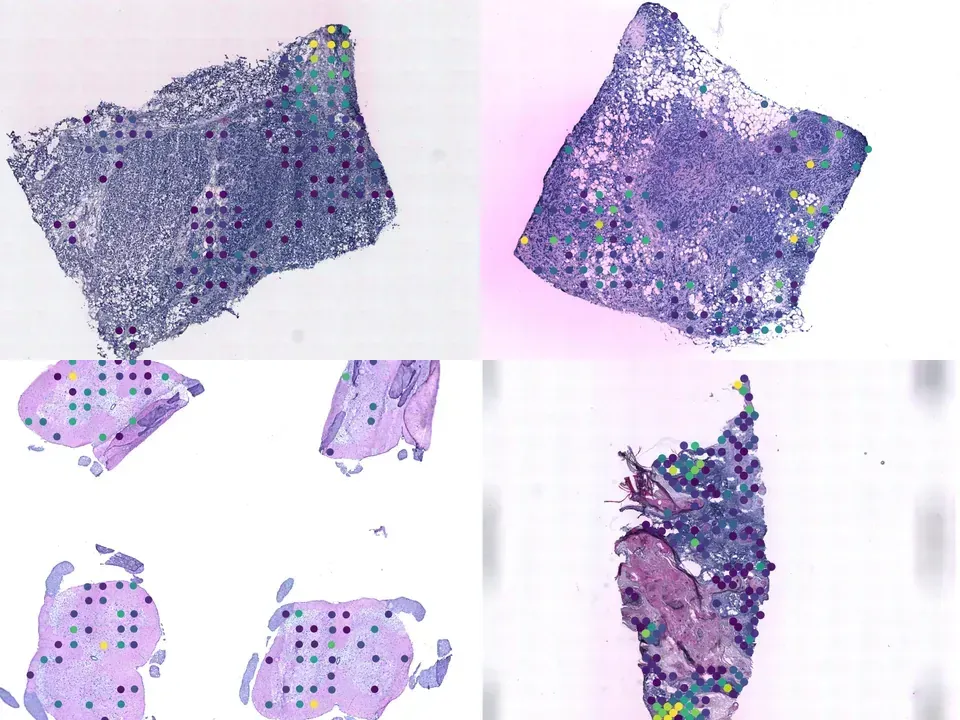
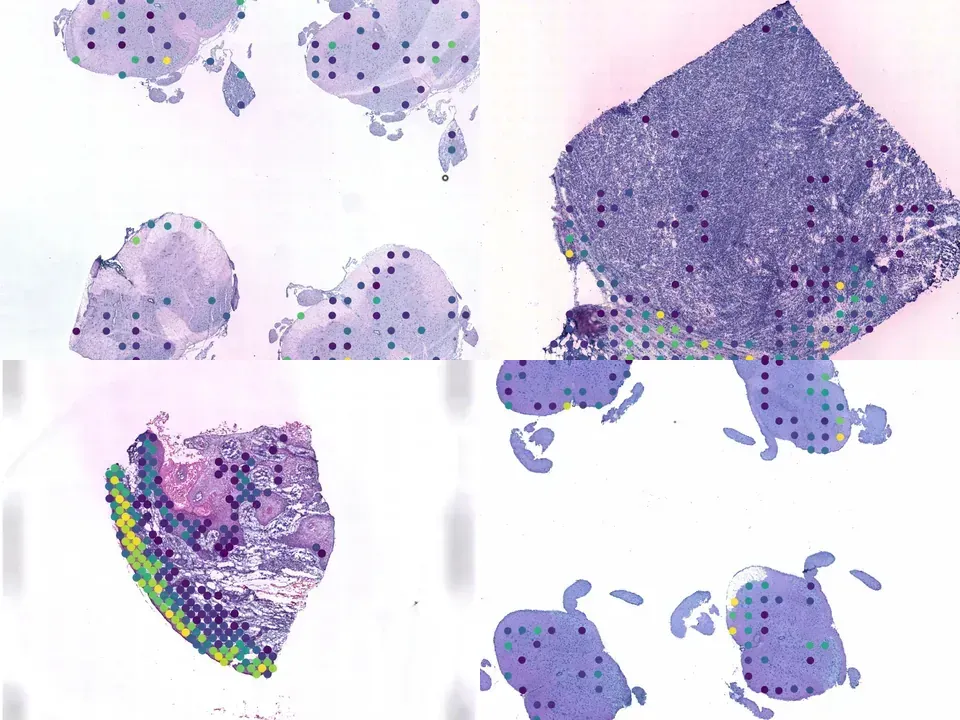
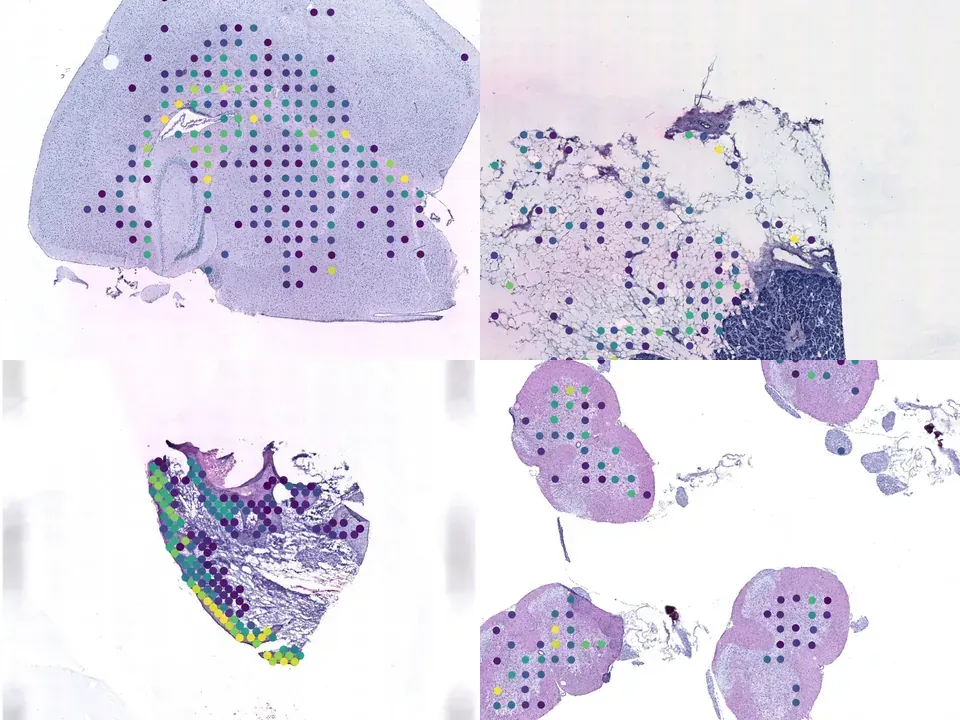
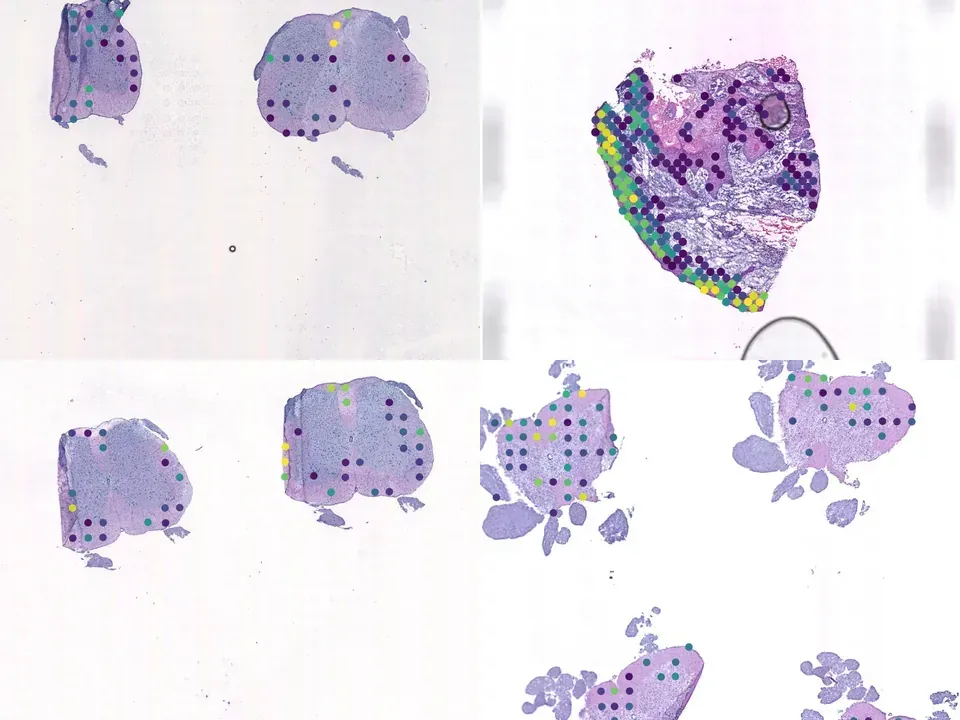
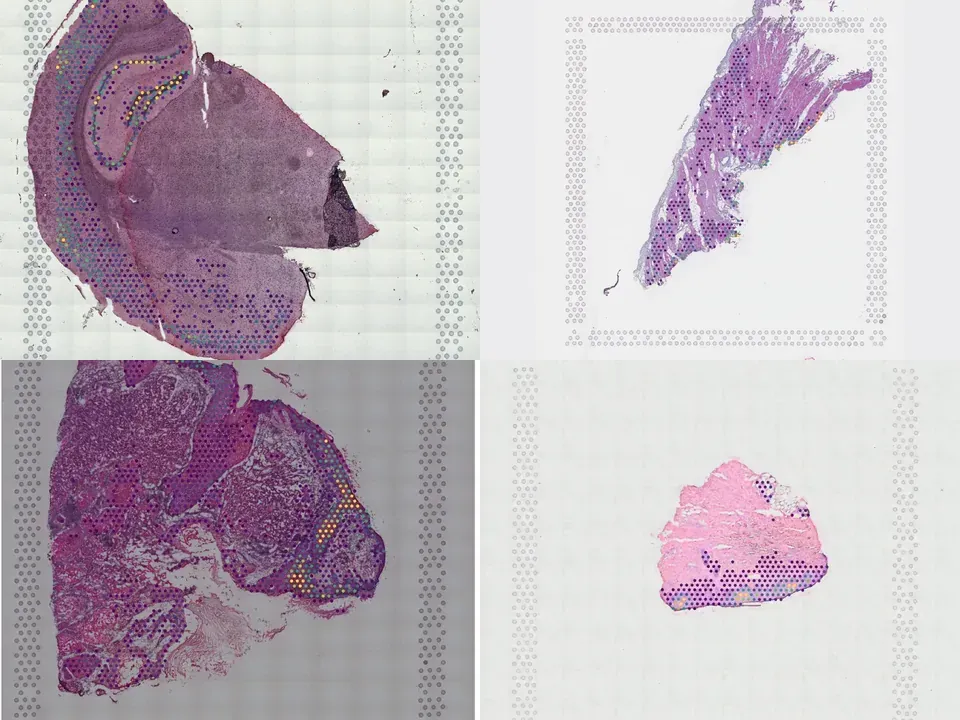
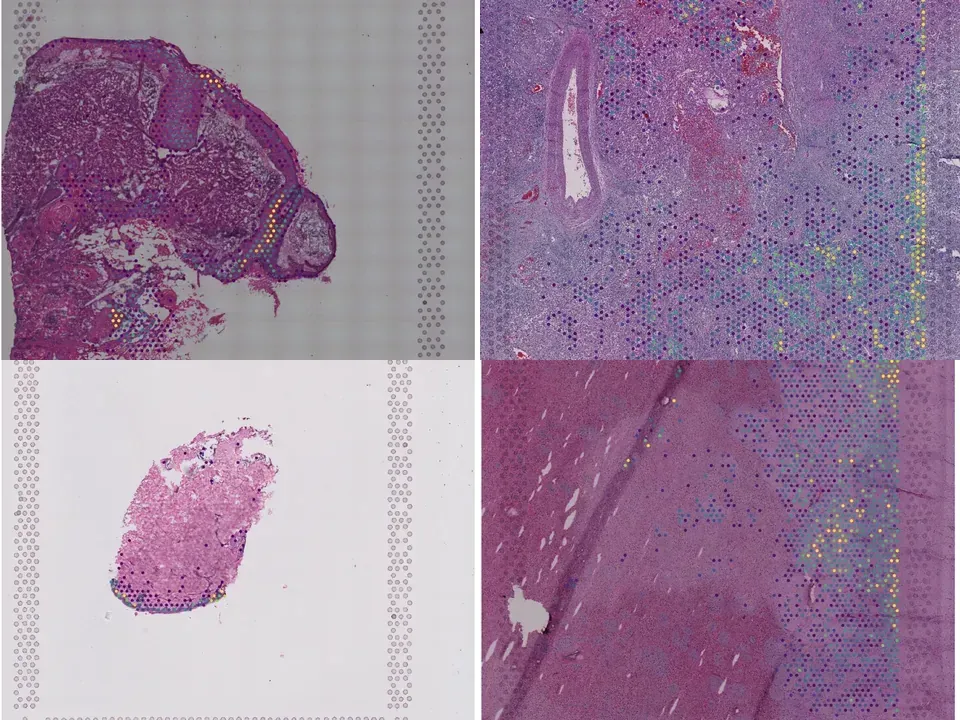
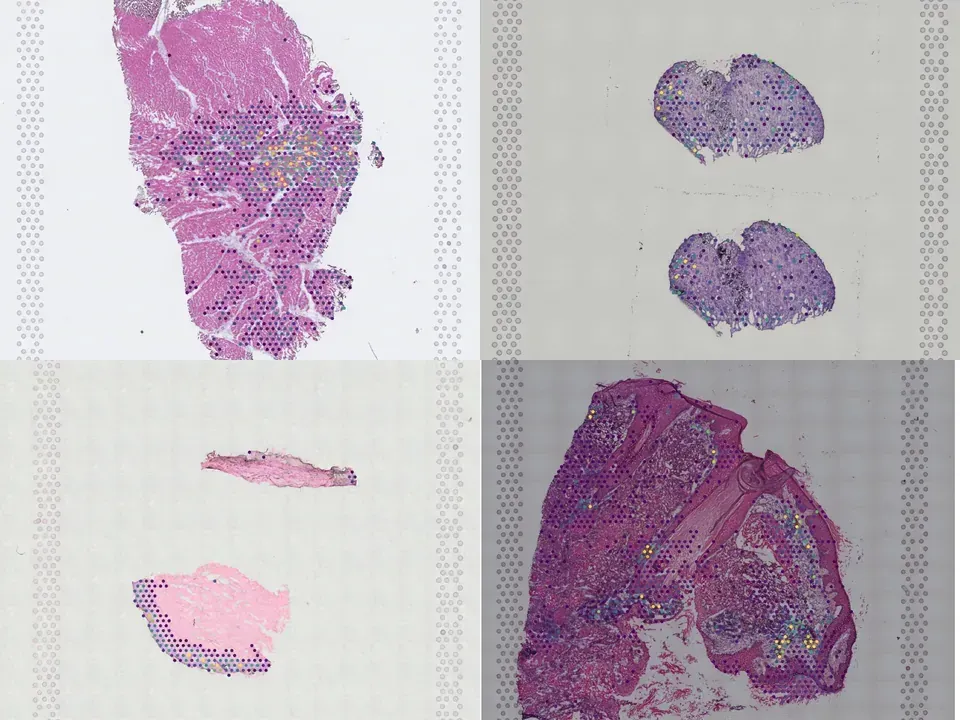
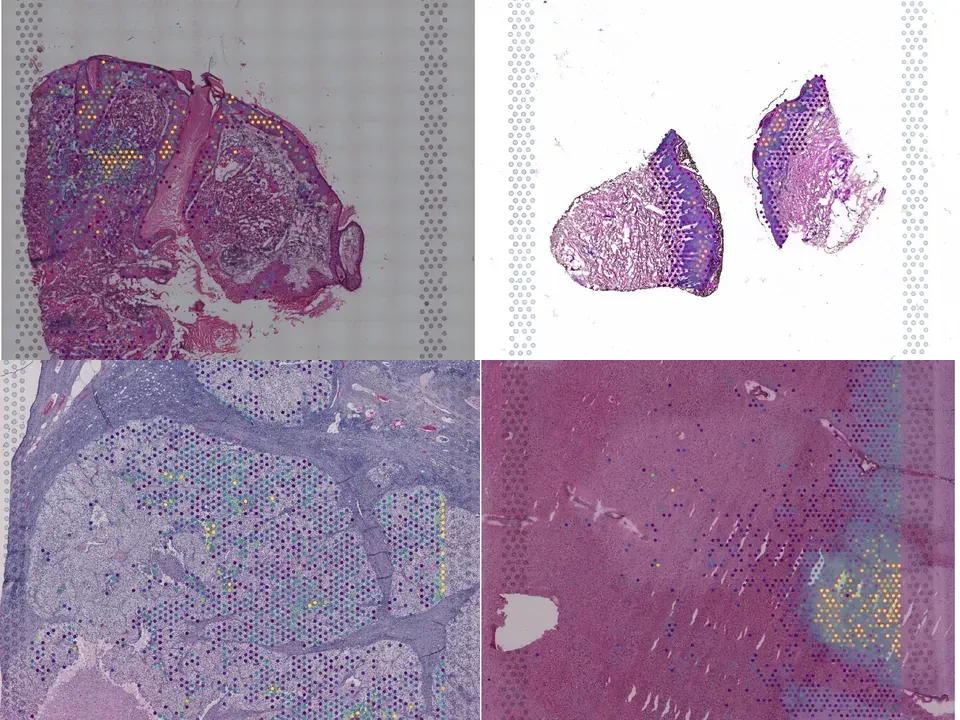
Multimodal Analysis of Composition and Spatial Architecture in Human Squamous Cell Carcinoma.
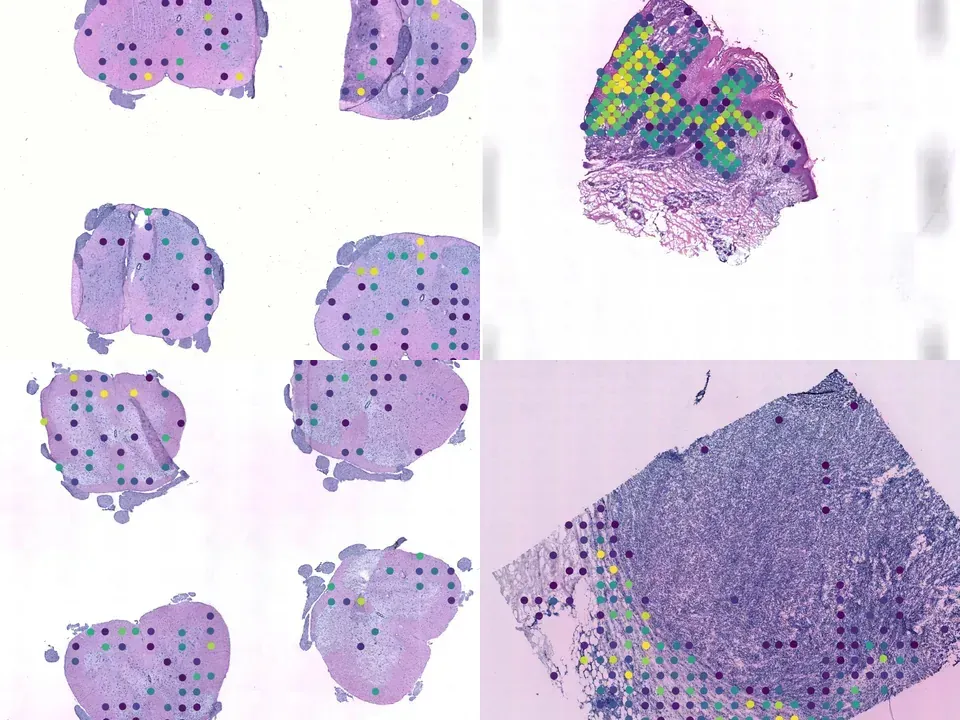
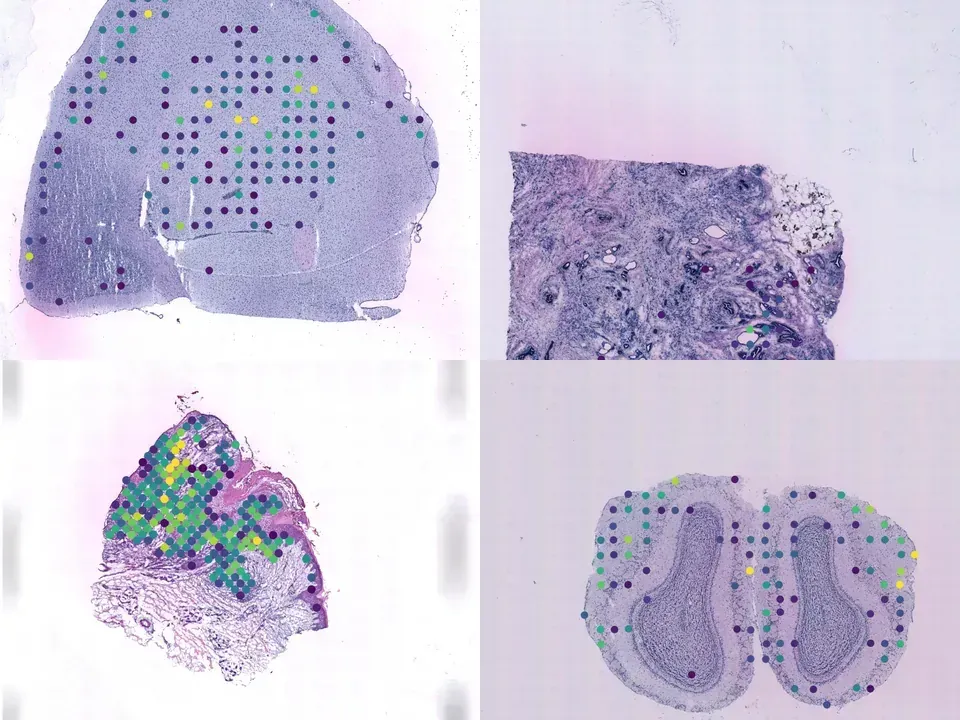
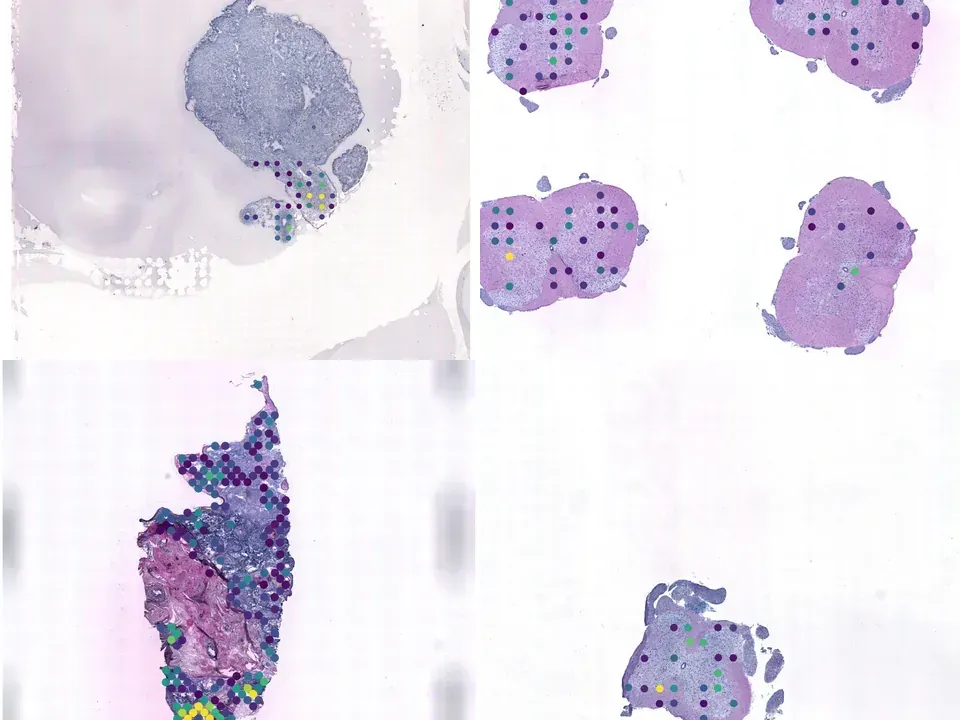
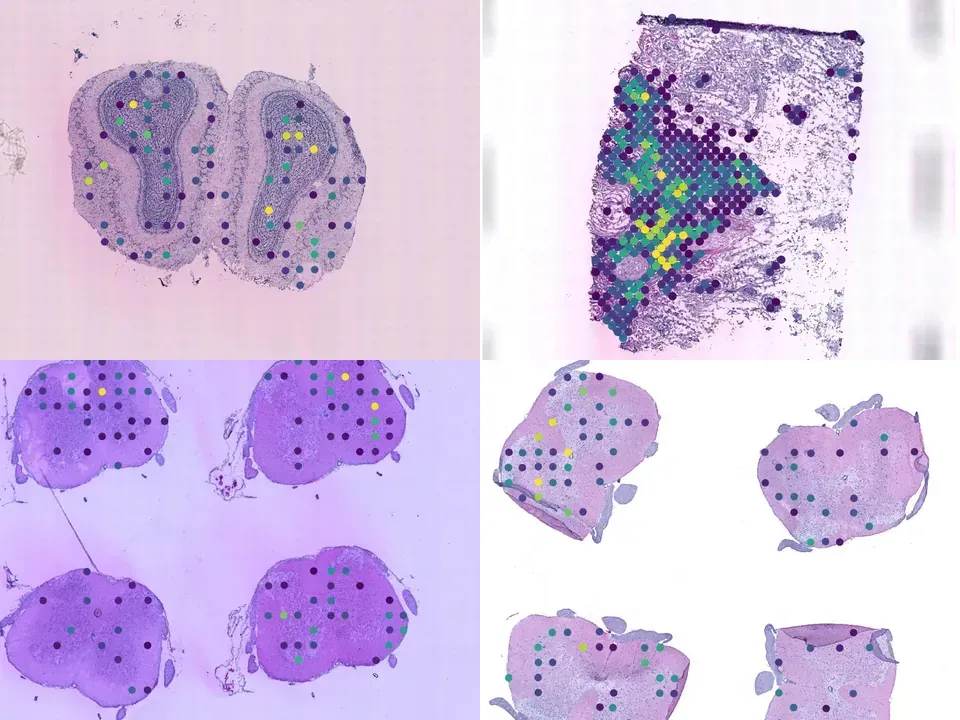
To define the cellular composition and architecture of cutaneous squamous cell carcinoma (cSCC), we combined single-cell RNA sequencing with spatial transcriptomics and multiplexed ion beam imaging from a series of human cSCCs and matched normal skin. cSCC exhibited four tumor subpopulations, three recapitulating normal epidermal states, and a tumor-specific keratinocyte (TSK) population unique to cancer, which localized to a fibrovascular niche. Integration of single-cell and spatial data mapped ligand-receptor networks to specific cell types, revealing TSK cells as a hub for intercellular communication. Multiple features of potential immunosuppression were observed, including T regulatory cell (Treg) co-localization with CD8 T cells in compartmentalized tumor stroma. Finally, single-cell characterization of human tumor xenografts and in vivo CRISPR screens identified essential roles for specific tumor subpopulation-enriched gene networks in tumorigenesis. These data define cSCC tumor and stromal cell subpopulations, the spatial niches where they interact, and the communicating gene networks that they engage in cancer.
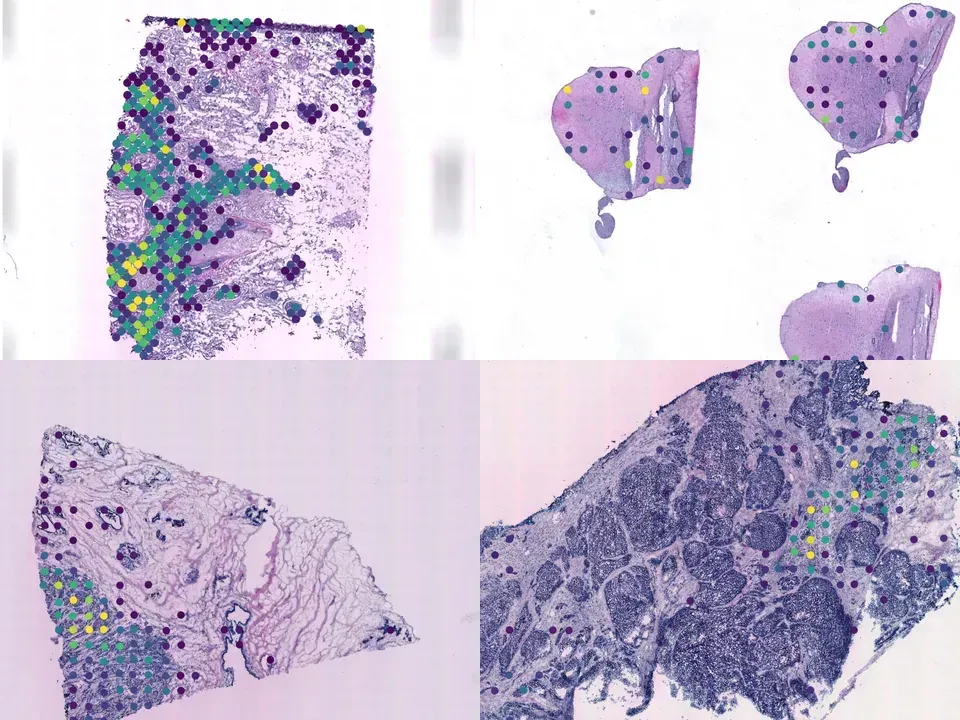
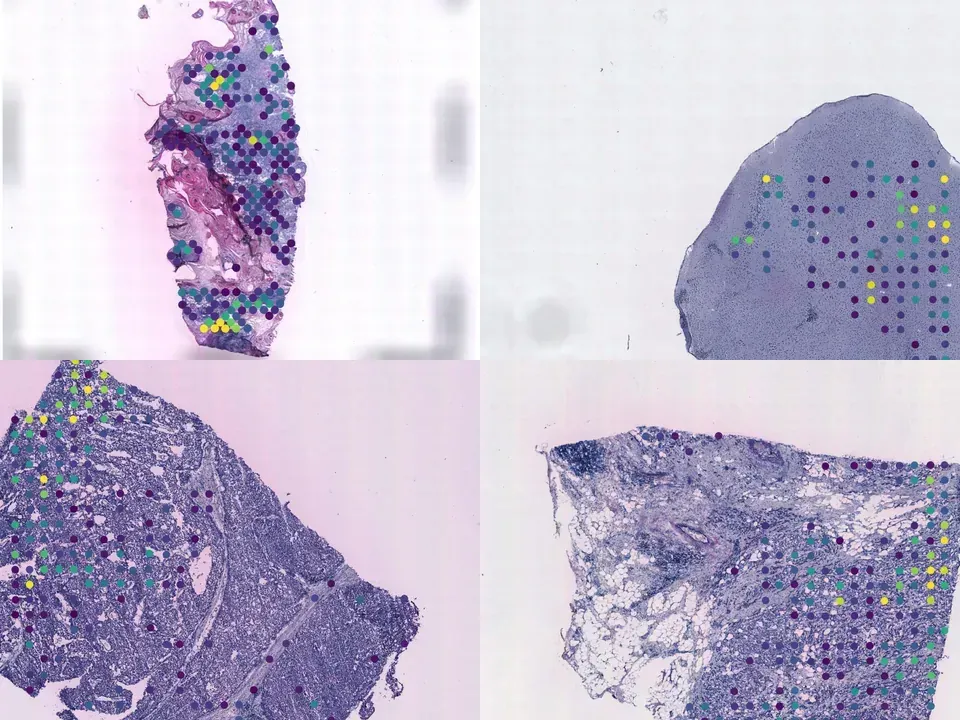
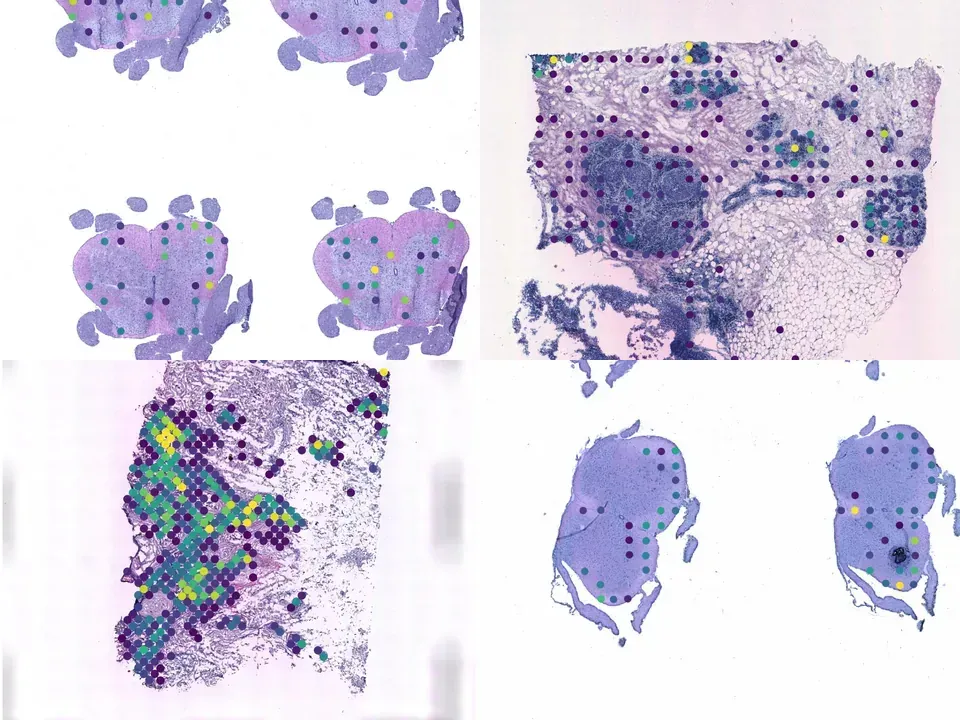
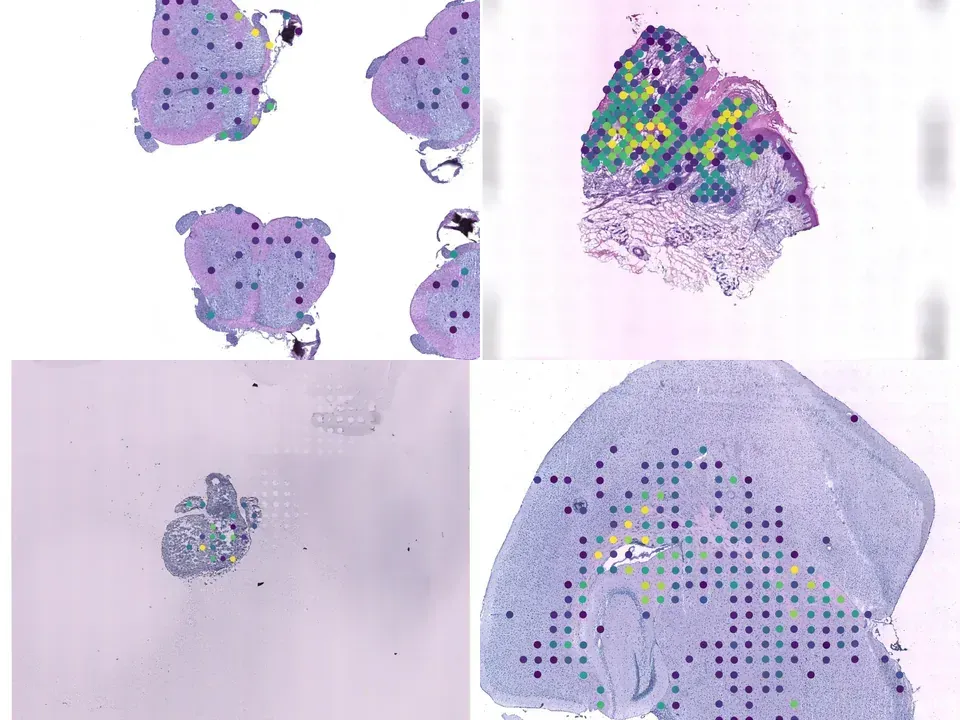
Member datasets · 16
spatial transcriptomics
Human skin of body
NCBI762
humanskin of bodyskin squamous cell carcinoma296 MB1,182 spotssilverH&E
Technologyspatial transcriptomics
Organismhuman
Tissueskin of body
Conditionskin squamous cell carcinoma
Size296 MB
Spots1,182
Magnification20x · 0.366 µm/px
silverH&E
spatial transcriptomics
Human skin of body
NCBI767
humanskin of bodyskin squamous cell carcinoma219 MB590 spotssilverH&E
Technologyspatial transcriptomics
Organismhuman
Tissueskin of body
Conditionskin squamous cell carcinoma
Size219 MB
Spots590
Magnification20x · 0.368 µm/px
silverH&E
spatial transcriptomics
Human skin of body
NCBI764
humanskin of bodyskin squamous cell carcinoma293 MB1,145 spotssilverH&E
Technologyspatial transcriptomics
Organismhuman
Tissueskin of body
Conditionskin squamous cell carcinoma
Size293 MB
Spots1,145
Magnification20x · 0.368 µm/px
silverH&E
spatial transcriptomics
Human skin of body
NCBI770
humanskin of bodyskin squamous cell carcinoma212 MB666 spotssilverH&E
Technologyspatial transcriptomics
Organismhuman
Tissueskin of body
Conditionskin squamous cell carcinoma
Size212 MB
Spots666
Magnification20x · 0.366 µm/px
silverH&E
spatial transcriptomics
Human skin of body
NCBI765
humanskin of bodyskin squamous cell carcinoma213 MB521 spotssilverH&E
Technologyspatial transcriptomics
Organismhuman
Tissueskin of body
Conditionskin squamous cell carcinoma
Size213 MB
Spots521
Magnification20x · 0.367 µm/px
silverH&E
spatial transcriptomics
Human skin of body
NCBI760
humanskin of bodyskin squamous cell carcinoma203 MB621 spotssilverH&E
Technologyspatial transcriptomics
Organismhuman
Tissueskin of body
Conditionskin squamous cell carcinoma
Size203 MB
Spots621
Magnification20x · 0.366 µm/px
silverH&E
spatial transcriptomics
Human skin of body
NCBI759
humanskin of bodyskin squamous cell carcinoma170 MB462 spotssilverH&E
Technologyspatial transcriptomics
Organismhuman
Tissueskin of body
Conditionskin squamous cell carcinoma
Size170 MB
Spots462
Magnification20x · 0.369 µm/px
silverH&E
spatial transcriptomics
Human skin of body
NCBI761
humanskin of bodyskin squamous cell carcinoma209 MB608 spotssilverH&E
Technologyspatial transcriptomics
Organismhuman
Tissueskin of body
Conditionskin squamous cell carcinoma
Size209 MB
Spots608
Magnification20x · 0.364 µm/px
silverH&E
spatial transcriptomics
Human skin of body
NCBI769
humanskin of bodyskin squamous cell carcinoma209 MB646 spotssilverH&E
Technologyspatial transcriptomics
Organismhuman
Tissueskin of body
Conditionskin squamous cell carcinoma
Size209 MB
Spots646
Magnification20x · 0.366 µm/px
silverH&E
spatial transcriptomics
Human skin of body
NCBI768
humanskin of bodyskin squamous cell carcinoma205 MB638 spotssilverH&E
Technologyspatial transcriptomics
Organismhuman
Tissueskin of body
Conditionskin squamous cell carcinoma
Size205 MB
Spots638
Magnification20x · 0.366 µm/px
silverH&E
spatial transcriptomics
Human skin of body
NCBI766
humanskin of bodyskin squamous cell carcinoma208 MB521 spotssilverH&E
Technologyspatial transcriptomics
Organismhuman
Tissueskin of body
Conditionskin squamous cell carcinoma
Size208 MB
Spots521
Magnification20x · 0.367 µm/px
silverH&E
spatial transcriptomics
Human skin of body
NCBI763
humanskin of bodyskin squamous cell carcinoma291 MB1,071 spotssilverH&E
Technologyspatial transcriptomics
Organismhuman
Tissueskin of body
Conditionskin squamous cell carcinoma
Size291 MB
Spots1,071
Magnification20x · 0.366 µm/px
silverH&E
Visium
Human skin of body
MEND38
humanskin of bodyskin squamous cell carcinoma3.0 GB2,752 spotssilverH&E
TechnologyVisium
Organismhuman
Tissueskin of body
Conditionskin squamous cell carcinoma
Size3.0 GB
Spots2,752
Magnification40x · 0.172 µm/px
silverH&E
Visium
Human skin of body
MEND37
humanskin of bodyskin squamous cell carcinoma2.8 GB2,363 spotssilverH&E
TechnologyVisium
Organismhuman
Tissueskin of body
Conditionskin squamous cell carcinoma
Size2.8 GB
Spots2,363
Magnification40x · 0.172 µm/px
silverH&E
Visium
Human skin of body
MEND40
humanskin of bodyskin squamous cell carcinoma3.3 GB2,793 spotssilverH&E
TechnologyVisium
Organismhuman
Tissueskin of body
Conditionskin squamous cell carcinoma
Size3.3 GB
Spots2,793
Magnification40x · 0.172 µm/px
silverH&E
Visium
Human skin of body
MEND39
humanskin of bodyskin squamous cell carcinoma3.2 GB2,496 spotssilverH&E
@article{Ji_2020,
  title = {Multimodal Analysis of Composition and Spatial Architecture in Human Squamous Cell Carcinoma},
  volume = {182},
  ISSN = {0092-8674},
  url = {http://dx.doi.org/10.1016/j.cell.2020.05.039},
  DOI = {10.1016/j.cell.2020.05.039},
  number = {2},
  journal = {Cell},
  publisher = {Elsevier BV},
  author = {Ji, Andrew L. and Rubin, Adam J. and Thrane, Kim and Jiang, Sizun and Reynolds, David L. and Meyers, Robin M. and Guo, Margaret G. and George, Benson M. and Mollbrink, Annelie and Bergenstråhle, Joseph and Larsson, Ludvig and Bai, Yunhao and Zhu, Bokai and Bhaduri, Aparna and Meyers, Jordan M. and Rovira-Clavé, Xavier and Hollmig, S. Tyler and Aasi, Sumaira Z. and Nolan, Garry P. and Lundeberg, Joakim and Khavari, Paul A.},
  year = {2020},
  month = July,
  pages = {497–514.e22}
}