
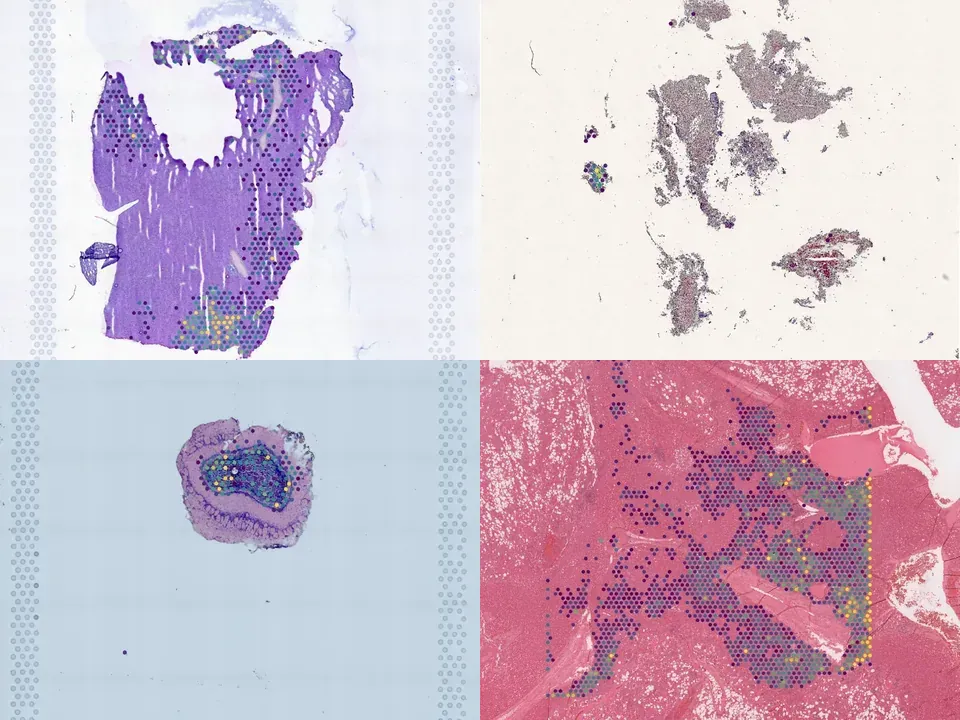
Human liver
GSM9986439
human liver hepatic angiomyolipoma 99.9 MB 4,988 spots bronze H&E NCBI GEO policy
TechnologyVisium
Organismhuman
Tissueliver
Conditionhepatic angiomyolipoma
Spots4,988
bronze H&E NCBI GEO policy
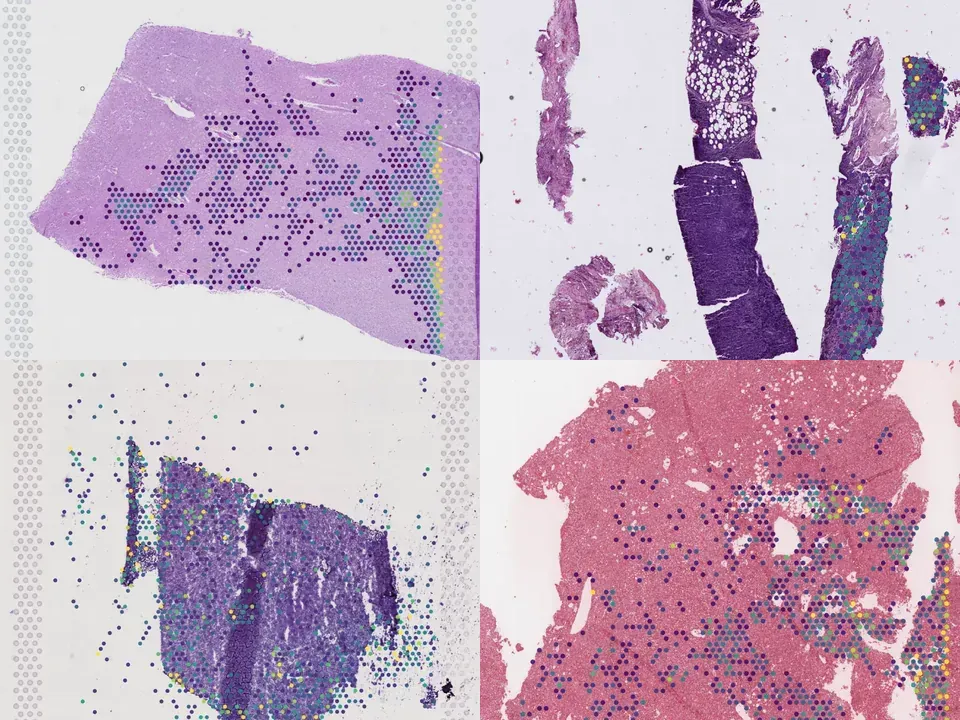
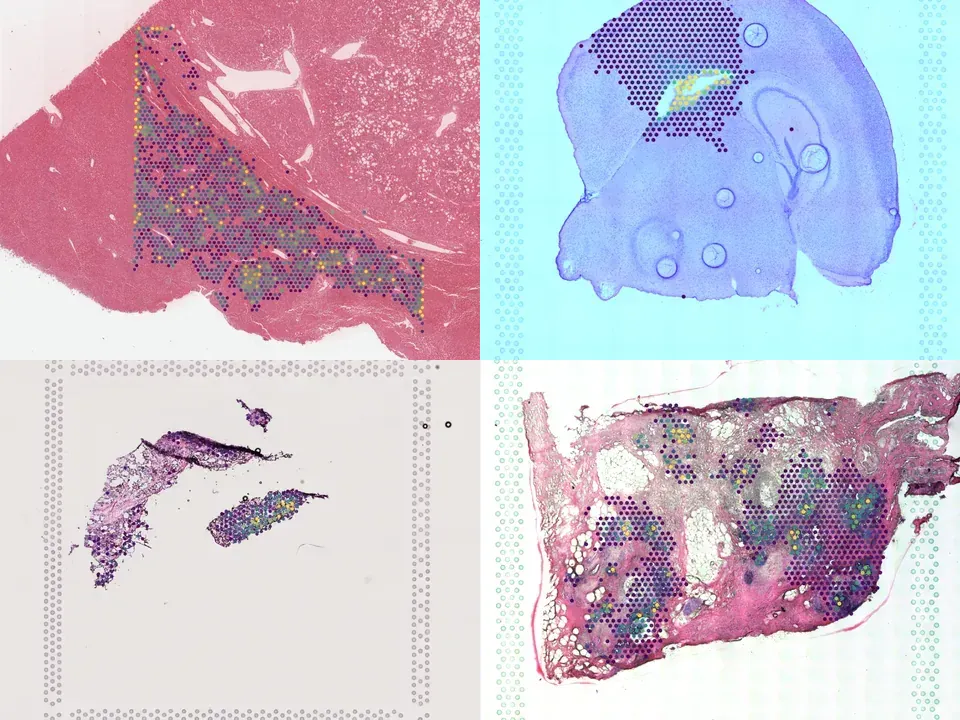
Hepatic angiomyolipoma is a rare mesenchymal tumor frequently associated with tuberous sclerosis complex gene mutations. The tumor microenvironment profiling enables the discovery of potential therapeutic targets. Here, we profile 18,214 cells from tumor and adjacent tissues to identify distinct cell subsets, validate perivascular epithelioid cell biomarkers, predict cellular origins, and characterize molecular networks. Complementarily, we applied microarray-based spatial transcriptomics to map tissue architecture on three hepatic angiomyolipoma specimens by spot arrays. Tumor and normal regions were annotated using robust cell type decomposition and multimodal intersection analysis, integrating snRNA-seq and spatial transcriptomics data. We demonstrate that the perivascular epithelioid cell share substantial transcriptional similarity with endothelial cells and and show a continuous differentiation trajectory. This interaction might be regulated by PDGFD-PDGFRB signaling promotes autophagy by activating the Ras pathway potentially contributing to the pathogenesis and progression of hepatic angiomyolipoma. Our results provide a potential therapeutic strategy by disrupting perivascular epithelioid cell and endothelial cells interaction to improve therapeutic effect.
from sddb import Catalog

cohort = Catalog().collection("geo-gse344843")
cohort.members        # the 3 datasets as a table

print(cohort.licenses())              # check the terms before you download

sdatas = cohort.to_dict()             # {uid: SpatialData}, cached locally
# or keep the .zarr files in a folder of your choice:
# sdatas = cohort.to_dict(dest="data/")Needs pip install lamindb and network access to the Lamin database, which is limited during the alpha. If it fails, use the Client tab.
import lamindb as ln

db = ln.DB("scverse/spatialdata-db")
coll = db.Collection.get(key="geo-gse344843")
coll.ordered_artifacts.to_dataframe()   # the 3 members, ordered

# download every member .zarr to the local cache:
paths = [a.cache() for a in coll.ordered_artifacts.all()]# sddb client: download every member .zarr into data/
sddb-cli download --collection geo-gse344843 --dest data/Licenses: 3 NCBI GEO policy
No linked publication found — please cite the data source.