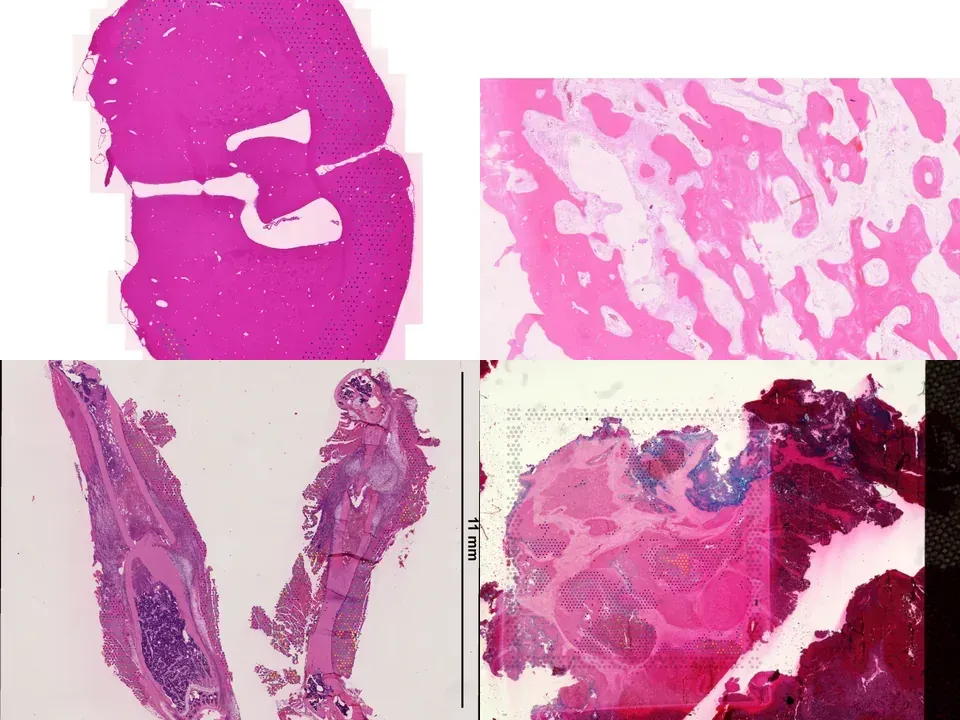
Collections / Spatial transcriptomics reveals microenvironmental heterogeneity in osteoarthritic subchondral bone

Spatial transcriptomics reveals microenvironmental heterogeneity in osteoarthritic subchondral bone

Although increasing evidence implicates subchondral bone alterations in osteoarthritis, the spatial organization of subchondral bone remodeling remains unclear. Applying spatial transcriptomics on human subchondral bone, we identify a spatially conserved osteogenic core-halo architecture that displays transcriptional reprogramming in sclerotic microenvironments. Spatial dependency and a customized cell-cell communication framework reveal disrupted osteoblast-osteoclast spatial coupling, enhanced osteoblast-mesenchymal interactions, and identify FN1-SDC2 and COL1A1-DDR2 as candidate stromal-osteogenic signaling axes that may contribute to aberrant bone remodeling. Additionally, we present the first in situ transcriptional landscape of osteocytes and reveal its potential regulatory role in aberrant bone remodeling. We further delineate a continuum of spatial ecotypes exhibiting distinct enrichment, spatial topology reorganization, and inter-ecotype communication rewiring across pathological states. Metabolic flux inference additionally reveals substrate-limited, stressed states across multiple ecotypes in sclerotic microenvironments. Collectively, our findings provide critical insights into aberrant subchondral bone remodeling in osteoarthritis and offer a valuable framework for future mechanistic studies and therapeutic exploration.

Datasets4
Size~188 MB
AssayVisium
Samplehuman · multiple
KindOther
Flag a data issue
www.ncbi.nlm.nih.gov/geo/query/acc.cgi?acc=GSE342703 ↗
Python · sddb client
from sddb import Catalog

cohort = Catalog().collection("geo-gse342703")
cohort.members        # the 4 datasets as a table

print(cohort.licenses())              # check the terms before you download

sdatas = cohort.to_dict()             # {uid: SpatialData}, cached locally
# or keep the .zarr files in a folder of your choice:
# sdatas = cohort.to_dict(dest="data/")
Python · lamindb

Needs pip install lamindb and network access to the Lamin database, which is limited during the alpha. If it fails, use the Client tab.

import lamindb as ln

db = ln.DB("scverse/spatialdata-db")
coll = db.Collection.get(key="geo-gse342703")
coll.ordered_artifacts.to_dataframe()   # the 4 members, ordered

# download every member .zarr to the local cache:
paths = [a.cache() for a in coll.ordered_artifacts.all()]
Shell
# sddb client: download every member .zarr into data/
sddb-cli download --collection geo-gse342703 --dest data/

Licenses: 4 NCBI GEO policy

Open in Vitessce
Visium
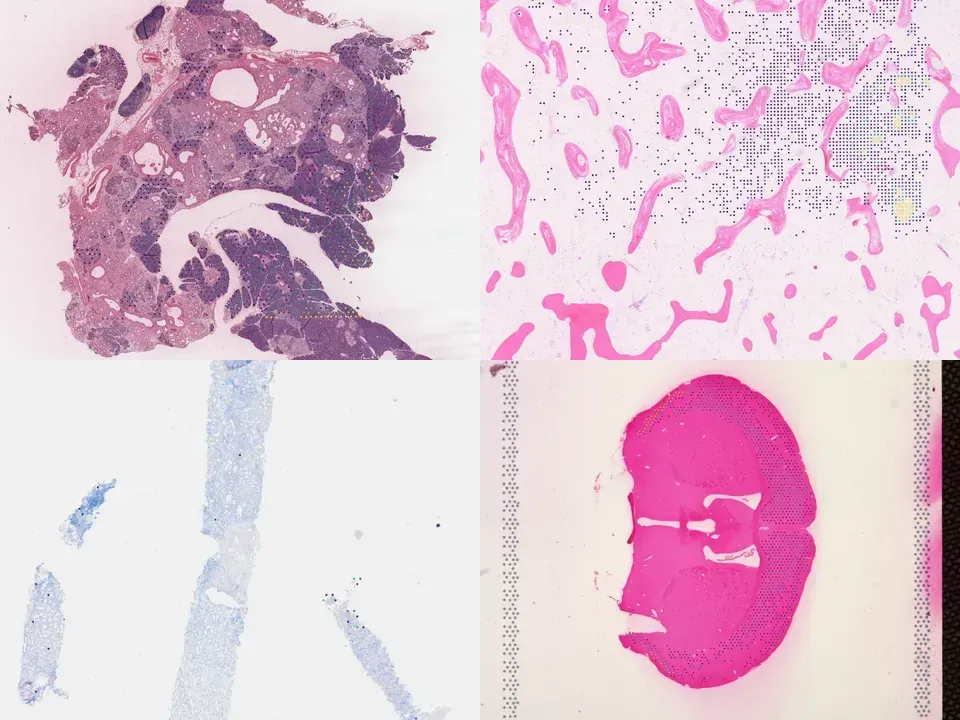
Human pancreas
GSM9936743
human pancreas pancreatic ductal adenocarcinoma 39.1 MB 14,400 spots silver H&E NCBI GEO policy
TechnologyVisium
Organismhuman
Tissuepancreas
Conditionpancreatic ductal adenocarcinoma
Size39.1 MB
Spots14,400
silver H&E NCBI GEO policy Open in Vitessce
Open in Vitessce
Visium
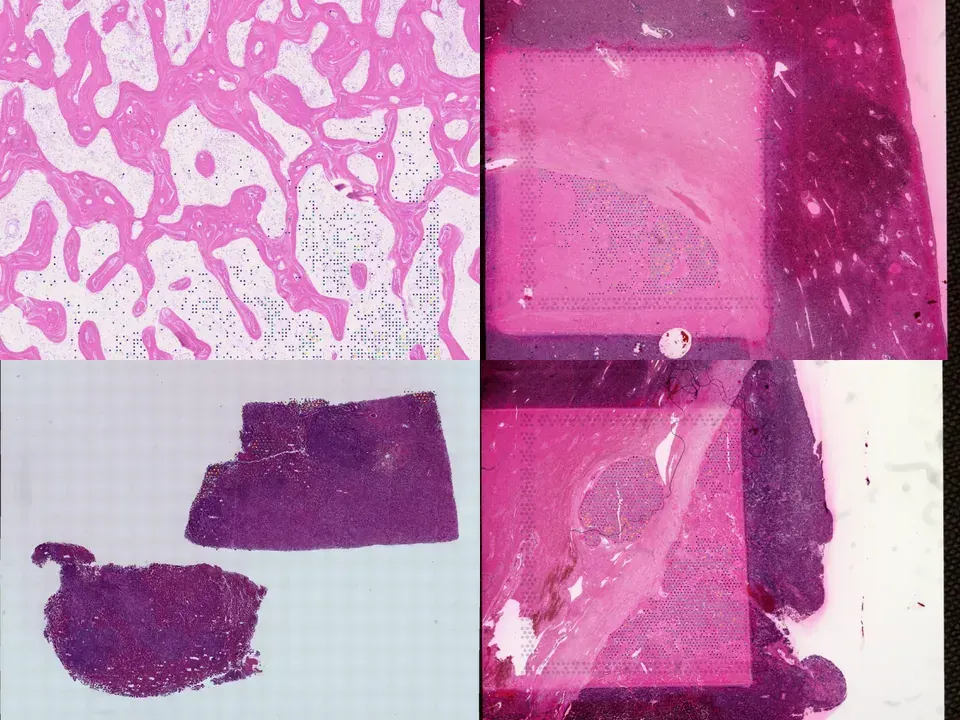
Human head of femur
GSM9936744
human head of femur osteoarthritis 47.0 MB 14,400 spots silver H&E NCBI GEO policy
TechnologyVisium
Organismhuman
Tissuehead of femur
Conditionosteoarthritis
Size47.0 MB
Spots14,400
silver H&E NCBI GEO policy Open in Vitessce
Open in Vitessce
Visium
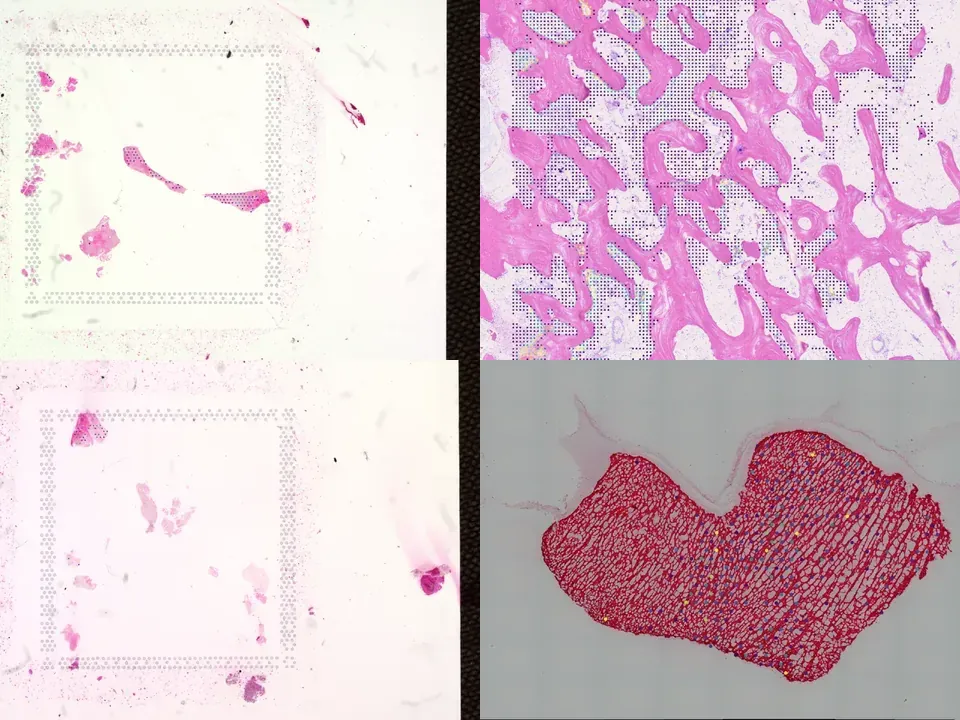
Human head of femur
GSM9936742
human head of femur osteoarthritis 50.5 MB 14,400 spots silver H&E NCBI GEO policy
TechnologyVisium
Organismhuman
Tissuehead of femur
Conditionosteoarthritis
Size50.5 MB
Spots14,400
silver H&E NCBI GEO policy Open in Vitessce
Open in Vitessce
Visium
Human head of femur
GSM9936741
human head of femur osteoarthritis 51.6 MB 14,400 spots silver H&E NCBI GEO policy
TechnologyVisium
Organismhuman
Tissuehead of femur
Conditionosteoarthritis
Size51.6 MB
Spots14,400
silver H&E NCBI GEO policy Open in Vitessce

Cite this collection

No linked publication found — please cite the data source.