
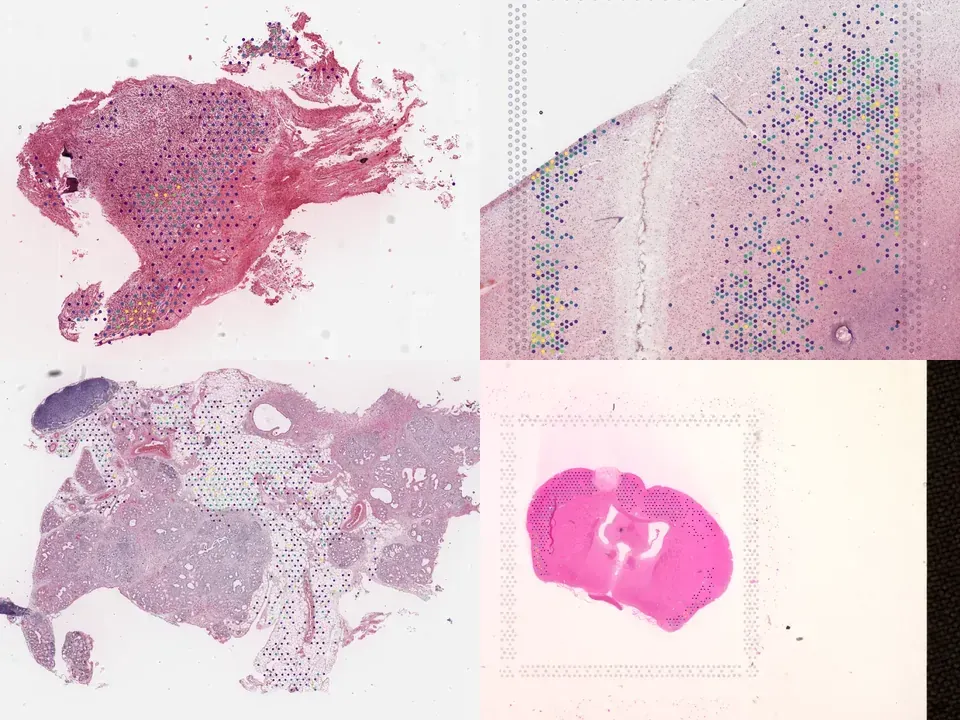
Human dental pulp
GSM9560414
human dental pulp pulpitis 26.3 MB 1,170 spots silver H&E NCBI GEO policy
TechnologyVisium
Organismhuman
Tissuedental pulp
Conditionpulpitis
Spots1,170
silver H&E NCBI GEO policy
Diagnostic protocols in endodontics rely heavily on subjective pain assessments and sensibility testing, which often fail to reflect the true histopathological and molecular state of the pulp. This limitation can result in misdiagnosis of reversible pulpitis as irreversible, leading to unnecessary devitalization of teeth that might otherwise respond to vital pulp therapy (VPT). Improved understanding of pulp biology is essential to refine case selection and enhance VPT outcomes. We aim to investigate the transcriptomic profiles of pulpitis, identify inflammation subtypes, and improve classification beyond the traditional reversible/irreversible framework. Methods: Spatial transcriptomics (Visium-CytAssist-V2) was used to analyze four dental pulp tissues. Cell deconvolution and differential gene expression analyses were performed to characterize transcriptomic signatures of healthy pulp (HL), reversible pulpitis (RP), and irreversible pulpitis (IP), with specific attention to coronal regions adjacent to carious lesions.
from sddb import Catalog

cohort = Catalog().collection("geo-gse322883")
cohort.members        # the 4 datasets as a table

print(cohort.licenses())              # check the terms before you download

sdatas = cohort.to_dict()             # {uid: SpatialData}, cached locally
# or keep the .zarr files in a folder of your choice:
# sdatas = cohort.to_dict(dest="data/")Needs pip install lamindb and network access to the Lamin database, which is limited during the alpha. If it fails, use the Client tab.
import lamindb as ln

db = ln.DB("scverse/spatialdata-db")
coll = db.Collection.get(key="geo-gse322883")
coll.ordered_artifacts.to_dataframe()   # the 4 members, ordered

# download every member .zarr to the local cache:
paths = [a.cache() for a in coll.ordered_artifacts.all()]# sddb client: download every member .zarr into data/
sddb-cli download --collection geo-gse322883 --dest data/Licenses: 4 NCBI GEO policy
No linked publication found — please cite the data source.