
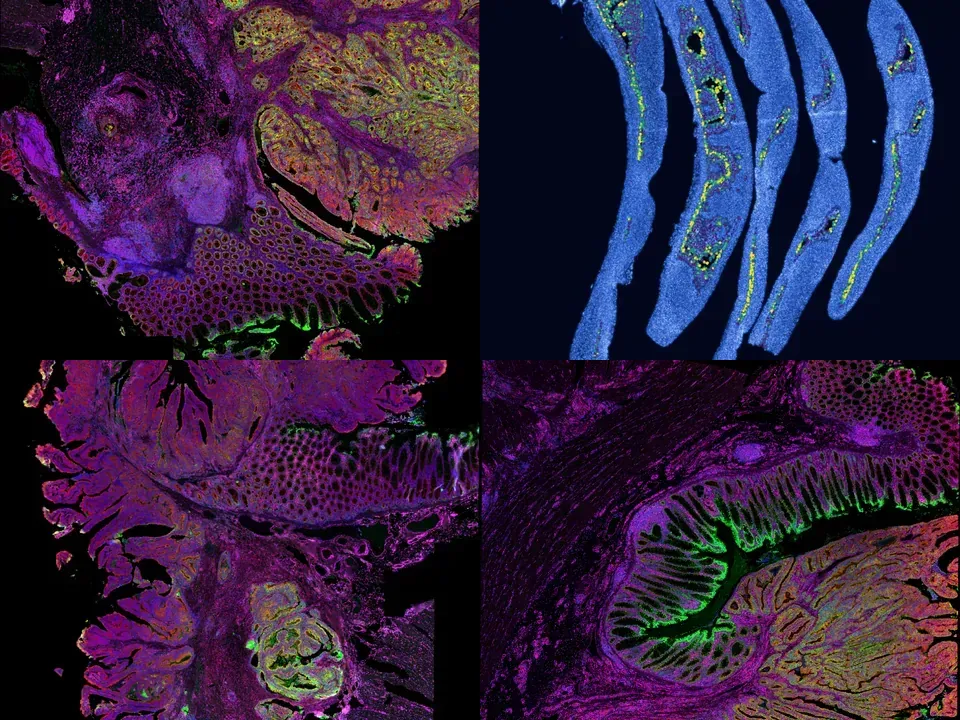
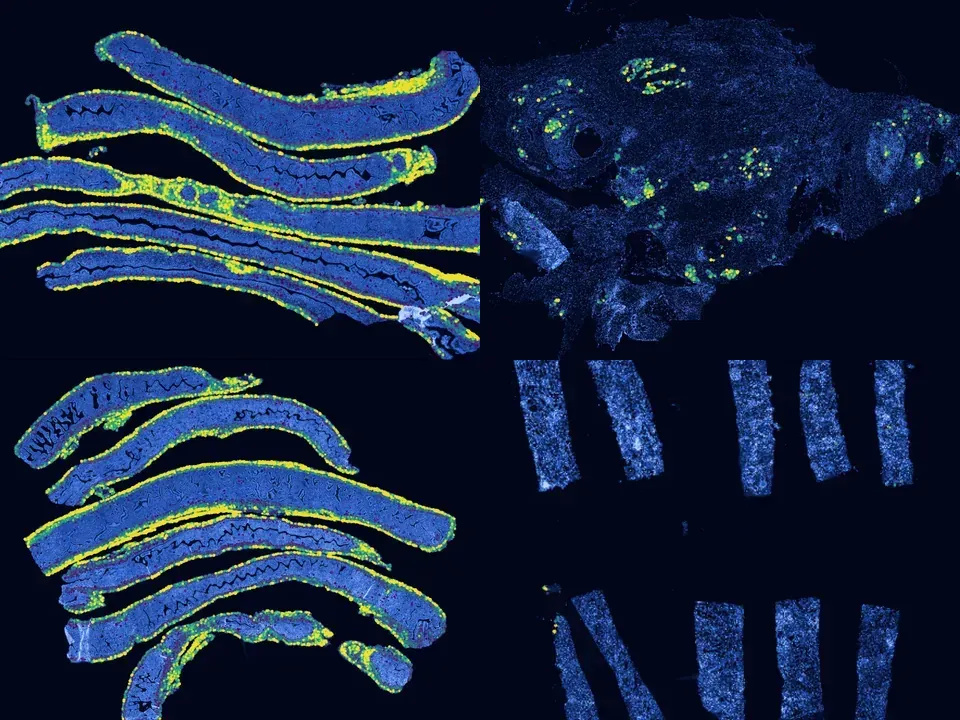
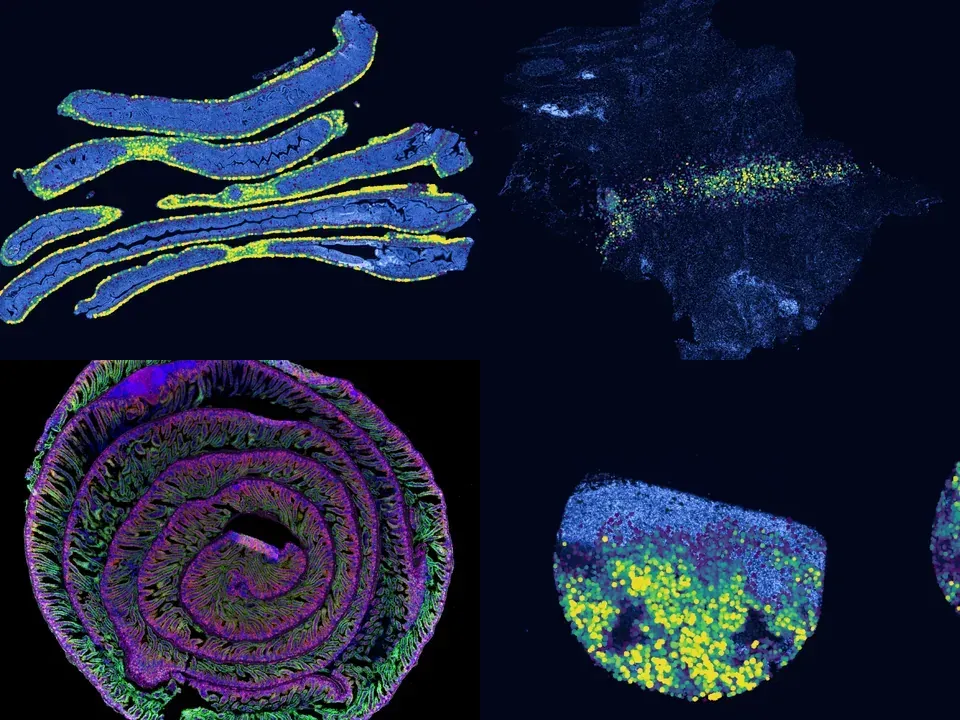
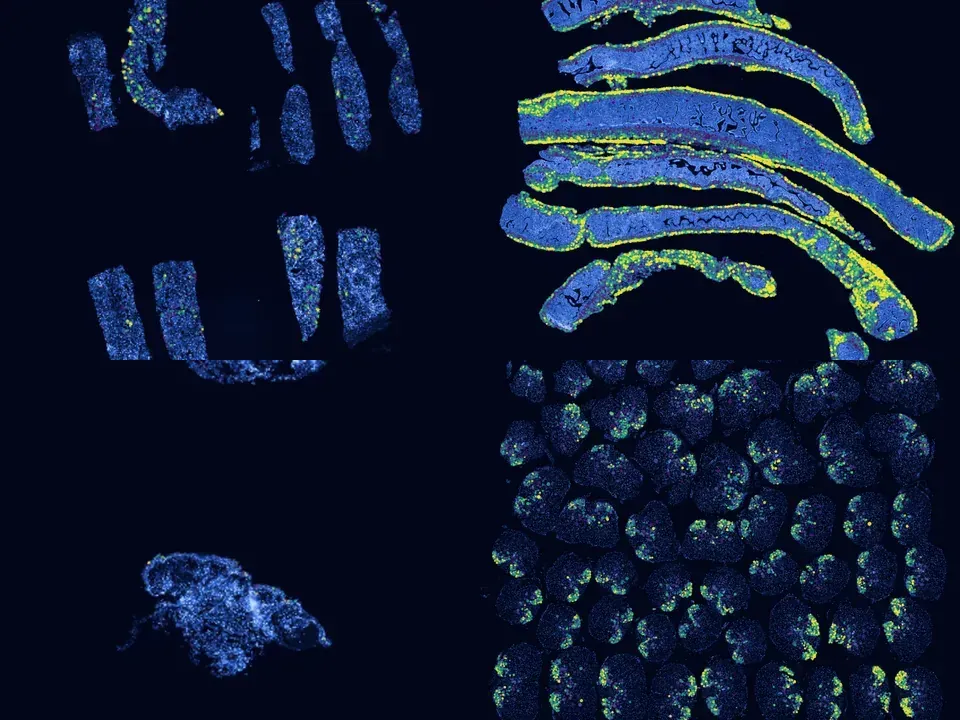
Mouse uterus
GSM9457930
mouse uterus 1.6 GB 139,806 cells bronze NCBI GEO policy
Technology10x Xenium
Organismmouse
Tissueuterus
Cells139,806
bronze NCBI GEO policy
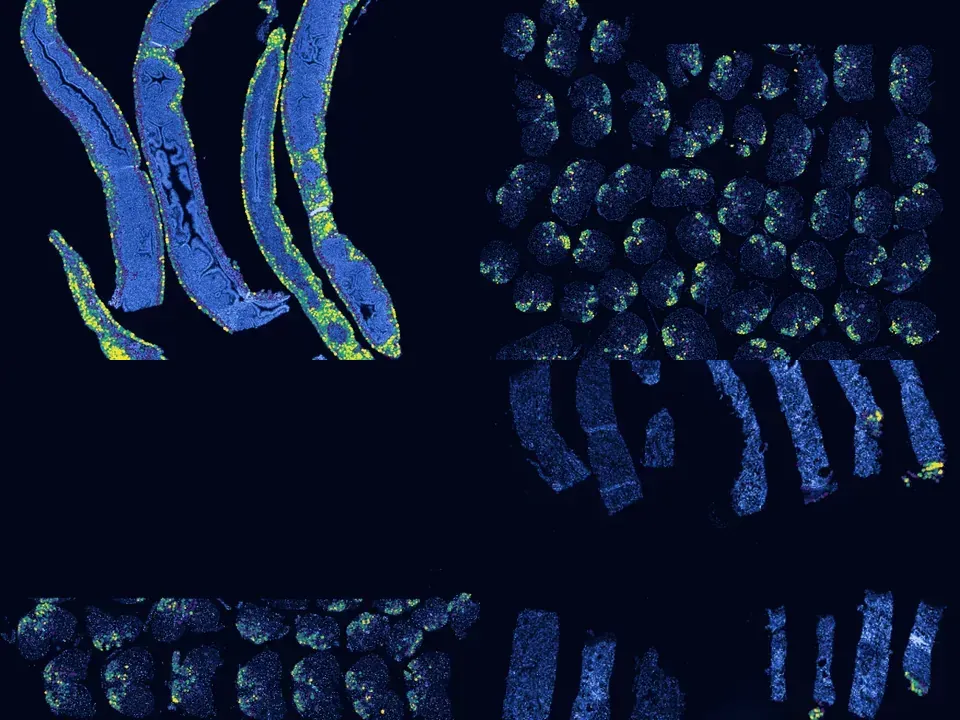
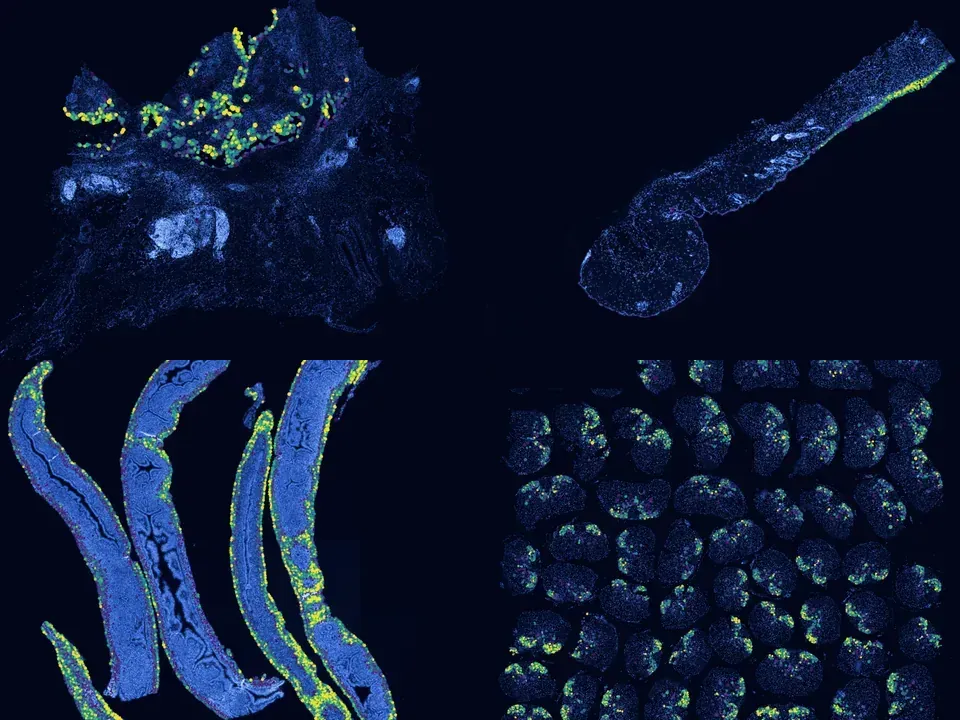
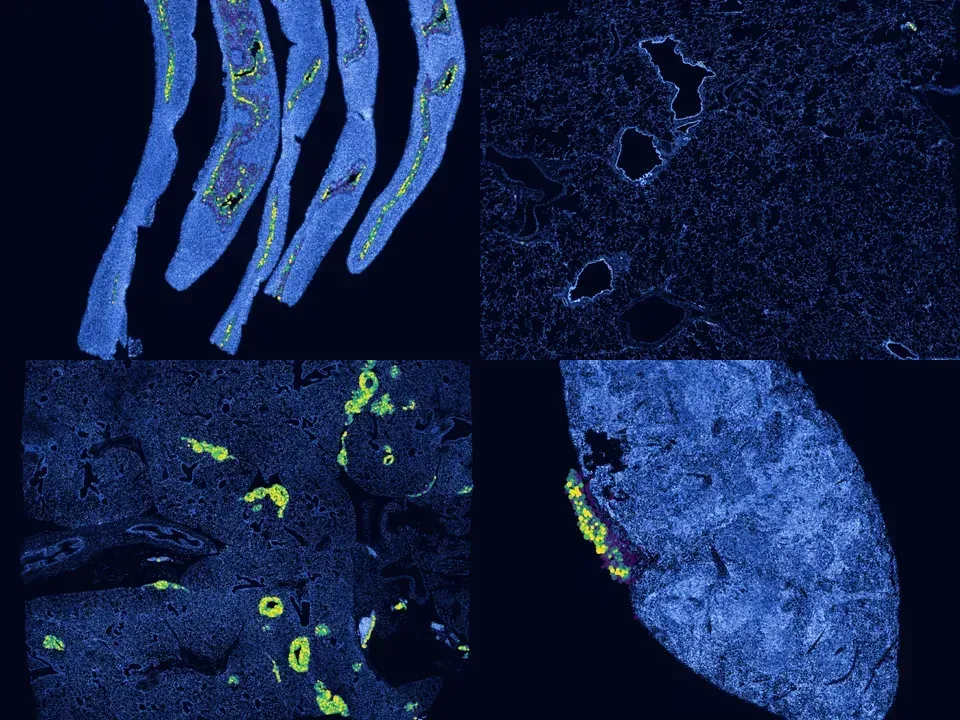
The uterus undergoes extensive remodeling after birth to acquire the epithelial structure required for adult reproductive function, yet how this process is spatially organized has remained unclear. This study provides a high-resolution spatial map of postnatal uterine development, revealing how epithelial cells diversify and mature within their native tissue context. By linking gene expression patterns to precise anatomical locations, the work shows how local signaling environments guide epithelial differentiation over time. The findings have broad relevance for understanding how epithelial tissues are patterned, maintained, and remodeled, providing a reference for studies of normal development and disease.
from sddb import Catalog

cohort = Catalog().collection("geo-gse316662")
cohort.members        # the 8 datasets as a table

print(cohort.licenses())              # check the terms before you download

sdatas = cohort.to_dict()             # {uid: SpatialData}, cached locally
# or keep the .zarr files in a folder of your choice:
# sdatas = cohort.to_dict(dest="data/")Needs pip install lamindb and network access to the Lamin database, which is limited during the alpha. If it fails, use the Client tab.
import lamindb as ln

db = ln.DB("scverse/spatialdata-db")
coll = db.Collection.get(key="geo-gse316662")
coll.ordered_artifacts.to_dataframe()   # the 8 members, ordered

# download every member .zarr to the local cache:
paths = [a.cache() for a in coll.ordered_artifacts.all()]# sddb client: download every member .zarr into data/
sddb-cli download --collection geo-gse316662 --dest data/Licenses: 8 NCBI GEO policy
Postnatal uterine development requires precise coordination of epithelial differentiation, gland formation, and stromal organization, yet how transcriptional programs are spatially integrated during this process remains poorly understood. Here, we generated a spatially resolved transcriptomic map of the mouse uterus across key postnatal stages from day 3 to day 21 by combining high resolution in situ transcriptomics with histology, proteomics, genetic models, and functional assays. This approach defines the temporal emergence and spatial arrangement of all major uterine cell types and demonstrates that endometrial glands arise from luminal epithelium through progressive transcriptional reprogramming rather than from a prespecified progenitor population. Spatial analysis reveals marked compartmentalization of signaling pathways during adenogenesis. Luminal epithelium is enriched for Wnt ligands and hormone receptors, whereas glandular epithelium engages inhibitory and negative feedback programs that constrain Wnt activity while supporting proliferation and differentiation. Functional genetic studies establish that epithelial canonical Wnt signaling is essential for prepubertal gland establishment and long-term epithelial maintenance but is dispensable for postpartum gland regeneration. Retinoic acid synthesis becomes increasingly concentrated within glands, while hedgehog signaling polarizes into an epithelial to stromal axis during gland morphogenesis. Additional pathways including RTK, Notch, TGFβ, BMP, hypoxia, Hippo, and PI3K-mTOR exhibit distinct spatial biases that collectively shape epithelial identity and tissue maturation. Together, these findings provide a comprehensive spatial framework for uterine gland development and reveal how compartment specific signaling networks coordinate postnatal uterine morphogenesis.
@article{Jamaluddin_2026,
  title = {Spatial transcriptomic mapping of postnatal mouse uterine development},
  volume = {123},
  ISSN = {1091-6490},
  url = {http://dx.doi.org/10.1073/pnas.2600524123},
  DOI = {10.1073/pnas.2600524123},
  number = {28},
  journal = {Proceedings of the National Academy of Sciences},
  publisher = {National Academy of Sciences},
  author = {Jamaluddin, M. Fairuz B. and Syed, Shafiq M. and Mohammed, Riazuddin and Goad, Jyoti and Hasan, Mehedi and Kumar, Manish and Moore, Isabella and Nagendra, Prathima B. and Vallabani, Naga Veera Srikanth and Bartlett, Florence and Anthonydhason, Vimala and Tanwar, Pradeep S.},
  year = {2026},
  month = July
}