Collections / Unveiling Transcriptional Heterogeneity and Discovering Footprints in Pediatric Medulloblastoma via Spatial RNA-Seq and Machine Learning
Unveiling Transcriptional Heterogeneity and Discovering Footprints in Pediatric Medulloblastoma via Spatial RNA-Seq and Machine Learning
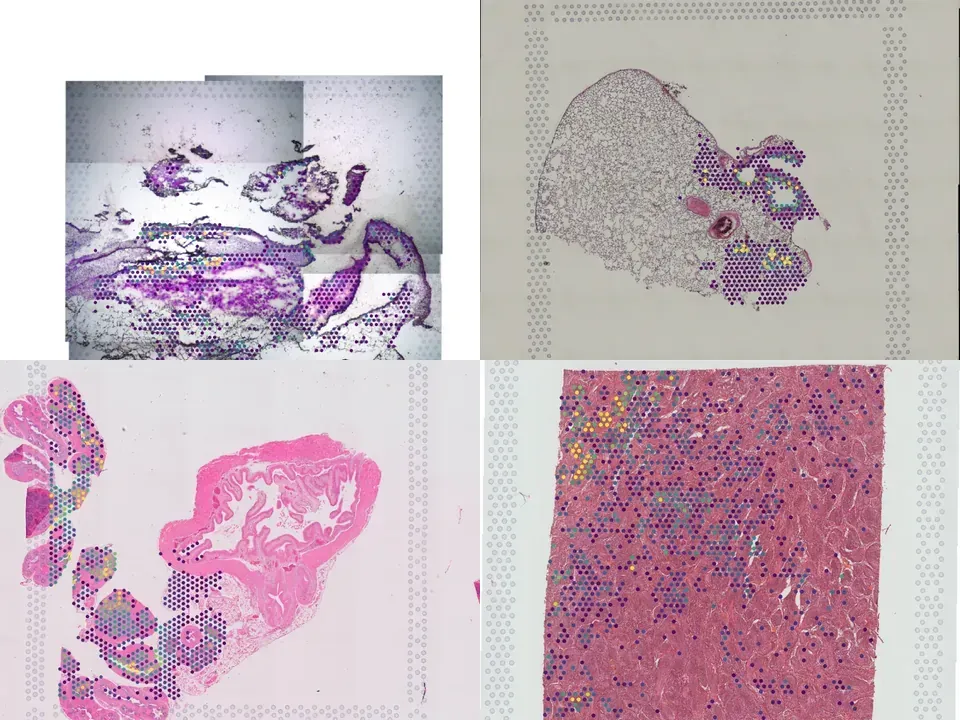
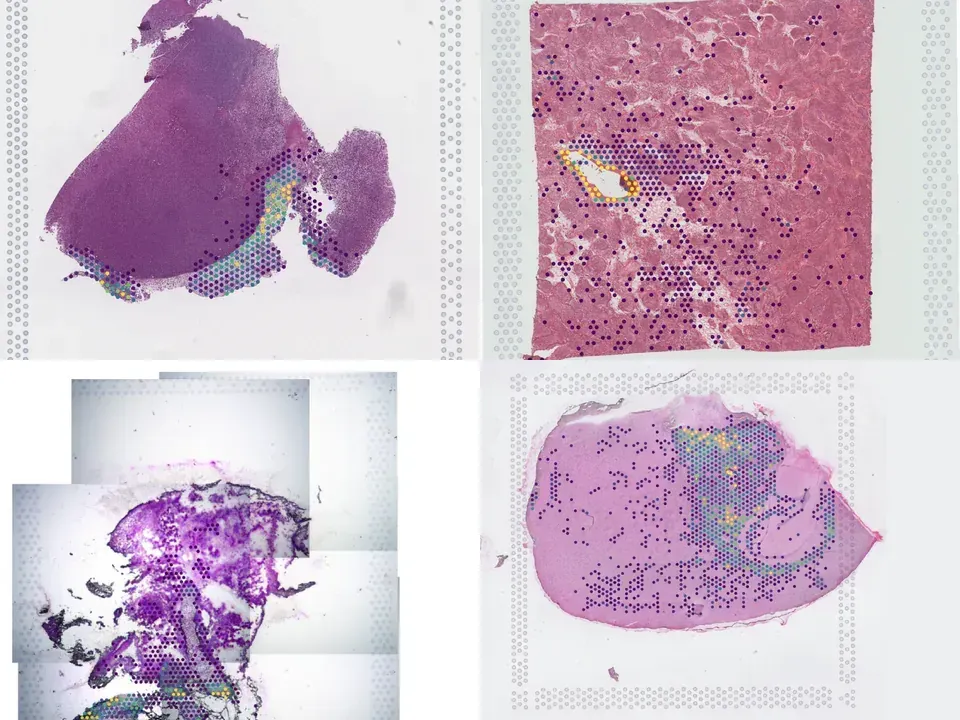
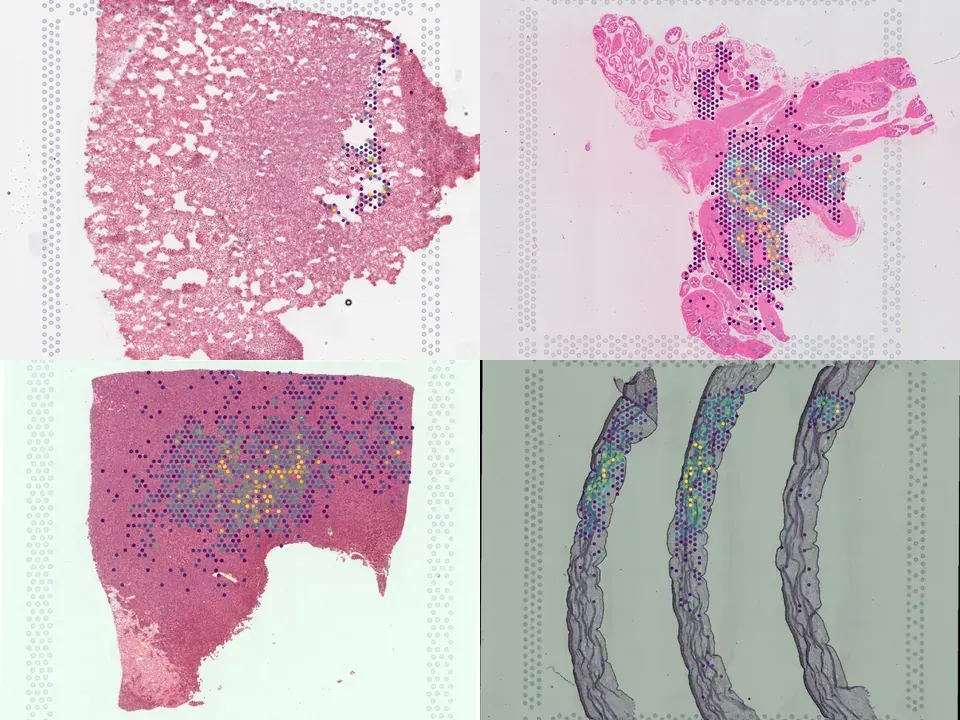
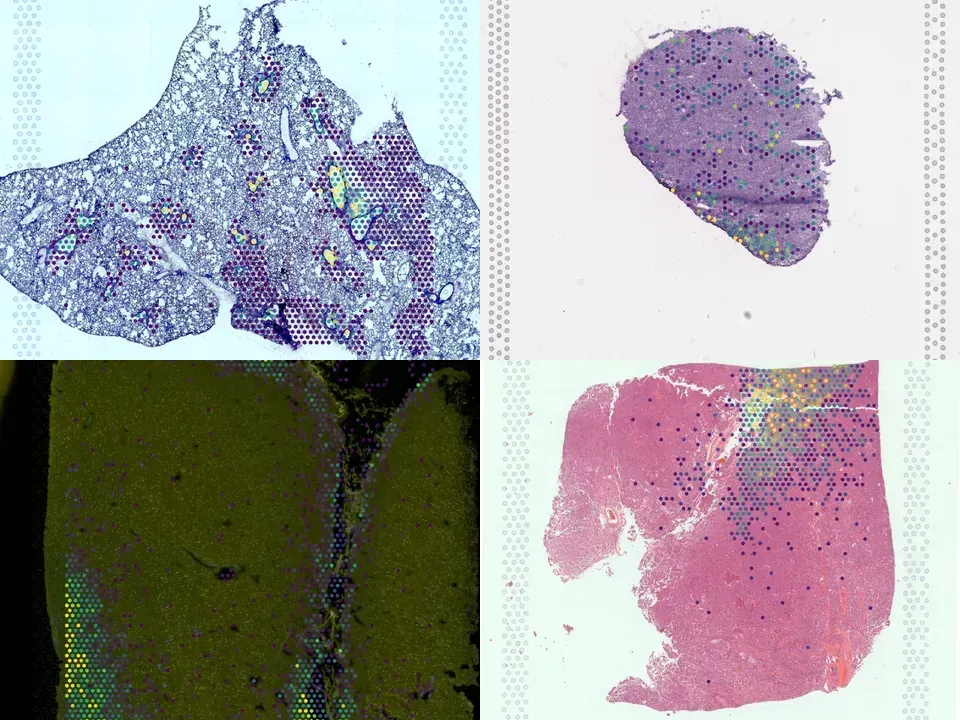
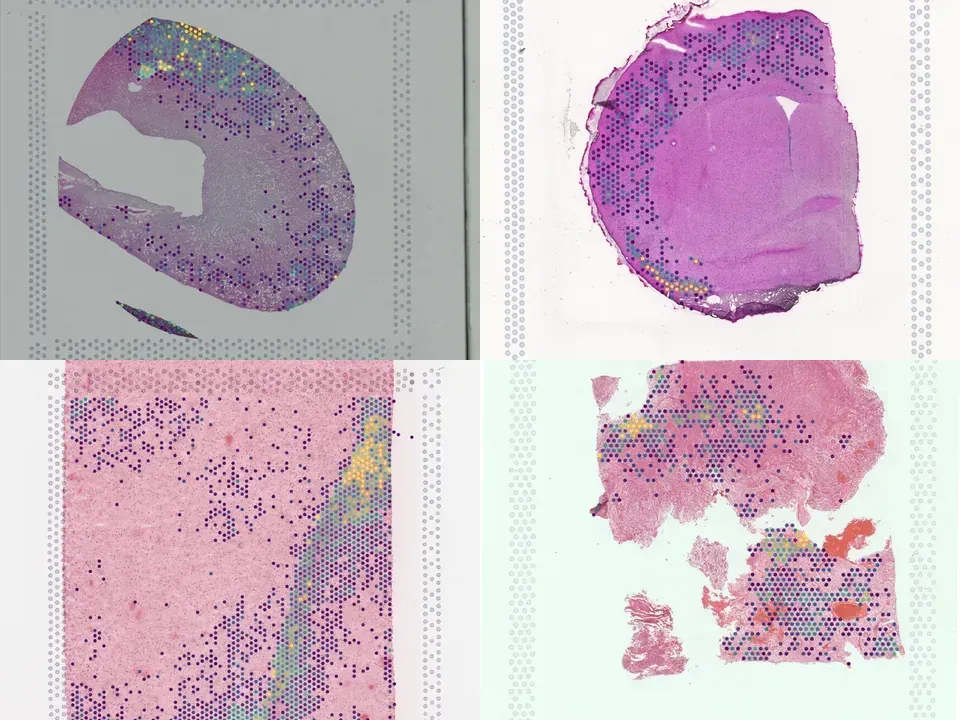
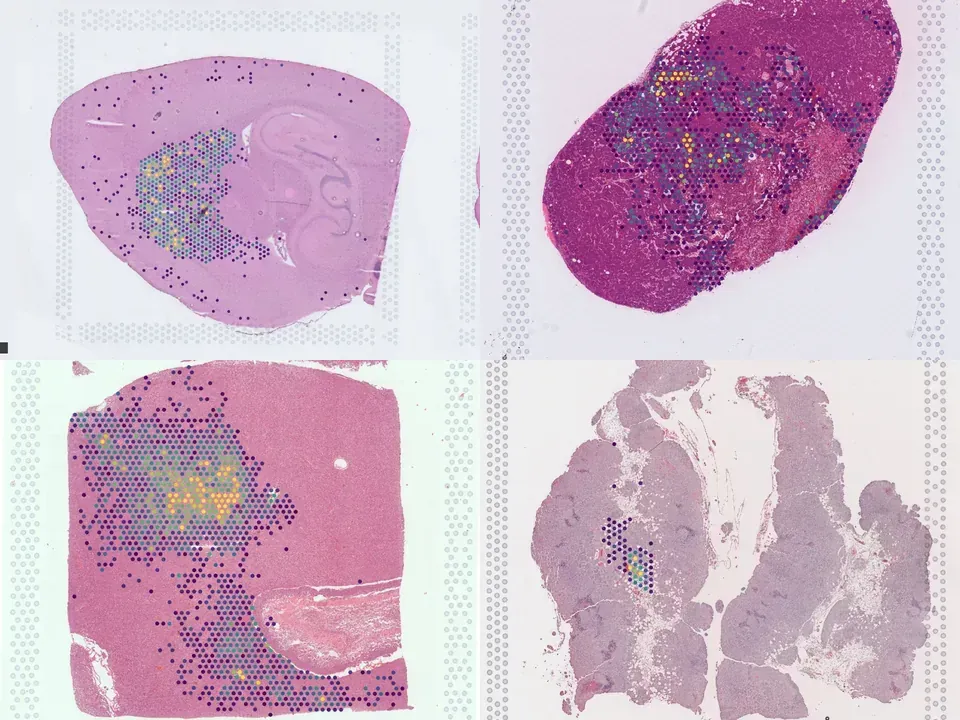
Medulloblastoma is the most common malignant pediatric brain tumor and is classified into four molecular subgroups: WNT, SHH, Group 3, and Group 4. Accurate characterization and classification of these subtypes are critical for prognosis and personalized treatment. In this study, we integrate spatial transcriptomics, machine learning, and explainable artificial intelligence to comprehensively analyze the spatial and transcriptional heterogeneity of the most prevalent and aggressive medulloblastoma subtypes (SHH, Group 3, and Group 4) in Mexican pediatric patients. By implementing a multiscale framework, we uncover extensive intra- and intertumoral variability that challenges traditional molecular classification. Our approach reveals subtype-specific gene expression signatures, identifies a core set of robust biomarkers and highlights distinct spatial patterns of tumor organization, including invasive and metabolically active niches. Notably, we demonstrate that Group 3 tumors, despite being the most aggressive, exhibit the lowest transcriptional heterogeneity, suggesting a streamlined malignant program centered on invasion and plasticity. These findings underscore the scope of bulk molecular profiling and support the implementation of spatially informed diagnostic tools and personalized therapeutic strategies that account for the complex architecture and functional diversity within MB tumors.
from sddb import Catalog

cohort = Catalog().collection("geo-gse306506")
cohort.members        # the 6 datasets as a table

print(cohort.licenses())              # check the terms before you download

sdatas = cohort.to_dict()             # {uid: SpatialData}, cached locally
# or keep the .zarr files in a folder of your choice:
# sdatas = cohort.to_dict(dest="data/")
Needs pip install lamindb and network access to the Lamin database, which is limited during the alpha. If it fails, use the Client tab.
import lamindb as ln

db = ln.DB("scverse/spatialdata-db")
coll = db.Collection.get(key="geo-gse306506")
coll.ordered_artifacts.to_dataframe()   # the 6 members, ordered

# download every member .zarr to the local cache:
paths = [a.cache() for a in coll.ordered_artifacts.all()]
@article{Ju_rez_M_ndez_2026,
  title = {Identification of Markers on the Basis of Transcriptomic Analysis for Molecular Assignment of Medulloblastoma},
  volume = {27},
  ISSN = {1422-0067},
  url = {http://dx.doi.org/10.3390/ijms27135720},
  DOI = {10.3390/ijms27135720},
  number = {13},
  journal = {International Journal of Molecular Sciences},
  publisher = {MDPI AG},
  author = {Juárez-Méndez, Sergio and Vázquez-Jiménez, Aarón and Ramírez-Chiquito, Josselen Carina and Villegas-Ruíz, Vanessa and Niembro-Zuñiga, Ana Maria and Farfán-Morales, José Eduardo and Marhx-Bracho, Alfonso and Krötzsch, Edgar and Rodríguez-Morales, Miguel and Segura-Solís, Emma and Perezpeña-Diazconti, Mario and Ridaura-Sanz, Cecilia and Rivera-Luna, Roberto and Eguía-Aguilar, Pilar and Resendis-Antonio, Osbaldo and Melendez-Zajgla, Jorge},
  year = {2026},
  month = June,
  pages = {5720}
}