Collections / Spatial transcriptomics of the human first trimester decidua
Spatial transcriptomics of the human first trimester decidua
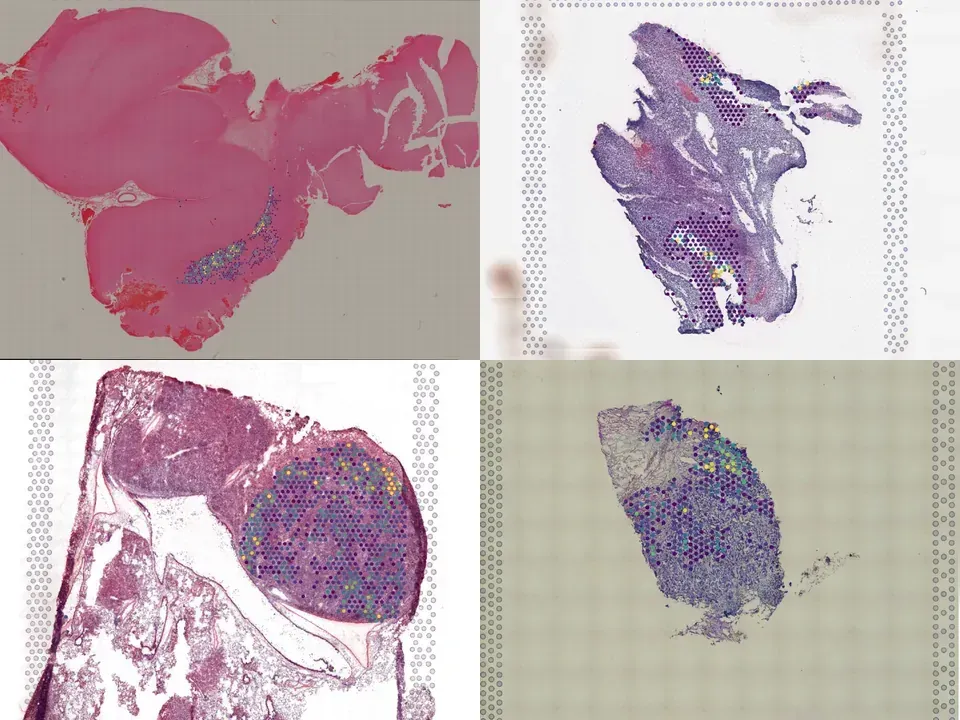
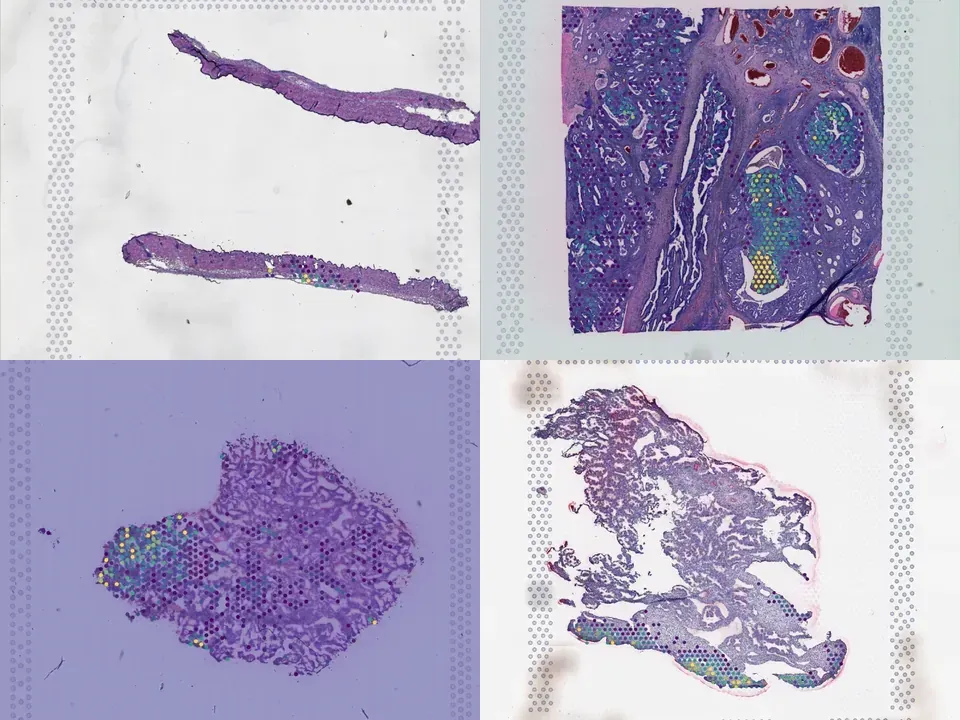
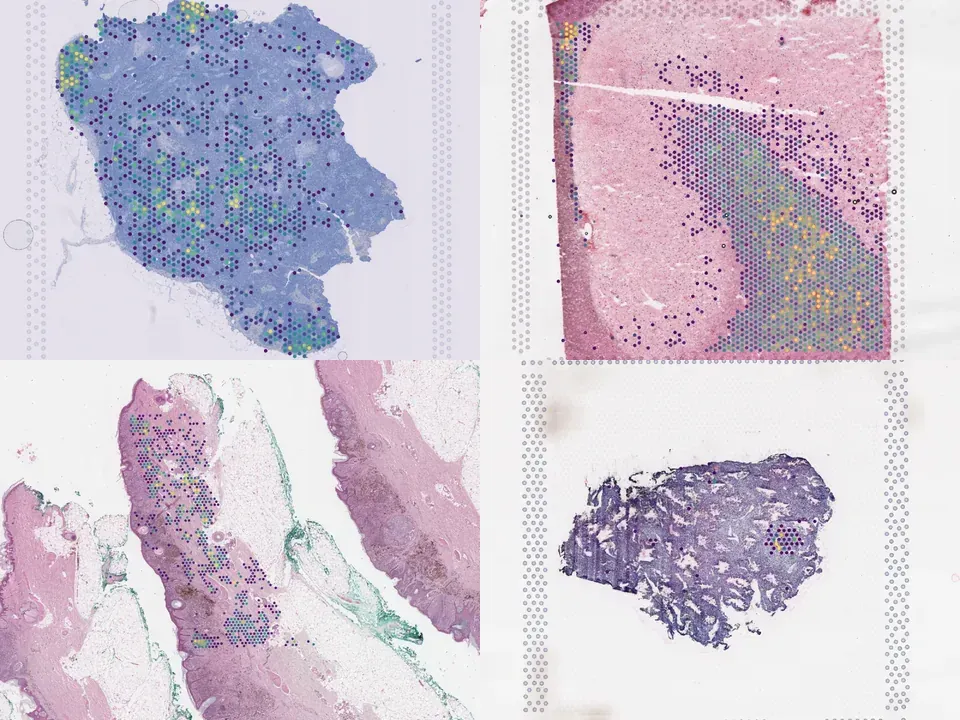
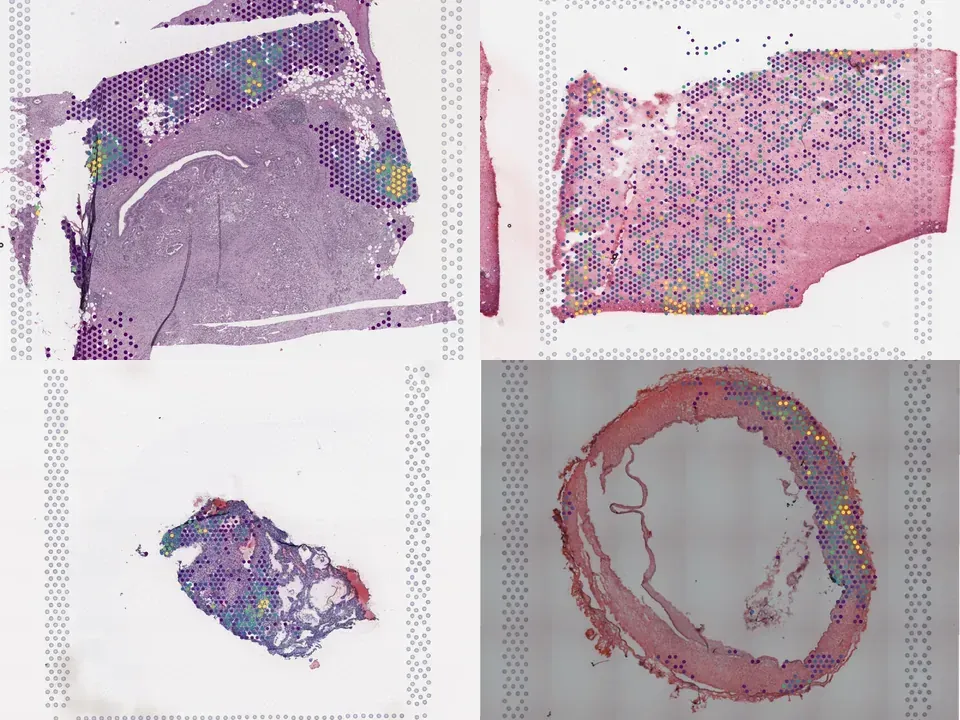
Understanding how extravillous trophoblasts (EVTs) reshape the maternal uterine environment (decidua basalis) is critical for deciphering early human placental development. To study the impact of EVT invasion on the distribution of immune cells and the restructuring of the decidual tissue, we performed spatial transcriptomic profiling using the Visium platform (10x Genomics) on first trimester decidua.
from sddb import Catalog

cohort = Catalog().collection("geo-gse301306")
cohort.members        # the 4 datasets as a table

print(cohort.licenses())              # check the terms before you download

sdatas = cohort.to_dict()             # {uid: SpatialData}, cached locally
# or keep the .zarr files in a folder of your choice:
# sdatas = cohort.to_dict(dest="data/")
Needs pip install lamindb and network access to the Lamin database, which is limited during the alpha. If it fails, use the Client tab.
import lamindb as ln

db = ln.DB("scverse/spatialdata-db")
coll = db.Collection.get(key="geo-gse301306")
coll.ordered_artifacts.to_dataframe()   # the 4 members, ordered

# download every member .zarr to the local cache:
paths = [a.cache() for a in coll.ordered_artifacts.all()]
@article{Moser_2026,
  title = {Remodeling lesions locate at sites of strong extravillous trophoblast invasion and are associated with neutrophil presence in the human first-trimester decidua},
  volume = {41},
  ISSN = {1460-2350},
  url = {http://dx.doi.org/10.1093/humrep/deag078},
  DOI = {10.1093/humrep/deag078},
  number = {7},
  journal = {Human Reproduction},
  publisher = {Oxford University Press (OUP)},
  author = {Moser, G and Kummer, D and Gruber, M and Hartmann, T and Forstner, D and Guettler, J and Siwetz, M and Sundl, M and Daxboeck, C and Kienesberger, S and Kargl, J and Deutsch, A and Fessler, J and Huppertz, B and Feichtinger, J and Gauster, M},
  year = {2026},
  month = June,
  pages = {1078–1096}
}