Collections / High resolution spatial trancrioptomics combined with deep learning-based image segmentation enables single-cell spatial profiling of archival FFPE kidney tissue from patients with idiopathic nephrotic syndrome

High resolution spatial trancrioptomics combined with deep learning-based image segmentation enables single-cell spatial profiling of archival FFPE kidney tissue from patients with idiopathic nephrotic syndrome

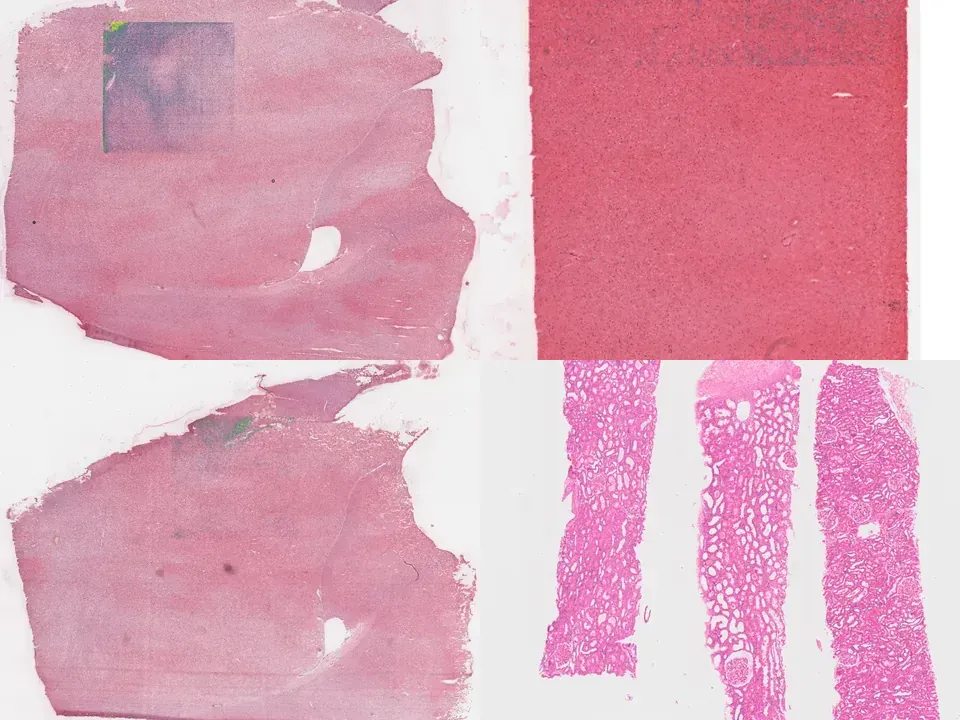
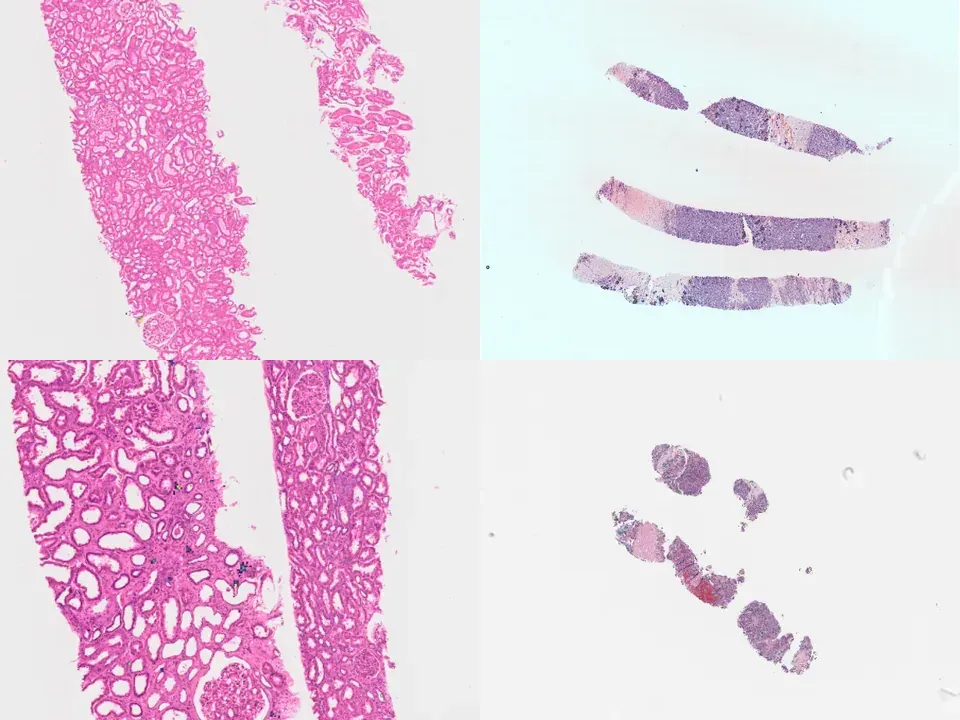
We have perfomed Visium HD spatial transcriptomics on archival FFPE kidney biopsies from patients with different manifistations of nephrotic syndrome, i.e., steriod sensitive, frequent relapsing and/or steroid dependent, and focal segmental glomerulosclerosis. Using a pre-trained deep learning model from StarDist to segment nuclei, we reconstructed single-nucleus level spatial trancriptomic datasets through custom binning of subcellular capture areas. We integrated the datasets from the different patients and indentified conserved cell types. Moreover, we identified patient specific transcriptomic differences in the podocyte cell population. This article demonstrates the usefullness of this approach to future studies of pathophysilogical mechanisms in idiopathic nephrotic syndrome.

Datasets3
Size~420 MB
AssayVisium HD
Samplehuman · kidney
KindComparison
Flag a data issue
Python · sddb client
from sddb import Catalog

cohort = Catalog().collection("geo-gse300895")
cohort.members        # the 3 datasets as a table

print(cohort.licenses())              # check the terms before you download

sdatas = cohort.to_dict()             # {uid: SpatialData}, cached locally
# or keep the .zarr files in a folder of your choice:
# sdatas = cohort.to_dict(dest="data/")
Python · lamindb

Needs pip install lamindb and network access to the Lamin database, which is limited during the alpha. If it fails, use the Client tab.

import lamindb as ln

db = ln.DB("scverse/spatialdata-db")
coll = db.Collection.get(key="geo-gse300895")
coll.ordered_artifacts.to_dataframe()   # the 3 members, ordered

# download every member .zarr to the local cache:
paths = [a.cache() for a in coll.ordered_artifacts.all()]
Shell
# sddb client: download every member .zarr into data/
sddb-cli download --collection geo-gse300895 --dest data/

Licenses: 3 NCBI GEO policy

Open in Vitessce
Visium HD
Human kidney
GSM9071195
human kidney focal segmental glomerulosclerosis 108 MB 56,758 bins silver H&E NCBI GEO policy
TechnologyVisium HD
Organismhuman
Tissuekidney
Conditionfocal segmental glomerulosclerosis
Size108 MB
Bins56,758
silver H&E NCBI GEO policy Open in Vitessce
Open in Vitessce
Visium HD
Human kidney
GSM9071196
human kidney nephrotic syndrome 209 MB 121,055 bins silver H&E NCBI GEO policy
TechnologyVisium HD
Organismhuman
Tissuekidney
Conditionnephrotic syndrome
Size209 MB
Bins121,055
silver H&E NCBI GEO policy Open in Vitessce
Visium HD
Human kidney
GSM9071194
human kidney nephrotic syndrome 104 MB 54,118 bins silver H&E NCBI GEO policy
TechnologyVisium HD
Organismhuman
Tissuekidney
Conditionnephrotic syndrome
Size104 MB
Bins54,118
silver H&E NCBI GEO policy