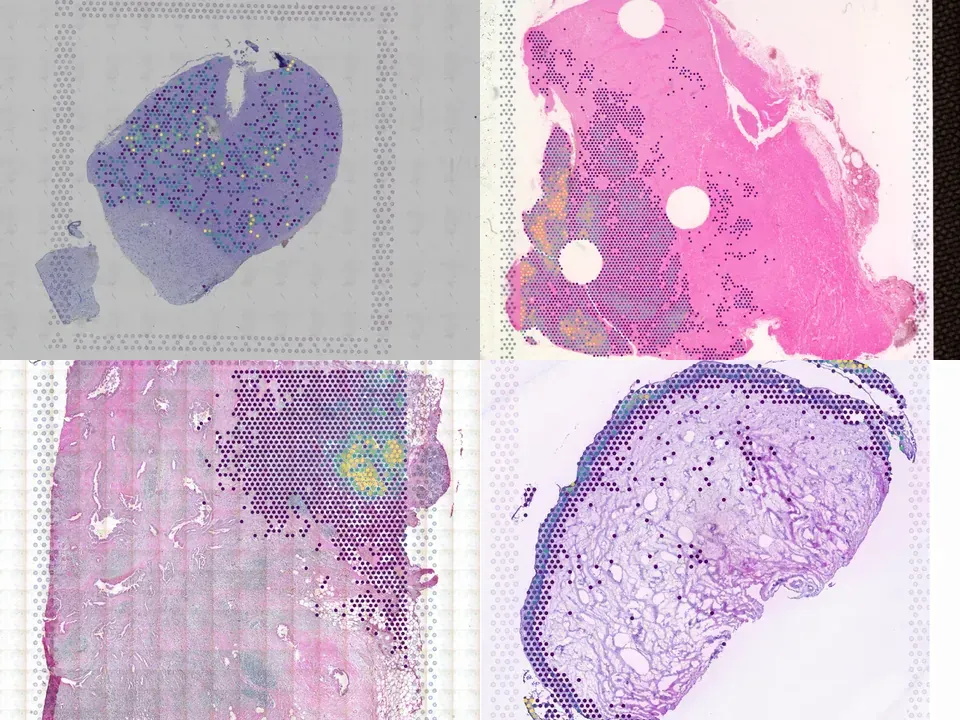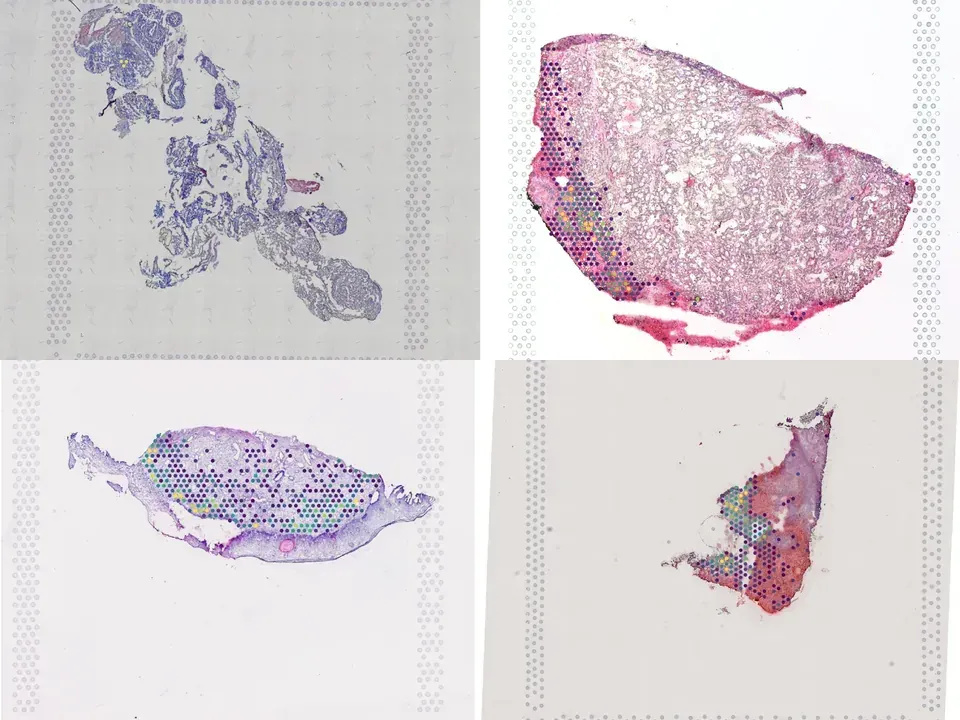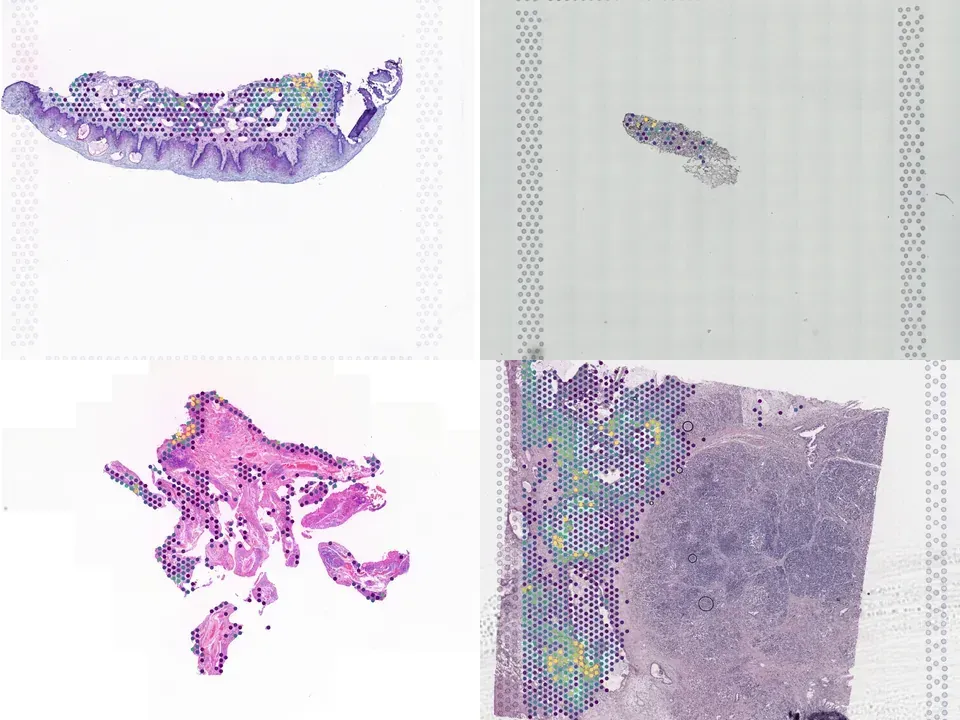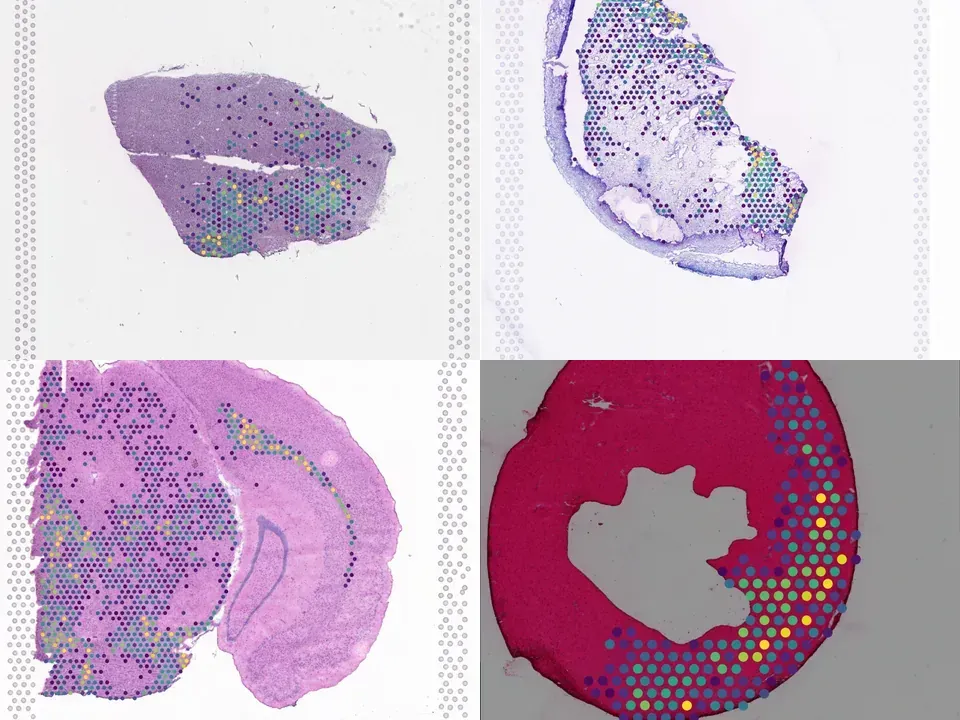
Collections / The cervicovaginal microbiome associates with spatially restricted host transcriptional signatures throughout the human ectocervical epithelium and submucosa

The cervicovaginal microbiome associates with spatially restricted host transcriptional signatures throughout the human ectocervical epithelium and submucosa

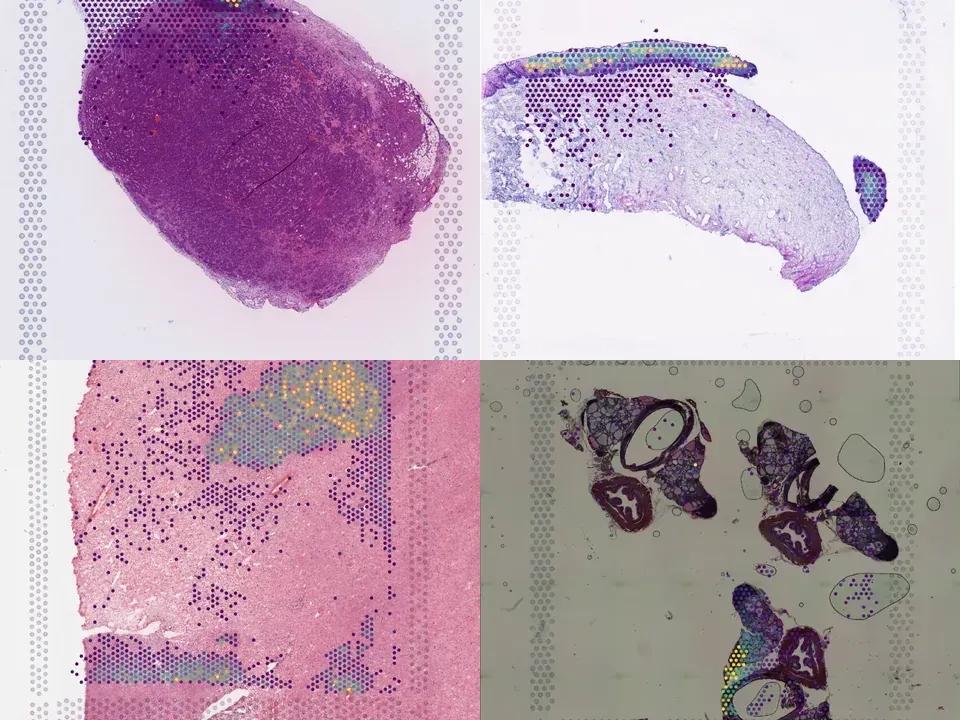
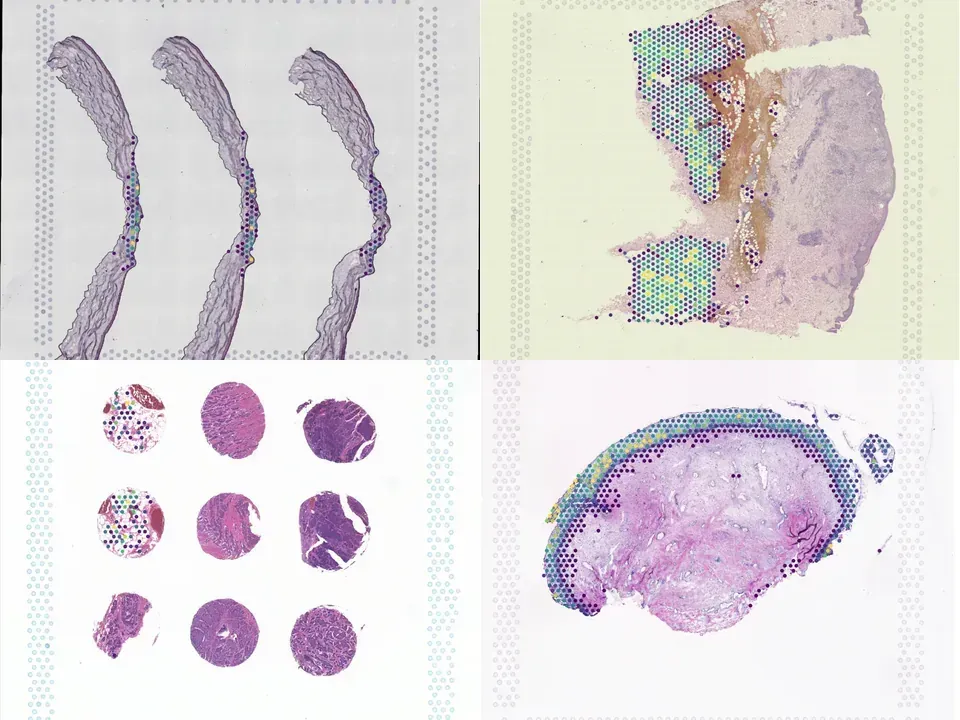
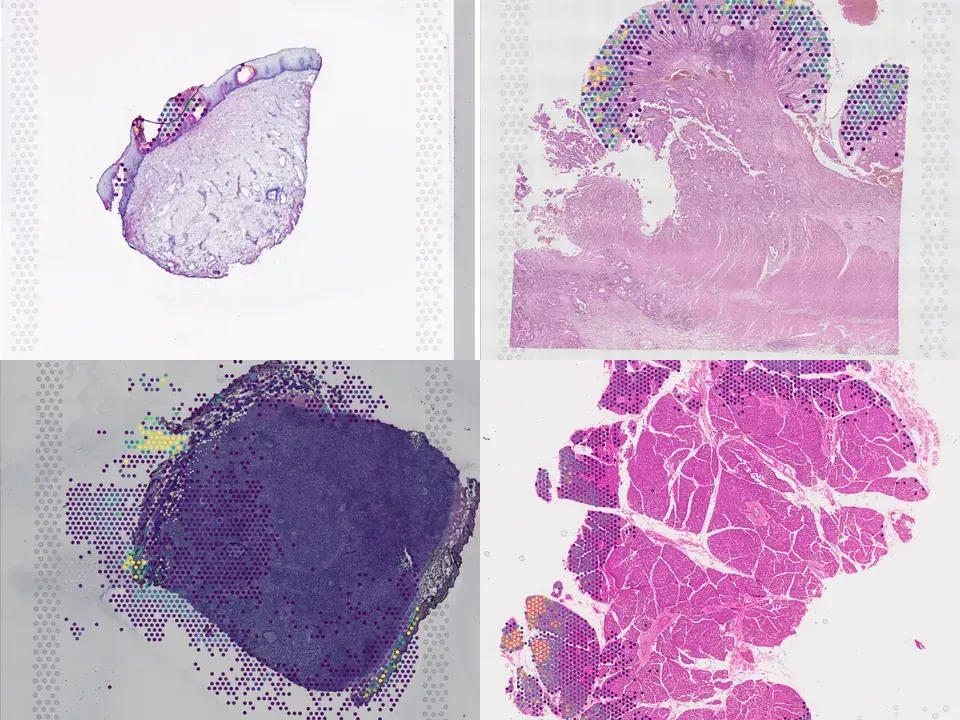
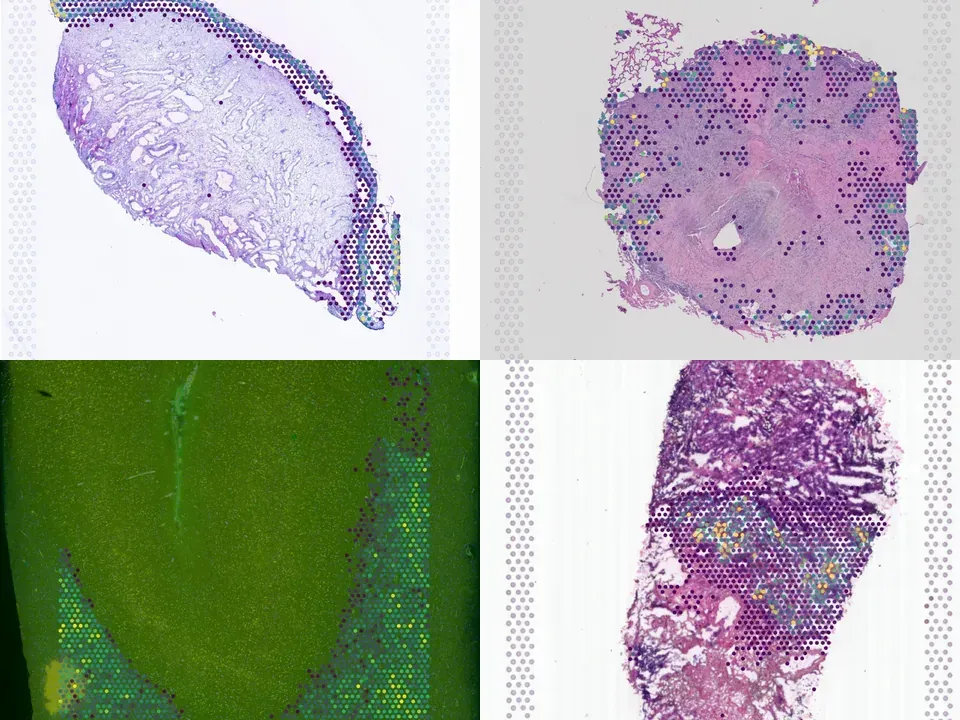
The cervicovaginal microbiome is a key biological determinant of human immunodeficiency virus (HIV) susceptibility, but its underlying impact on the ectocervical transcriptional landscape is unclear. Ectocervical tissue samples from Kenyan female sex workers were categorized into pre-defined cervicovaginal microbiome groups based on dominant compositions: Lactobacillus crispatus, Lactobacillus iners, Gardnerella, and ‘highly diverse’. The tissue samples (n=21) were assessed using spatial transcriptomics, revealing three epithelial, one mixed border, and nine submucosal gene clusters. Differential gene expression analysis across the microbiome groups and gene clusters identified 3,771 unique genes. The highly diverse microbiome group exhibited the largest differences, mostly located near the epithelial basal membrane, encompassing genes involved in epithelial maintenance, submucosal extracellular matrix structures, and immune function. The L. crispatus- dominated group was identified by genes involved in active immune engagement, supporting mucosal barrier integrity. Weighted gene co-expression analysis confirmed tissue-wide altered gene expression associated with all microbiome groups and with individual bacterial taxa. Despite the assumption that microbiome colonization is restricted to the luminal surface, the transcriptional landscape was affected throughout the mucosa, with the most pronounced effect near both sides of the basal membrane. This broad impact on the mucosal barrier integrity is likely to affect susceptibility to HIV acquisition.

Datasets12
Size~163 MB
AssayVisium
Samplehuman · ectocervix
KindComparison
Flag a data issue
PMID:41218071 ↗
Python · sddb client
from sddb import Catalog

cohort = Catalog().collection("geo-gse300112")
cohort.members        # the 12 datasets as a table

print(cohort.licenses())              # check the terms before you download

sdatas = cohort.to_dict()             # {uid: SpatialData}, cached locally
# or keep the .zarr files in a folder of your choice:
# sdatas = cohort.to_dict(dest="data/")
Python · lamindb

Needs pip install lamindb and network access to the Lamin database, which is limited during the alpha. If it fails, use the Client tab.

import lamindb as ln

db = ln.DB("scverse/spatialdata-db")
coll = db.Collection.get(key="geo-gse300112")
coll.ordered_artifacts.to_dataframe()   # the 12 members, ordered

# download every member .zarr to the local cache:
paths = [a.cache() for a in coll.ordered_artifacts.all()]
Shell
# sddb client: download every member .zarr into data/
sddb-cli download --collection geo-gse300112 --dest data/

Licenses: 12 NCBI GEO policy

Open in Vitessce
Visium
Human ectocervix
GSM9053840
human ectocervix 10.0 MB 697 spots silver H&E NCBI GEO policy
TechnologyVisium
Organismhuman
Tissueectocervix
Size10.0 MB
Spots697
silver H&E NCBI GEO policy Open in Vitessce
Open in Vitessce
Visium
Human ectocervix
GSM9053847
human ectocervix 10.3 MB 1,831 spots silver H&E NCBI GEO policy
TechnologyVisium
Organismhuman
Tissueectocervix
Size10.3 MB
Spots1,831
silver H&E NCBI GEO policy Open in Vitessce
Open in Vitessce
Visium
Human ectocervix
GSM9053845
human ectocervix 15.6 MB 1,808 spots silver H&E NCBI GEO policy
TechnologyVisium
Organismhuman
Tissueectocervix
Size15.6 MB
Spots1,808
silver H&E NCBI GEO policy Open in Vitessce
Open in Vitessce
Visium
Human ectocervix
GSM9053848
human ectocervix 8.3 MB 1,167 spots silver H&E NCBI GEO policy
TechnologyVisium
Organismhuman
Tissueectocervix
Size8.3 MB
Spots1,167
silver H&E NCBI GEO policy Open in Vitessce
Open in Vitessce
Visium
Human ectocervix
GSM9053842
human ectocervix 19.9 MB 2,387 spots silver H&E NCBI GEO policy
TechnologyVisium
Organismhuman
Tissueectocervix
Size19.9 MB
Spots2,387
silver H&E NCBI GEO policy Open in Vitessce
Open in Vitessce
Visium
Human ectocervix
GSM9053839
human ectocervix 20.3 MB 2,966 spots silver H&E NCBI GEO policy
TechnologyVisium
Organismhuman
Tissueectocervix
Size20.3 MB
Spots2,966
silver H&E NCBI GEO policy Open in Vitessce
Open in Vitessce
Visium
Human ectocervix
GSM9053849
human ectocervix 9.3 MB 1,005 spots silver H&E NCBI GEO policy
TechnologyVisium
Organismhuman
Tissueectocervix
Size9.3 MB
Spots1,005
silver H&E NCBI GEO policy Open in Vitessce
Open in Vitessce
Visium
Human ectocervix
GSM9053846
human ectocervix 12.6 MB 1,040 spots silver H&E NCBI GEO policy
TechnologyVisium
Organismhuman
Tissueectocervix
Size12.6 MB
Spots1,040
silver H&E NCBI GEO policy Open in Vitessce
Open in Vitessce
Visium
Human ectocervix
GSM9053841
human ectocervix 15.4 MB 1,692 spots silver H&E NCBI GEO policy
TechnologyVisium
Organismhuman
Tissueectocervix
Size15.4 MB
Spots1,692
silver H&E NCBI GEO policy Open in Vitessce
Open in Vitessce
Visium
Human ectocervix
GSM9053850
human ectocervix 8.7 MB 1,283 spots silver H&E NCBI GEO policy
TechnologyVisium
Organismhuman
Tissueectocervix
Size8.7 MB
Spots1,283
silver H&E NCBI GEO policy Open in Vitessce
Open in Vitessce
Visium
Human ectocervix
GSM9053844
human ectocervix 18.8 MB 1,988 spots silver H&E NCBI GEO policy
TechnologyVisium
Organismhuman
Tissueectocervix
Size18.8 MB
Spots1,988
silver H&E NCBI GEO policy Open in Vitessce
Open in Vitessce
Visium
Human ectocervix
GSM9053843
human ectocervix 13.5 MB 1,379 spots silver H&E NCBI GEO policy
TechnologyVisium
Organismhuman
Tissueectocervix
Size13.5 MB
Spots1,379
silver H&E NCBI GEO policy Open in Vitessce

Cite this collection

No linked publication found — please cite the data source.