
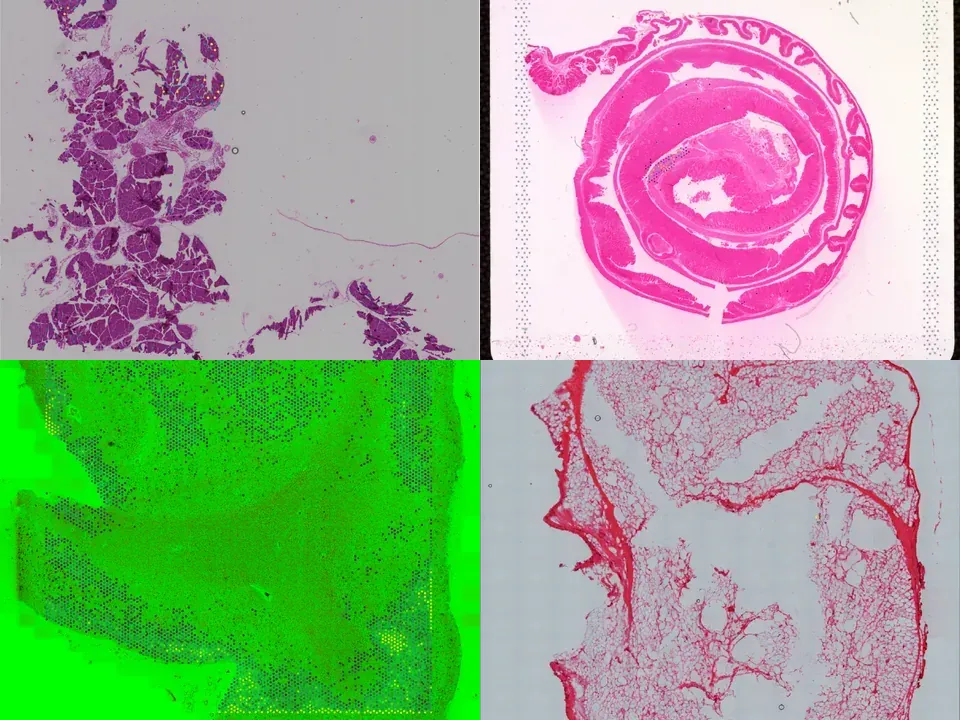
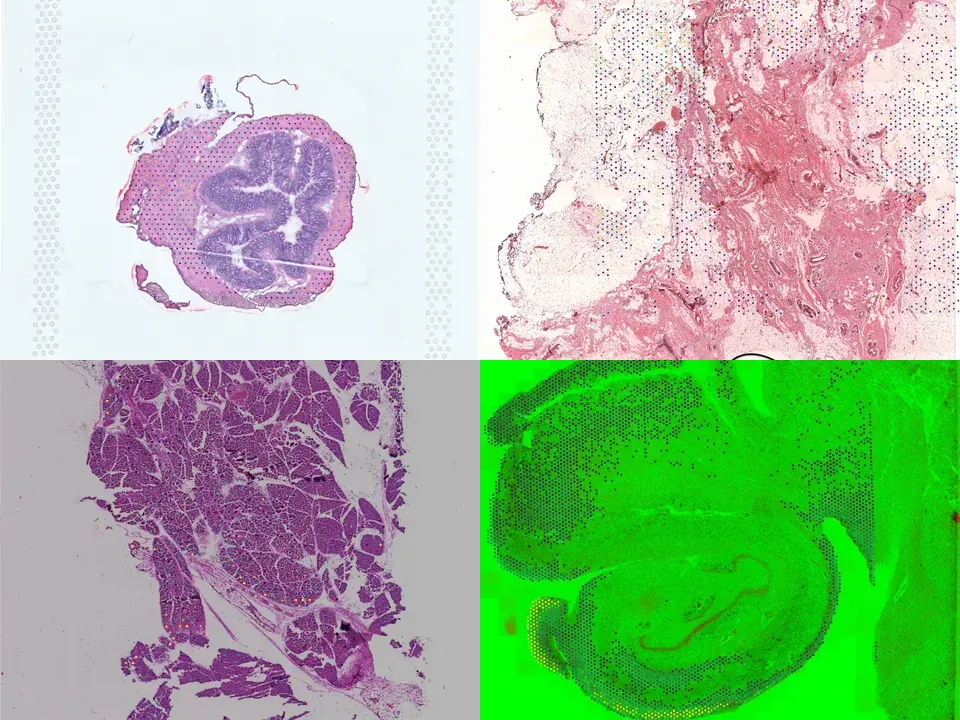
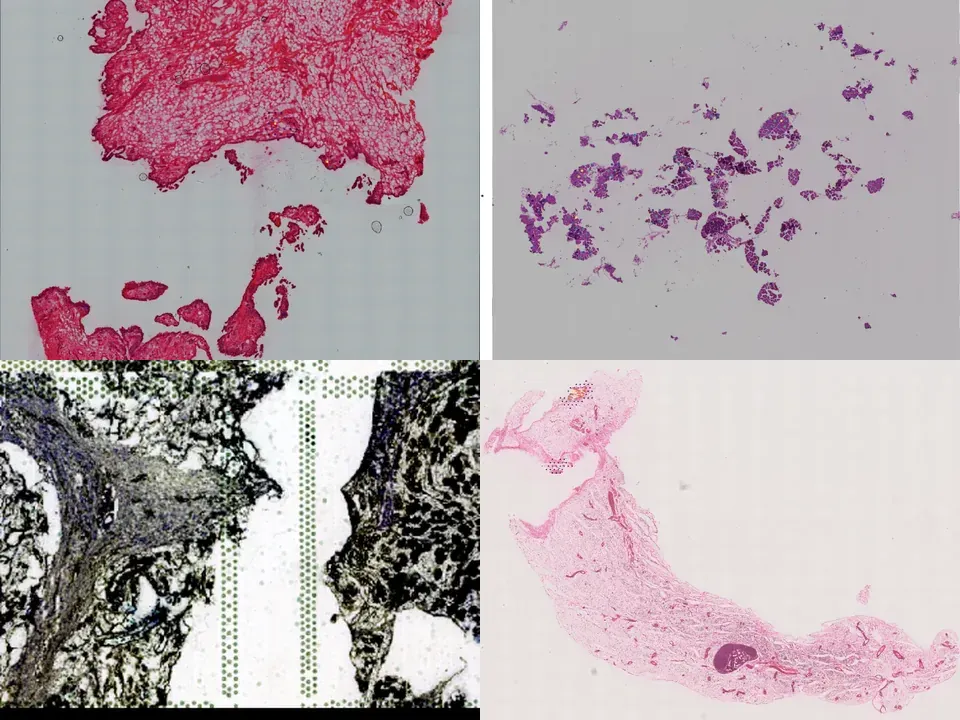
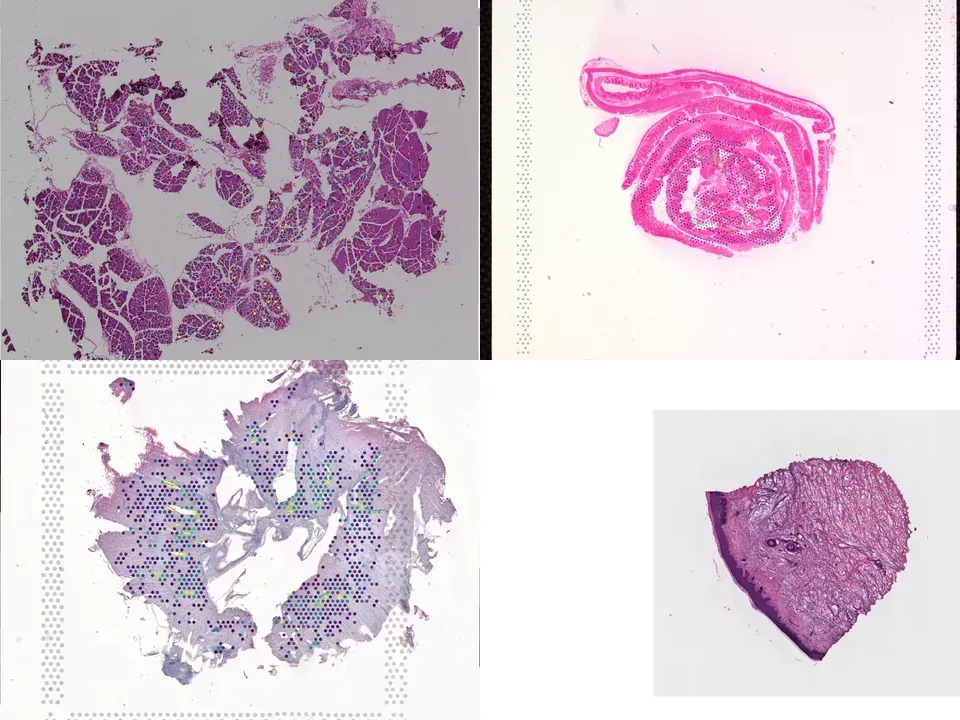
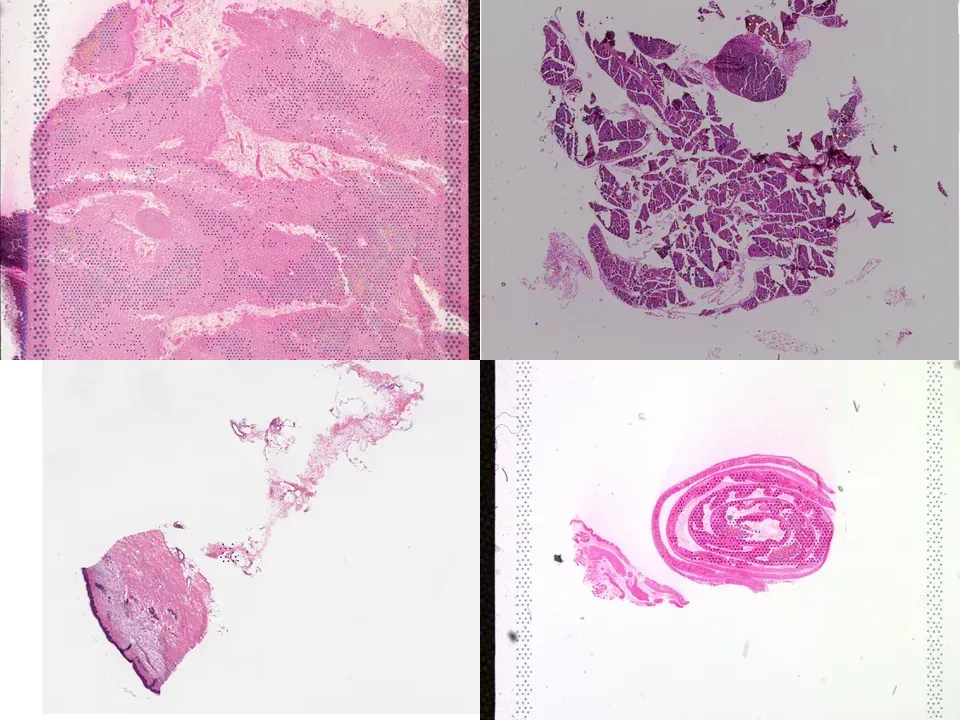
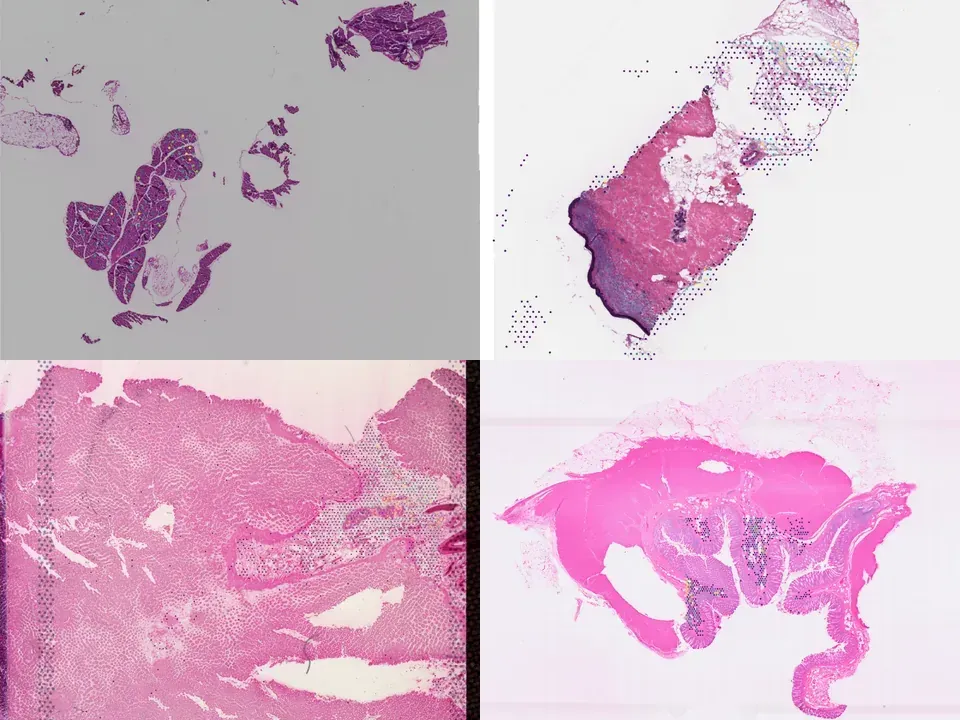
Mouse pancreas
GSM8972905
mouse pancreas pancreatitis 25.2 MB 714 spots silver H&E NCBI GEO policy
TechnologyVisium
Organismmouse
Tissuepancreas
Conditionpancreatitis
Spots714
silver H&E NCBI GEO policy
Background & Aims Pancreatitis is an inflammatory disease of the exocrine pancreas and a known risk factor for pancreatic ductal adenocarcinoma (PDAC). Previously, we identified HMG- box transcription factor 1 (HBP1) as a potential master transcription factor (TF) in the early progression of PDAC, with its expression associated with poor patient survival, underscoring its significance in pancreatic disease. However, the functional role of HBP1 in the onset and progression of acute pancreatitis (AP) remains unknown. Methods We examined HBP1 expression in human pancreatitis samples and a cerulein-induced AP mouse model. Pancreatic-specific conditional HBP1 knockout mice, with or without an oncogenic Kras mutation, were generated and compared to their littermate controls. Spatial transcriptomics and multiplexed protein assays, histological analysis, and immunostaining were utilized to characterize pathological changes. Findings from mouse models were validated using inducible HBP1-overexpressing human pancreatic ductal epithelial cells. Results HBP1 was upregulated in pancreatic exocrine cells in human chronic pancreatitis and mouse acute pancreatitis, with its expression in human chronic pancreatitis correlating with cancer presence. Pancreatic HBP1 ablation disrupted acinar homeostasis by impairing autophagic flux and exacerbating inflammation following injury. In the presence of oncogenic KRAS, HBP1 ablation delayed the formation of pancreatic intraepithelial neoplasia (PanIN), the precursor to PDAC, and slowed its progression to higher-grade lesions. Conclusions HBP1 upregulation in pancreatitis mitigates pancreatic inflammatory injury; however, in the presence of oncogenic KRAS, it facilitates PanIN progression. Thus, HBP1 serves as a critical regulator in both pancreatitis and early pancreatic neoplasia, representing a potential therapeutic target for intervening pancreatitis and PanIN progression.
from sddb import Catalog

cohort = Catalog().collection("geo-gse296582")
cohort.members        # the 6 datasets as a table

print(cohort.licenses())              # check the terms before you download

sdatas = cohort.to_dict()             # {uid: SpatialData}, cached locally
# or keep the .zarr files in a folder of your choice:
# sdatas = cohort.to_dict(dest="data/")Needs pip install lamindb and network access to the Lamin database, which is limited during the alpha. If it fails, use the Client tab.
import lamindb as ln

db = ln.DB("scverse/spatialdata-db")
coll = db.Collection.get(key="geo-gse296582")
coll.ordered_artifacts.to_dataframe()   # the 6 members, ordered

# download every member .zarr to the local cache:
paths = [a.cache() for a in coll.ordered_artifacts.all()]# sddb client: download every member .zarr into data/
sddb-cli download --collection geo-gse296582 --dest data/Licenses: 6 NCBI GEO policy
@article{Lee_2025,
  title = {HMG Box-containing Protein 1 (HBP1) Protects Against Pancreatic Injury in Acute Pancreatitis but Promotes Neoplastic Progression},
  volume = {19},
  ISSN = {2352-345X},
  url = {http://dx.doi.org/10.1016/j.jcmgh.2025.101536},
  DOI = {10.1016/j.jcmgh.2025.101536},
  number = {9},
  journal = {Cellular and Molecular Gastroenterology and Hepatology},
  publisher = {Elsevier BV},
  author = {Lee, Seung-Won and Ekstrom, Taelor and Manalo, Elise C. and Ye, Shangyuan and Berry, Mark and Grygoryev, Dmytro and Szczepaniak, Malwina and Lee, Jinho and Marmolejo, Carlos Origel and Haverlack, Syber and Lee, Juyoung and Shah, Vidhi M. and Keith, Dove and Muschler, John L. and Chin, Koei and Sears, Rosalie C. and Weisberg, Stuart P. and Morgan, Terry and Kim, Jungsun},
  year = {2025},
  pages = {101536}
}