
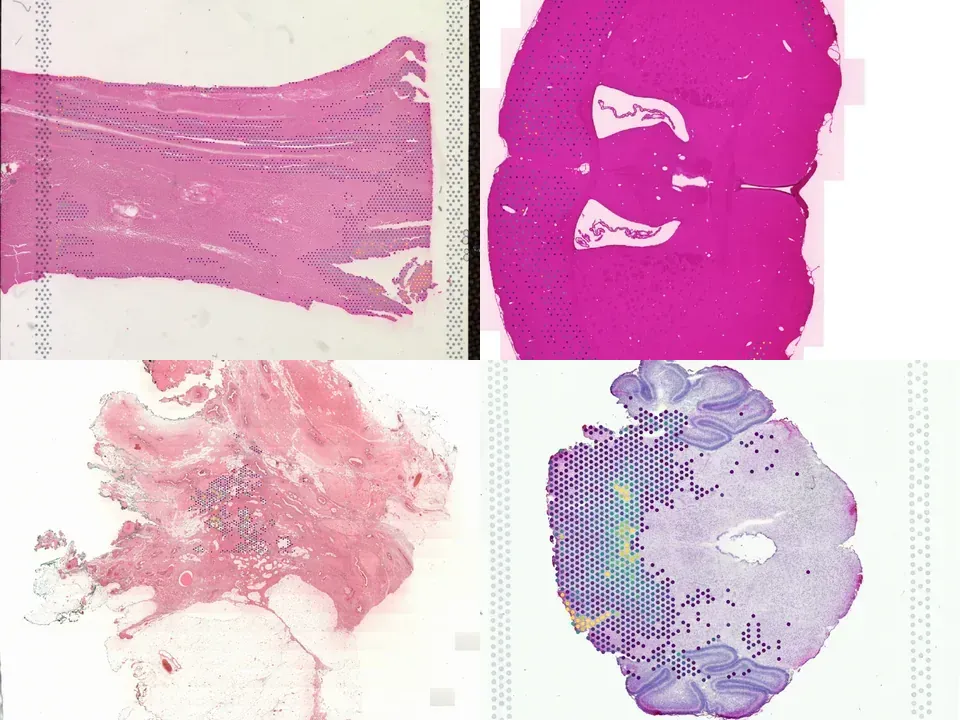
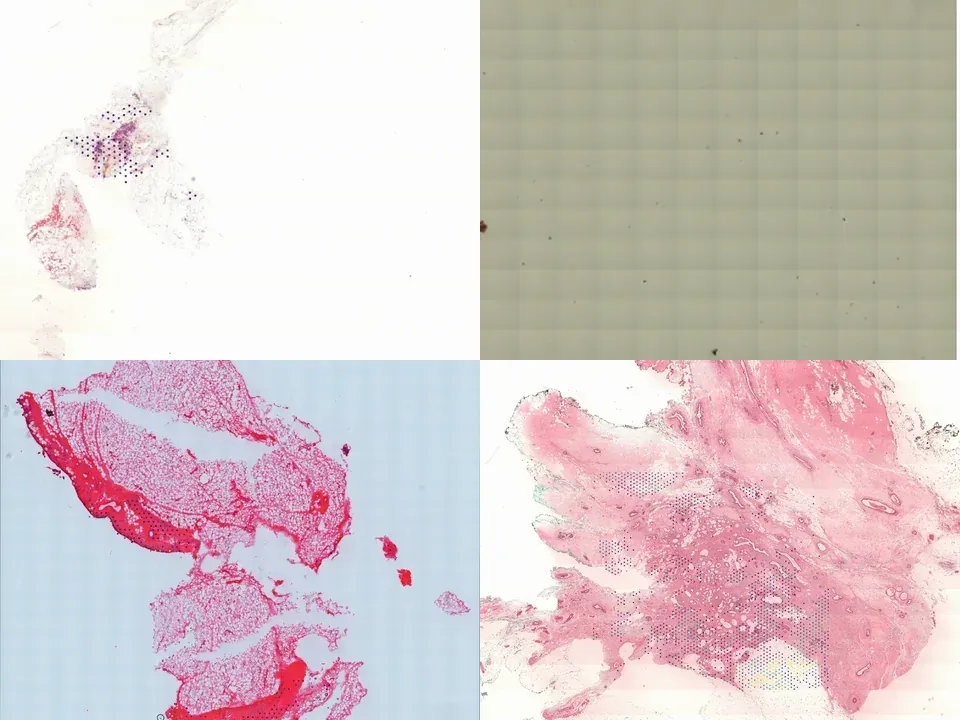
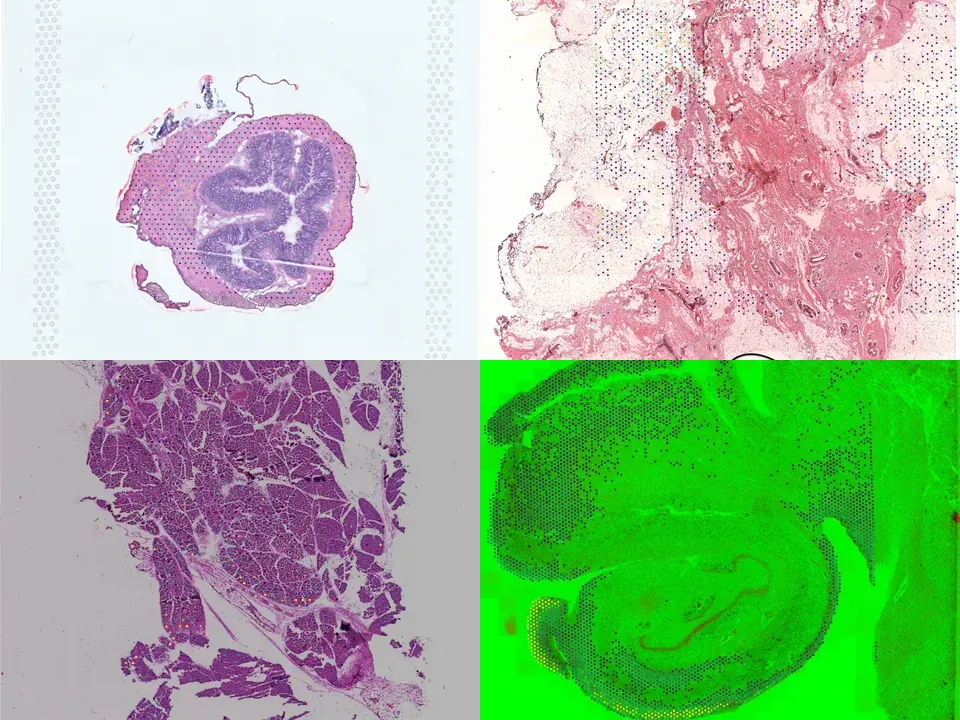
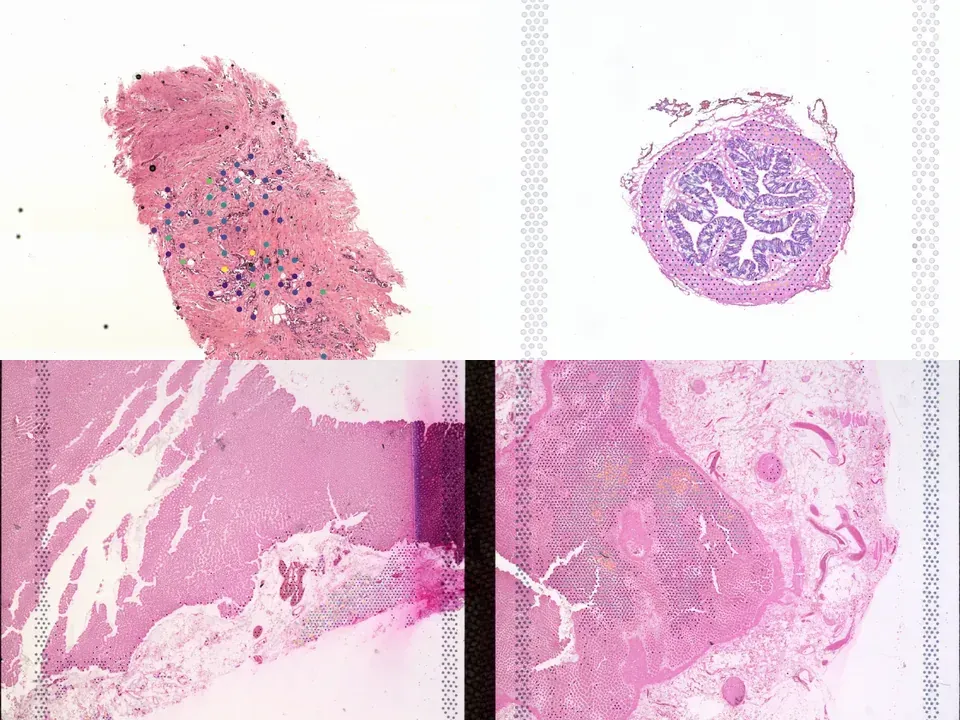
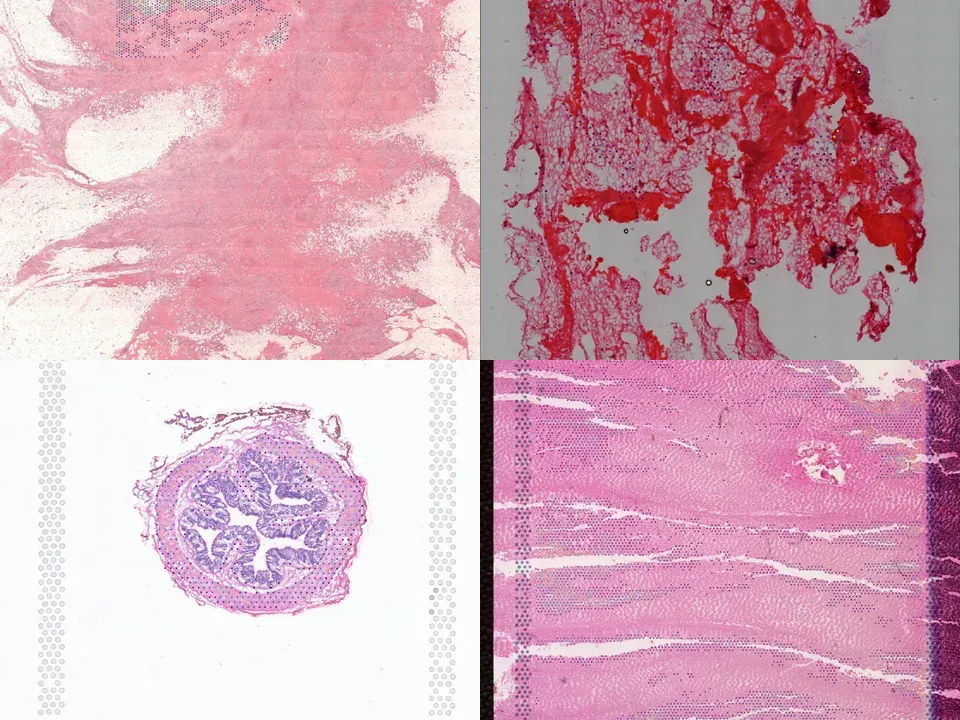
Human breast
GSM8789213
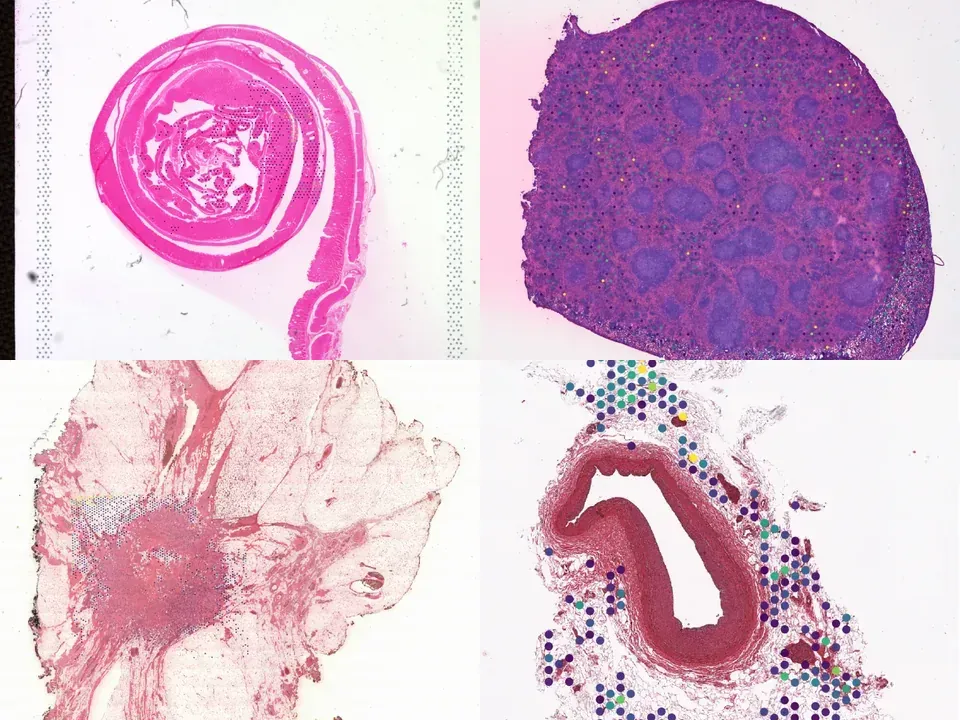
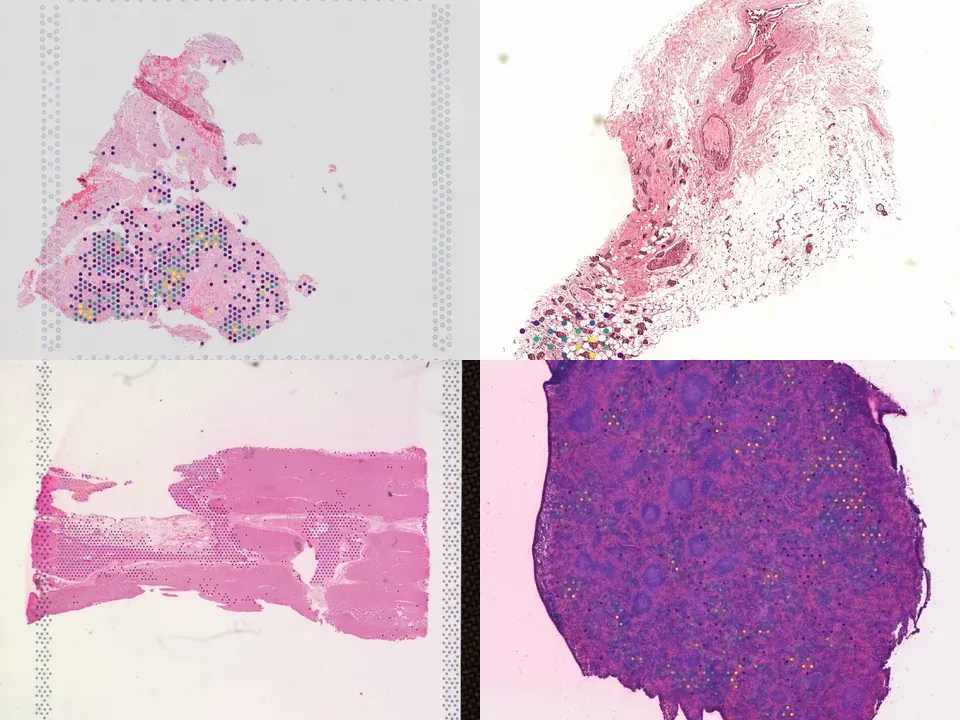
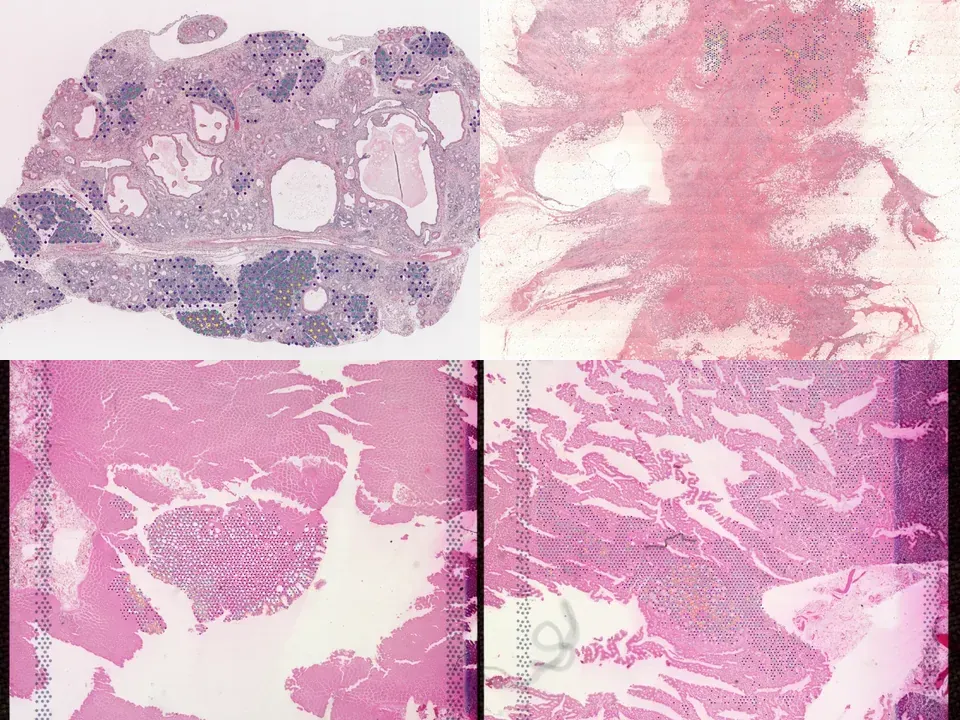
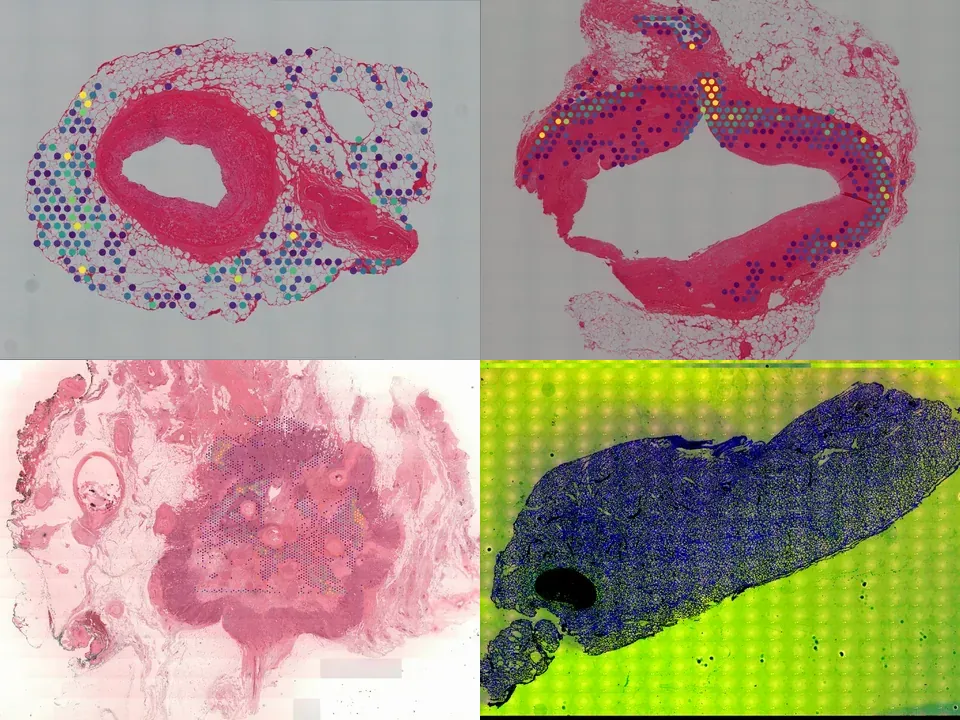
human breast breast neoplasm 39.9 MB 4,351 spots silver H&E NCBI GEO policy
TechnologyVisium
Organismhuman
Tissuebreast
Conditionbreast neoplasm
Spots4,351
silver H&E NCBI GEO policy
Spatial transcriptomics provides insights into tissue architecture by linking gene expression with spatial localization. Current deconvolution methods rely heavily on single-cell RNA sequencing (scRNA-seq) references, which are costly and often unavailable, especially if the tissue under evaluation is limited as in a core biopsy specimen. We present a novel tool, CITEgeist, that deconvolutes spatial transcriptomics data using antibody capture from the same slide as the reference, directly leveraging cell surface protein measurements from the same tissue section. This approach circumvents the limitations of scRNA-seq as a reference, offering a cost-effective and biologically grounded alternative. Our method employs mathematical optimization to estimate cell type proportions and gene expression profiles, incorporating sparsity constraints for robustness and interpretability. Benchmarks against state-of-the-art deconvolution methods show improved accuracy in cell type resolution, particularly in dense tumor microenvironments, while maintaining computational efficiency. This antibody-based tool advances spatial transcriptomics by providing a scalable, accurate, and reference-independent solution for deconvolution in complex tissues. We validate this tool by using a combined approach of simulated data and clinical samples by applying CITEgeist to translational pre-treatment and post-treatment ER+ breast tumors from an ongoing clinical trial, emphasizing the applicability and robustness of CITEgeist.
from sddb import Catalog

cohort = Catalog().collection("geo-gse289326")
cohort.members        # the 14 datasets as a table

print(cohort.licenses())              # check the terms before you download

sdatas = cohort.to_dict()             # {uid: SpatialData}, cached locally
# or keep the .zarr files in a folder of your choice:
# sdatas = cohort.to_dict(dest="data/")Needs pip install lamindb and network access to the Lamin database, which is limited during the alpha. If it fails, use the Client tab.
import lamindb as ln

db = ln.DB("scverse/spatialdata-db")
coll = db.Collection.get(key="geo-gse289326")
coll.ordered_artifacts.to_dataframe()   # the 14 members, ordered

# download every member .zarr to the local cache:
paths = [a.cache() for a in coll.ordered_artifacts.all()]# sddb client: download every member .zarr into data/
sddb-cli download --collection geo-gse289326 --dest data/Licenses: 14 NCBI GEO policy
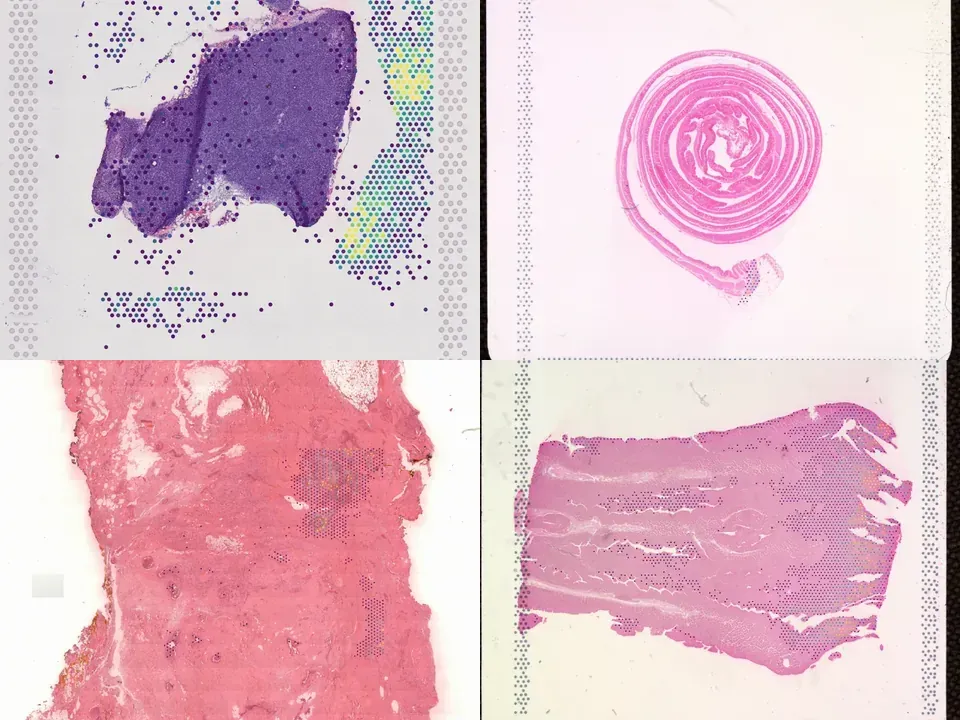
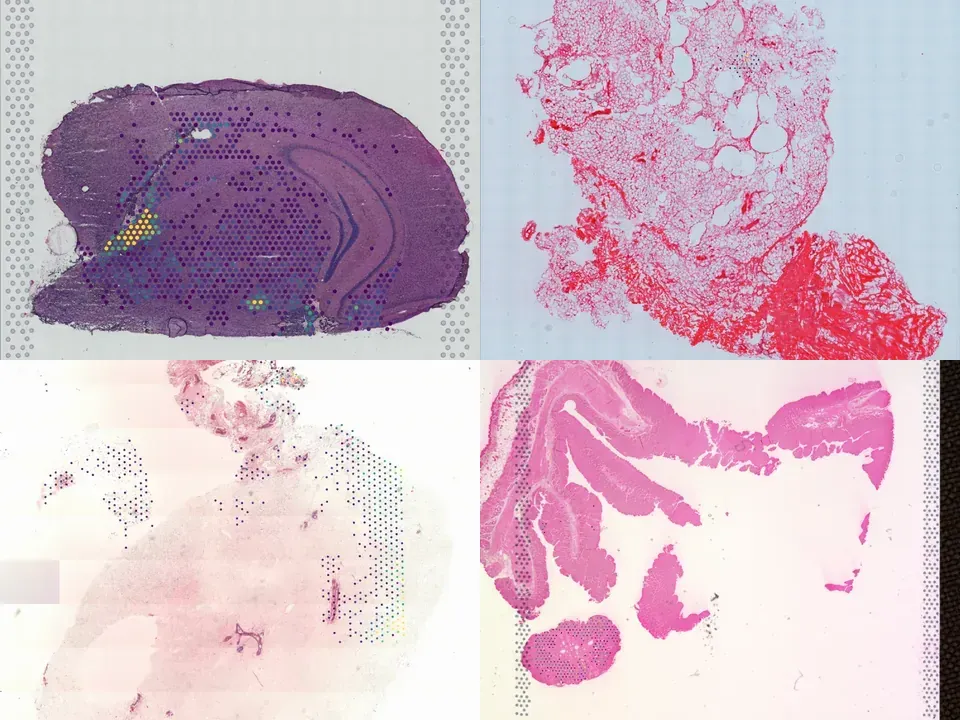
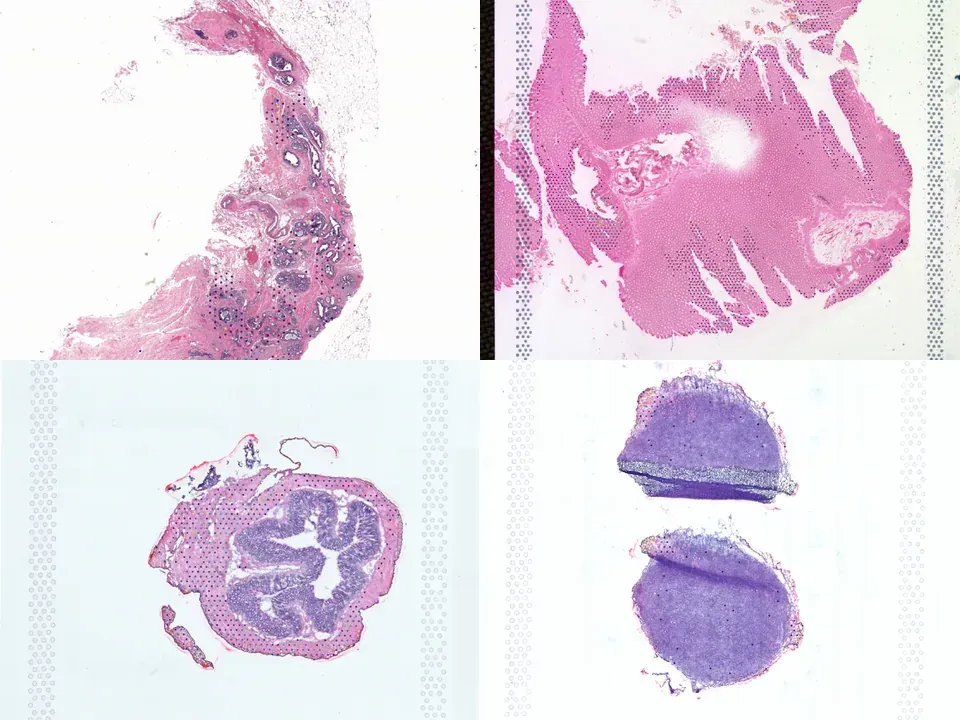
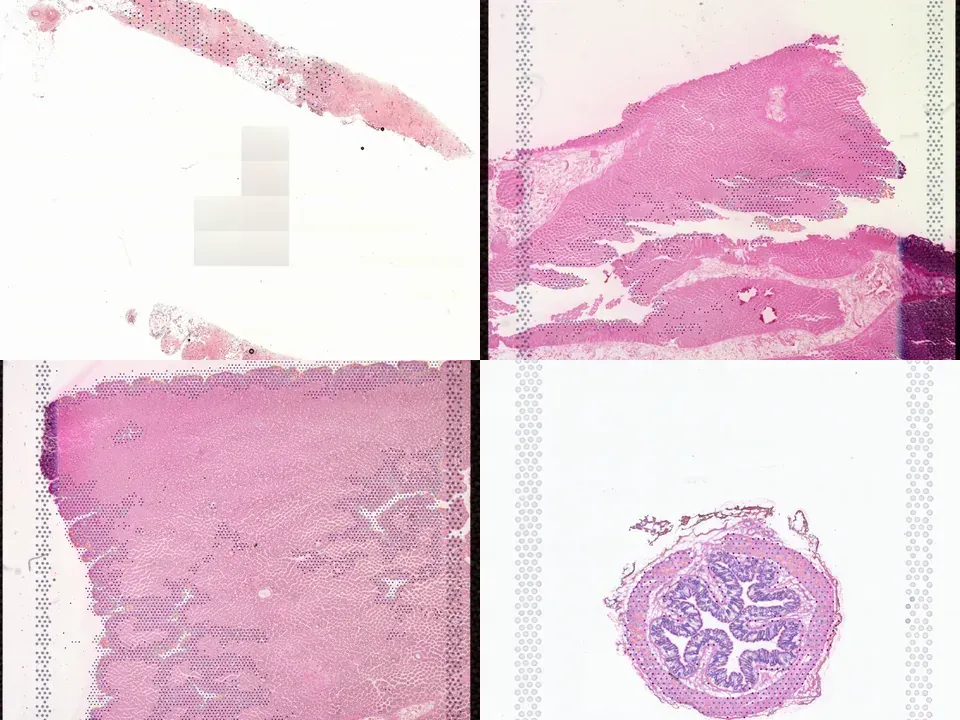
@article{Carleton_2026,
  title = {Use of ctDNA in Older Women with ER+ Breast Cancer to Facilitate Surgical De-escalation: A Prospective, Hybrid-Decentralized Trial with Correlative Studies},
  volume = {32},
  ISSN = {1557-3265},
  url = {http://dx.doi.org/10.1158/1078-0432.ccr-25-4079},
  DOI = {10.1158/1078-0432.ccr-25-4079},
  number = {14},
  journal = {Clinical Cancer Research},
  publisher = {American Association for Cancer Research (AACR)},
  author = {Carleton, Neil and Chang, Alexander C. and Chen, Fangyuan and Puhalla, Shannon L. and Foldi, Julia and Waltermire, Hunter and Tin, Antony and Cowher, Michael S. and Lupinacci, Kristin and Diego, Emilia J. and Sabih, Quratulain and Johnson, Ronald R. and Malhotra, Monica and Laubenthal, Amanda and Gorantla, Vikram and Balic, Marija and Bhargava, Rohit and Joy, Marion and Freeman, Tanner and Bridges, Catherine and Kalashnikova, Ekaterina and Rodriguez, Angel and Liu, Minetta C. and Oesterreich, Steffi and Lee, Adrian V. and McAuliffe, Priscilla F.},
  year = {2026},
  month = Mar,
  pages = {2957–2967}
}