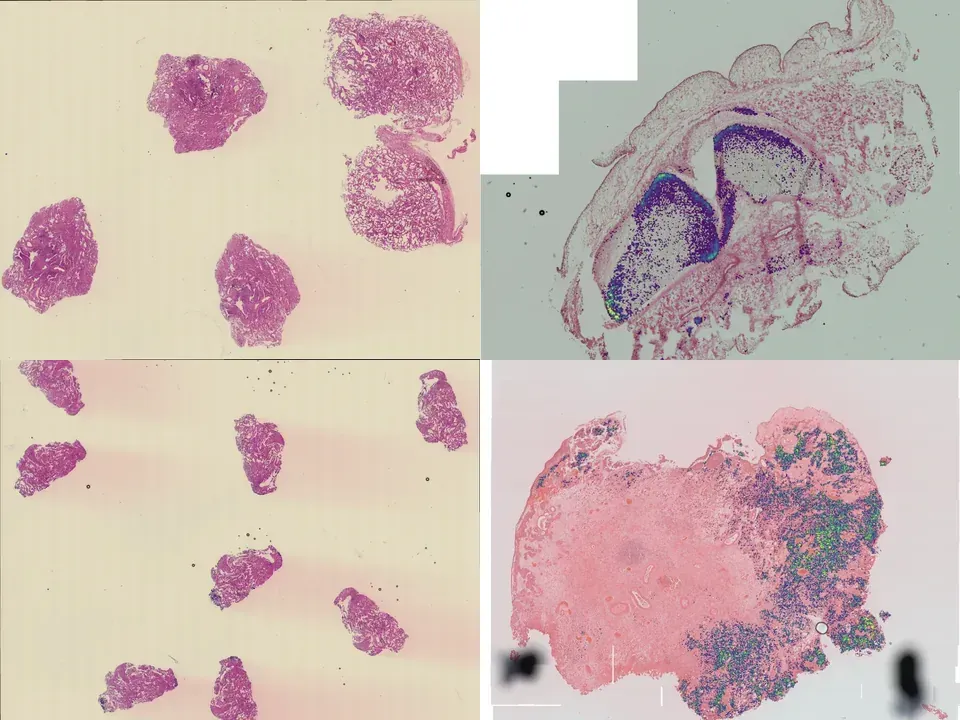
Spatial transcriptomic profiling of the lung tissues from a patient with recurrent anti-synthetase syndrome associated interstitial lung disease after bilateral lung transplantation and one untreated patient
Background: A 58-year-old male with anti-synthetase syndrome-associated interstitial lung disease (ASS-ILD) underwent bilateral lung transplantation (LTx) but experienced ILD progression and myositis worsening 38 weeks post-transplant, despite glucocorticoids, tacrolimus, and mycophenolic acid treatment. High-dose glucocorticoids led to adverse effects and ILD exacerbation upon tapering. Objective: To identify persistent inflammatory pathways despite anti-rejection therapy. Methods: 10X Visium HD spatial transcriptomic analysis was conducted on lung tissues from two distinct patients: one untreated patient with ASS-ILD without LTx serving as a control, and another patient who experienced bilateral LTx. This analysis aims to investigate the inflammatory profiles within the lung tissues and to explore the correlation between pulmonary lesions and systemic inflammation. Results: In comparison to the control patient, the lung tissue from the post-transplant patient appeared to have an increased proportion of macrophages, with a concurrent decrease in the proportions of plasma cells and T cells. Among the macrophages of interest, the post-transplant patient appeared to have an elevated proportion of alveolar macrophages, whereas the control patient seemed to have a larger proportion of monocyte-derived macrophages. Considering that interstitial pneumonia is often driven by alveolar epithelial cell injury, we observed that the post-transplant patient appeared to have a higher proportion of transitional AT2 cells, which were appeared to express both AT2-specific markers (SFTPC, SFTPD) and AT1-specific markers (AGER, RTKN2, GPRC5A). Conclusions: We presented a complicated case of a patient with early recurrence of underlying ASS-ILD after bilateral LTx. We used spatial transcriptomic analysis to investigate the differences between systemic inflammatory responses and lung tissue responses.
from sddb import Catalog
cohort = Catalog().collection("geo-gse286227")
cohort.members # the 2 datasets as a table
print(cohort.licenses()) # check the terms before you download
sdatas = cohort.to_dict() # {uid: SpatialData}, cached locally
# or keep the .zarr files in a folder of your choice:
# sdatas = cohort.to_dict(dest="data/") Needs pip install lamindb and network access to the Lamin database, which is limited during the alpha. If it fails, use the Client tab.
import lamindb as ln
db = ln.DB("scverse/spatialdata-db")
coll = db.Collection.get(key="geo-gse286227")
coll.ordered_artifacts.to_dataframe() # the 2 members, ordered
# download every member .zarr to the local cache:
paths = [a.cache() for a in coll.ordered_artifacts.all()] # sddb client: download every member .zarr into data/
sddb-cli download --collection geo-gse286227 --dest data/ Licenses: 2 NCBI GEO policy