Collections / Distinct Molecular Patterns in R6/2 HD Mouse Brain: Insights from Spatiotemporal Transcriptomics [Spatial Transcriptomics]

Distinct Molecular Patterns in R6/2 HD Mouse Brain: Insights from Spatiotemporal Transcriptomics [Spatial Transcriptomics]

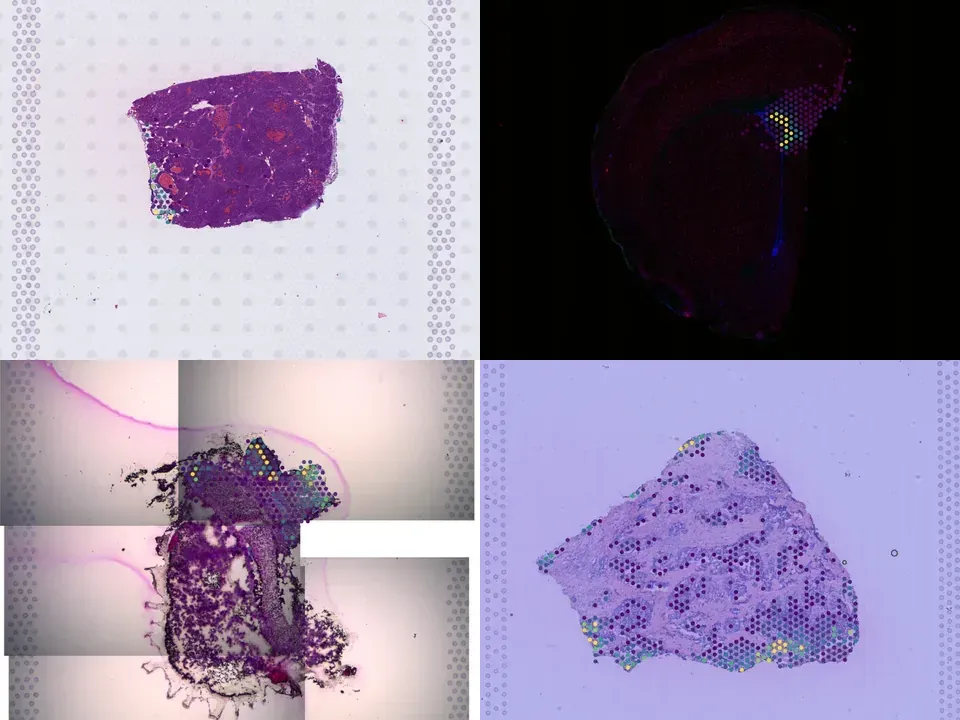
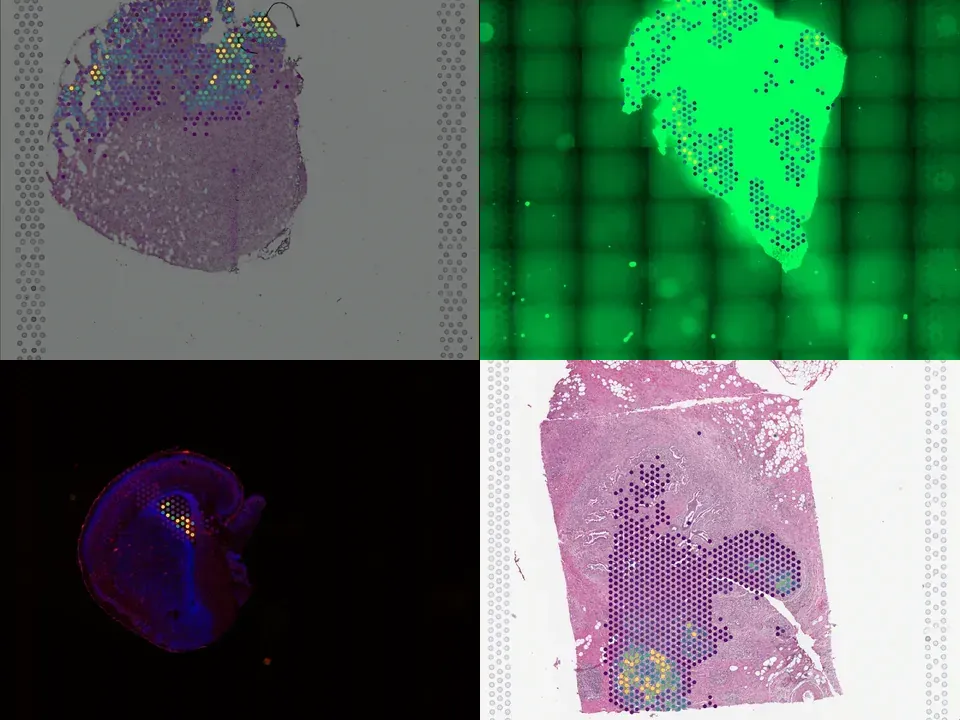
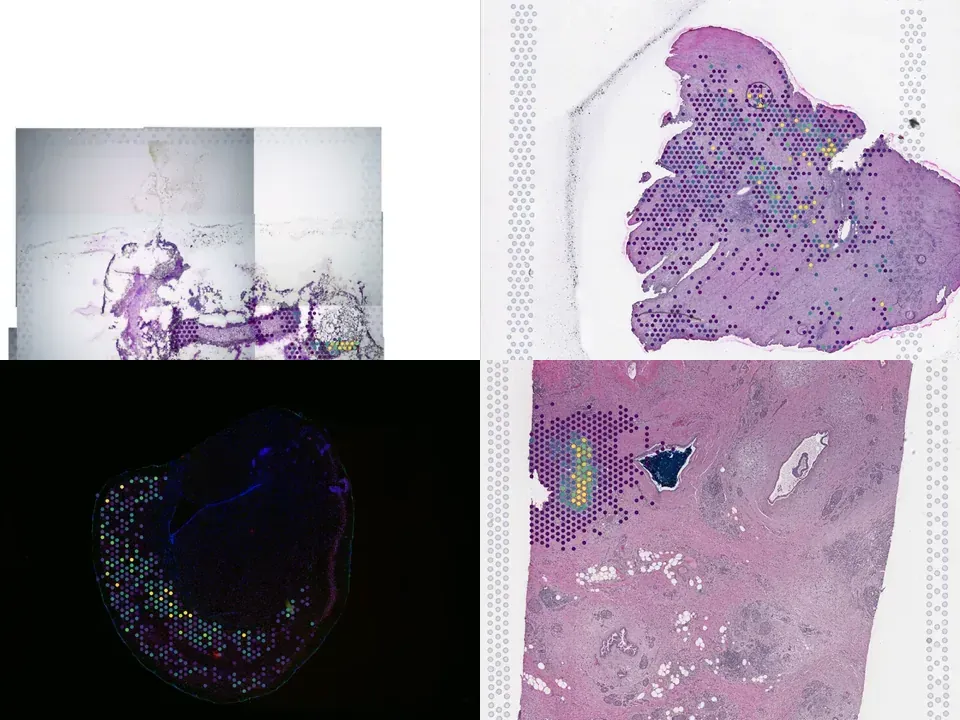
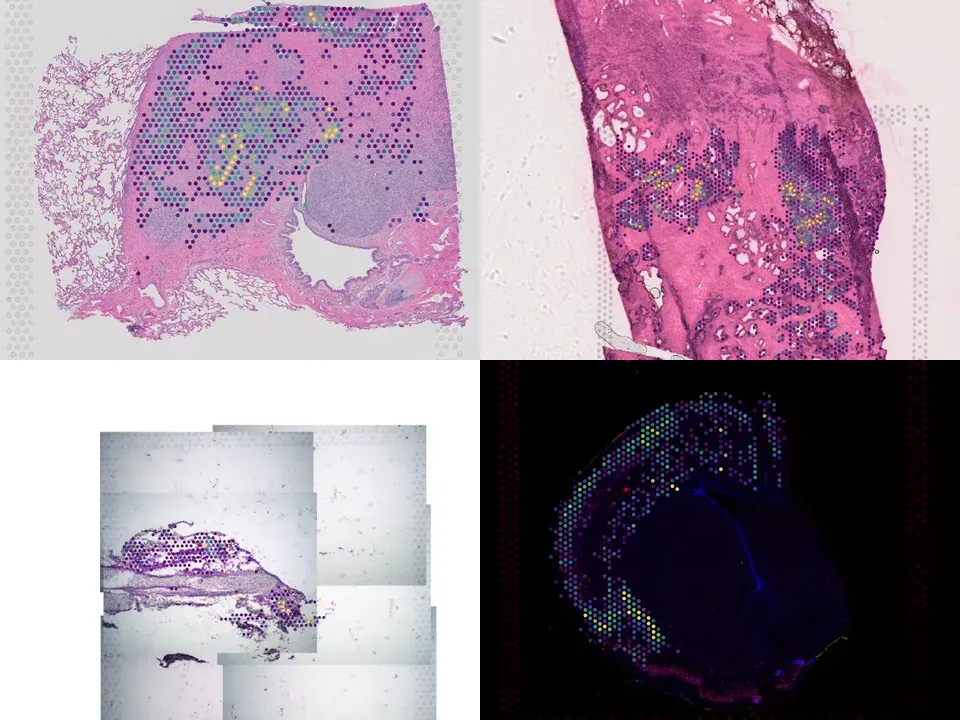
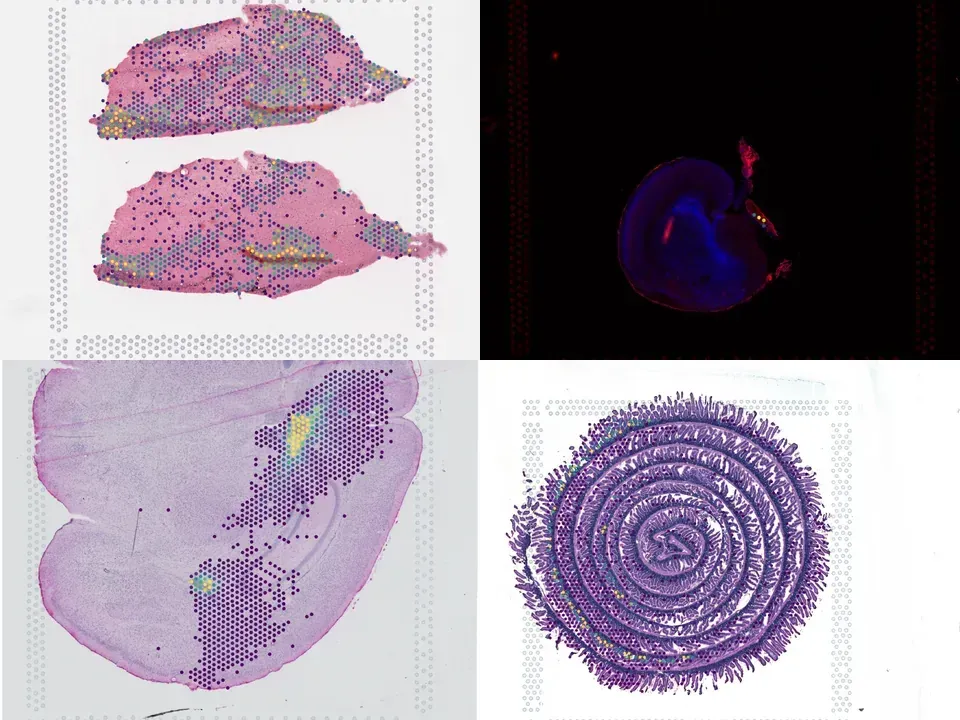
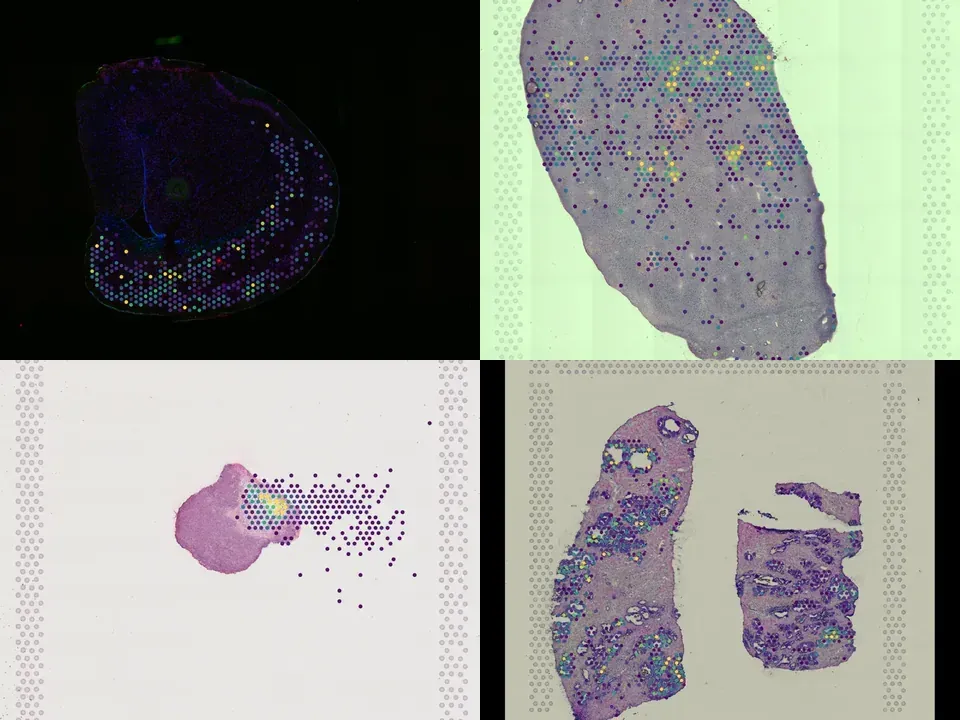
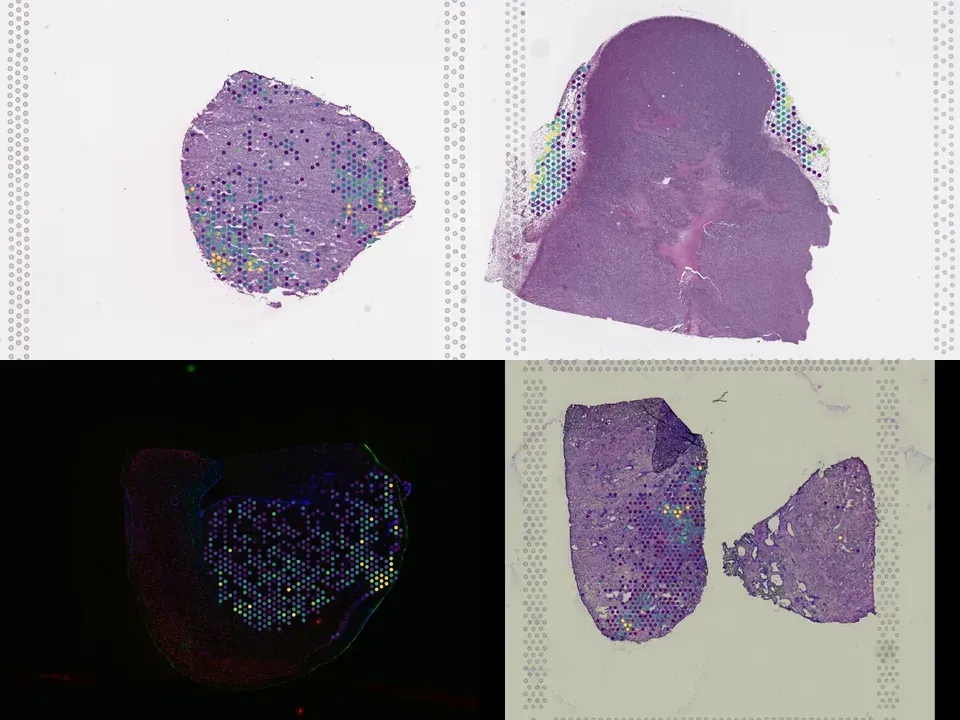
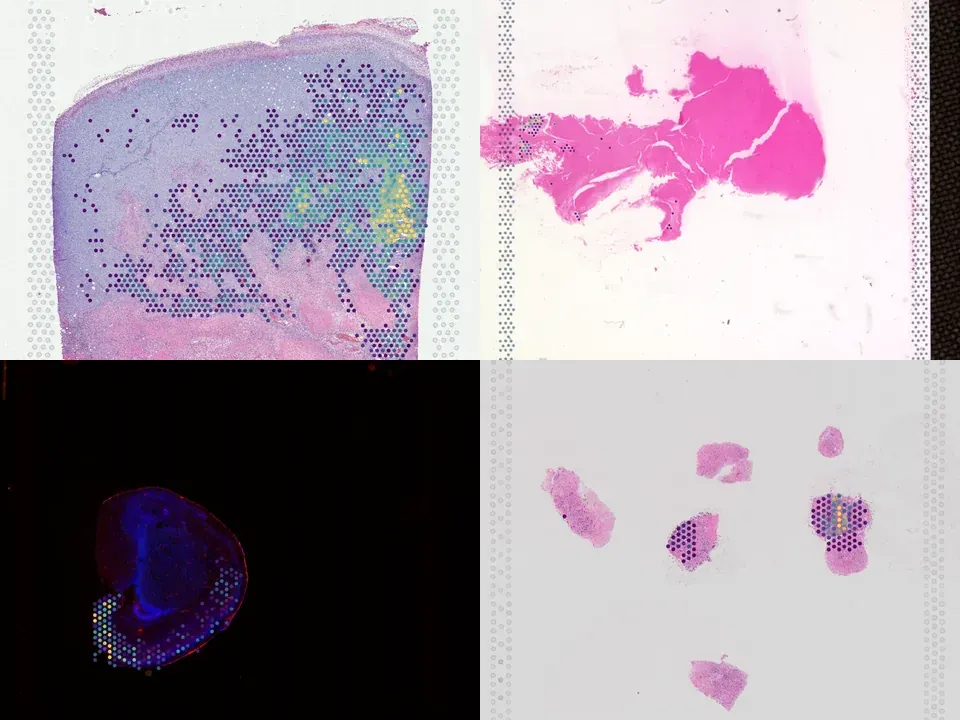
Huntington’s disease (HD) is a progressive neurodegenerative disease marked by widespread cellular disruption. To understand disease mechanisms by investigating transcriptional differences, we and others have utilized bulk and single cell transcriptomics which provide cell type information but limited spatial information. We therefore utilized 10x Genomics Visium spatial transcriptomics integrated with matched single nuclei-RNA-seq in the HD R6/2 mouse brain (postnatal day 0, 4- and 12-week) to examine disease trajectories across regions in a rapidly progressing model. Our data suggests regional, temporal and cell type specific regulatory pathways that establish distinct gene expression changes in brain. Synaptic dysfunction is observed broadly throughout the brain. We observed early dysregulation of the transcription factor Tcf-4 that may drive cortical changes. Mitochondrial deficits are the earliest changes, beginning at P0 in striatum prior to overt symptom onset together with increased expression of striatal identity genes that then become progressively downregulated. Finally, we identified a time-dependent dysregulation of neuropeptide Y signaling and potential interaction with the cAMP/PKA pathway, which may be involved in early imbalance between Drd1 and Drd2 neuron vulnerability.

Datasets16
Size~421 MB
AssayVisium
Samplemouse · brain
KindComparison
Flag a data issue
PMID:40482637 ↗
Python · sddb client
from sddb import Catalog

cohort = Catalog().collection("geo-gse285858")
cohort.members        # the 16 datasets as a table

print(cohort.licenses())              # check the terms before you download

sdatas = cohort.to_dict()             # {uid: SpatialData}, cached locally
# or keep the .zarr files in a folder of your choice:
# sdatas = cohort.to_dict(dest="data/")
Python · lamindb

Needs pip install lamindb and network access to the Lamin database, which is limited during the alpha. If it fails, use the Client tab.

import lamindb as ln

db = ln.DB("scverse/spatialdata-db")
coll = db.Collection.get(key="geo-gse285858")
coll.ordered_artifacts.to_dataframe()   # the 16 members, ordered

# download every member .zarr to the local cache:
paths = [a.cache() for a in coll.ordered_artifacts.all()]
Shell
# sddb client: download every member .zarr into data/
sddb-cli download --collection geo-gse285858 --dest data/

Licenses: 16 NCBI GEO policy
Open in Vitessce
Visium
Mouse brain
GSM8711465
mouse brain 31.5 MB 2,779 spots bronze H&E NCBI GEO policy
TechnologyVisium
Organismmouse
Tissuebrain
Size31.5 MB
Spots2,779
Magnificationother · 3.621 µm/px
bronze H&E NCBI GEO policy Open in Vitessce
Open in Vitessce
Visium
Mouse brain
GSM8711463
mouse brain 26.5 MB 2,271 spots bronze H&E NCBI GEO policy
TechnologyVisium
Organismmouse
Tissuebrain
Size26.5 MB
Spots2,271
Magnificationother · 3.625 µm/px
bronze H&E NCBI GEO policy Open in Vitessce
Open in Vitessce
Visium
Mouse brain
GSM8711461
mouse brain Huntington disease 18.3 MB 1,049 spots bronze H&E NCBI GEO policy
TechnologyVisium
Organismmouse
Tissuebrain
ConditionHuntington disease
Size18.3 MB
Spots1,049
Magnificationother · 3.619 µm/px
bronze H&E NCBI GEO policy Open in Vitessce
Open in Vitessce
Visium
Mouse brain
GSM8711472
mouse brain Huntington disease 28.3 MB 2,184 spots bronze H&E NCBI GEO policy
TechnologyVisium
Organismmouse
Tissuebrain
ConditionHuntington disease
Size28.3 MB
Spots2,184
Magnificationother · 3.627 µm/px
bronze H&E NCBI GEO policy Open in Vitessce
Open in Vitessce
Visium
Mouse brain
GSM8711464
mouse brain 34.4 MB 2,543 spots bronze H&E NCBI GEO policy
TechnologyVisium
Organismmouse
Tissuebrain
Size34.4 MB
Spots2,543
Magnificationother · 3.631 µm/px
bronze H&E NCBI GEO policy Open in Vitessce
Open in Vitessce
Visium
Mouse brain
GSM8711471
mouse brain 38.6 MB 2,714 spots bronze H&E NCBI GEO policy
TechnologyVisium
Organismmouse
Tissuebrain
Size38.6 MB
Spots2,714
Magnificationother · 3.624 µm/px
bronze H&E NCBI GEO policy Open in Vitessce
Open in Vitessce
Visium
Mouse brain
GSM8711459
mouse brain 12.0 MB 728 spots bronze H&E NCBI GEO policy
TechnologyVisium
Organismmouse
Tissuebrain
Size12.0 MB
Spots728
Magnificationother · 3.622 µm/px
bronze H&E NCBI GEO policy Open in Vitessce
Open in Vitessce
Visium
Mouse brain
GSM8711468
mouse brain Huntington disease 35.2 MB 2,723 spots bronze H&E NCBI GEO policy
TechnologyVisium
Organismmouse
Tissuebrain
ConditionHuntington disease
Size35.2 MB
Spots2,723
bronze H&E NCBI GEO policy Open in Vitessce
Open in Vitessce
Visium
Mouse brain
GSM8711474
mouse brain Huntington disease 26.1 MB 1,915 spots bronze H&E NCBI GEO policy
TechnologyVisium
Organismmouse
Tissuebrain
ConditionHuntington disease
Size26.1 MB
Spots1,915
Magnificationother · 3.623 µm/px
bronze H&E NCBI GEO policy Open in Vitessce
Open in Vitessce
Visium
Mouse brain
GSM8711462
mouse brain Huntington disease 15.5 MB 777 spots bronze H&E NCBI GEO policy
TechnologyVisium
Organismmouse
Tissuebrain
ConditionHuntington disease
Size15.5 MB
Spots777
Magnificationother · 3.652 µm/px
bronze H&E NCBI GEO policy Open in Vitessce
Open in Vitessce
Visium
Mouse brain
GSM8711473
mouse brain Huntington disease 27.5 MB 2,073 spots bronze H&E NCBI GEO policy
TechnologyVisium
Organismmouse
Tissuebrain
ConditionHuntington disease
Size27.5 MB
Spots2,073
Magnificationother · 3.628 µm/px
bronze H&E NCBI GEO policy Open in Vitessce
Open in Vitessce
Visium
Mouse brain
GSM8711469
mouse brain 25.7 MB 2,151 spots bronze H&E NCBI GEO policy
TechnologyVisium
Organismmouse
Tissuebrain
Size25.7 MB
Spots2,151
Magnificationother · 3.622 µm/px
bronze H&E NCBI GEO policy Open in Vitessce
Open in Vitessce
Visium
Mouse brain
GSM8711466
mouse brain Huntington disease 28.3 MB 2,592 spots bronze H&E NCBI GEO policy
TechnologyVisium
Organismmouse
Tissuebrain
ConditionHuntington disease
Size28.3 MB
Spots2,592
bronze H&E NCBI GEO policy Open in Vitessce
Visium
Mouse brain
GSM8711460
mouse brain 14.8 MB 848 spots bronze H&E NCBI GEO policy
TechnologyVisium
Organismmouse
Tissuebrain
Size14.8 MB
Spots848
bronze H&E NCBI GEO policy
Open in Vitessce
Visium
Mouse brain
GSM8711467
mouse brain Huntington disease 30.5 MB 2,445 spots bronze H&E NCBI GEO policy
TechnologyVisium
Organismmouse
Tissuebrain
ConditionHuntington disease
Size30.5 MB
Spots2,445
bronze H&E NCBI GEO policy Open in Vitessce
Open in Vitessce
Visium
Mouse brain
GSM8711470
mouse brain 27.5 MB 2,341 spots bronze H&E NCBI GEO policy
TechnologyVisium
Organismmouse
Tissuebrain
Size27.5 MB
Spots2,341
bronze H&E NCBI GEO policy Open in Vitessce

Cite this collection

doi.org/10.1016/j.neuron.2025.05.014 ↗
BibTeX
@article{Burns_2025,
  title = {Distinct molecular patterns in R6/2 HD mouse brain: Insights from spatiotemporal transcriptomics},
  volume = {113},
  ISSN = {0896-6273},
  url = {http://dx.doi.org/10.1016/j.neuron.2025.05.014},
  DOI = {10.1016/j.neuron.2025.05.014},
  number = {15},
  journal = {Neuron},
  publisher = {Elsevier BV},
  author = {Burns, Mara S. and Miramontes, Ricardo and Wu, Jie and Gulia, Ravinder and Saddala, Madhu S. and Lau, Alice L. and Quach, Tiffany and Reidling, John C. and Swarup, Vivek and La Spada, Albert R. and Lim, Ryan G. and Thompson, Leslie M.},
  year = {2025},
  month = Aug,
  pages = {2416–2437.e6}
}