
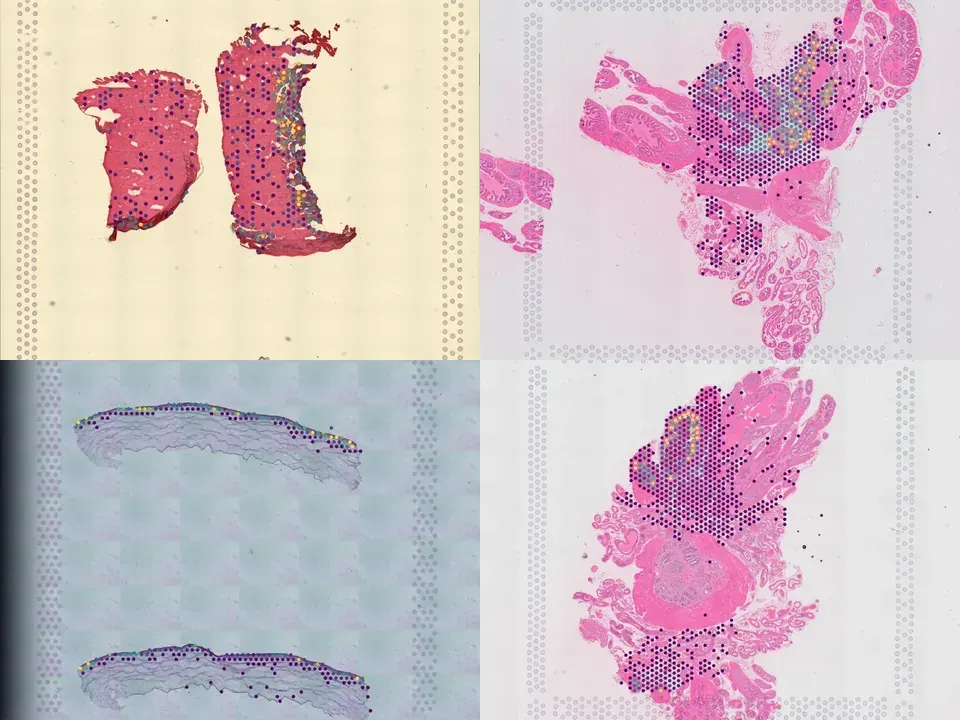
Mouse prostate gland
GSM8686968
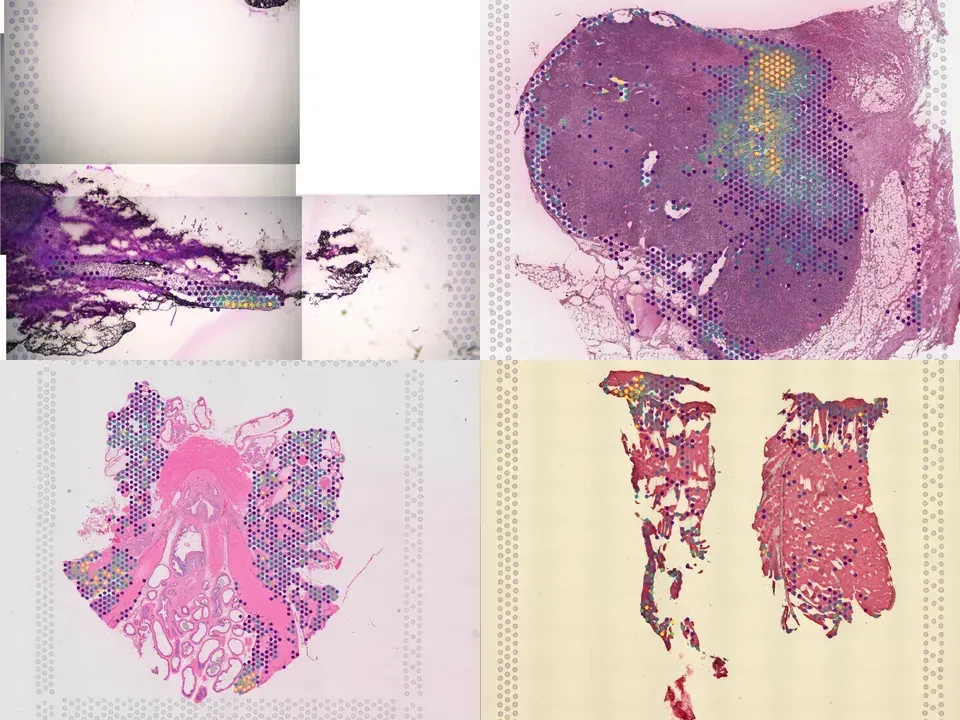
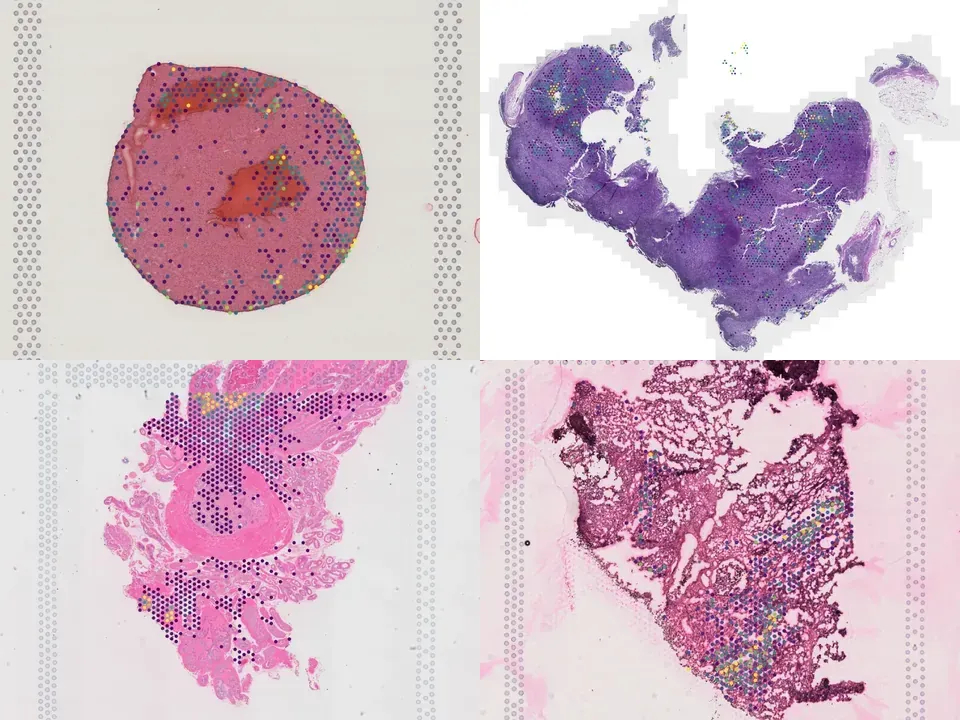
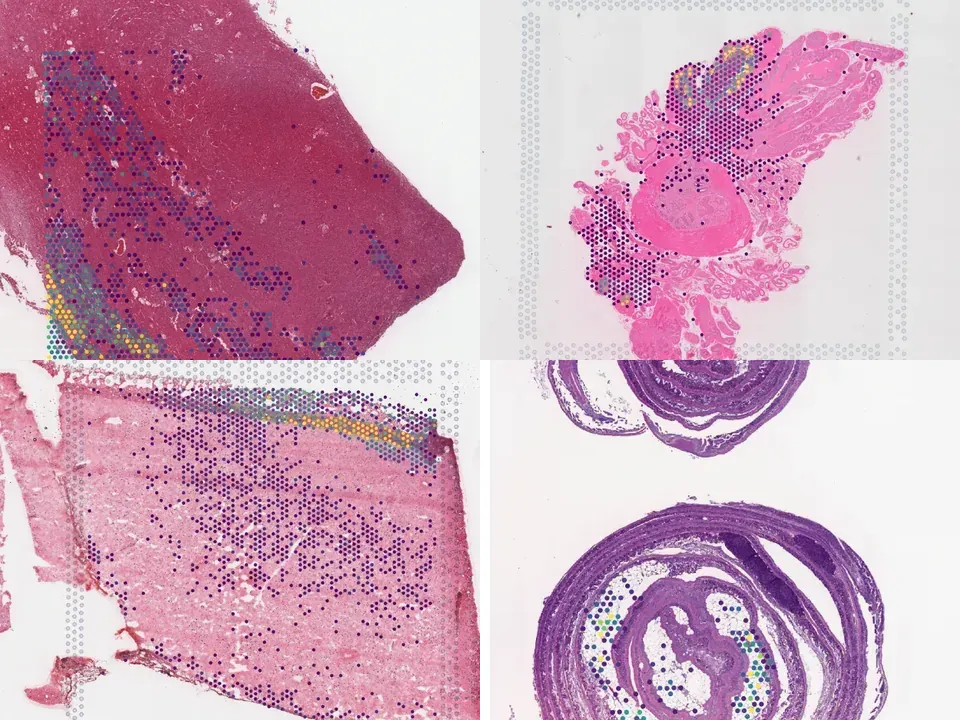
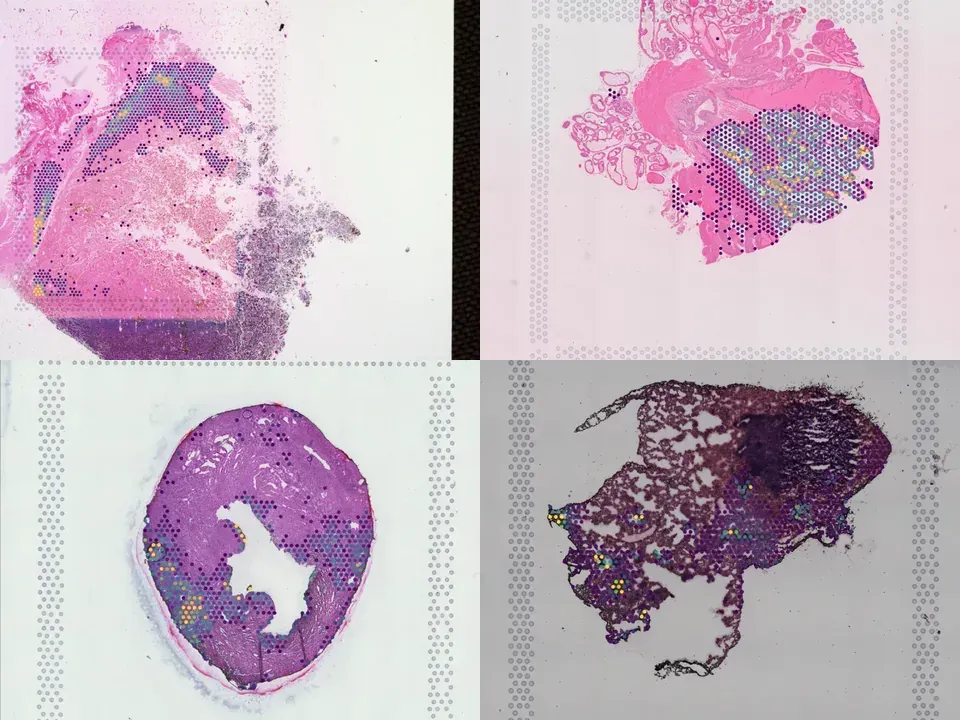
mouse prostate gland 49.1 MB 2,481 spots bronze H&E NCBI GEO policy
TechnologyVisium
Organismmouse
Tissueprostate gland
Spots2,481
Magnificationother · 4.122 µm/px
bronze H&E NCBI GEO policy
Inadequate response to Androgen Deprivation Therapy (ADT) frequently arises in Prostate Cancer (PCa) via unclear cellular mechanisms and drives aggressive forms of the disease. Here, we integrated single-cell RNA sequencing, single-cell multiomics and spatial transcriptomics to reveal the transcriptional, epigenetic and spatial basis of cell identity and cell-specific castration response in mouse prostates, and used this reference along with meta-analysis to identify determinants of ADT-response and castration resistance in human PCa. We found that that the mouse prostate contains lobe-specific luminal epithelial cell types (LEs), as driven by unique gene regulatory modules, and anatomically-defined androgen responsive transcriptional programs, which together indicate developmental divergence. Androgen recalcitrant stem-like epithelia that bear semblance to Club and Hillock cells of the human prostate were enriched in the urethra and Ventral Prostate (VP), but rarely present in other lobes. Strikingly, the VP contained two additional LEs, Pbsn-positive and Spink1-positive (enriched in SPOP mutant PCa) androgen responsive cells, which effectively mapped to human LEs and potentially denote cell types that drive distinct PCa subtypes. Castration reorganized LE transcriptomes, with castration resistant LEs activating stress responsive (e.g. Nfe2l2) and stemness (e.g. Klf6) programs. Tumor cells of ADT-treated and Castration Resistant PCa patients were enriched for these castration programs, suggesting their role in driving the emergence and sustenance of castration resistance. Overall, our cellular cartography effort culminates in a comprehensive atlas of the mouse prostate, highlights the potential for lobe-specific PCa modeling in mice and identifies potential therapeutic targets that inhibit castration resistance.
from sddb import Catalog

cohort = Catalog().collection("geo-gse284571")
cohort.members        # the 8 datasets as a table

print(cohort.licenses())              # check the terms before you download

sdatas = cohort.to_dict()             # {uid: SpatialData}, cached locally
# or keep the .zarr files in a folder of your choice:
# sdatas = cohort.to_dict(dest="data/")Needs pip install lamindb and network access to the Lamin database, which is limited during the alpha. If it fails, use the Client tab.
import lamindb as ln

db = ln.DB("scverse/spatialdata-db")
coll = db.Collection.get(key="geo-gse284571")
coll.ordered_artifacts.to_dataframe()   # the 8 members, ordered

# download every member .zarr to the local cache:
paths = [a.cache() for a in coll.ordered_artifacts.all()]# sddb client: download every member .zarr into data/
sddb-cli download --collection geo-gse284571 --dest data/Licenses: 8 NCBI GEO policy
@article{Cho_2024,
  title = {Cellular cartography reveals mouse prostate organization and determinants of castration resistance},
  url = {http://dx.doi.org/10.1101/2024.12.27.630532},
  DOI = {10.1101/2024.12.27.630532},
  publisher = {openRxiv},
  author = {Cho, Hanbyul and Zhang, Yuping and Tien, Jean C. and Mannan, Rahul and Luo, Jie and Narayanan, Sathiya Pandi and Mahapatra, Somnath and Hu, Jing and Shelley, Greg and Cruz, Gabriel and Shahine, Miriam and Wang, Lisha and Su, Fengyun and Wang, Rui and Cao, Xuhong and Dhanasekaran, Saravana Mohan and Keller, Evan T. and Pitchiaya, Sethuramasundaram and Chinnaiyan, Arul M.},
  year = {2024},
  month = Dec
}