from sddb import Catalog

cohort = Catalog().collection("geo-gse284005")
cohort.members        # the 17 datasets as a table

print(cohort.licenses())              # check the terms before you download

sdatas = cohort.to_dict()             # {uid: SpatialData}, cached locally
# or keep the .zarr files in a folder of your choice:
# sdatas = cohort.to_dict(dest="data/")
Needs pip install lamindb and network access to the Lamin database, which is limited during the alpha. If it fails, use the Client tab.
import lamindb as ln

db = ln.DB("scverse/spatialdata-db")
coll = db.Collection.get(key="geo-gse284005")
coll.ordered_artifacts.to_dataframe()   # the 17 members, ordered

# download every member .zarr to the local cache:
paths = [a.cache() for a in coll.ordered_artifacts.all()]
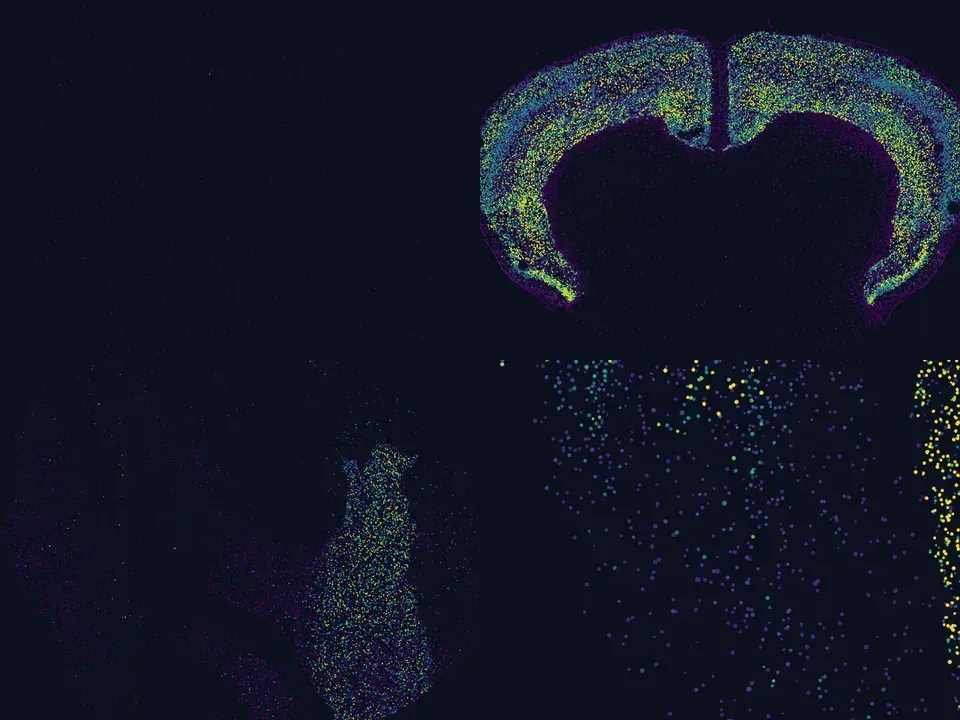
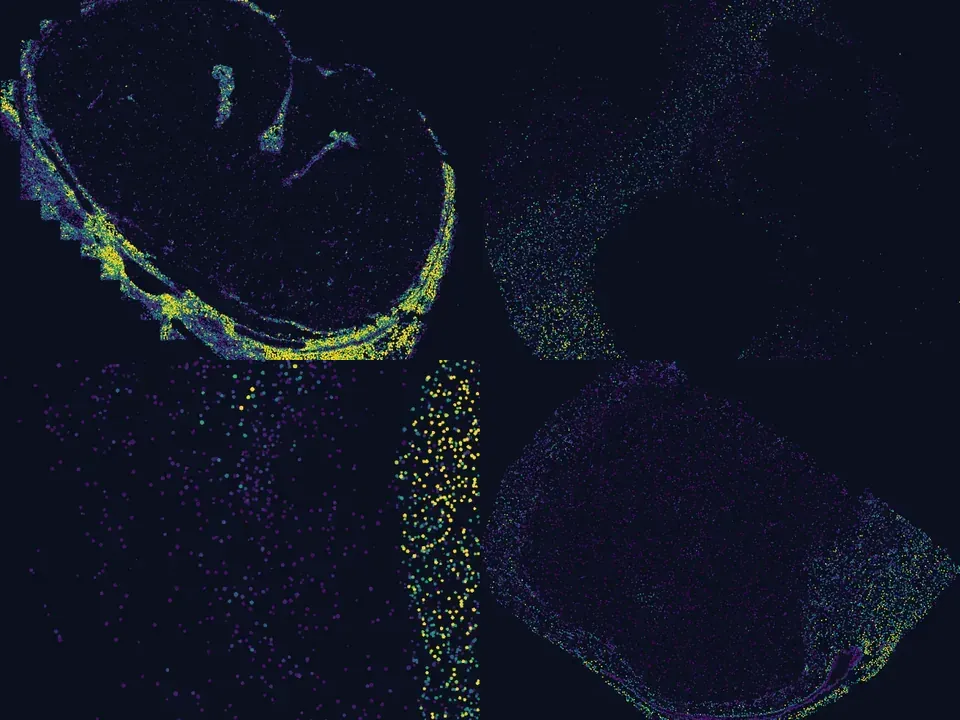
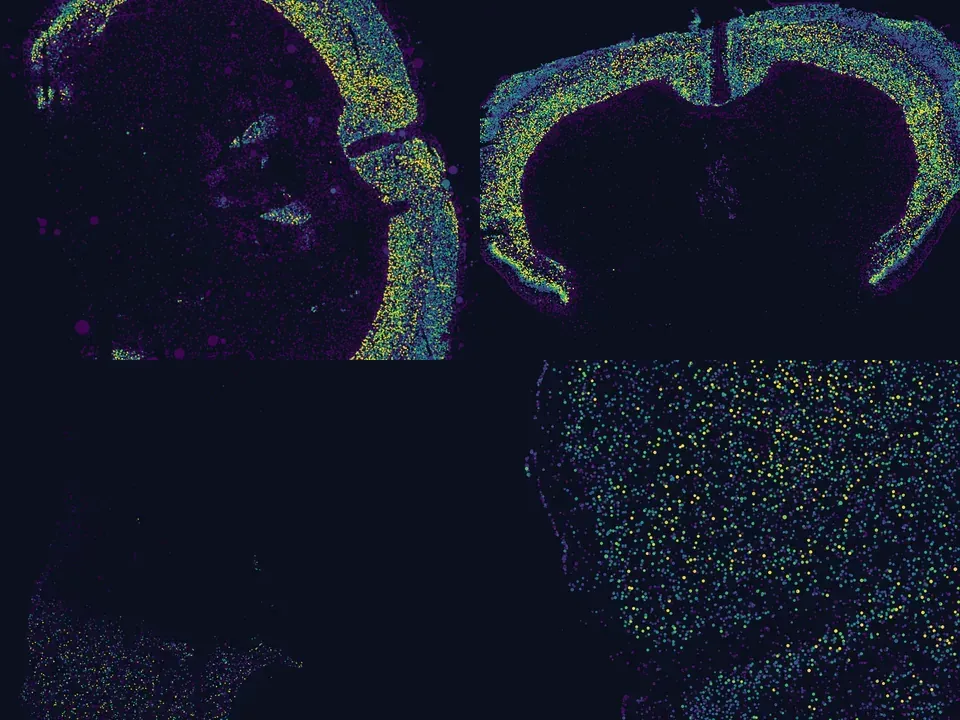
Single-cell spatial transcriptomic profiling defines a pathogenic inflammatory niche in chronic active multiple sclerosis lesions.
Compartmentalized inflammation is a key driver of multiple sclerosis (MS) progression, but the mechanisms sustaining its persistence remain unclear. A hallmark of this persistent and slowly evolving inflammatory process is chronic active MS lesions. We generated a high-resolution, single-cell molecular and spatial atlas of such lesions by combining single-nucleus RNA sequencing (snRNA-seq) with multiplexed error-robust fluorescence in situ hybridization (MERFISH). Within lesion rims, we identified CD8<sup>+</sup> T cell niches associated with inflamed microglia displaying an interferon response and upregulated lipid metabolism. To investigate their function, we deleted ATP-binding cassette transporters A1 and G1 (ABCA1/G1) in the microglia of mice with experimental autoimmune encephalomyelitis (EAE), which increased the formation of lipid-storing phagocytes that amplified inflammation. Moreover, pharmacologically targeting sterol metabolism mitigated foam cell formation and inflammatory demyelination in EAE. Thus, our high-resolution map of immune niches in chronic active MS lesions identifies a role for lipid-storing, dysfunctional microglia in persistent neuroinflammation.