
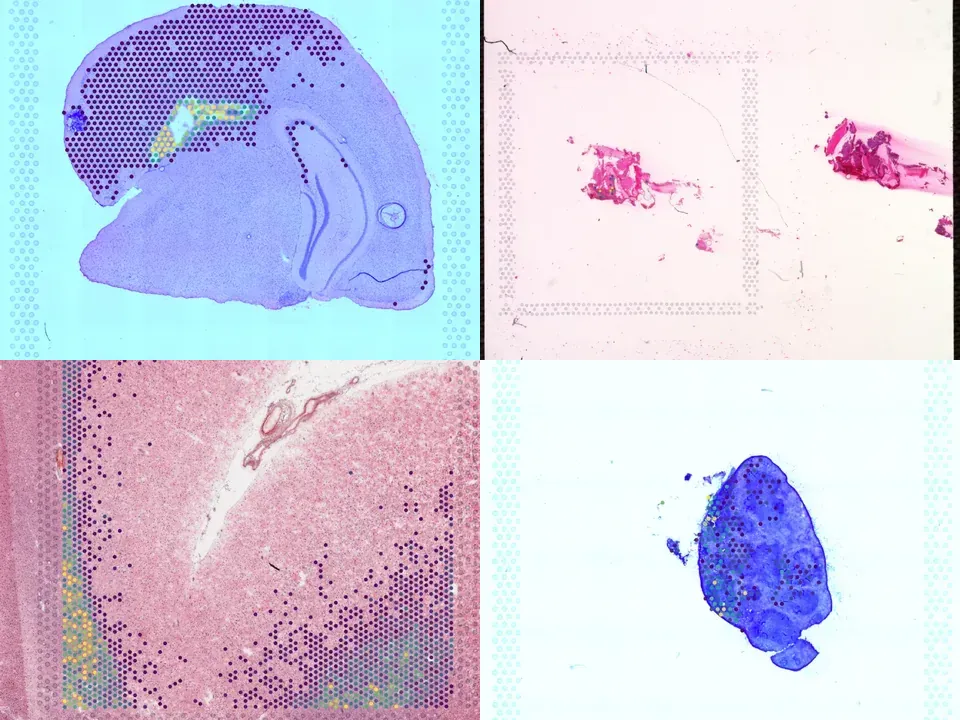
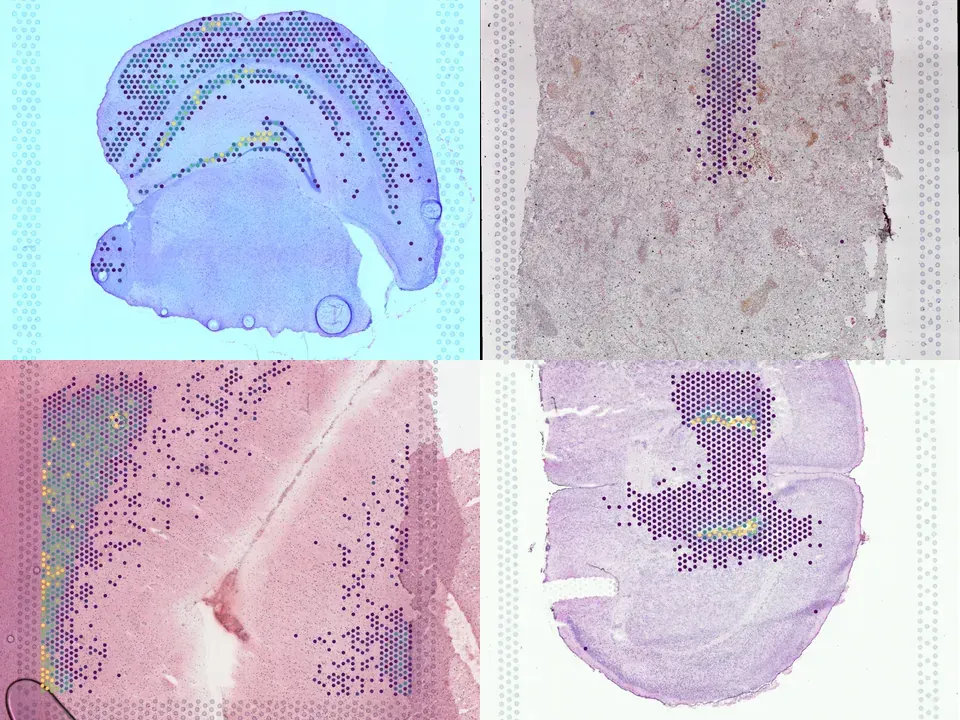
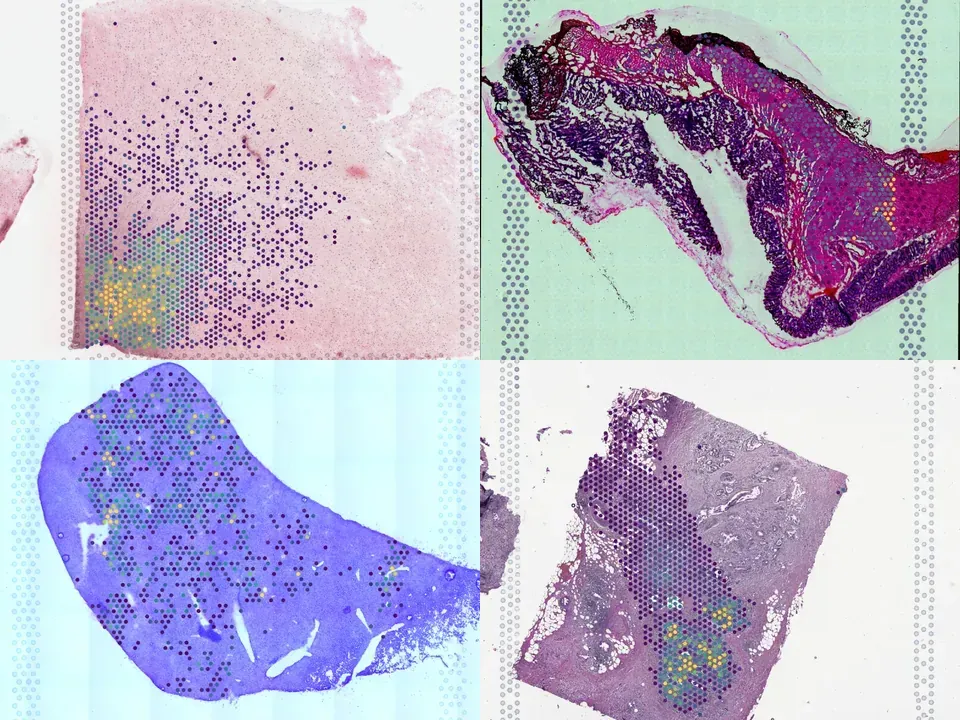
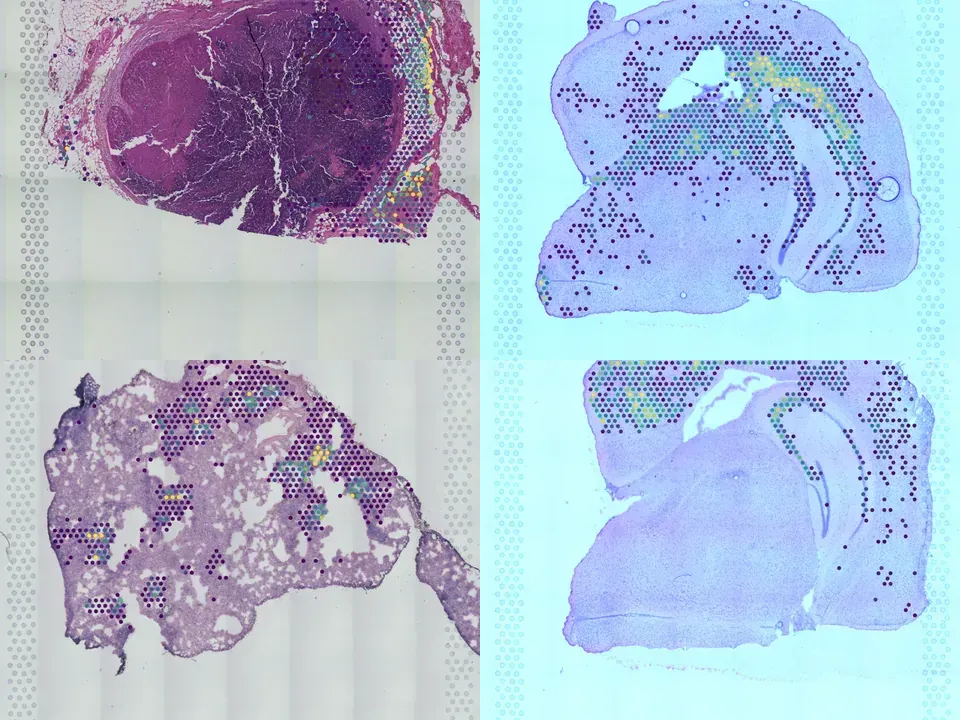
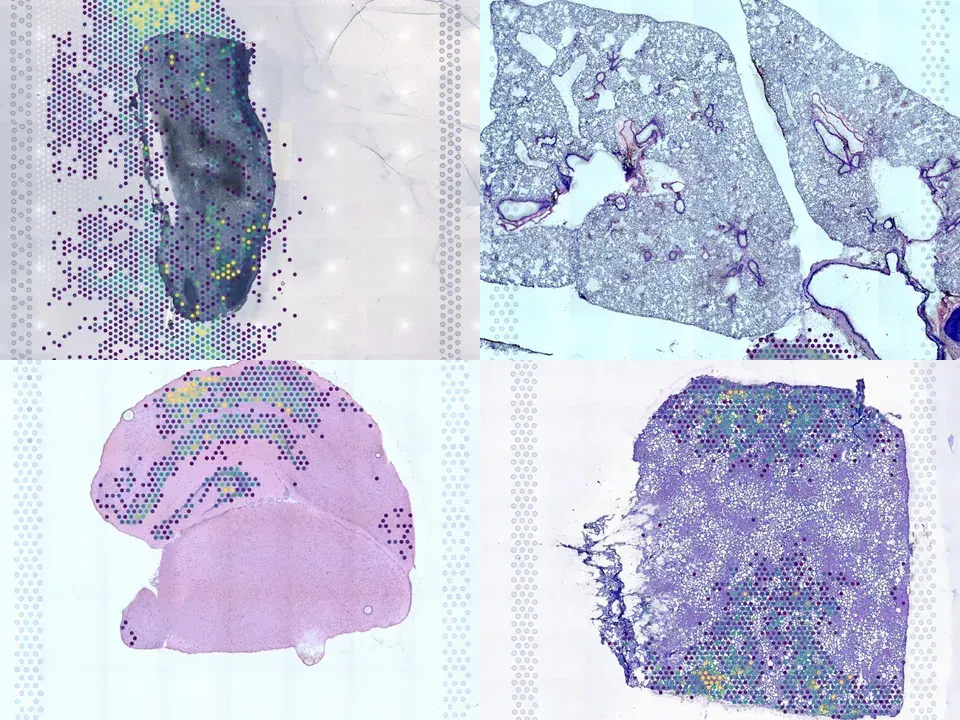
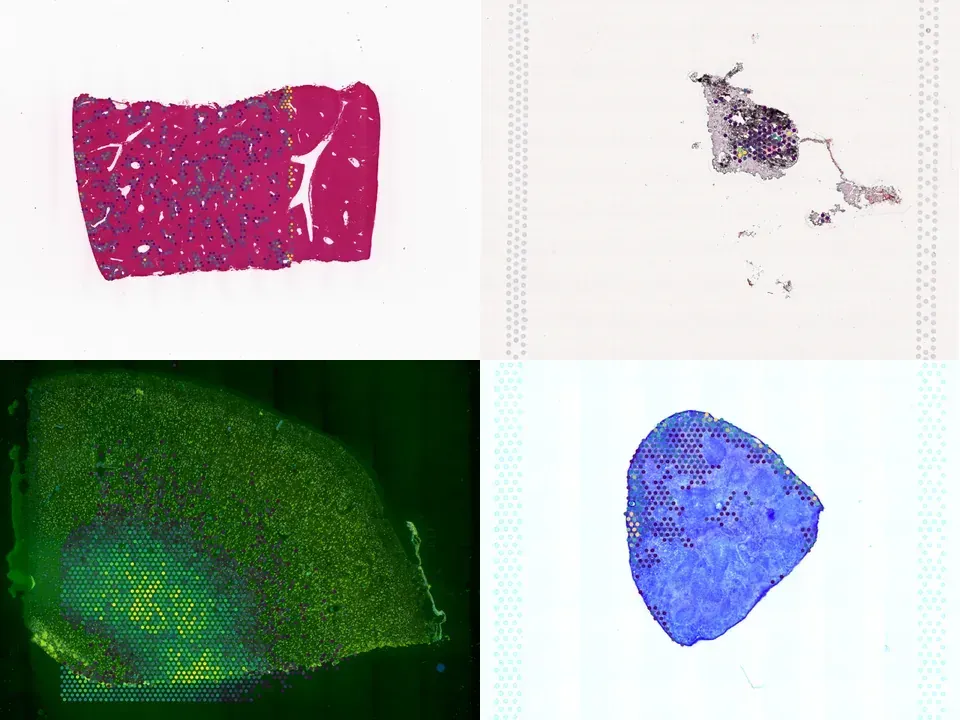
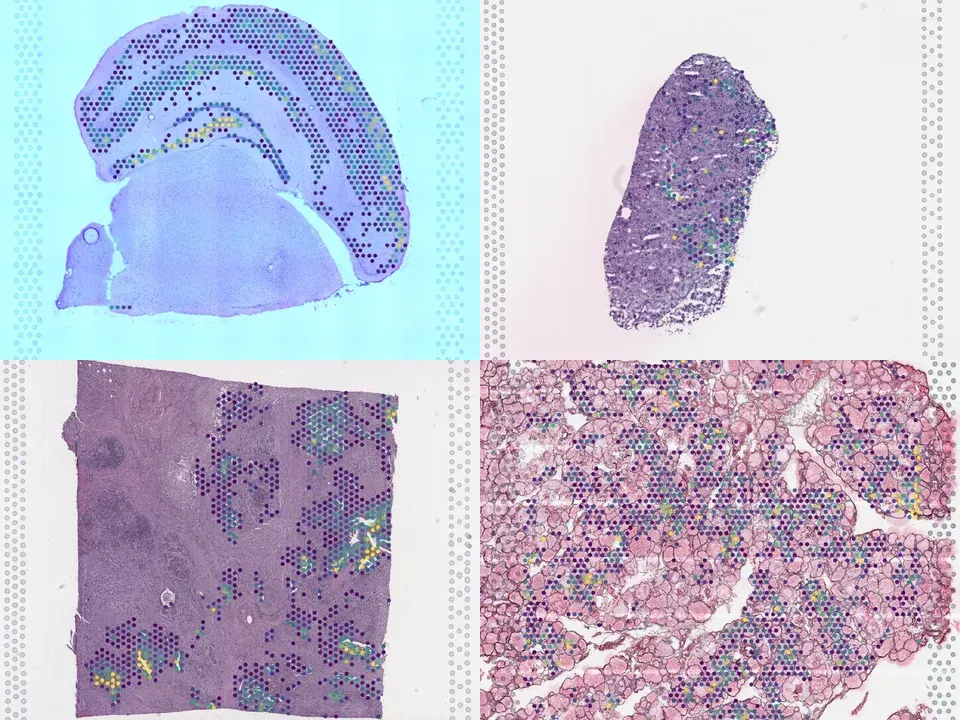
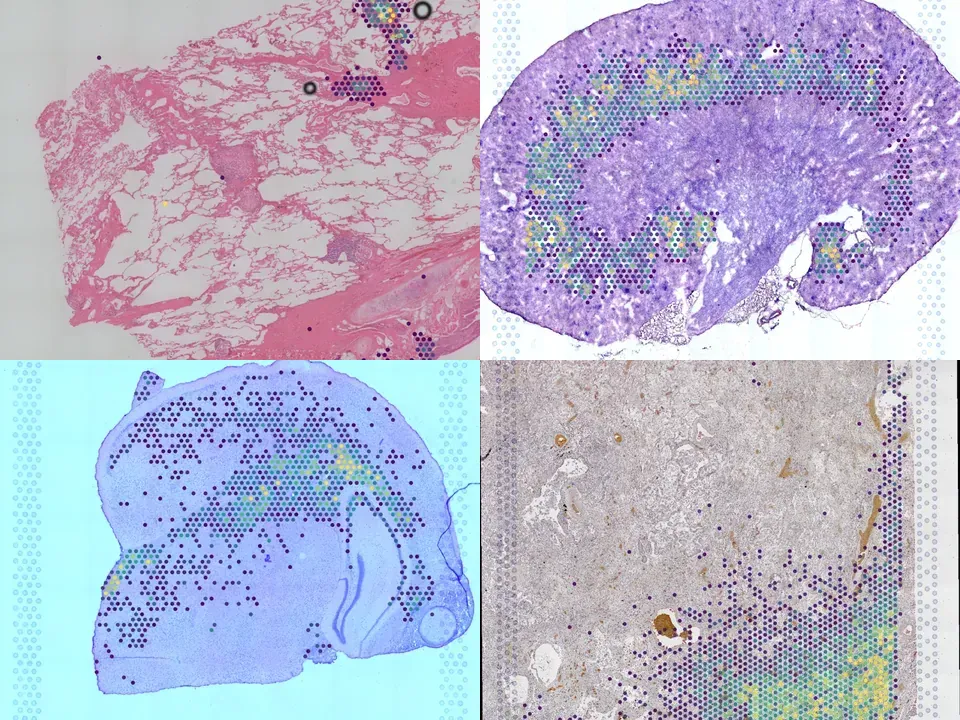
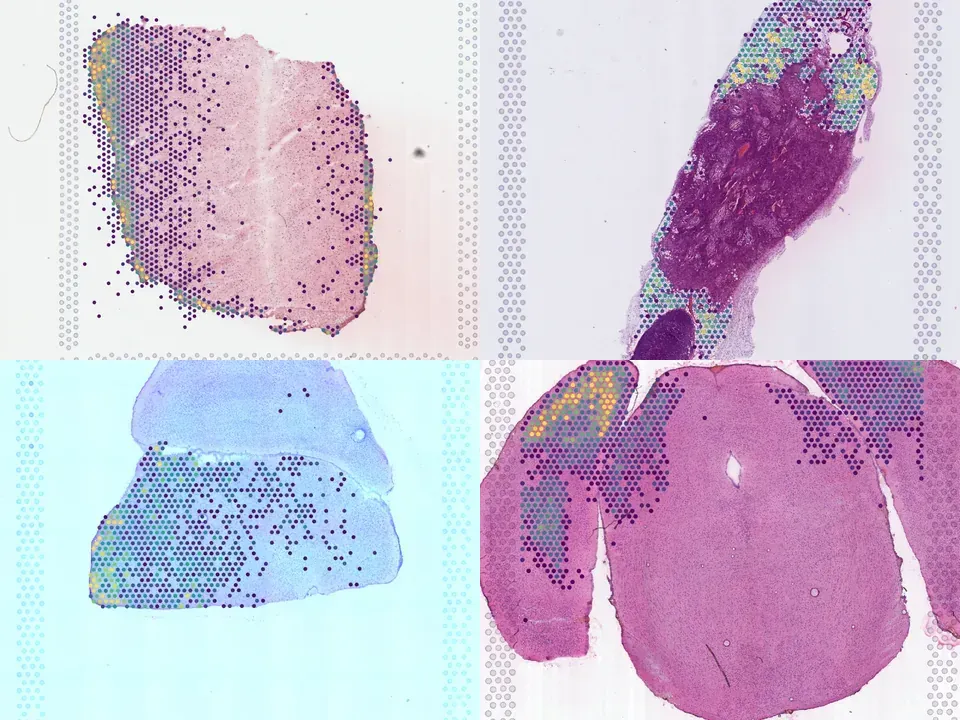
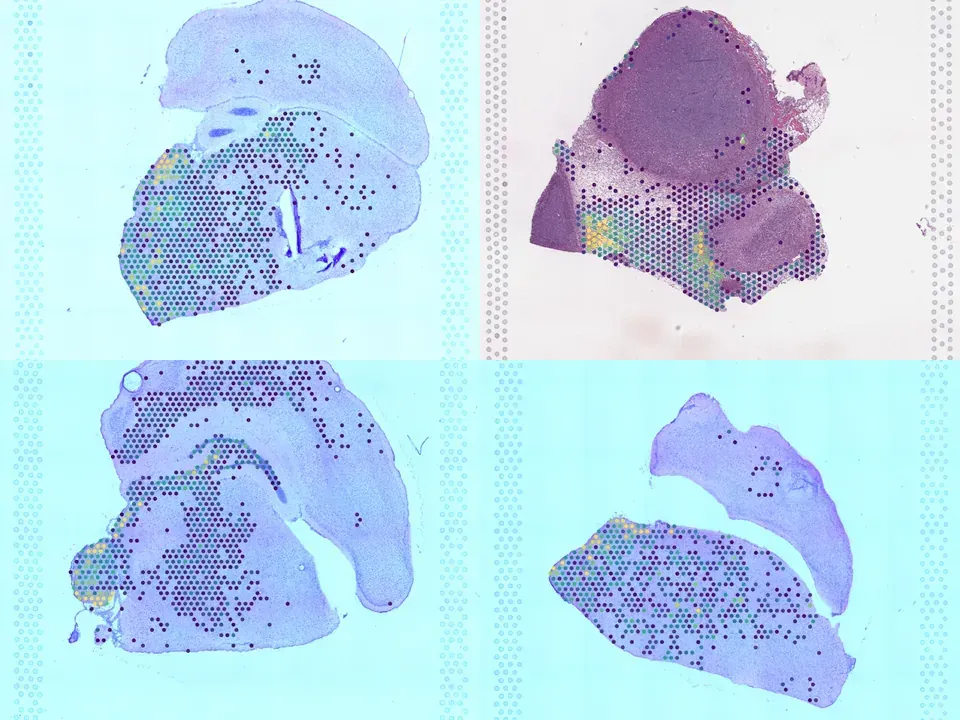
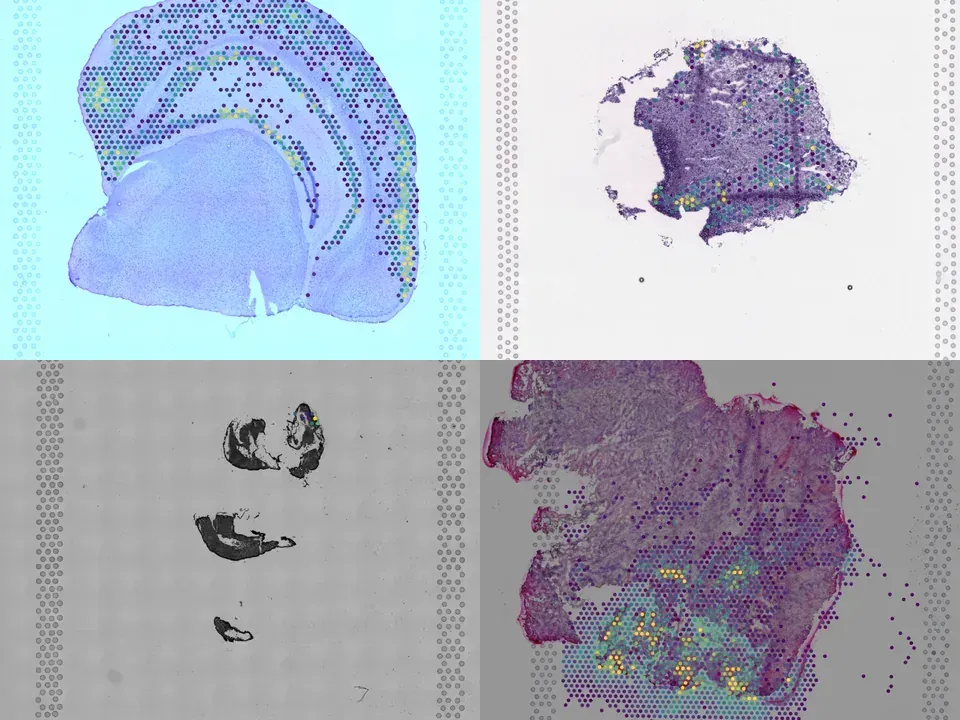
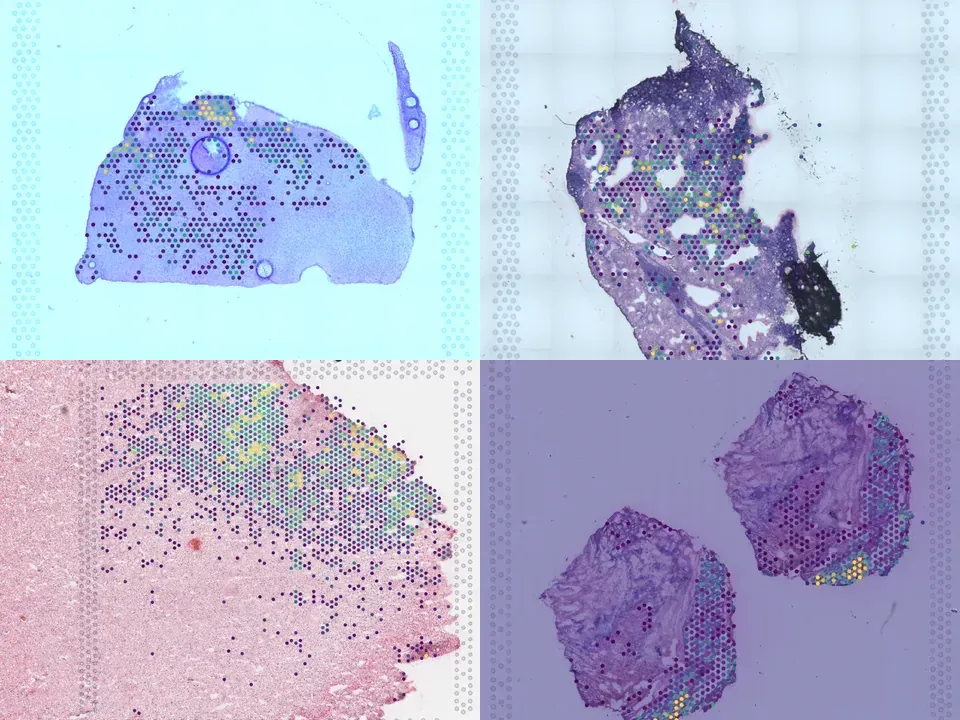
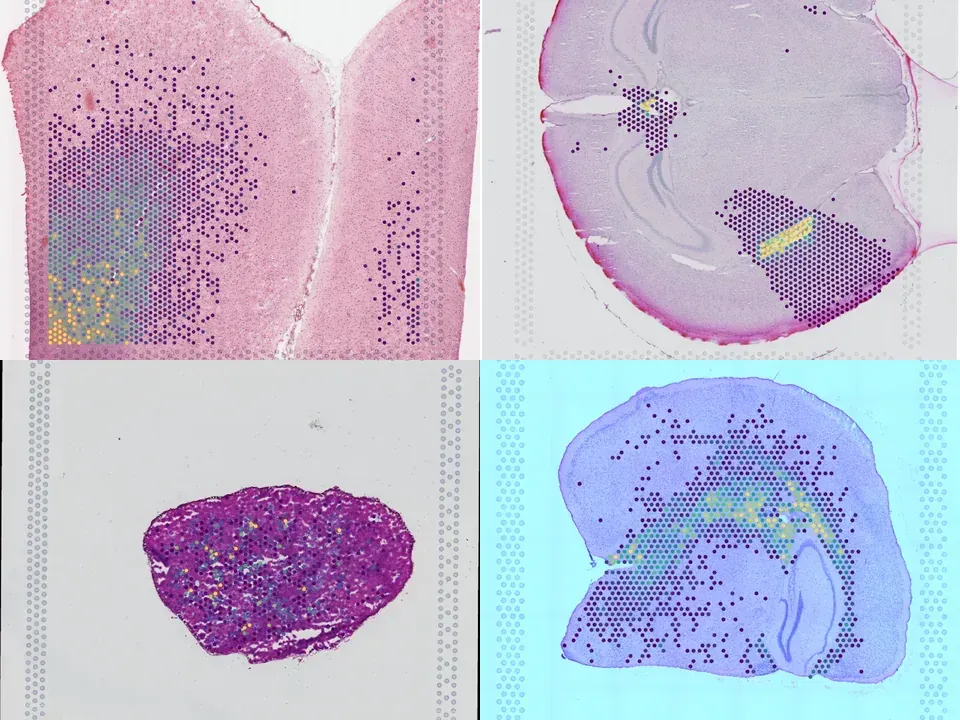
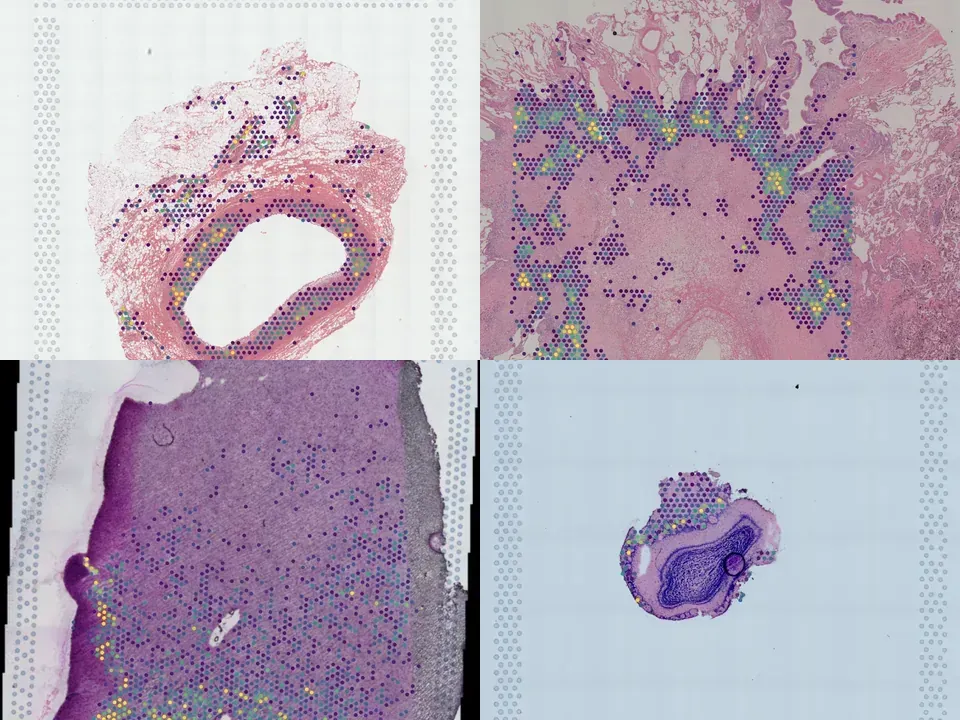
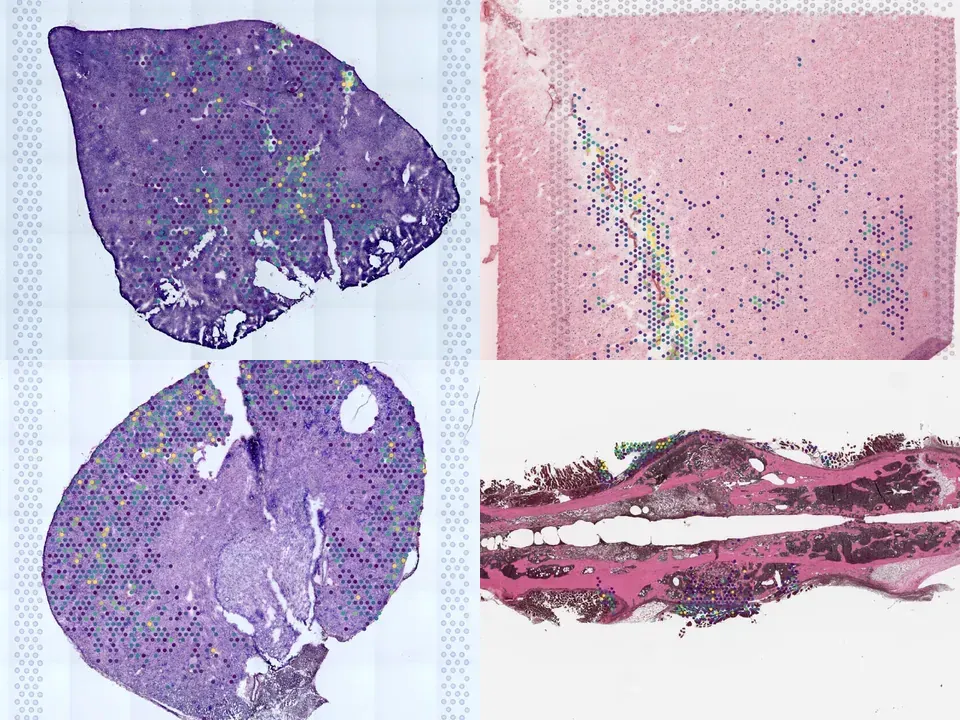
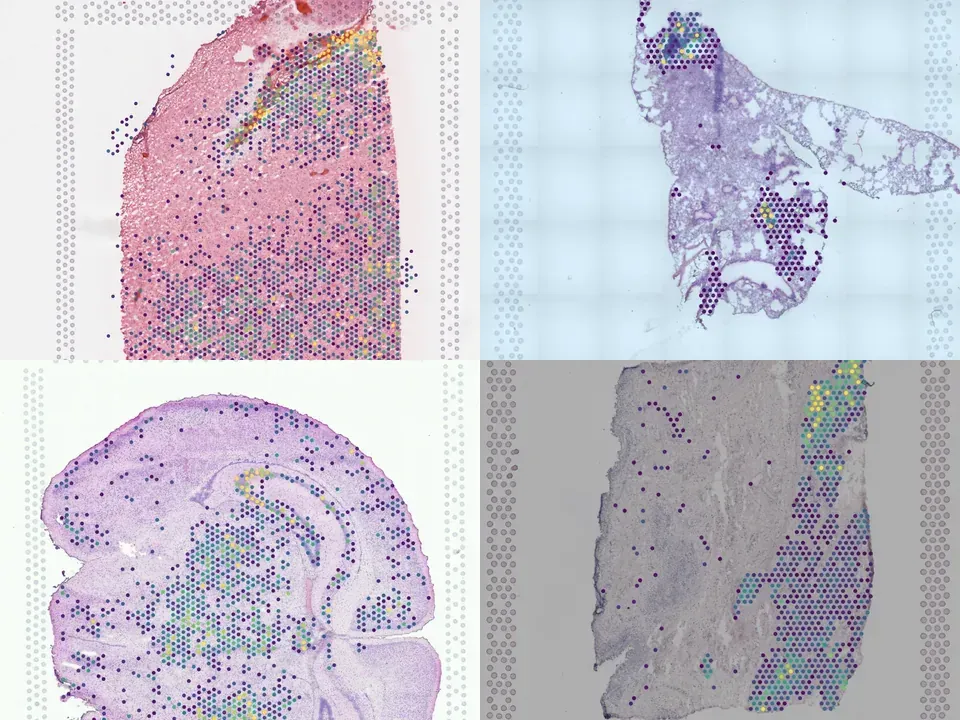
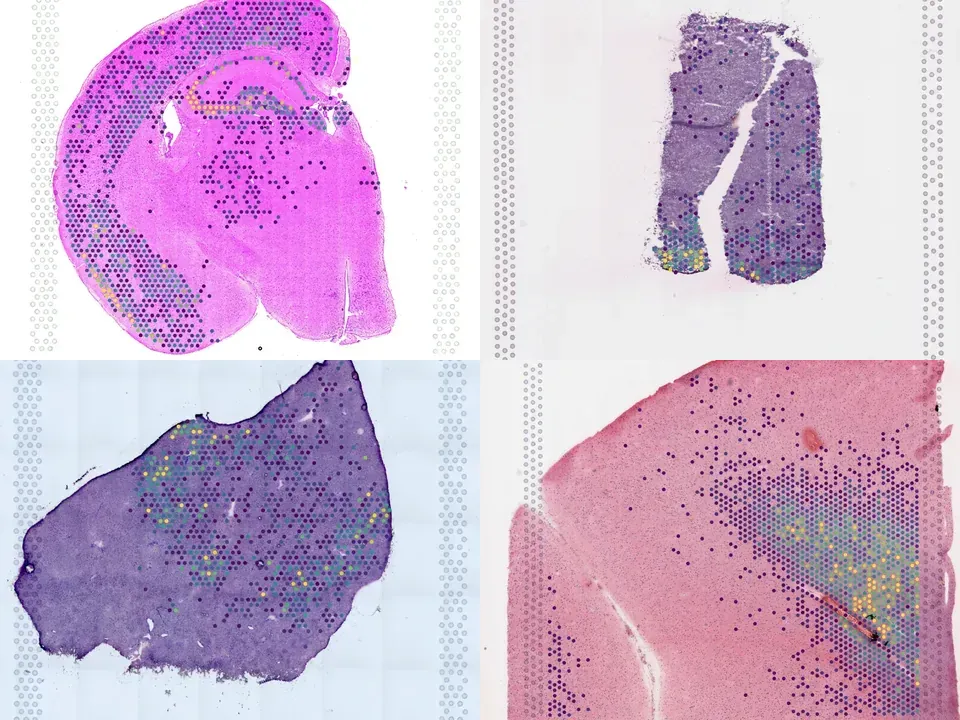
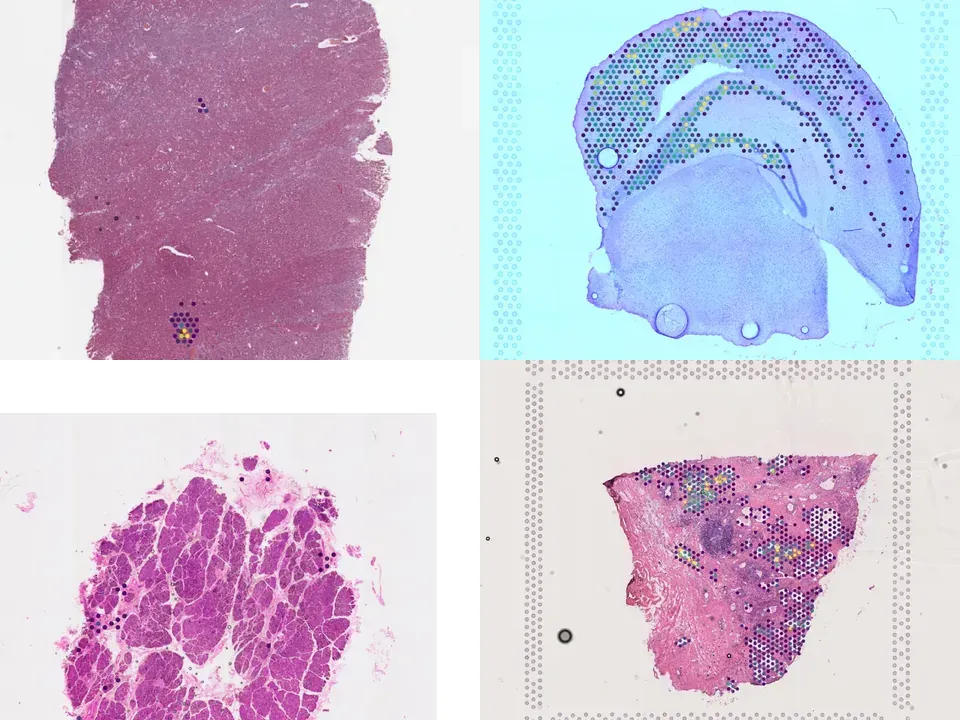
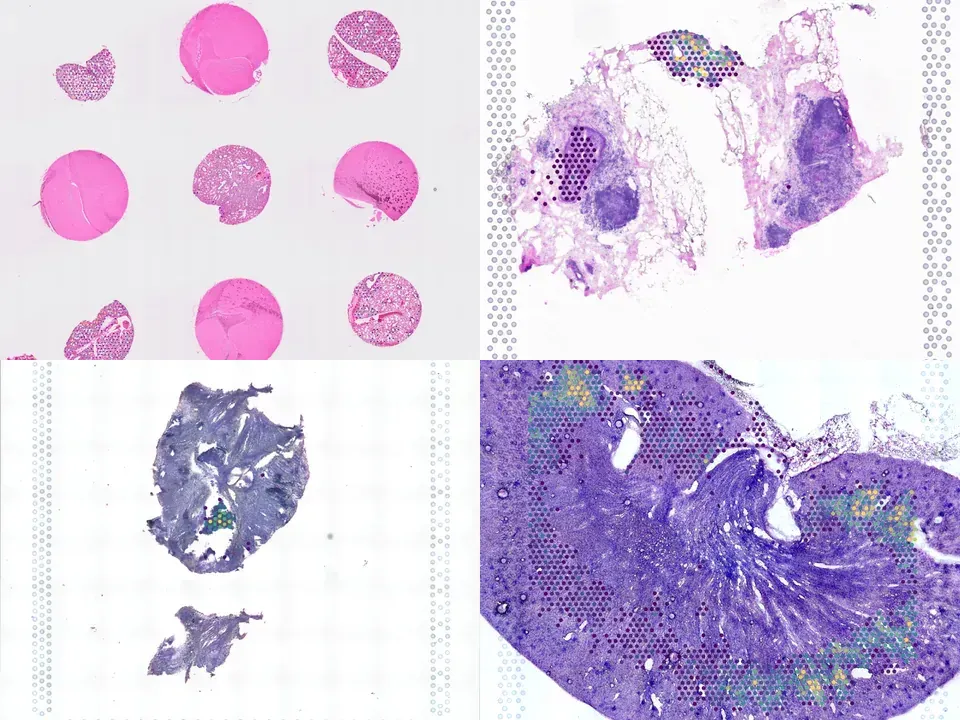
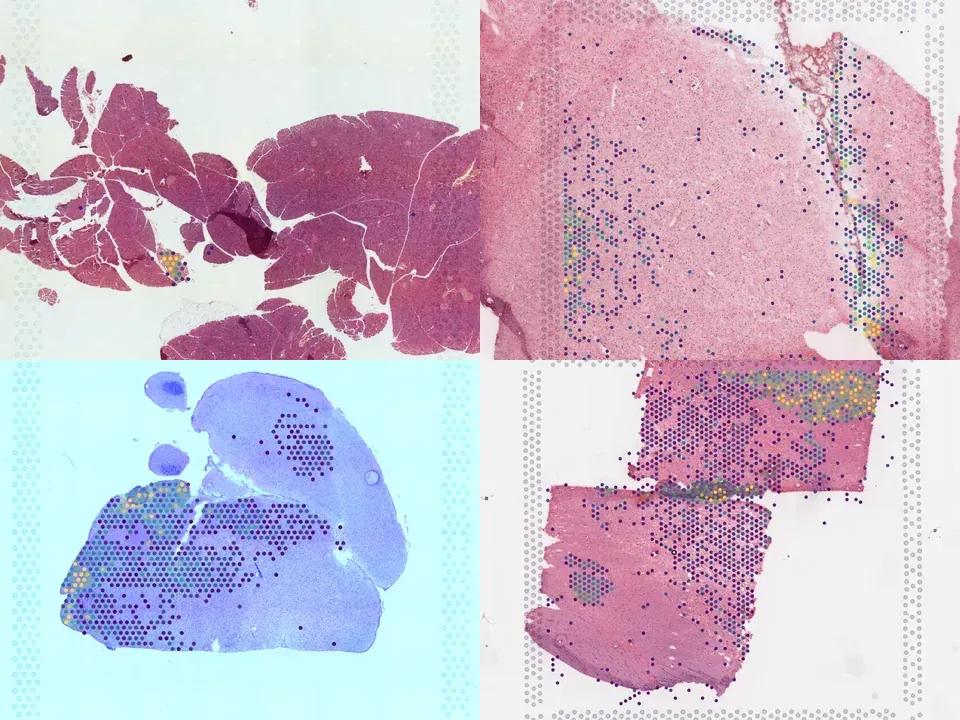
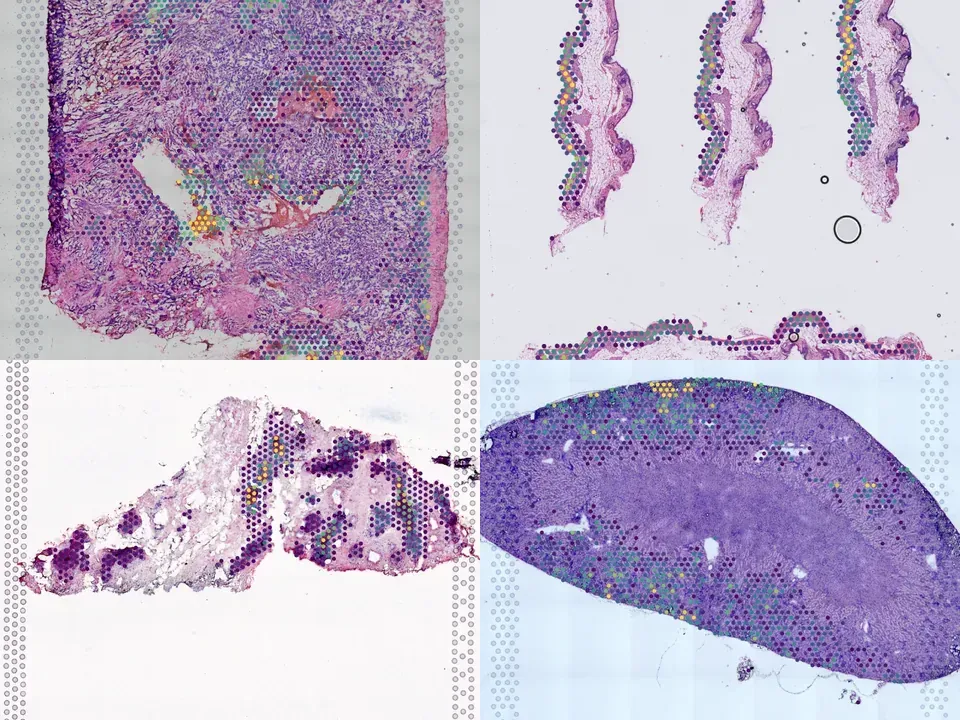
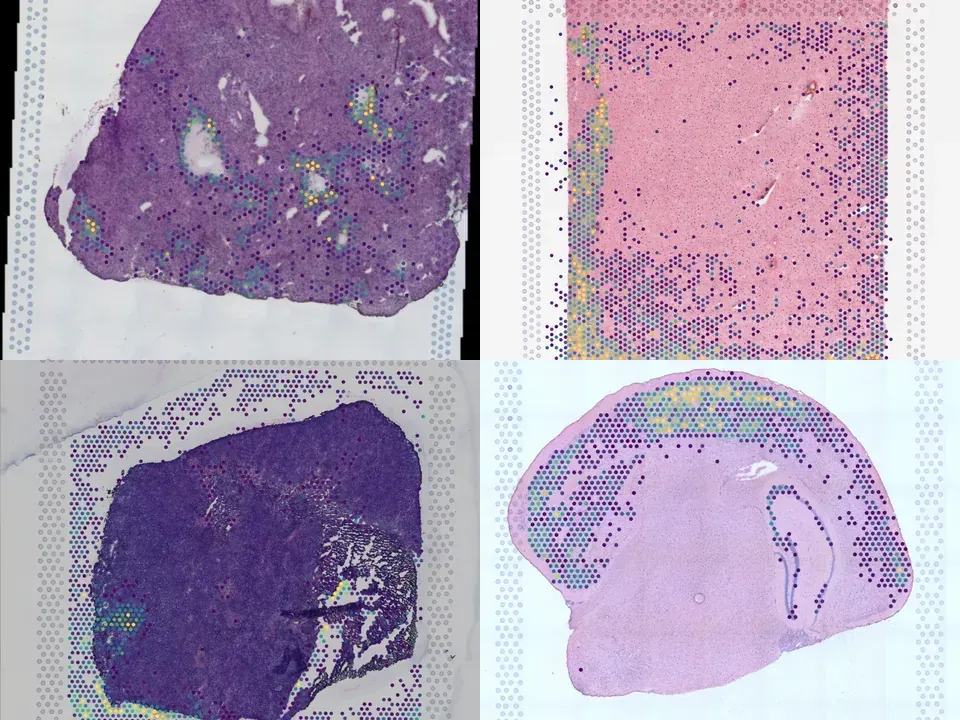
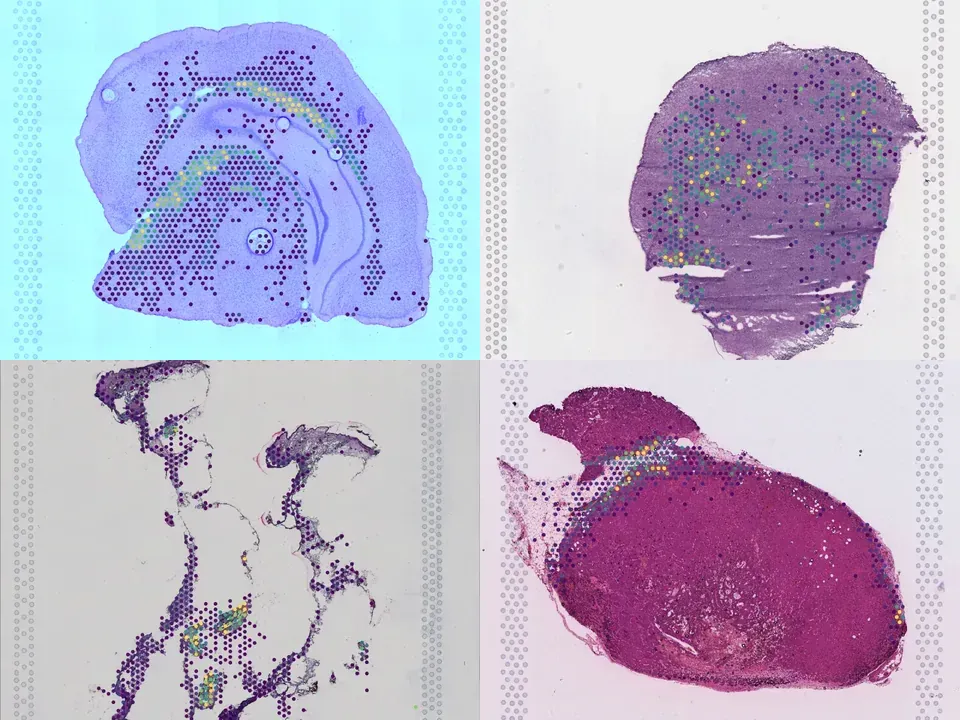
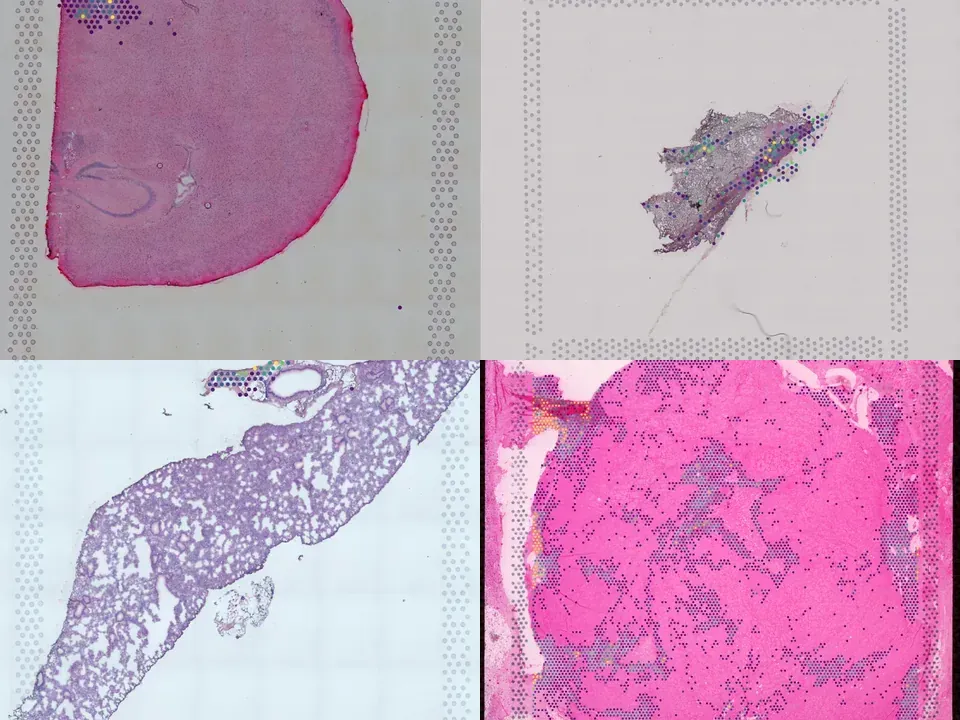
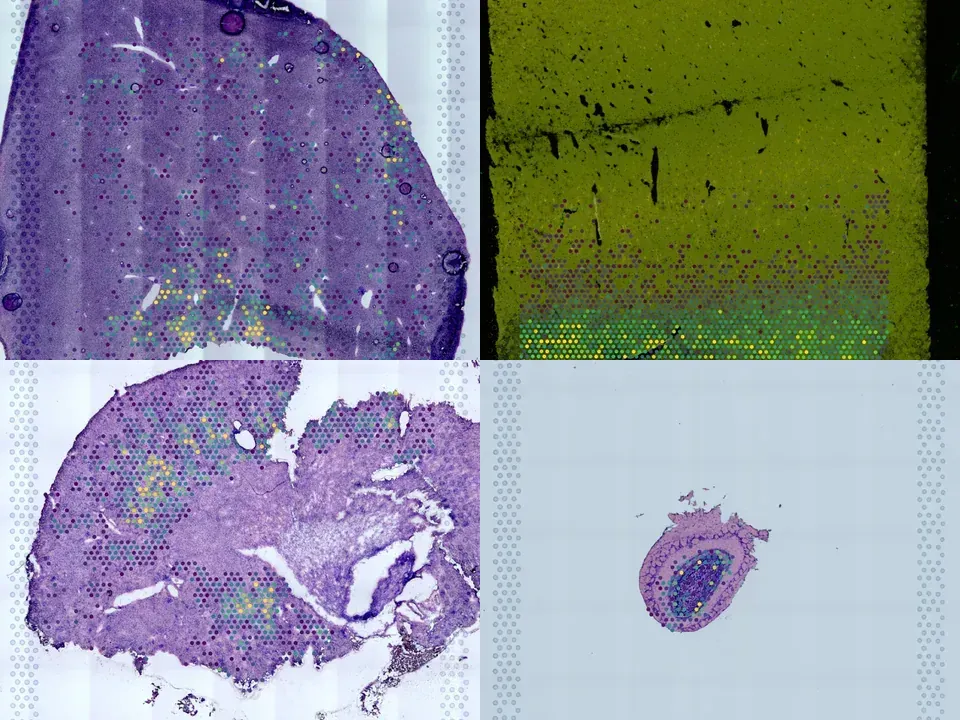
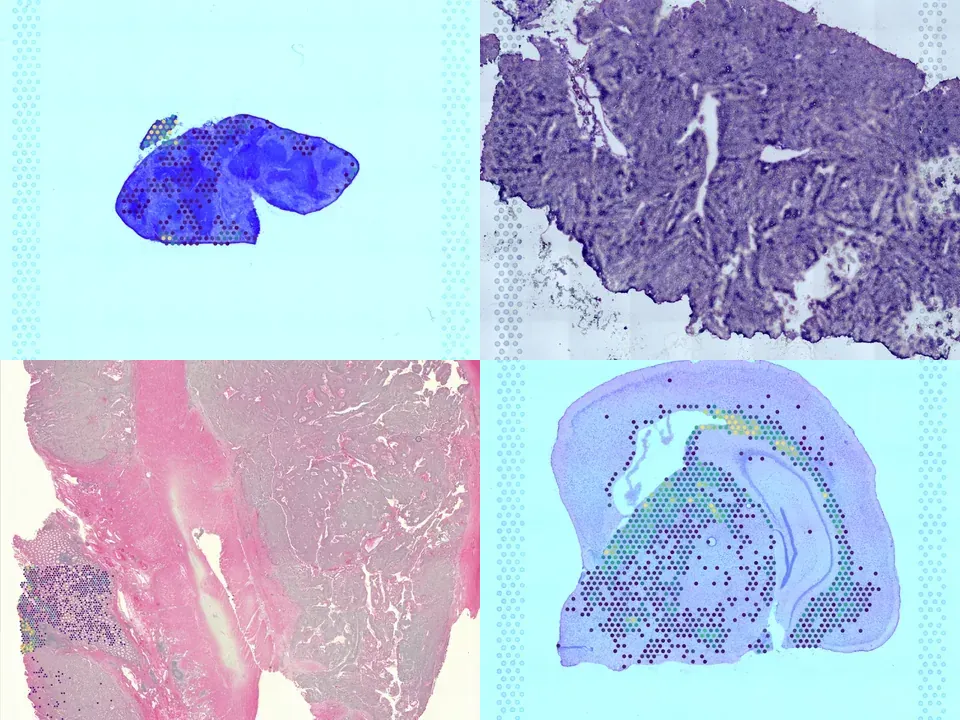
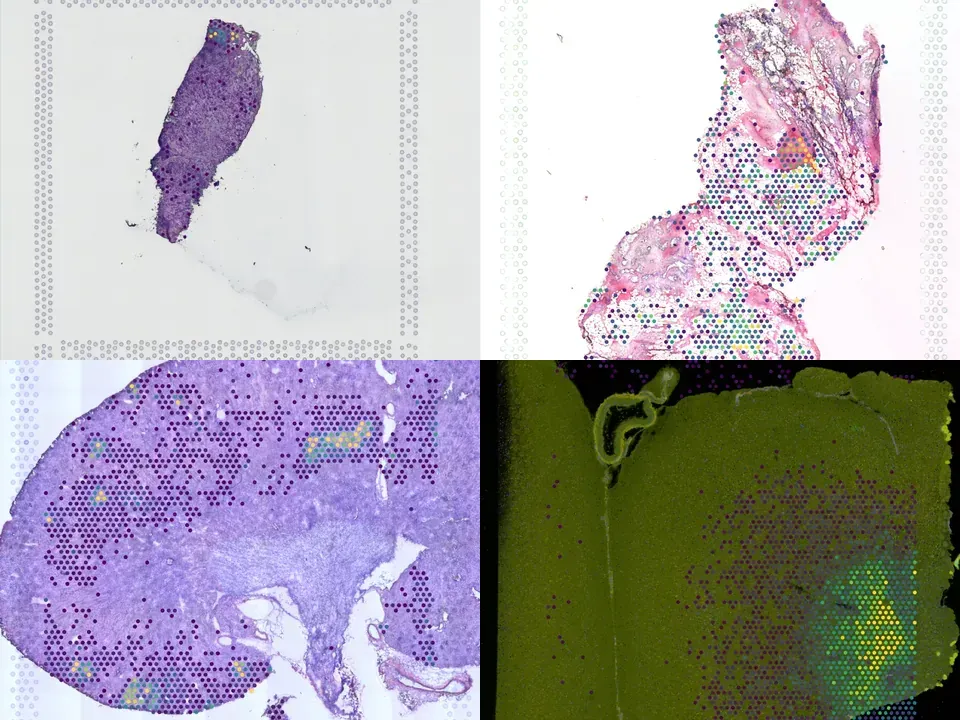
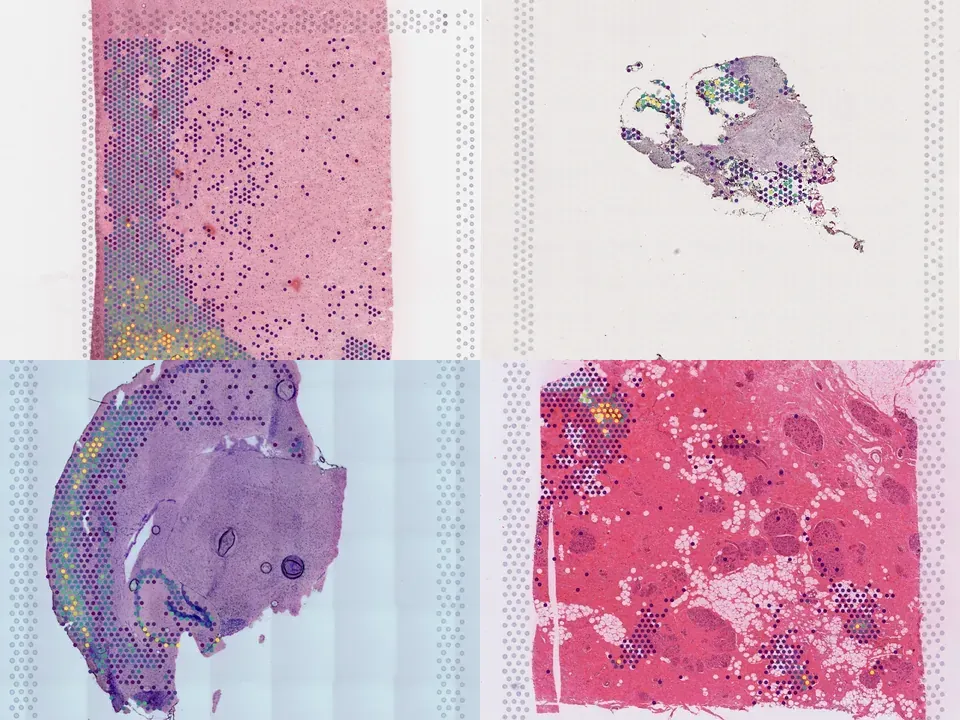
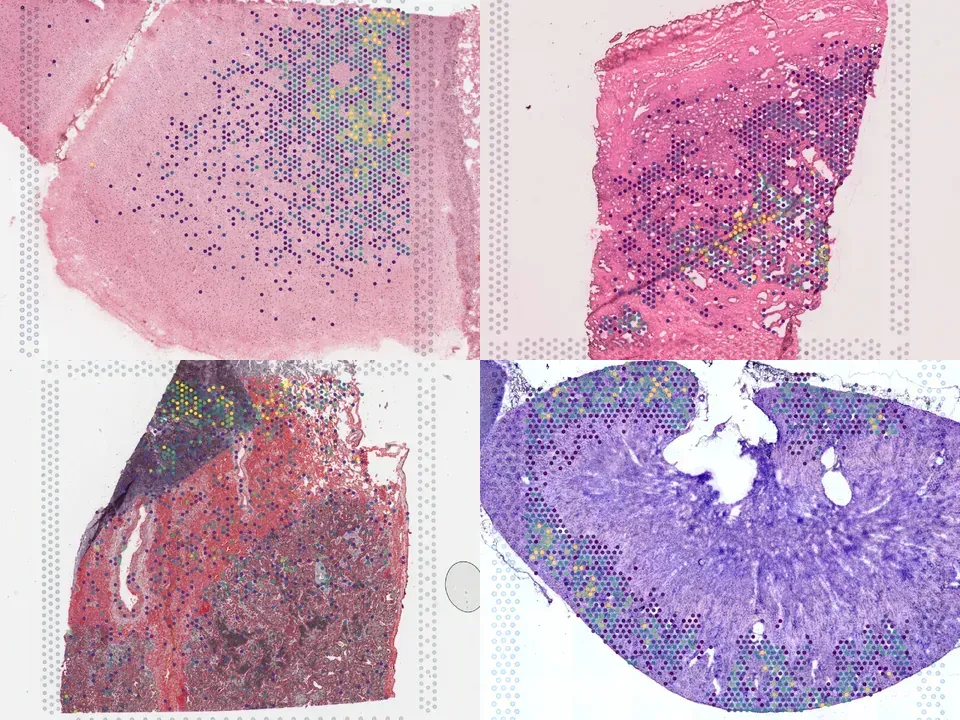
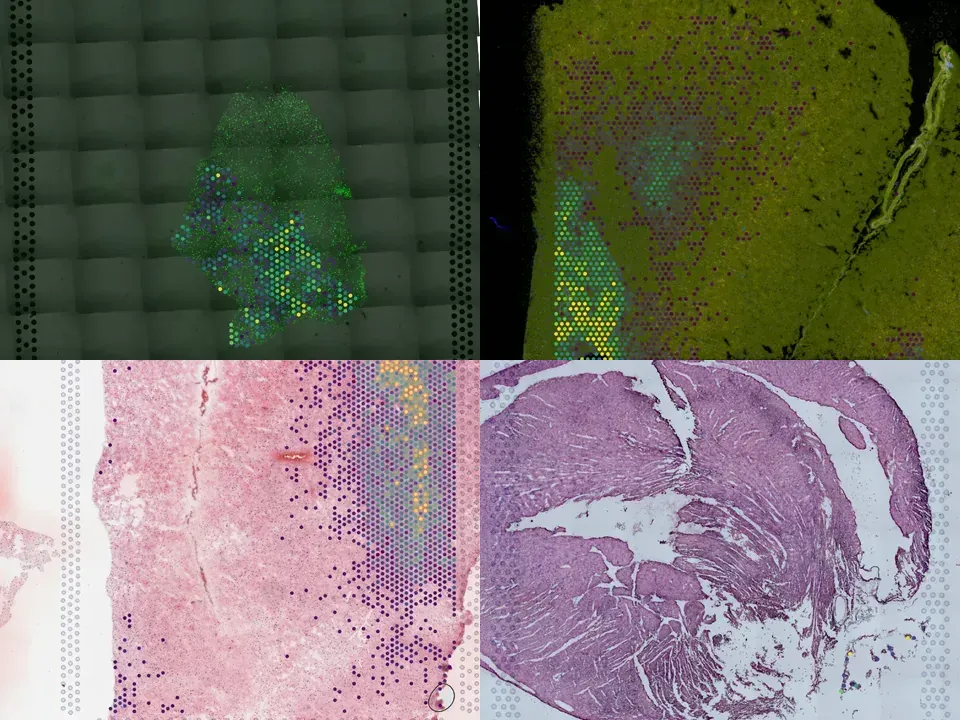
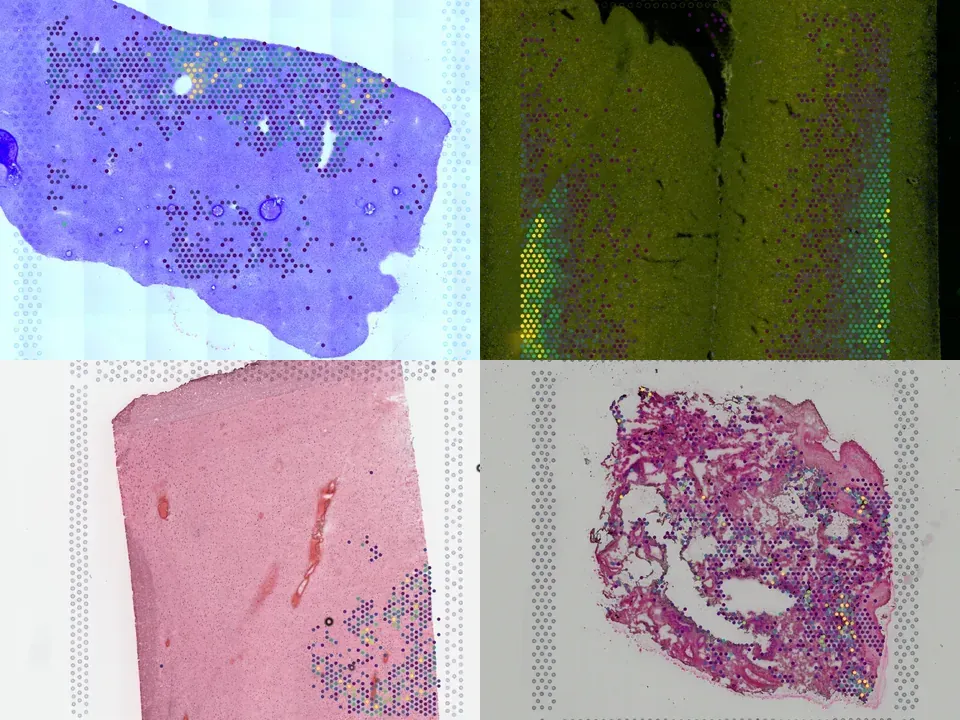
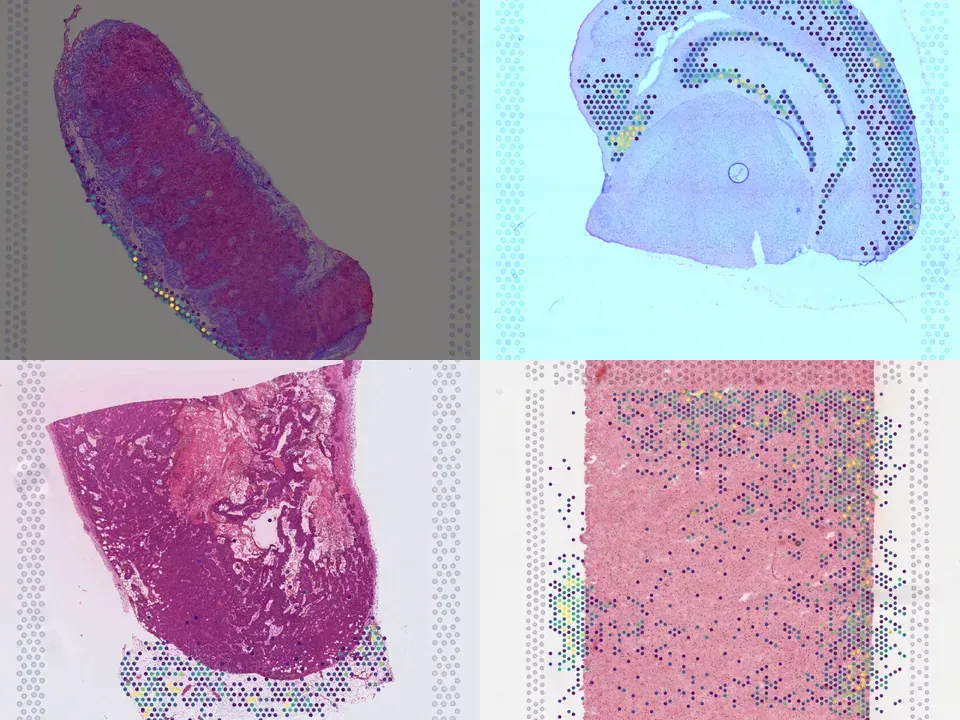
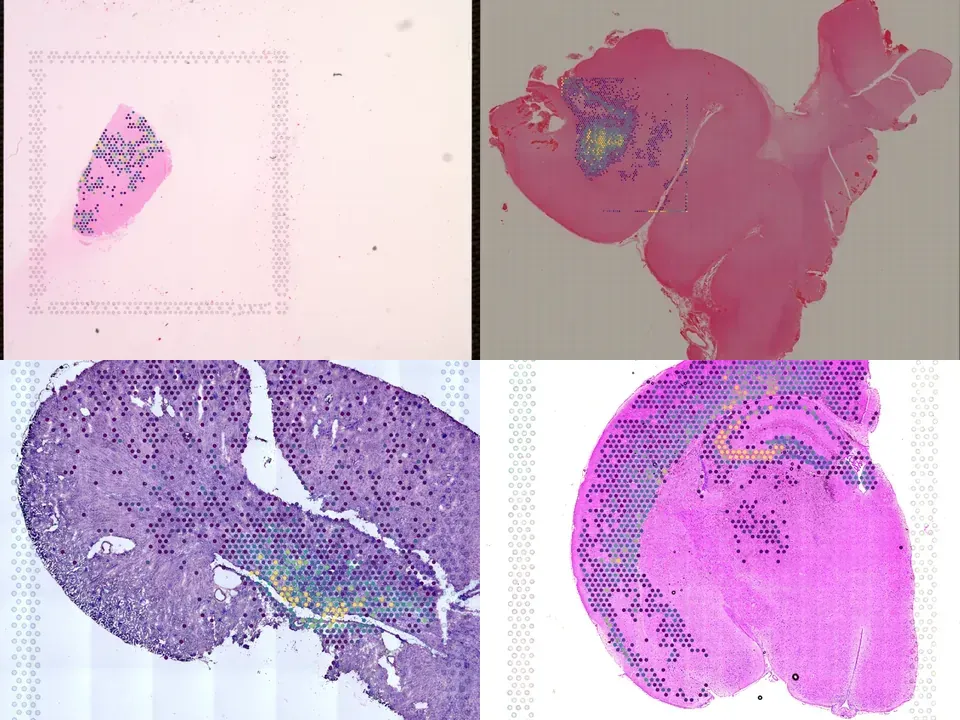
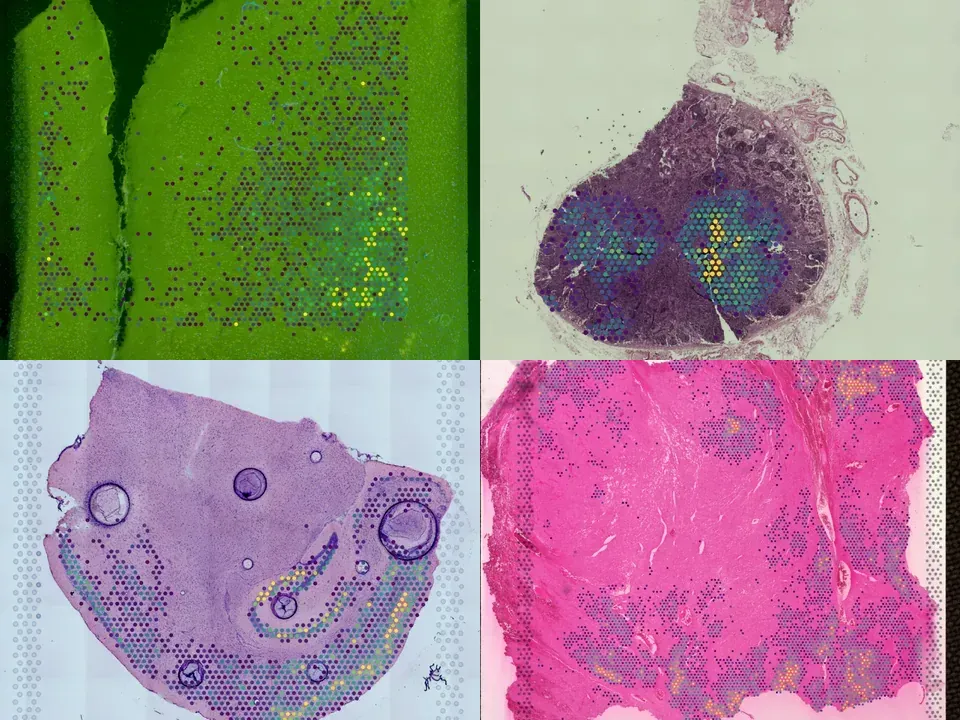
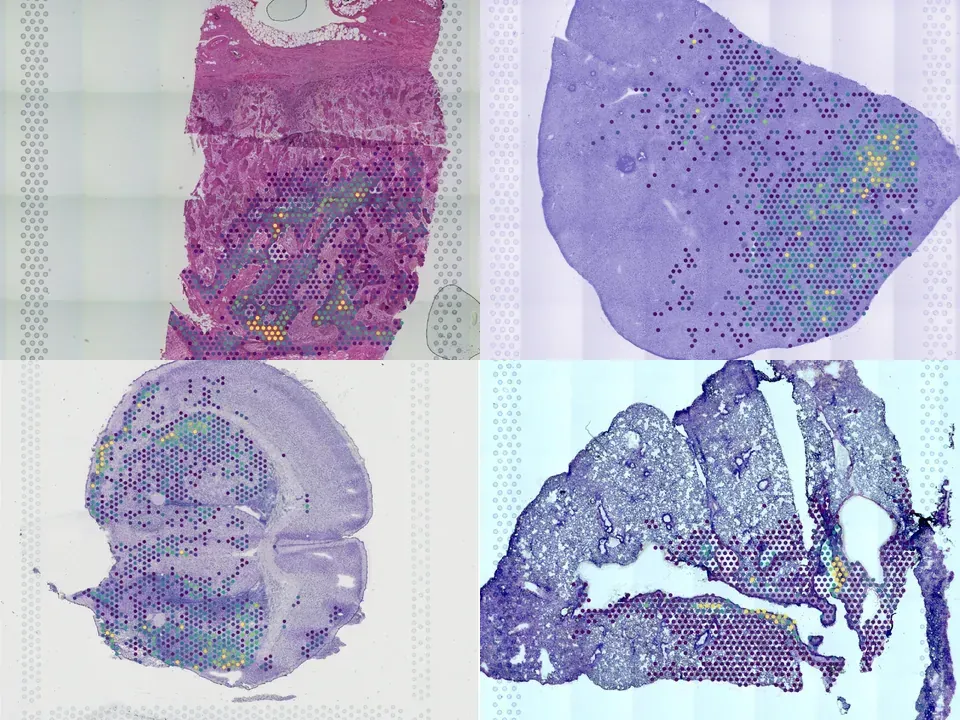
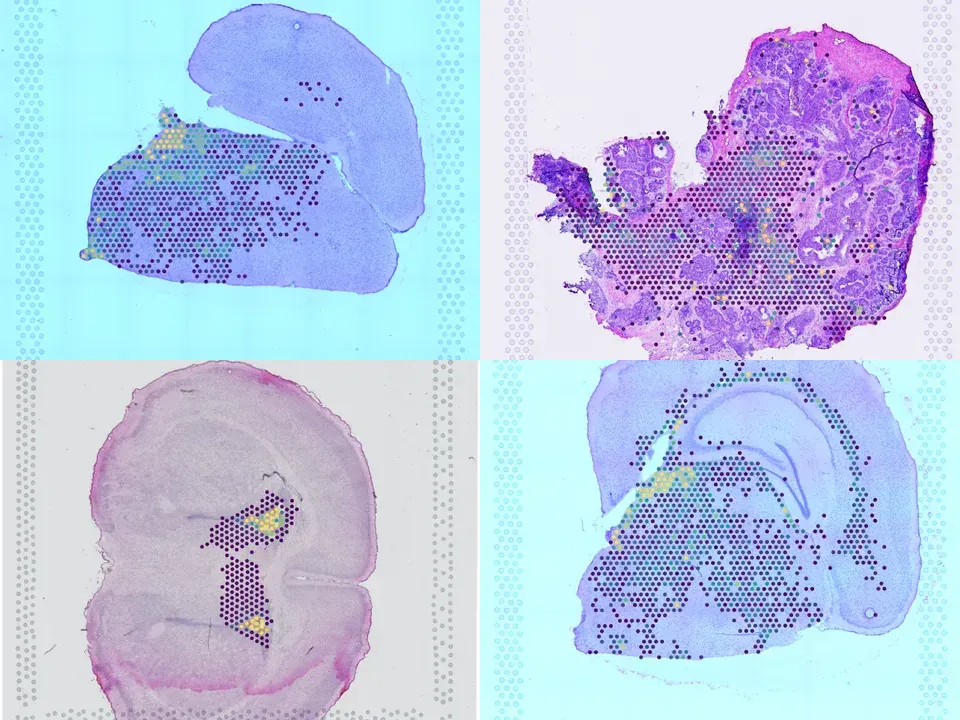
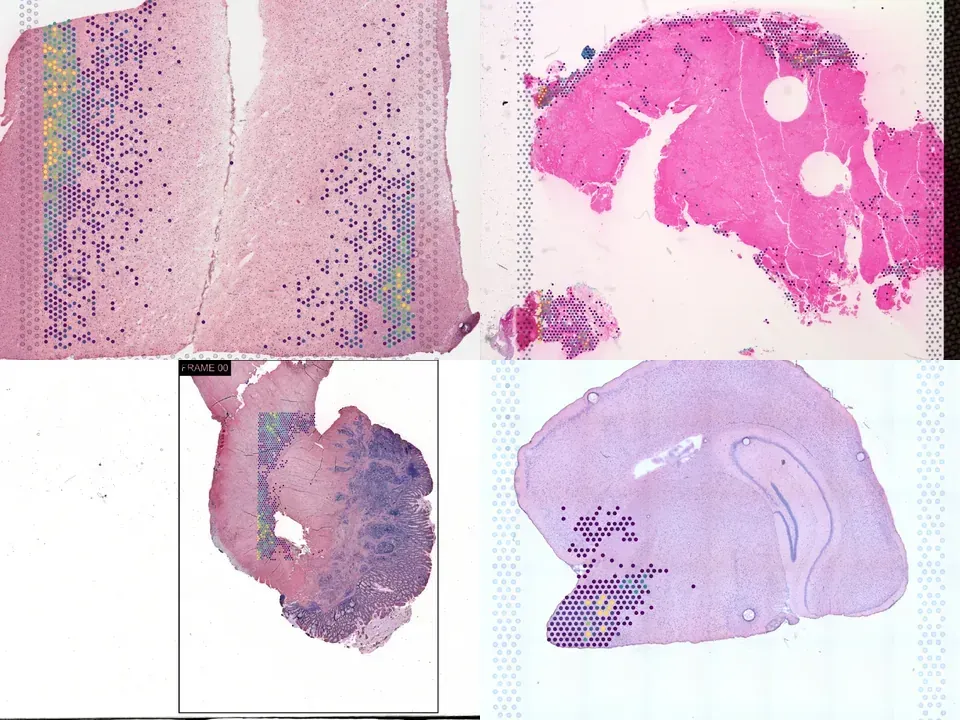
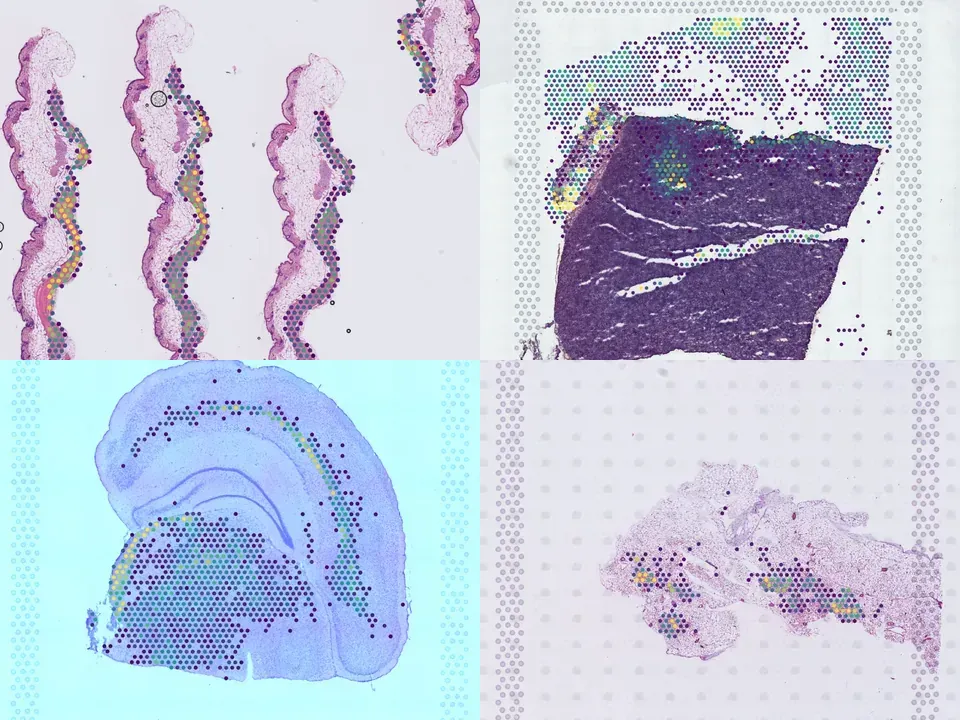
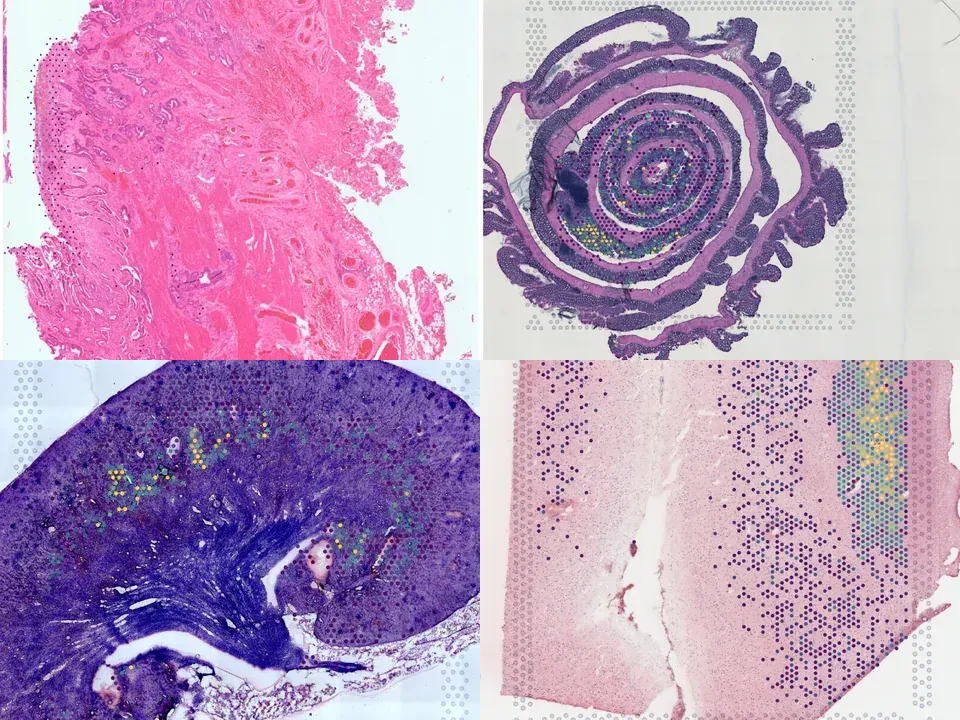
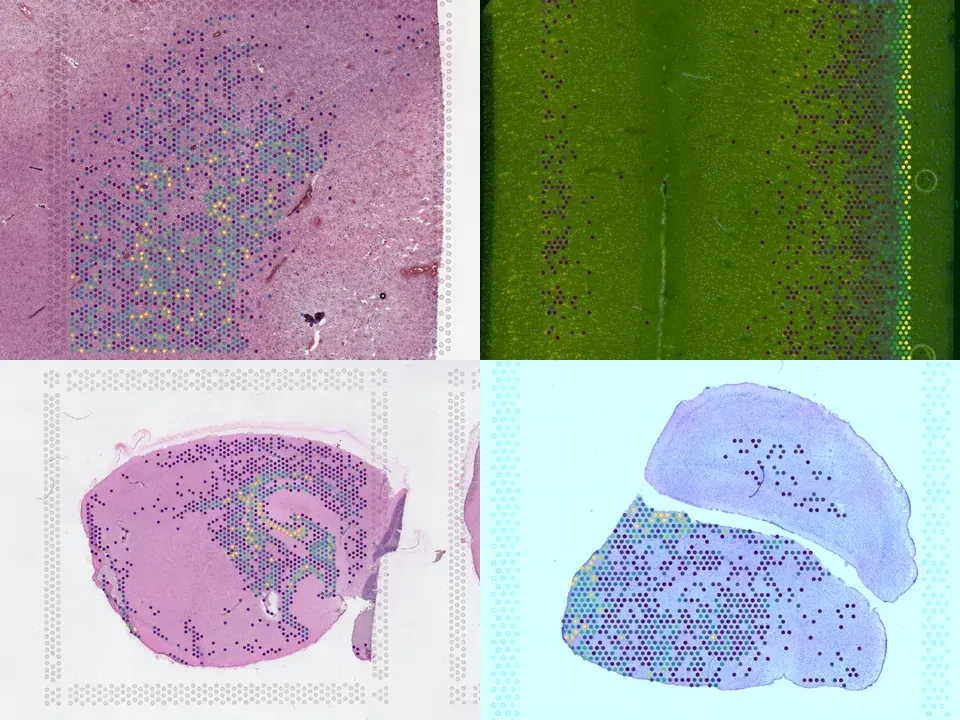
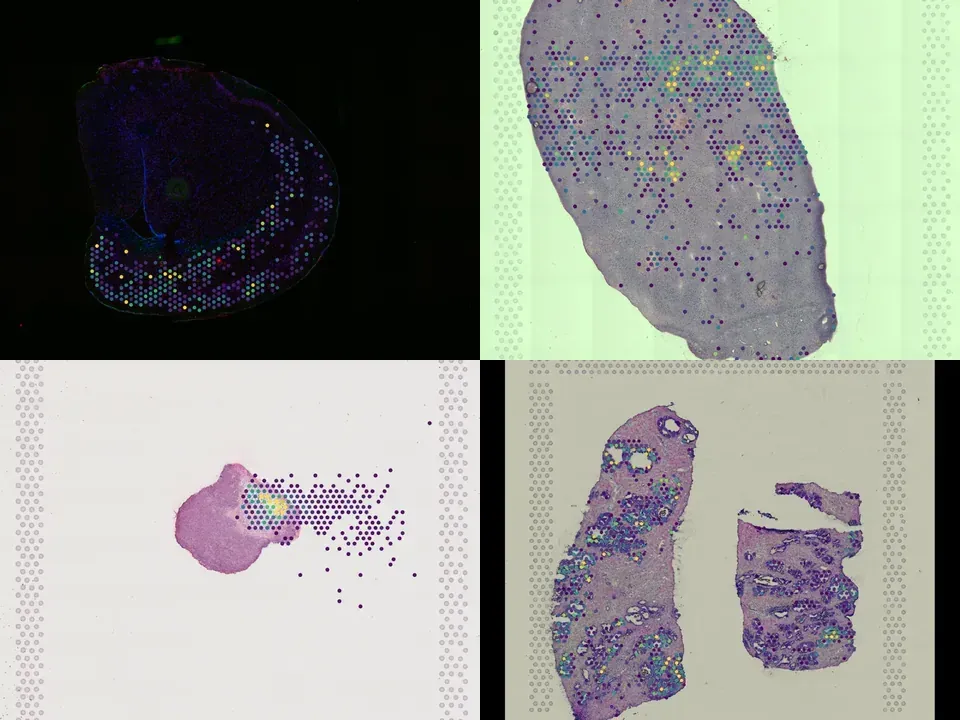
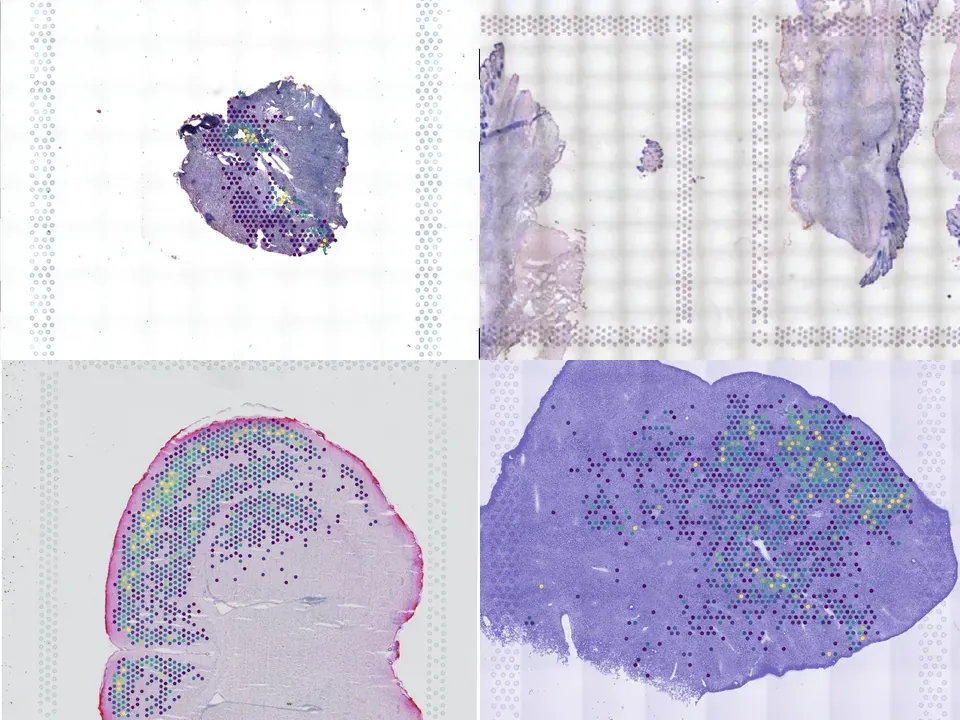
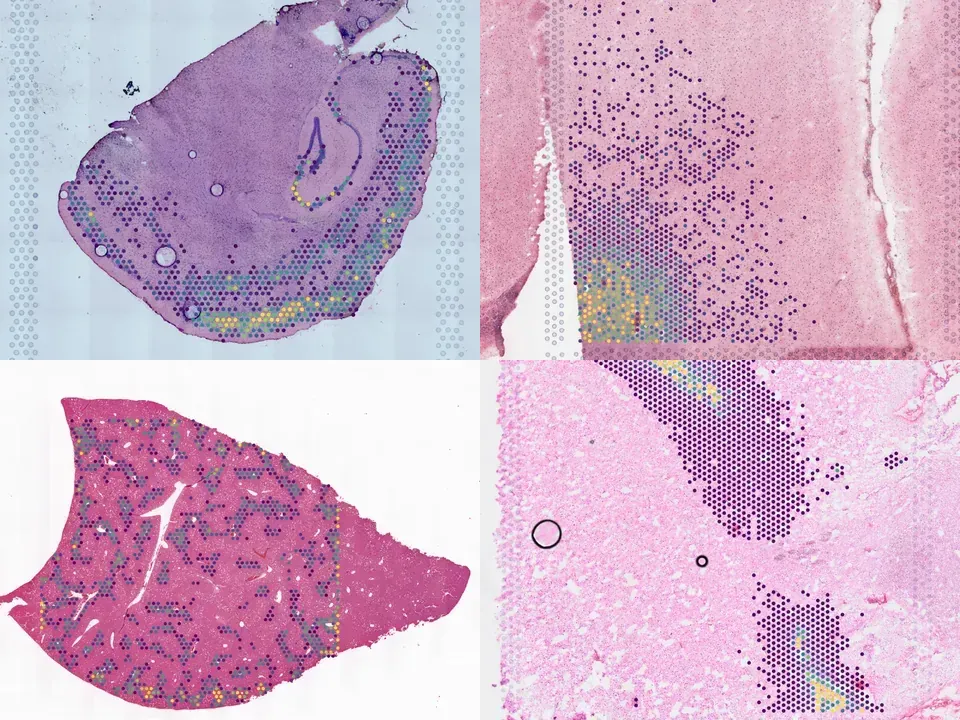
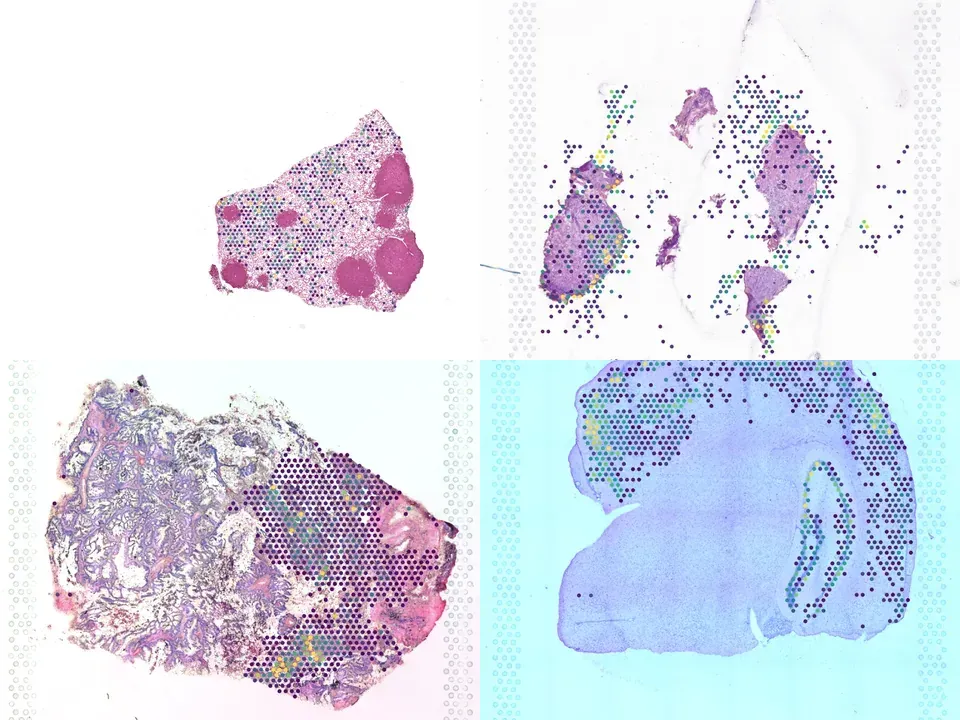
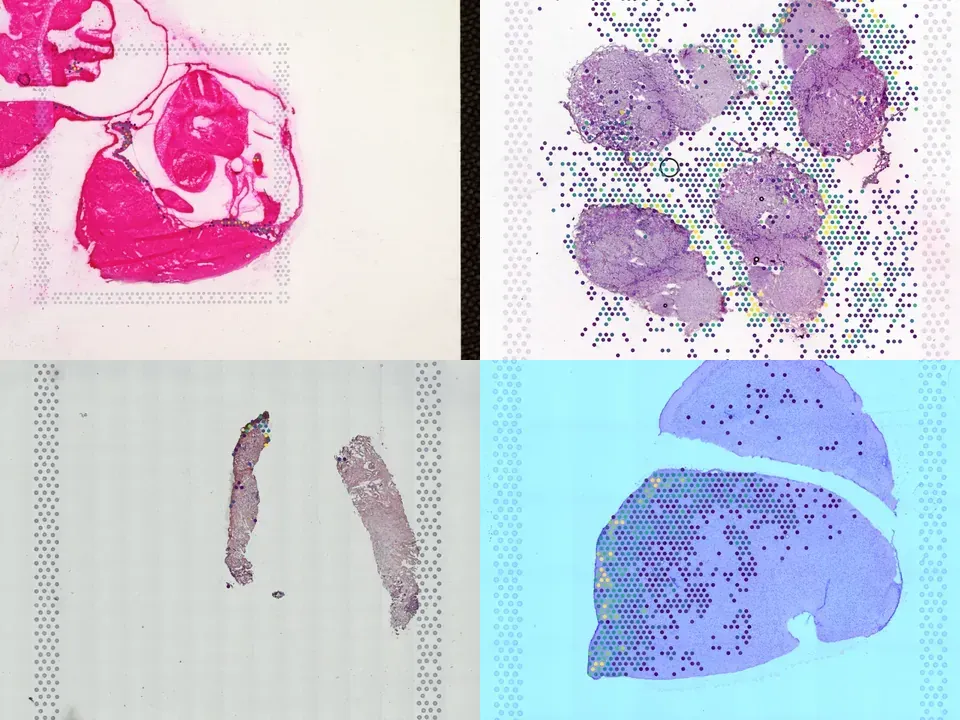
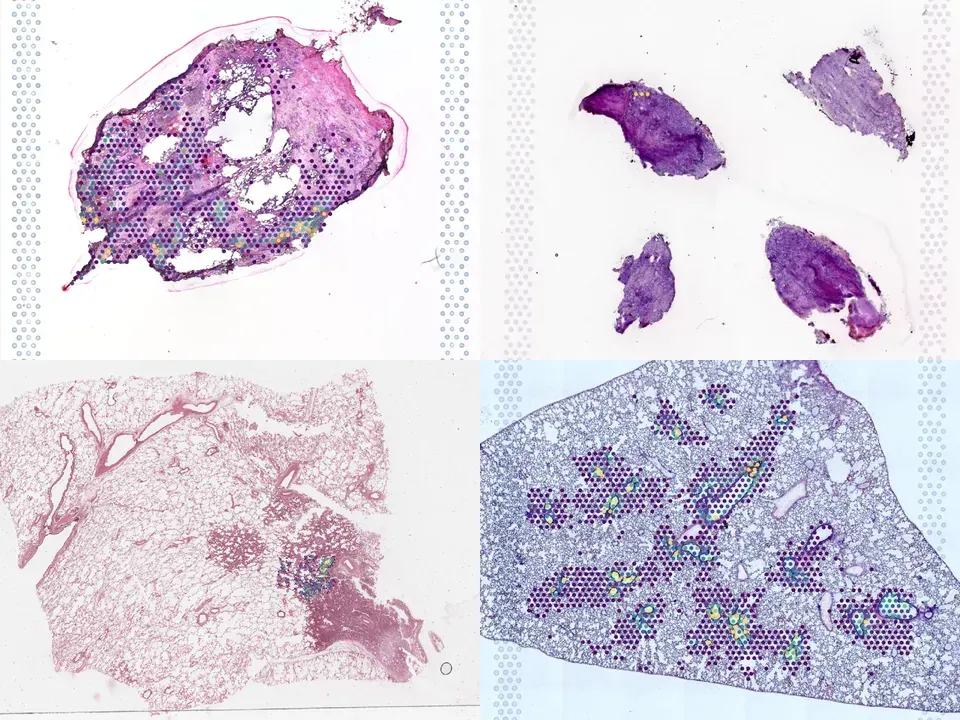
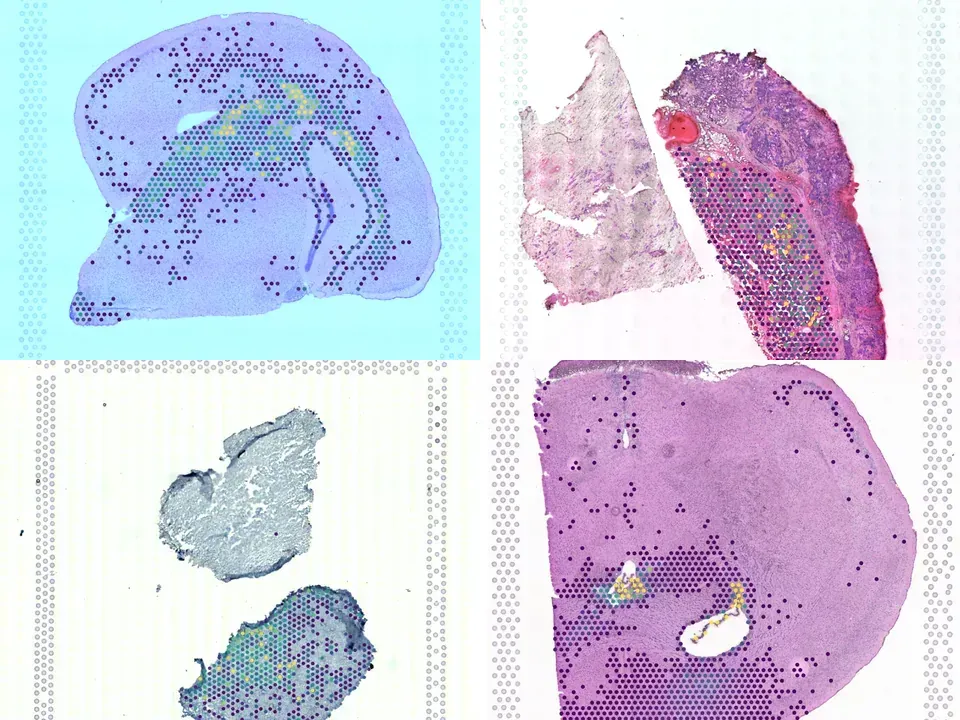
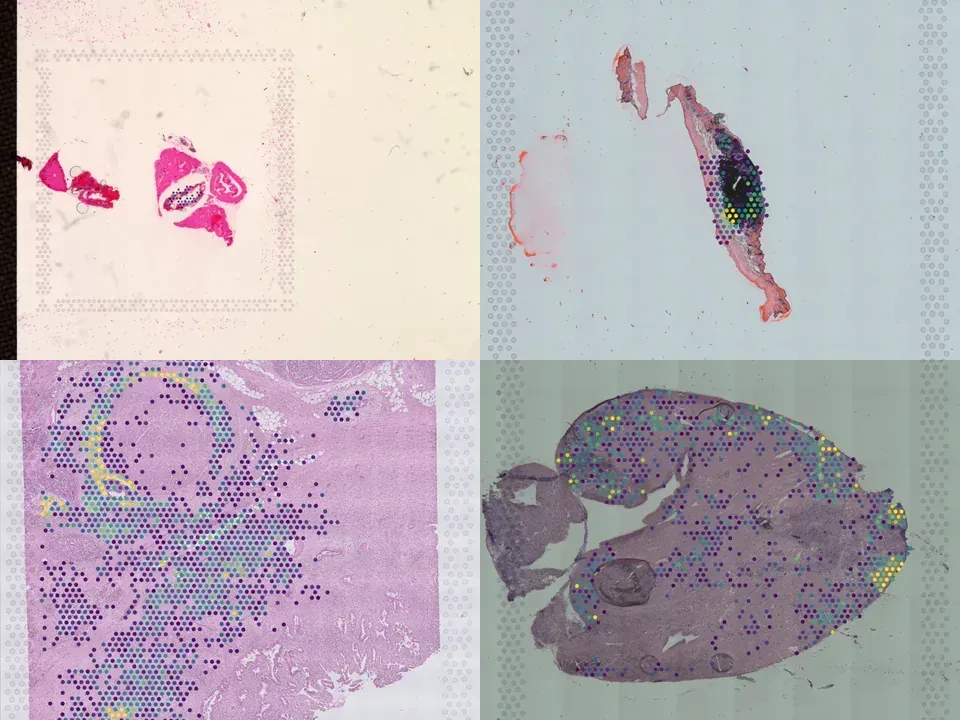
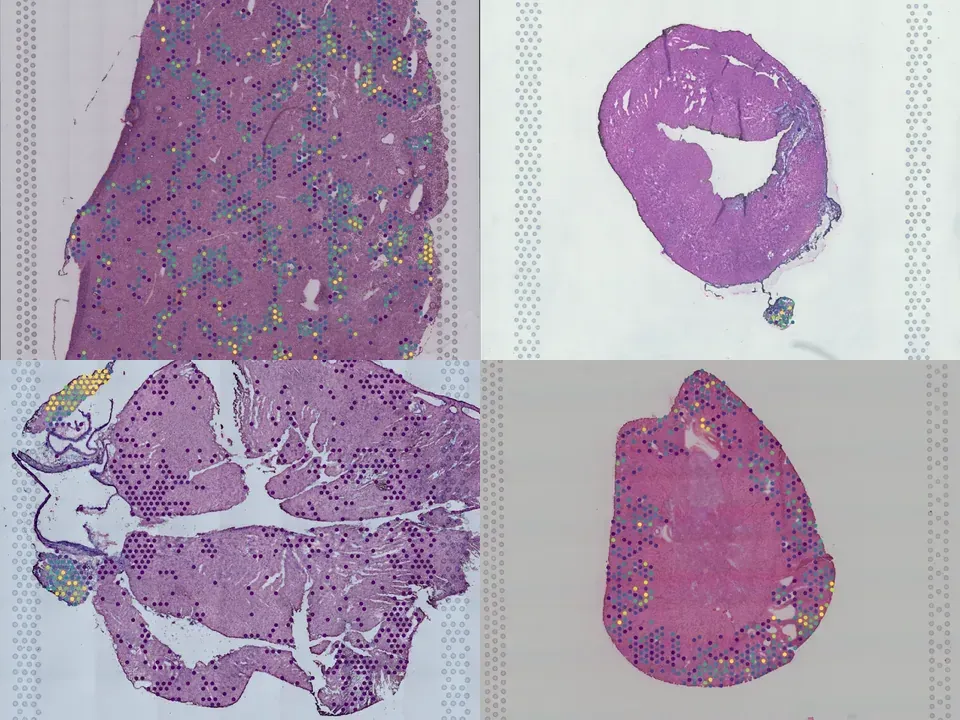
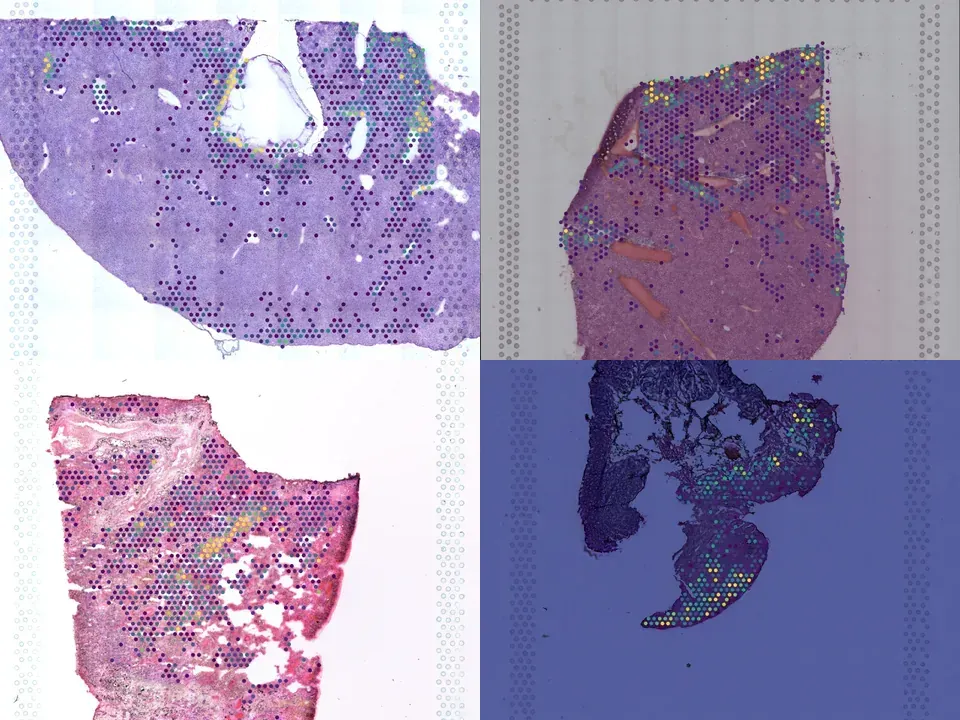
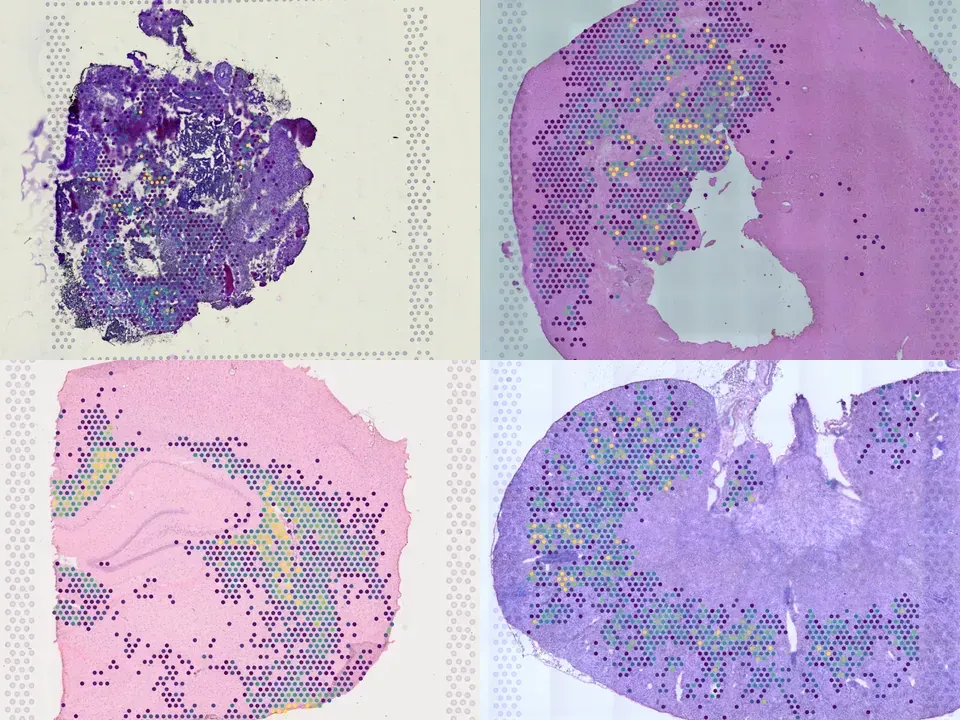
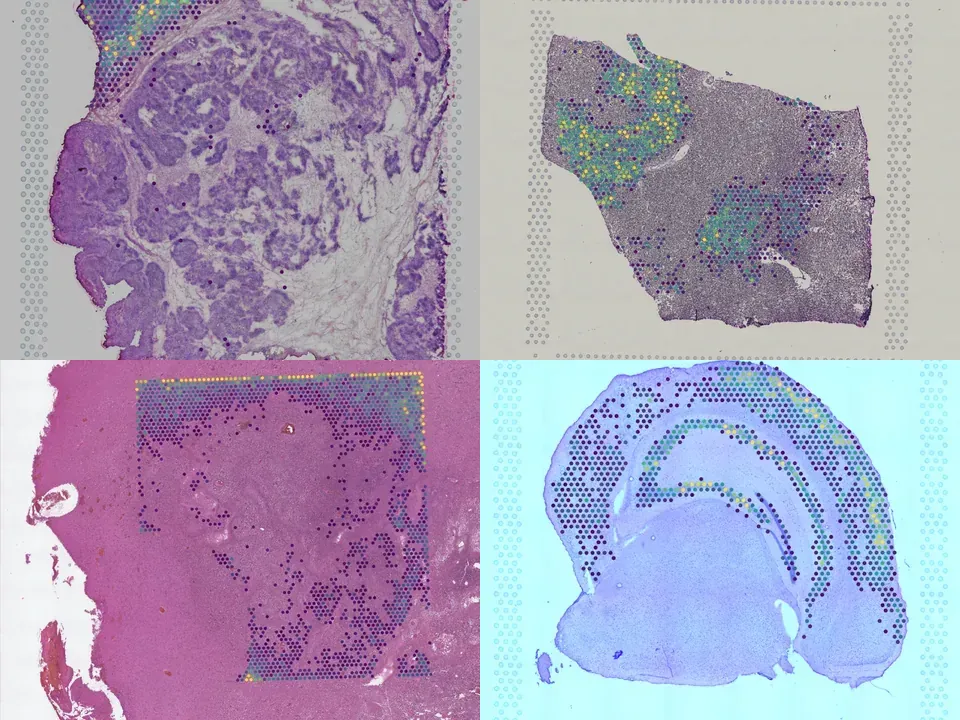
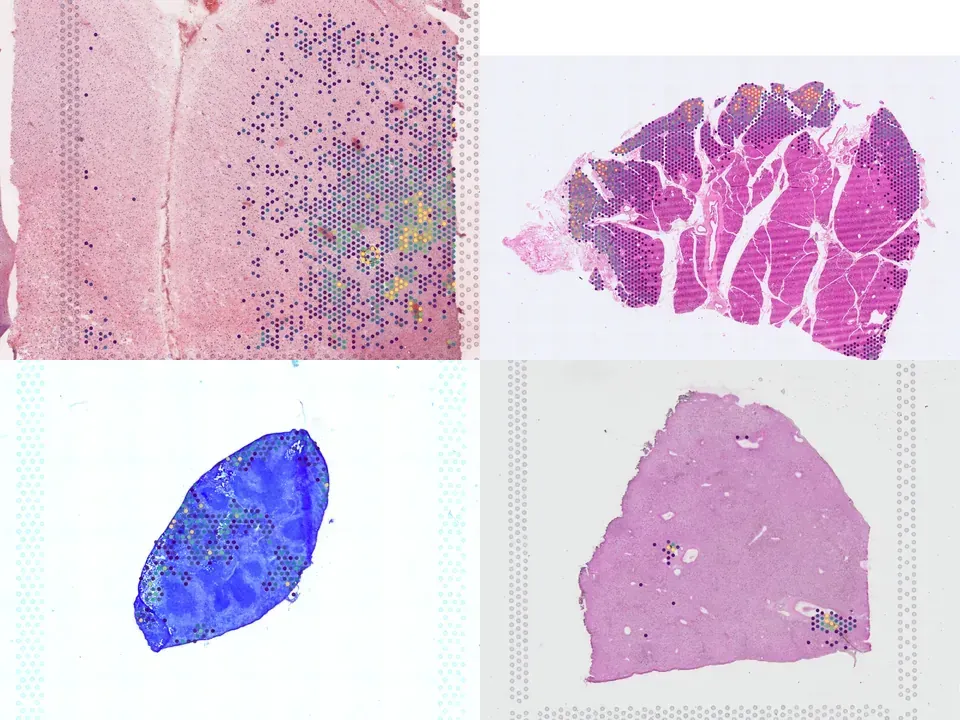
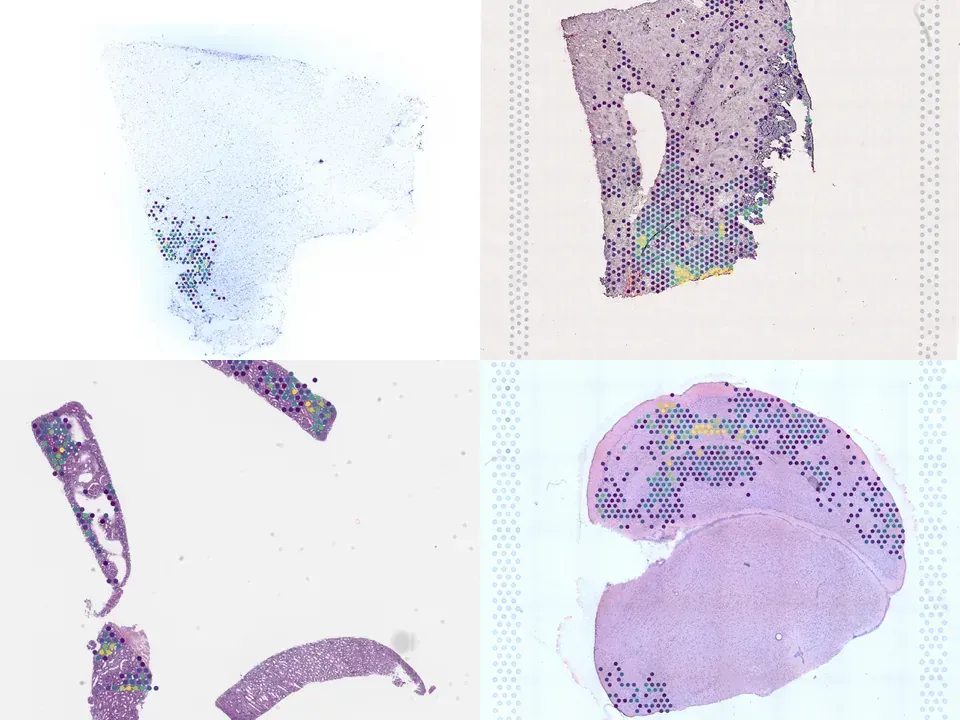
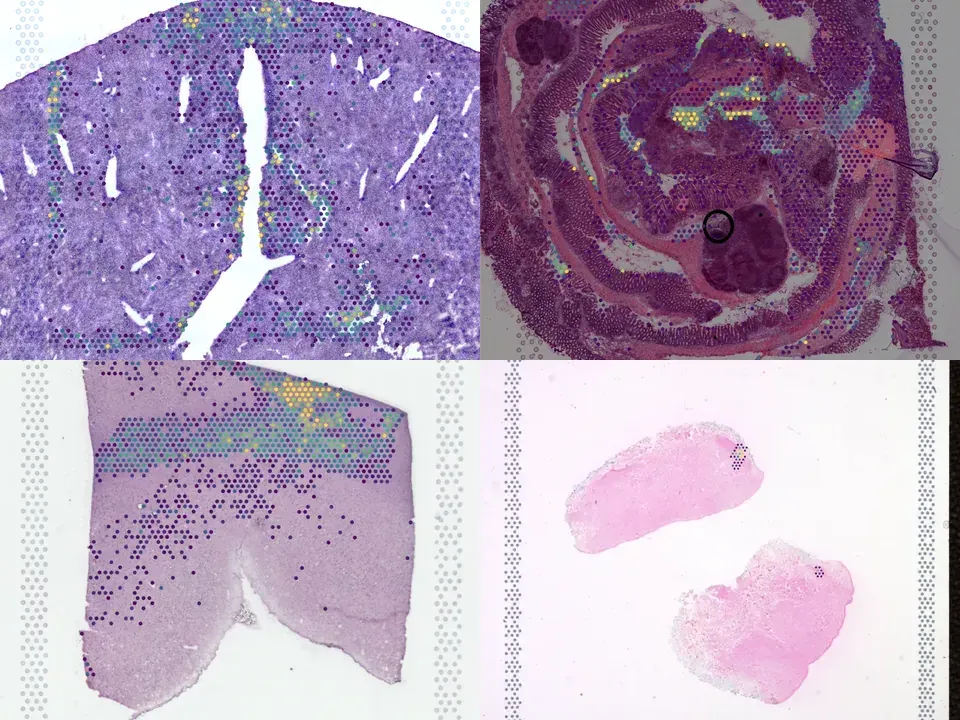
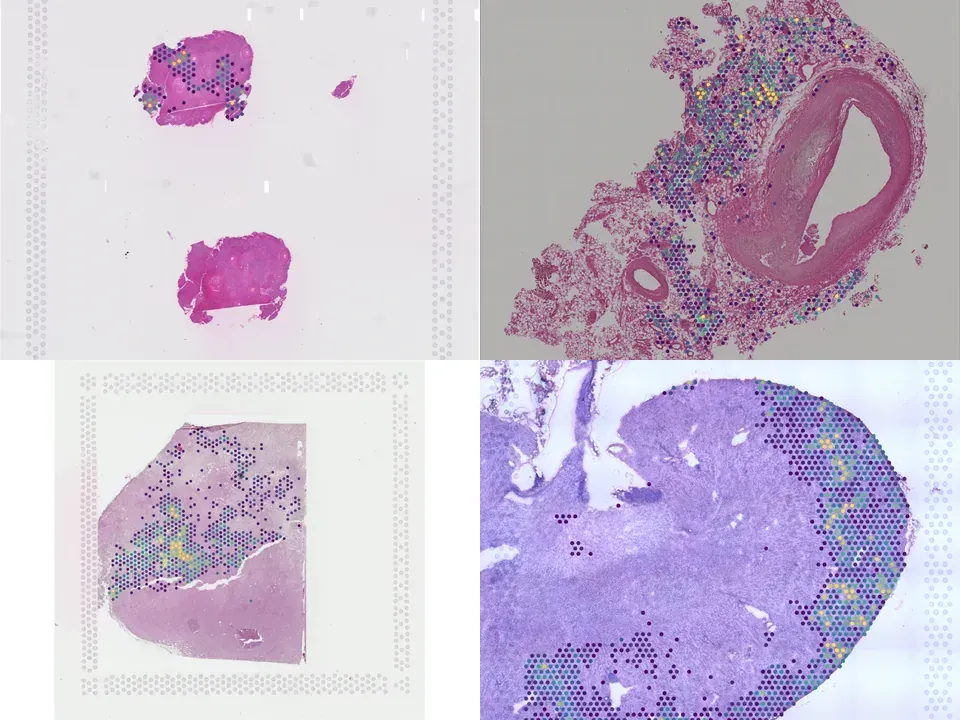
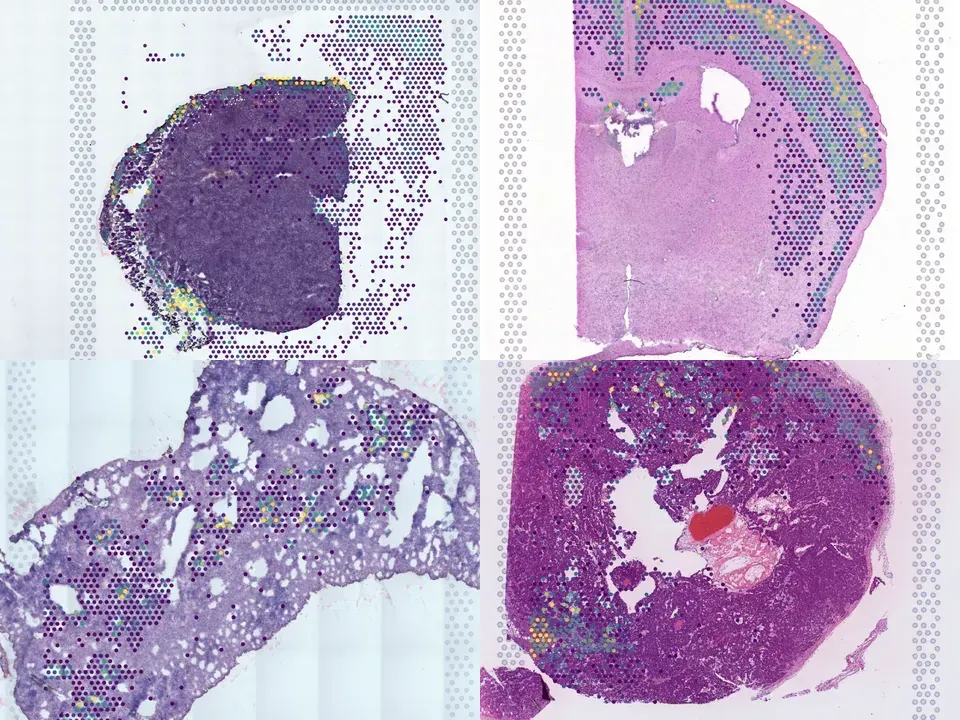
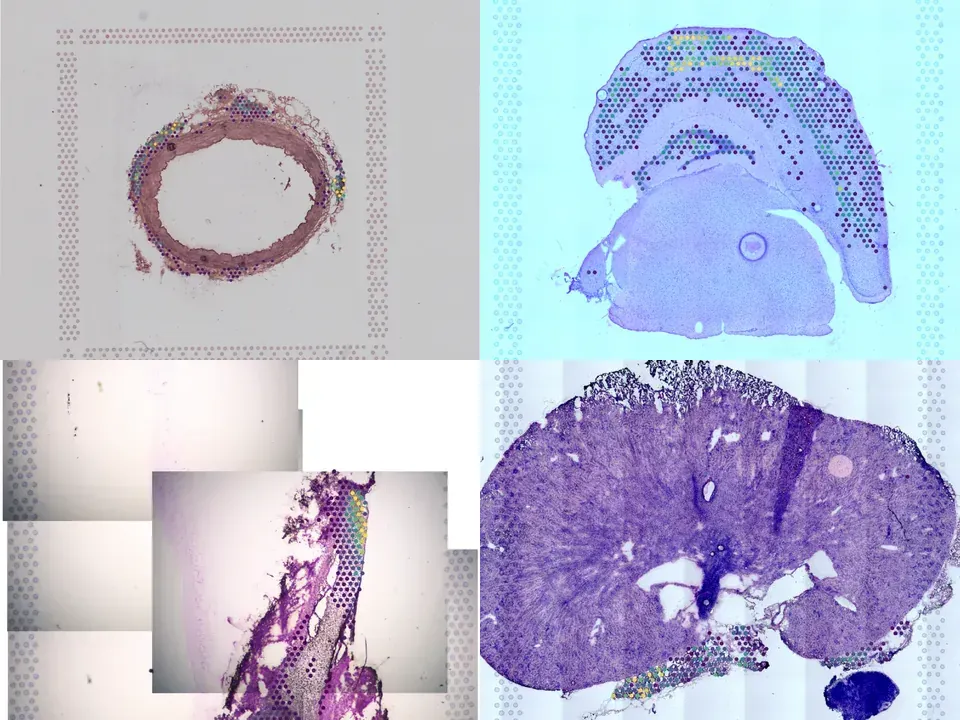
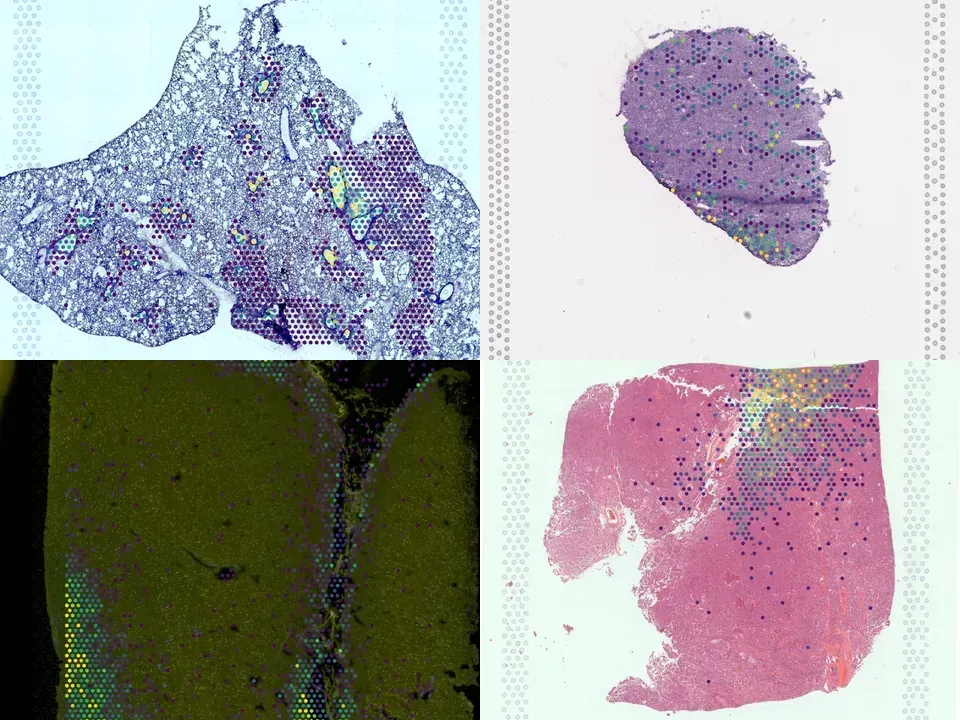
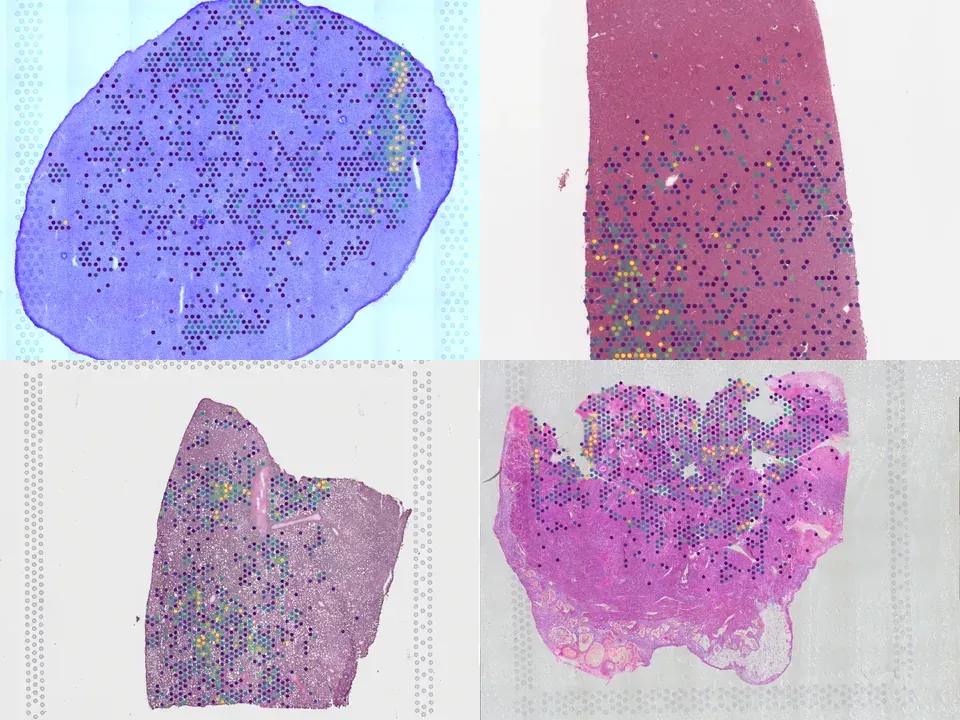
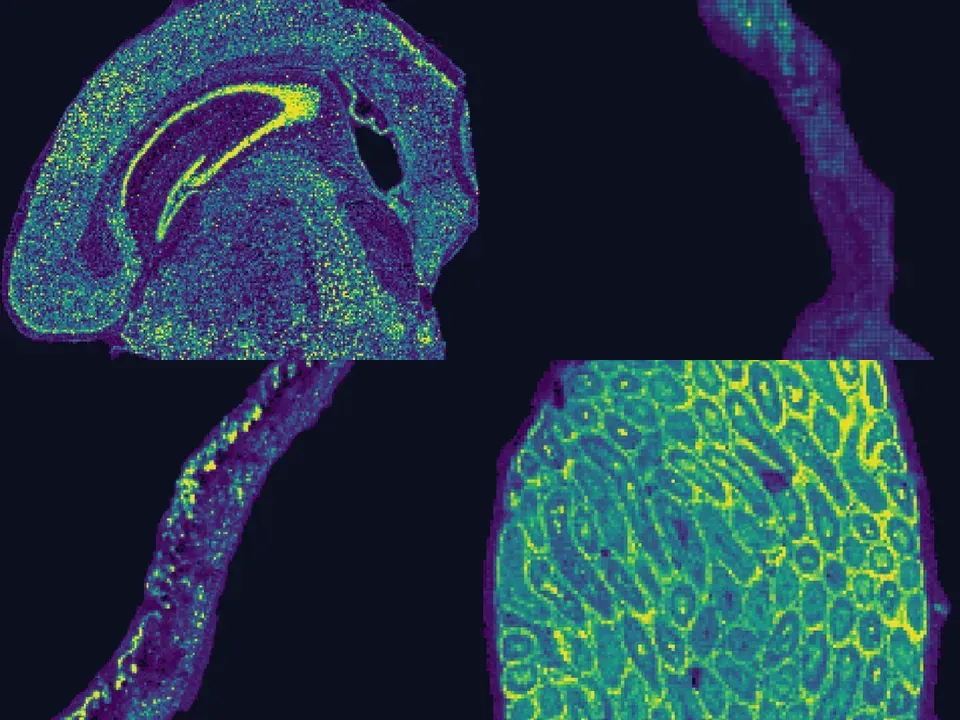
Mouse brain
GSM8659246
mouse brain 54.3 MB 2,818 spots silver H&E NCBI GEO policy
TechnologyVisium
Organismmouse
Tissuebrain
Spots2,818
silver H&E NCBI GEO policy
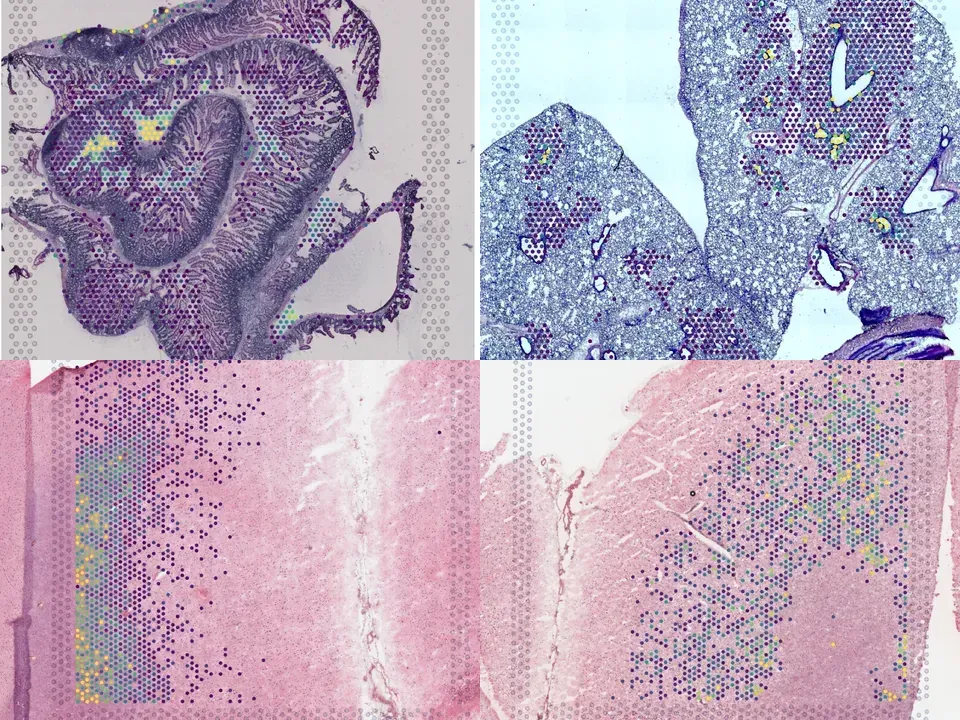
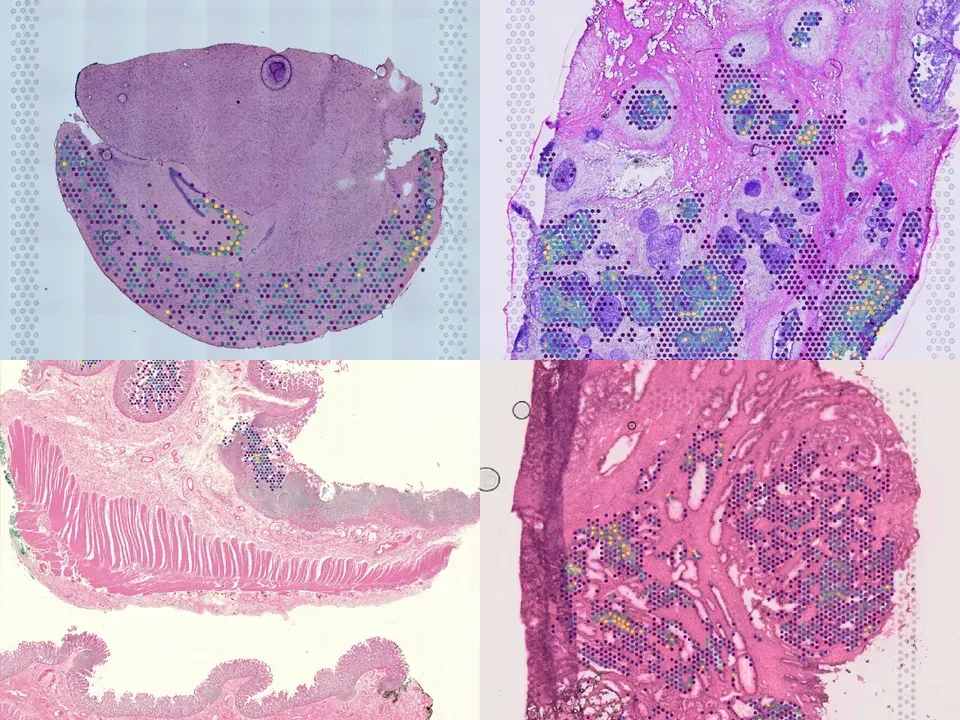
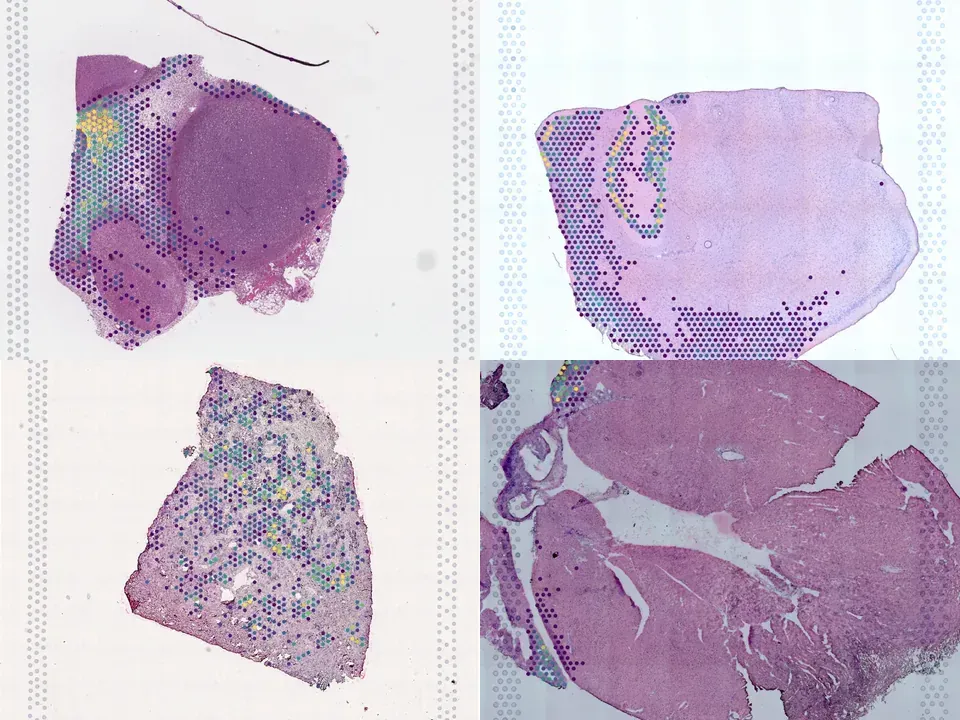
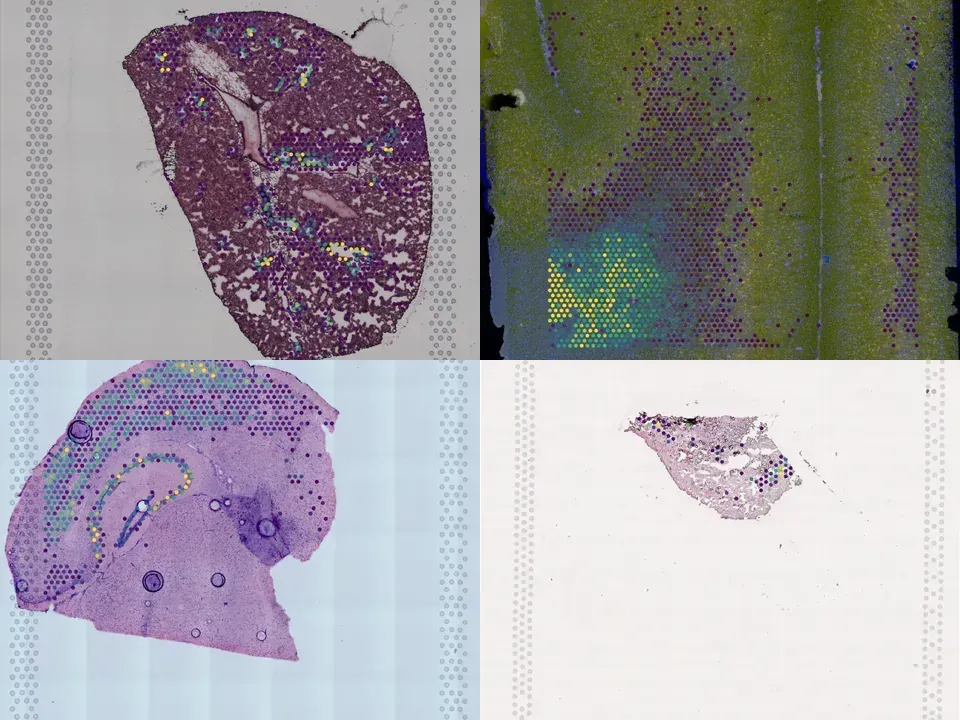
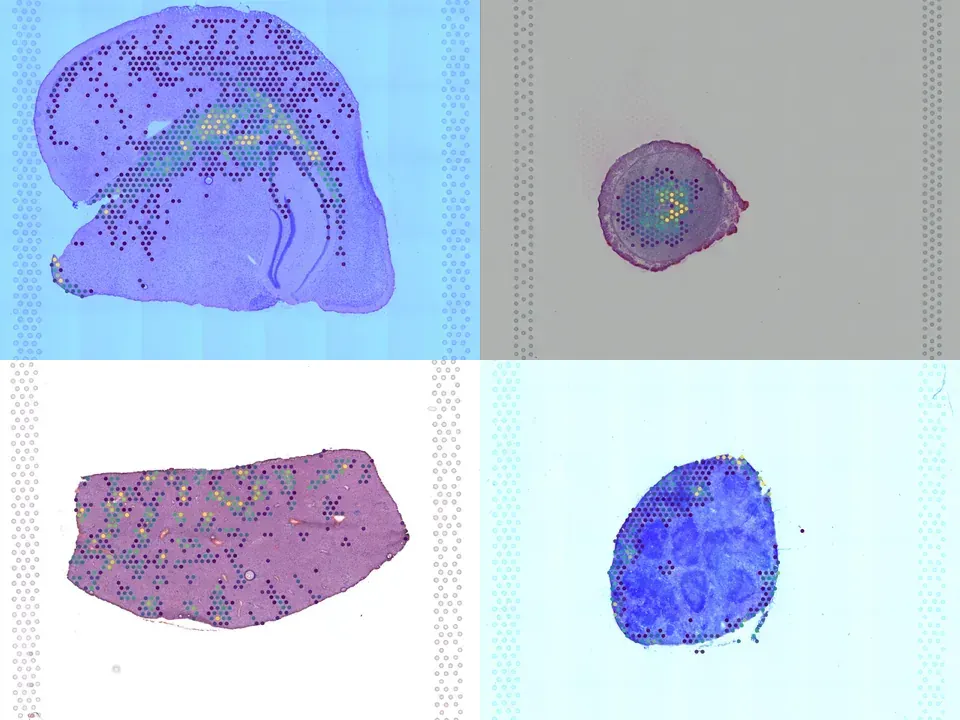
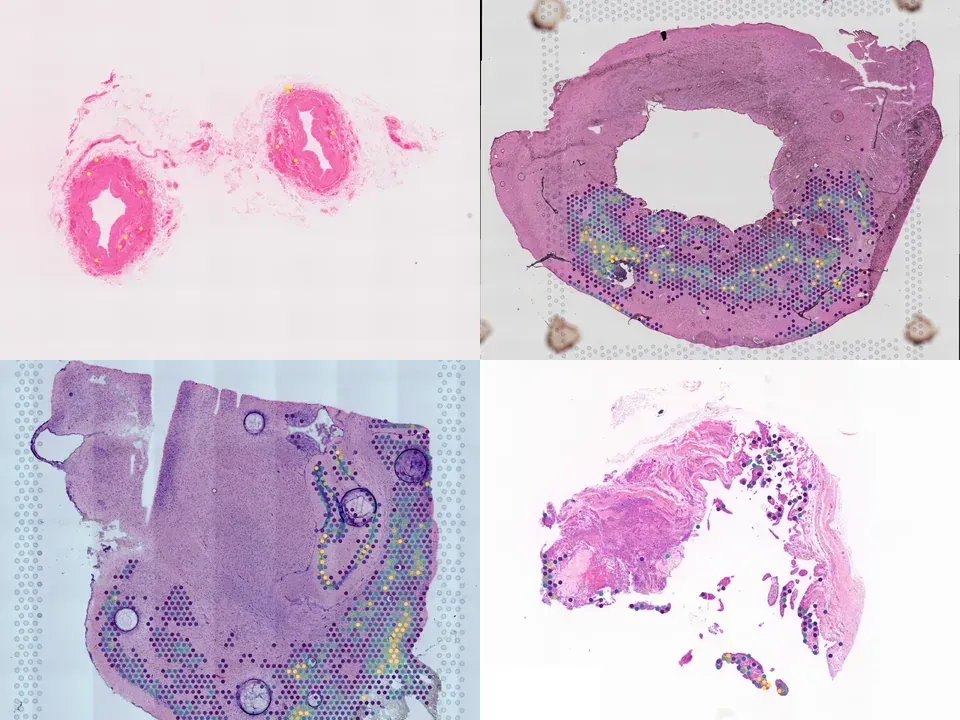
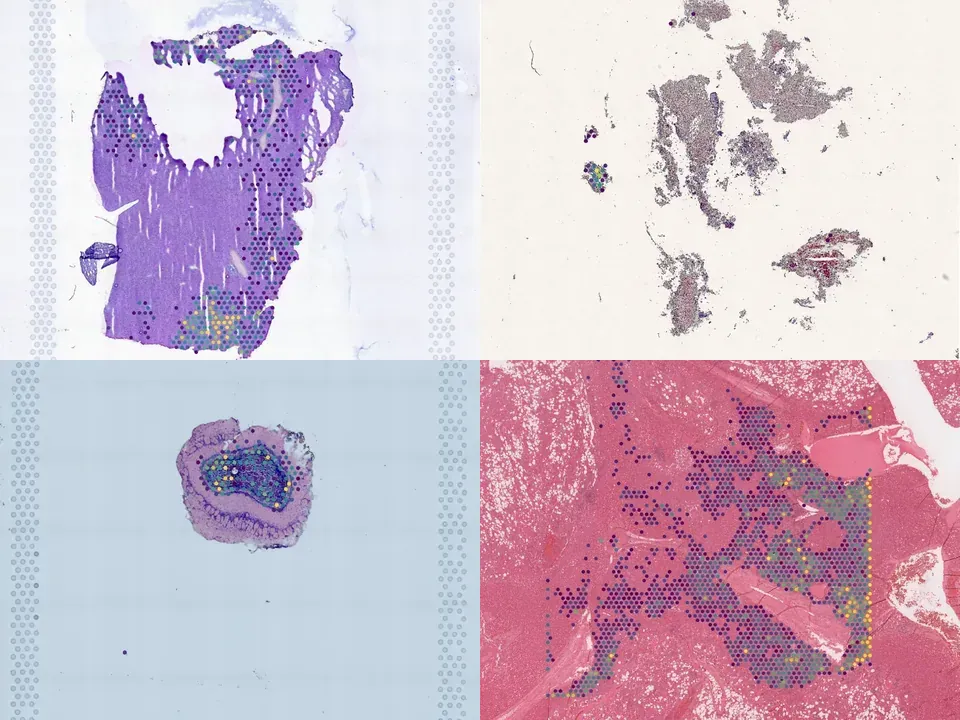
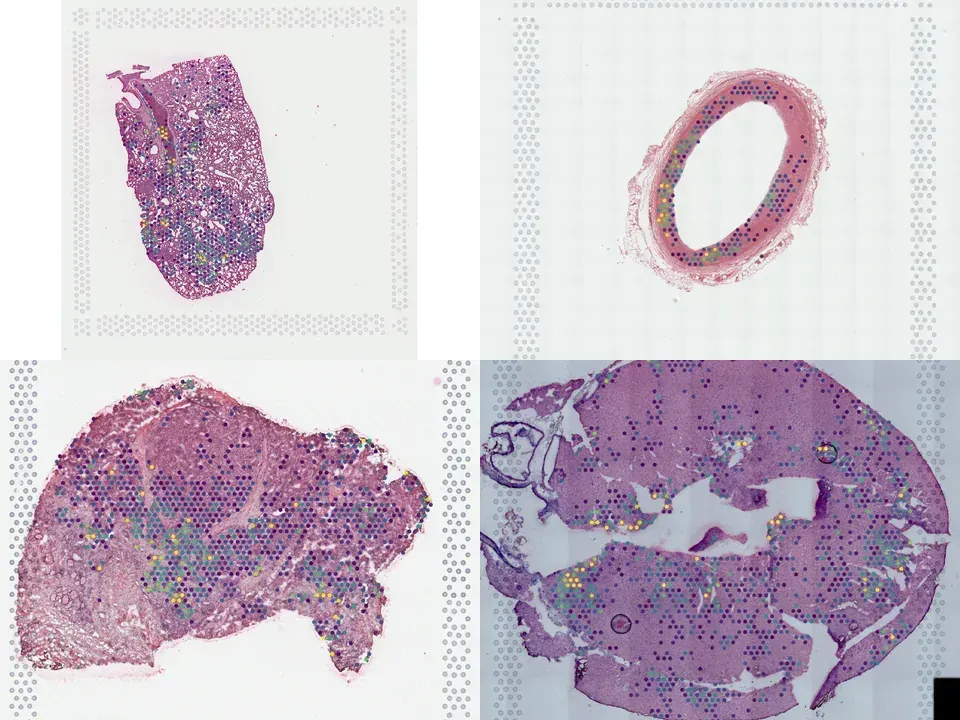
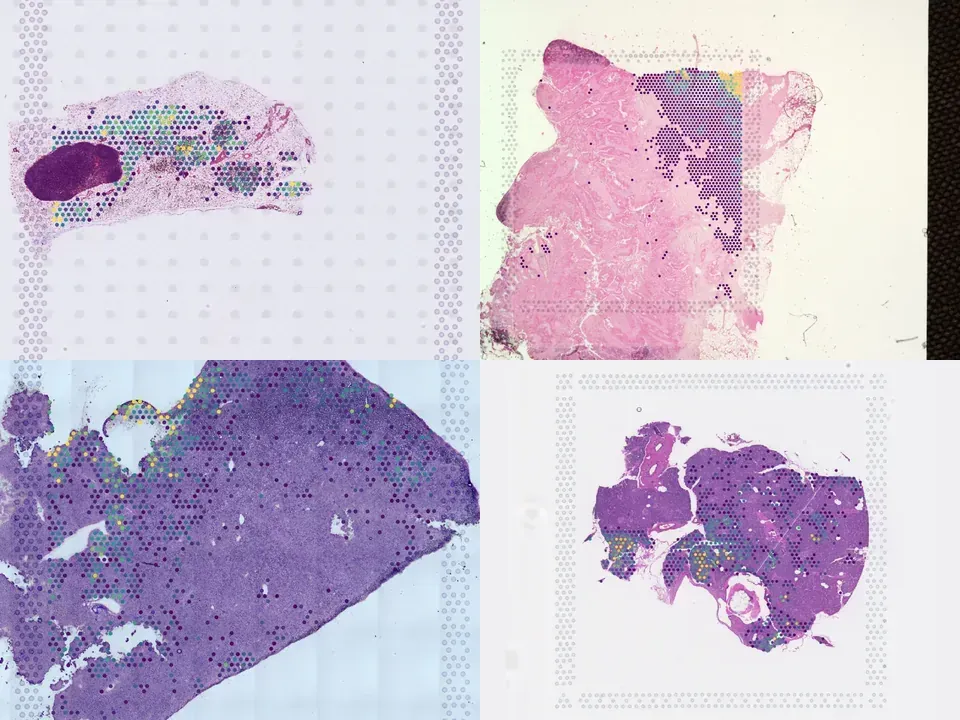
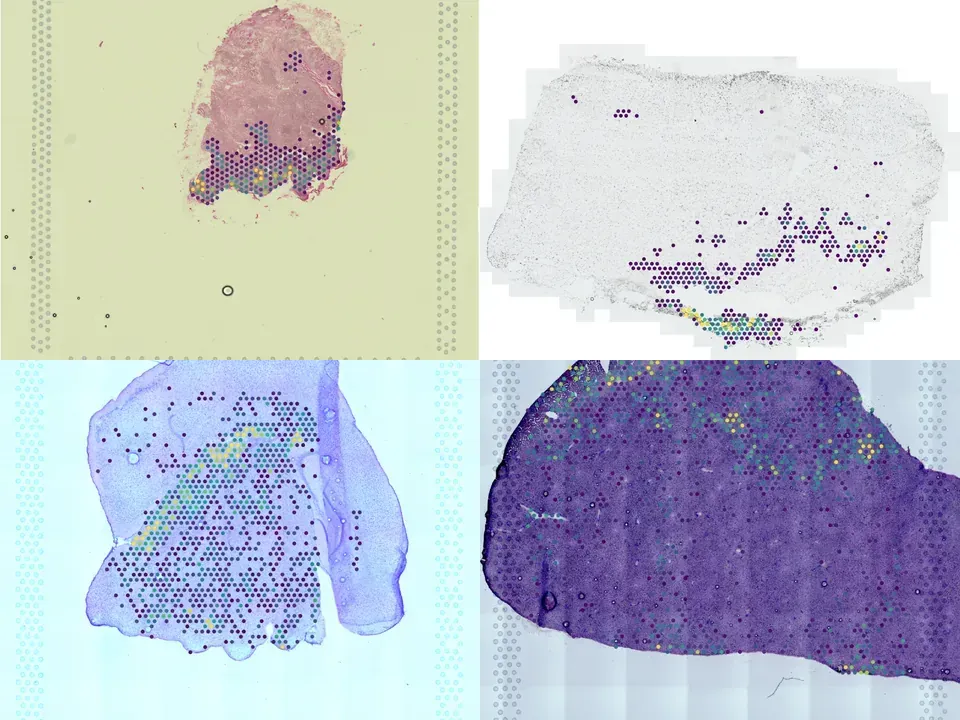
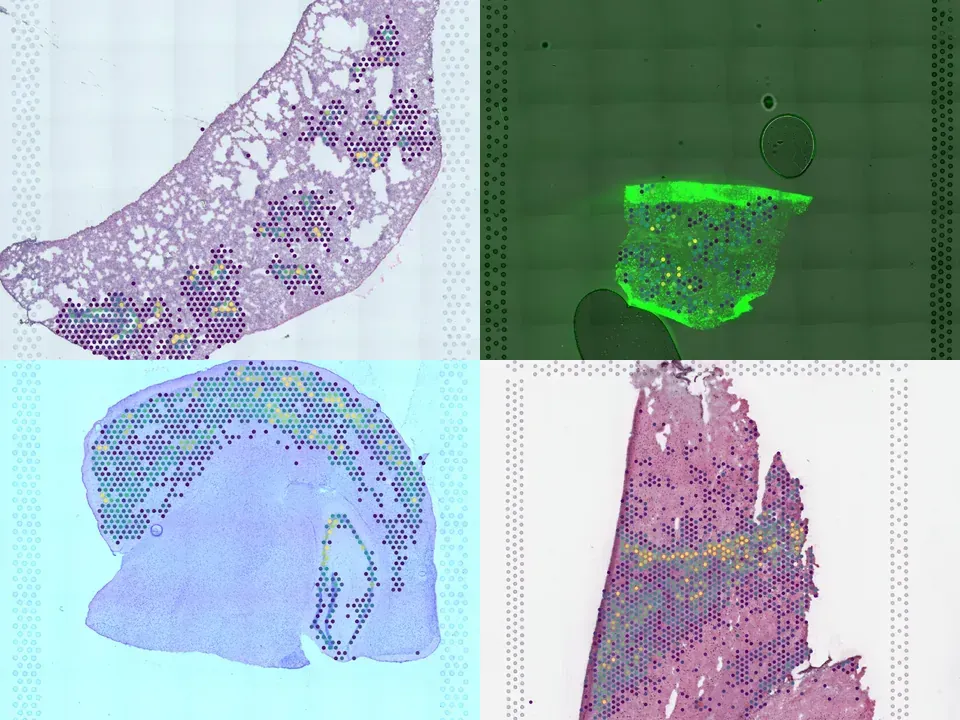
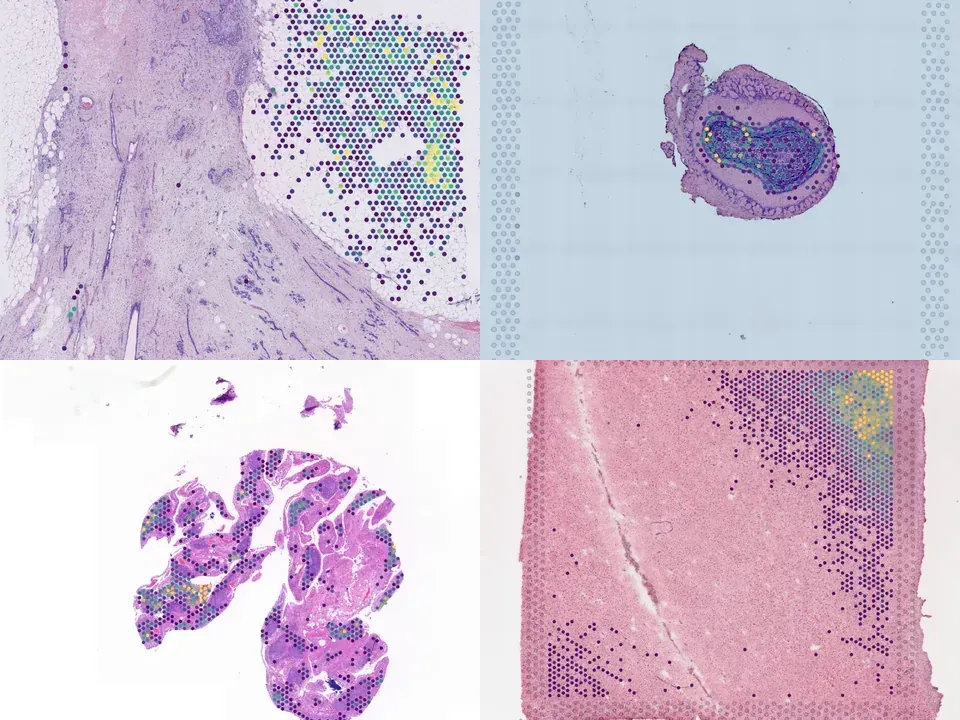
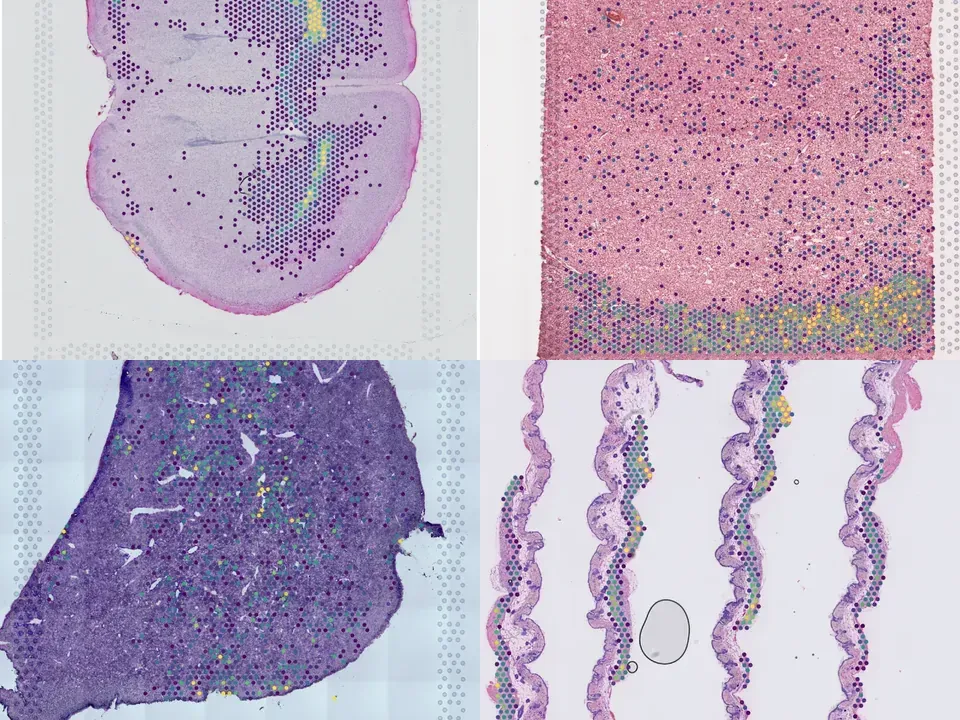
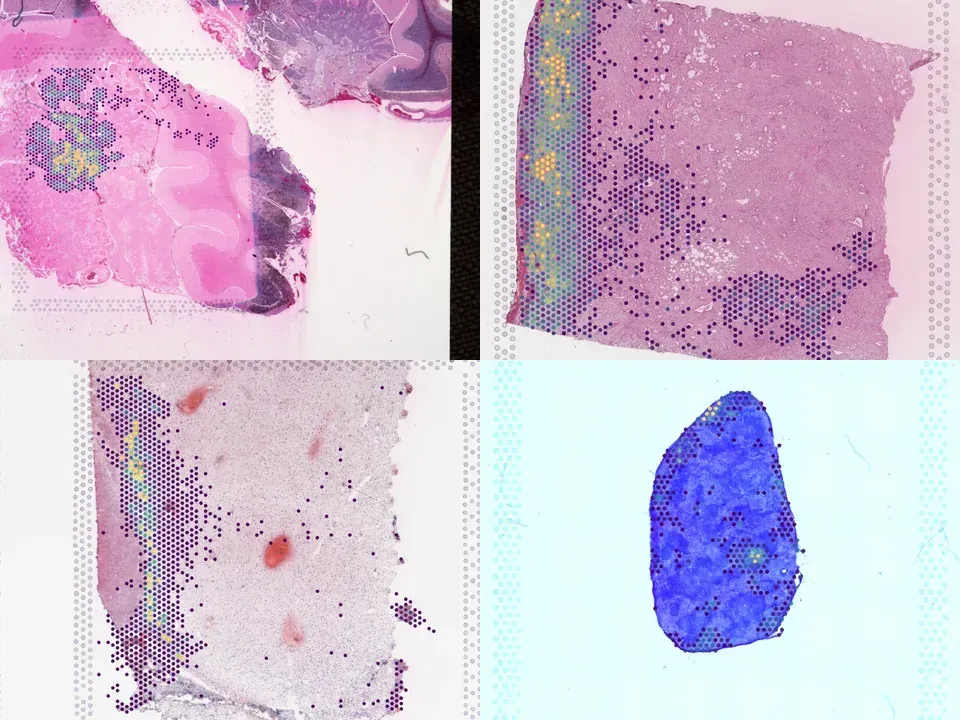
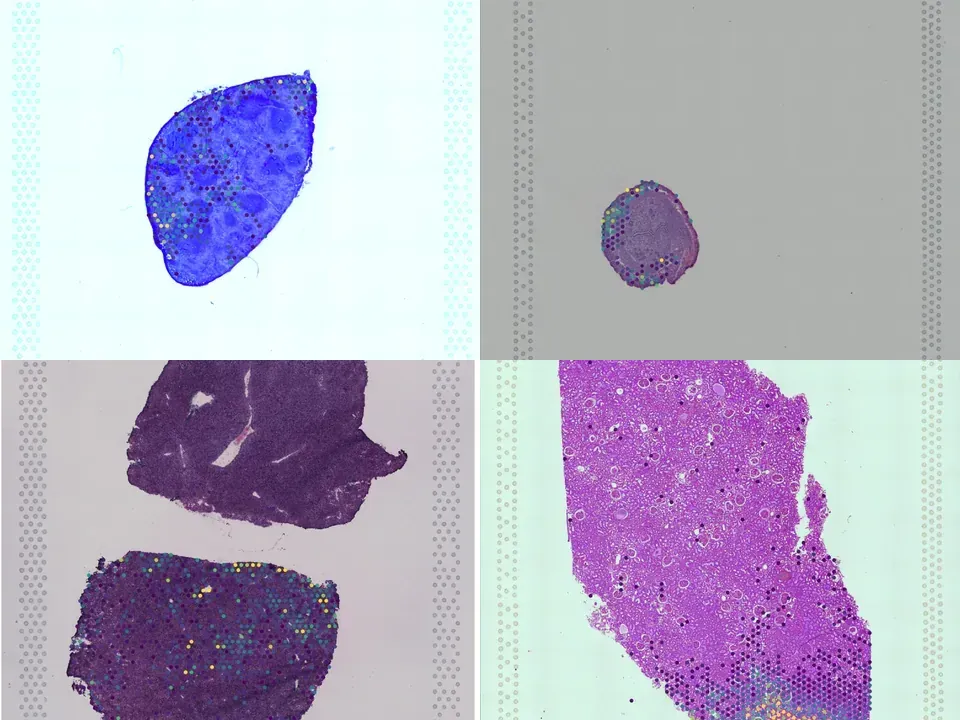
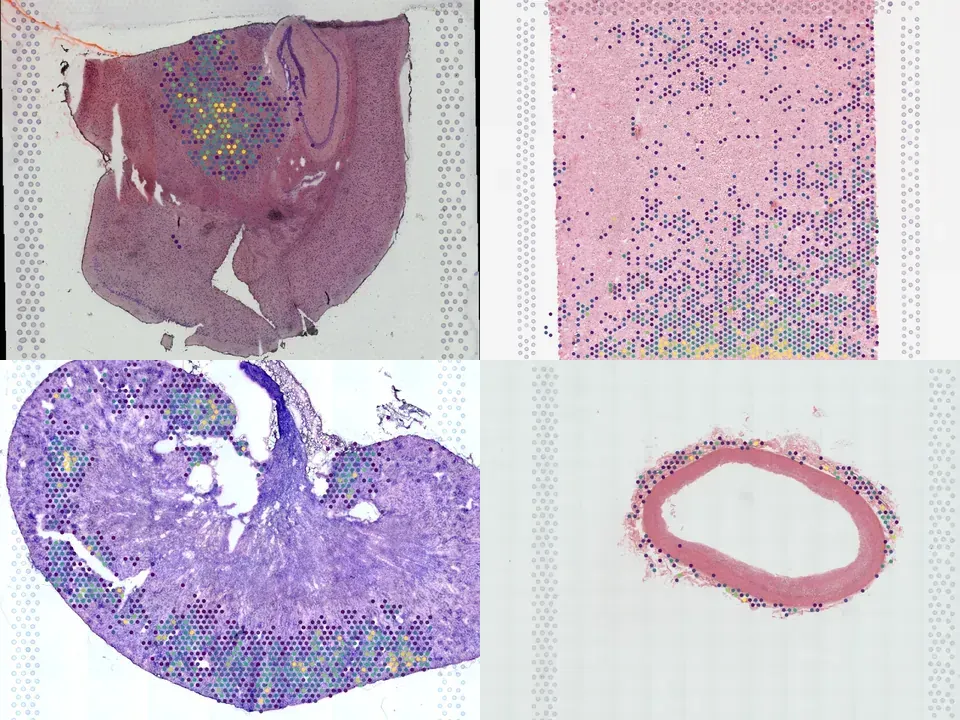
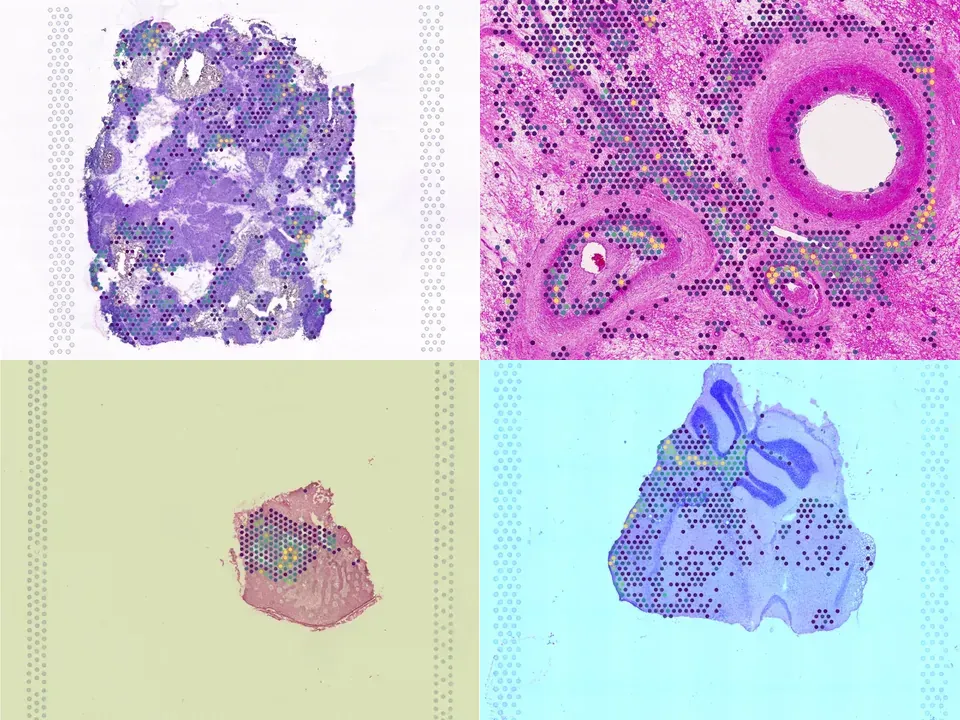
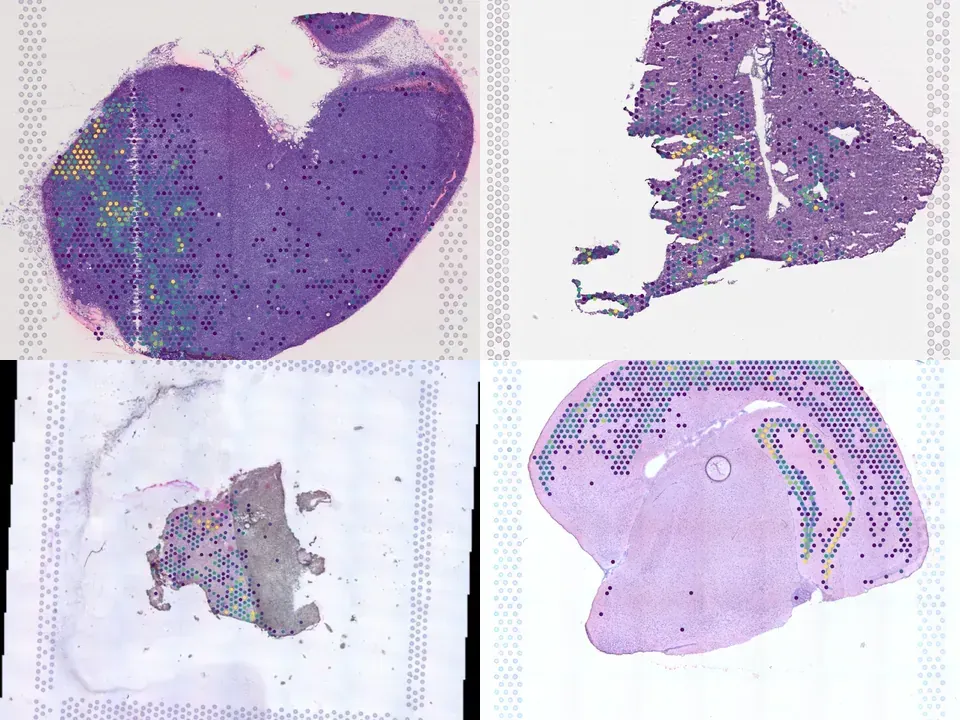
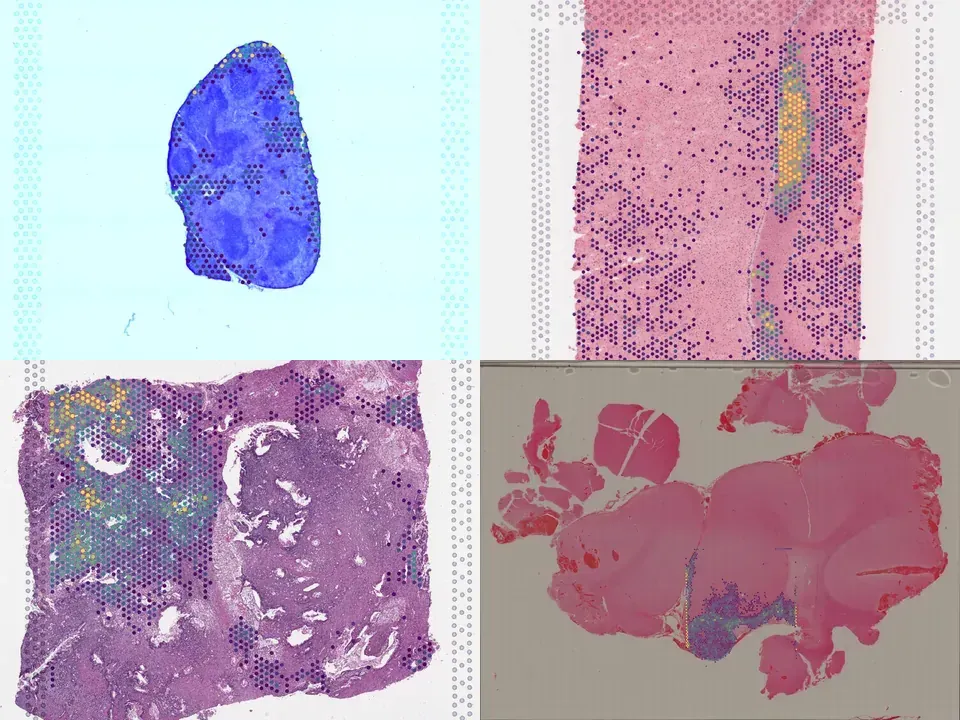
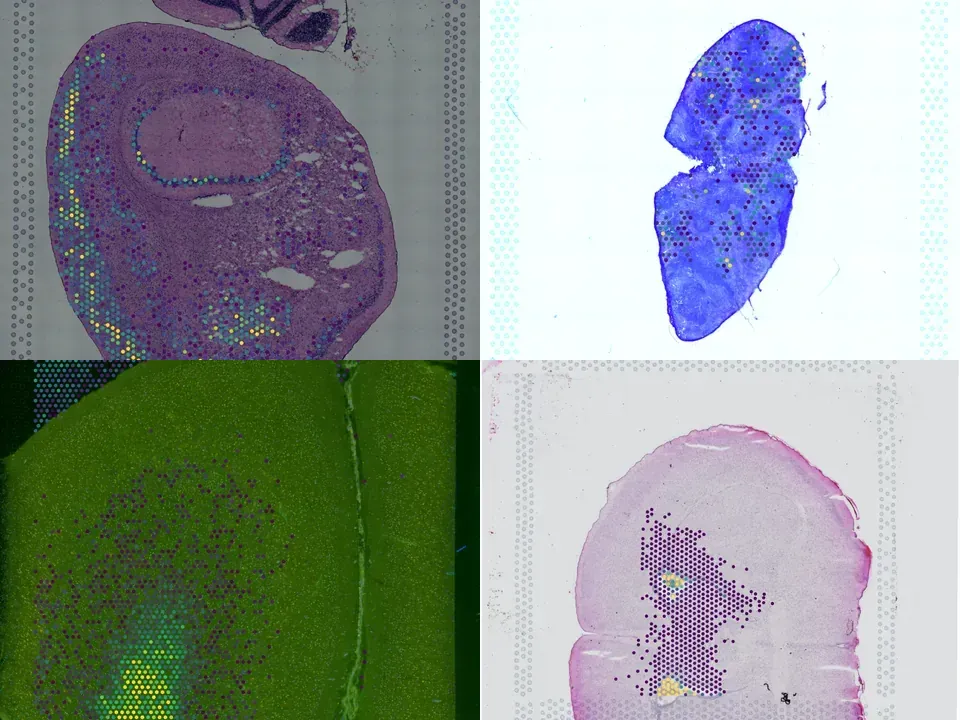
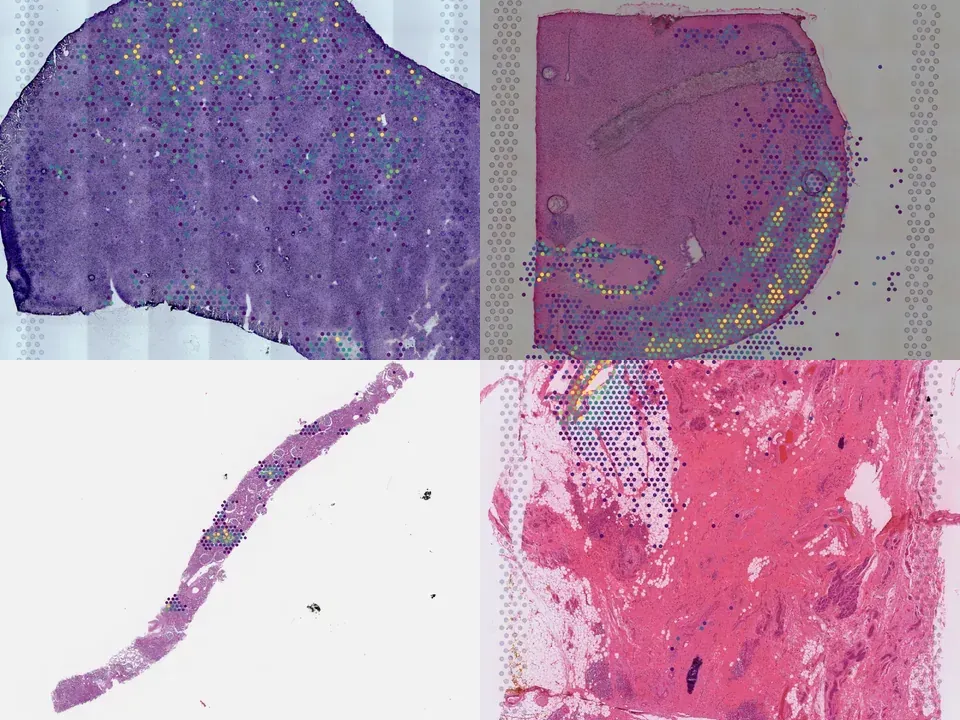
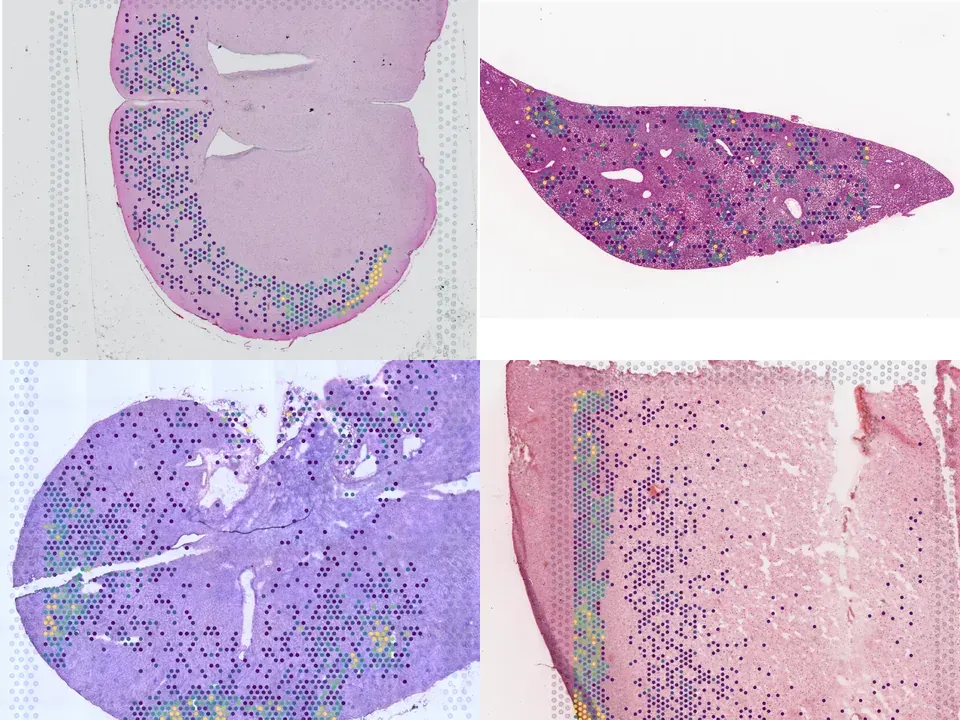
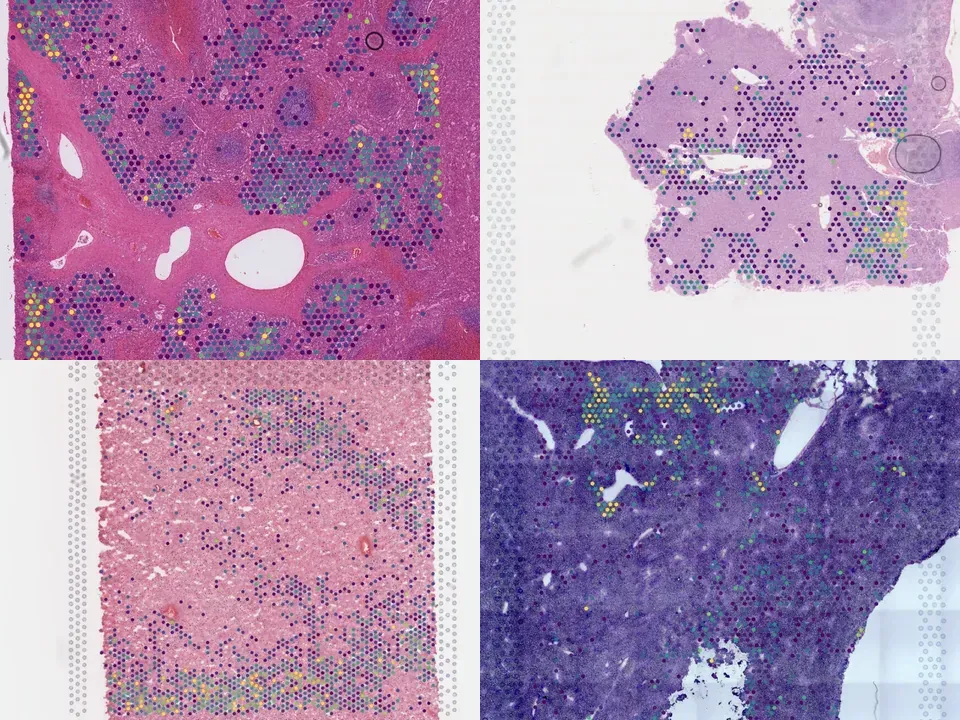
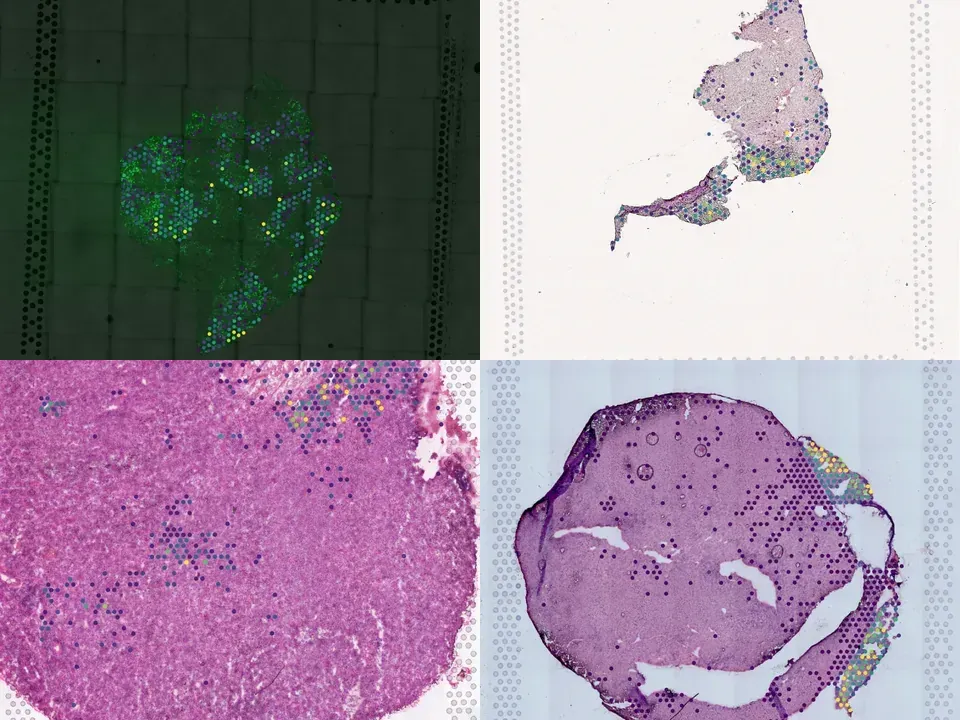
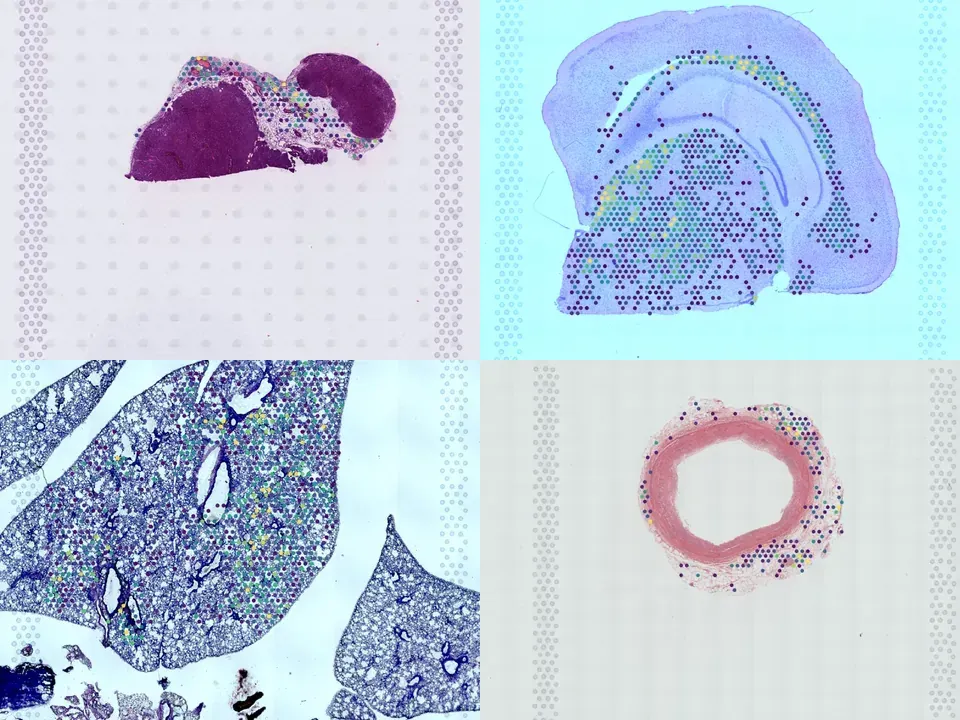
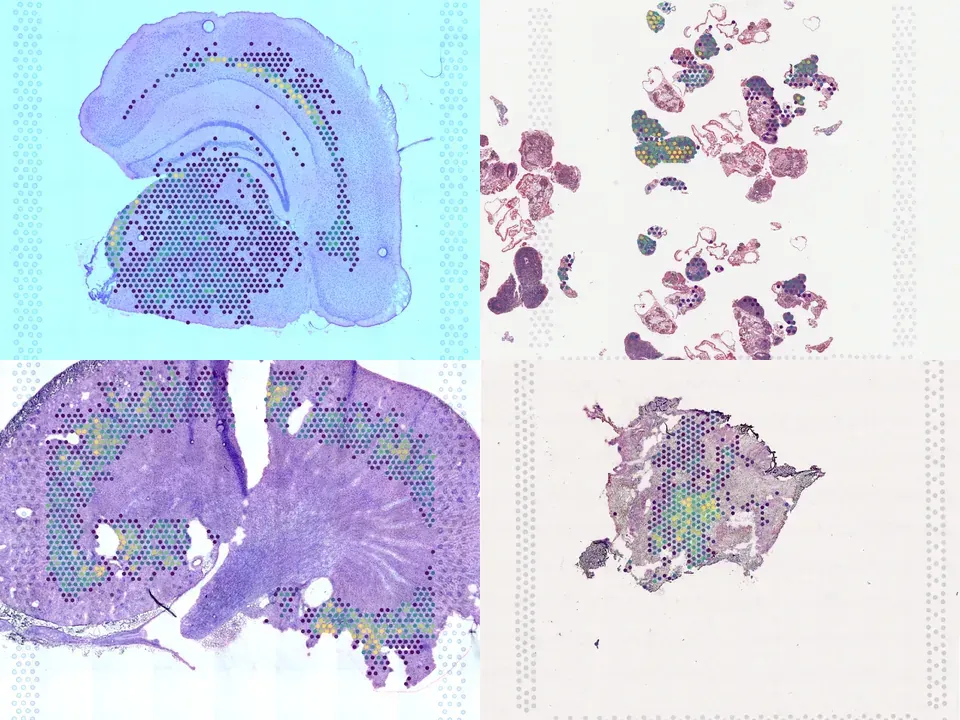
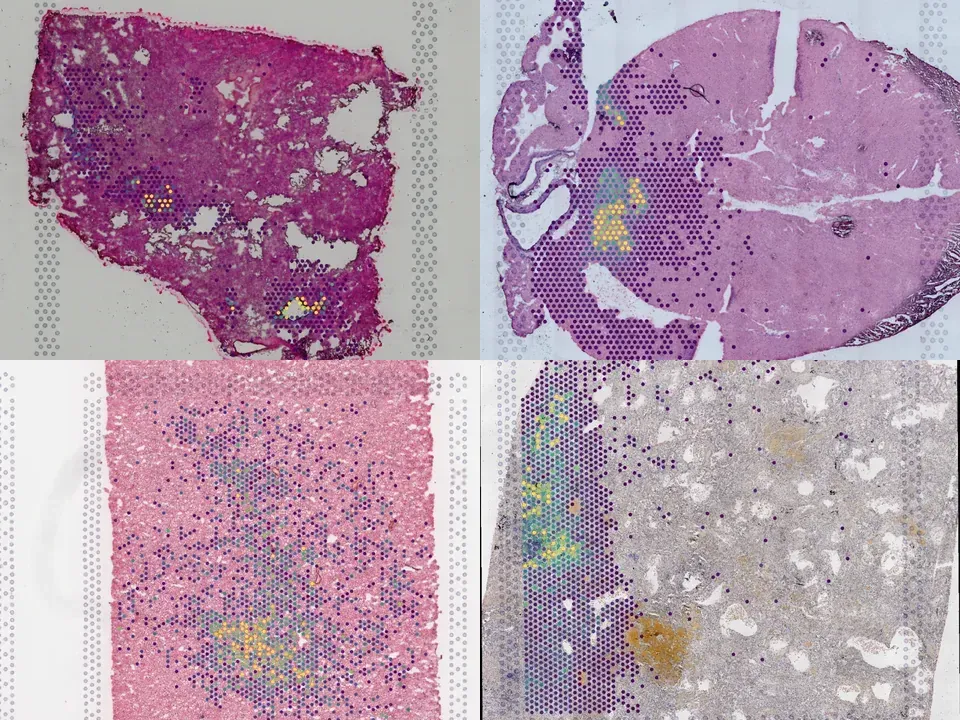
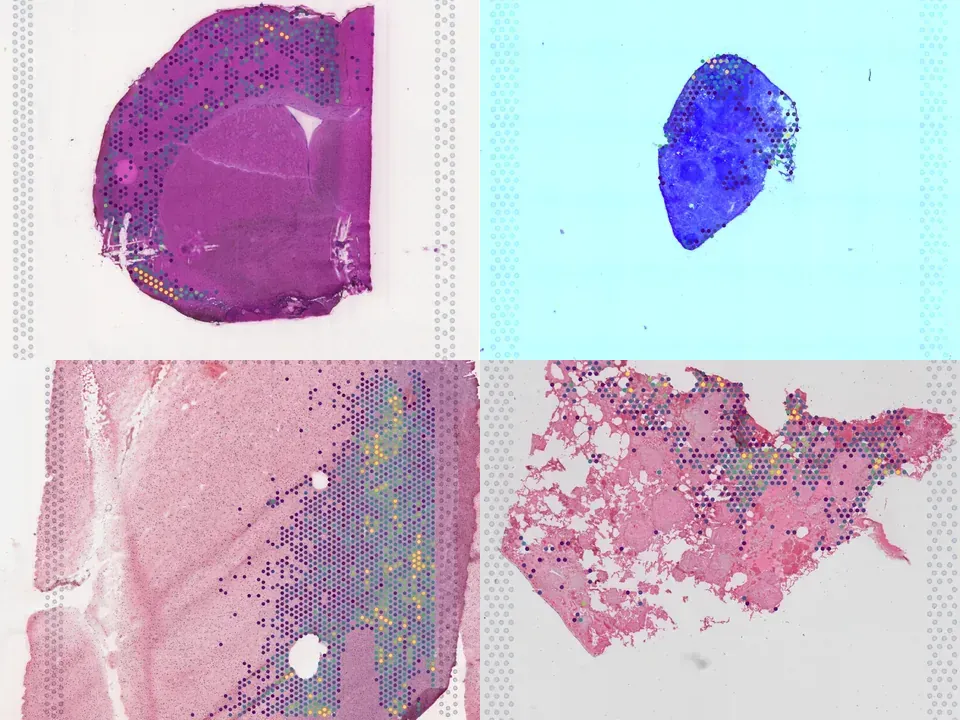
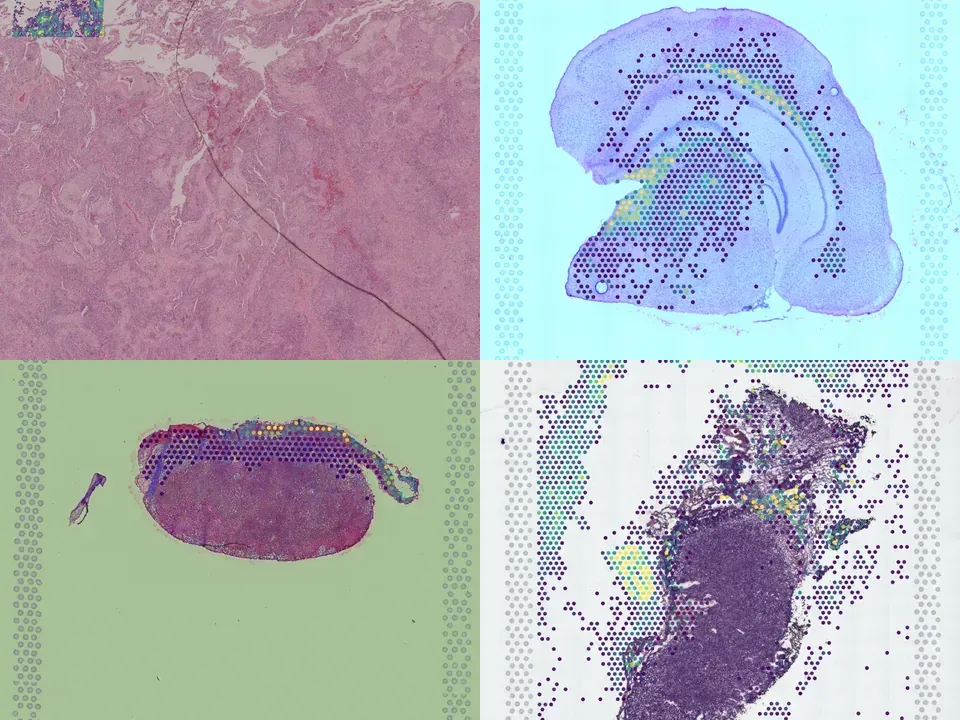
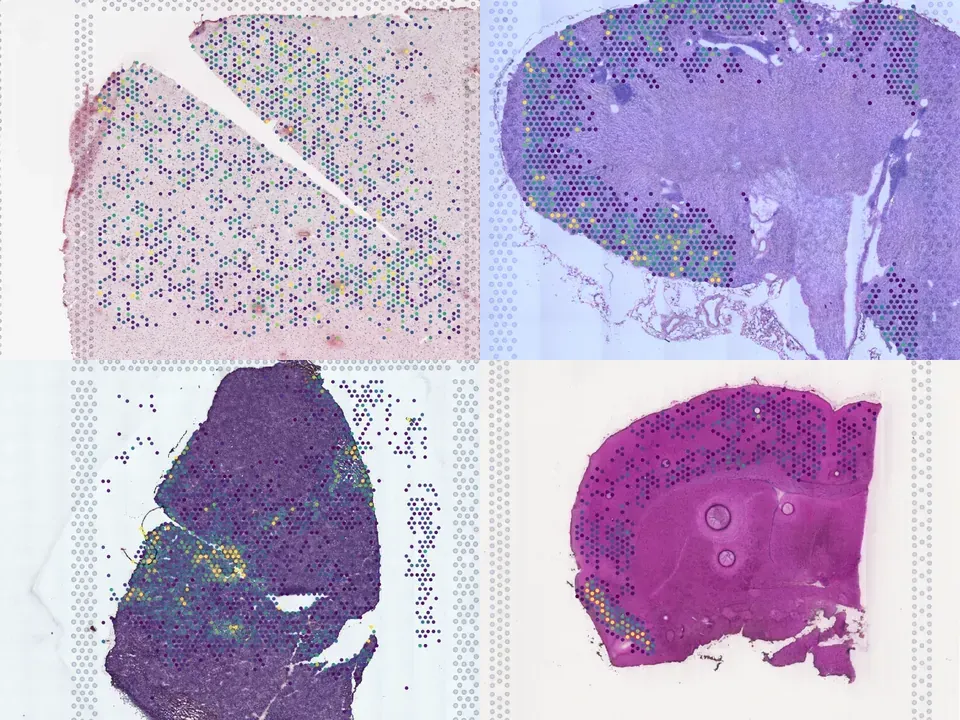
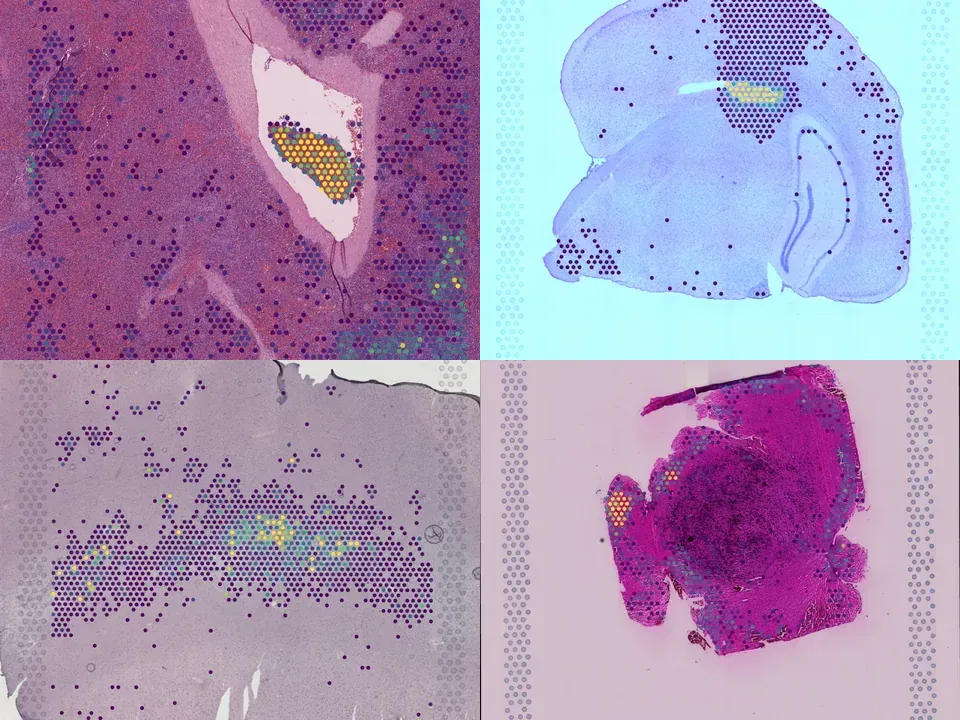
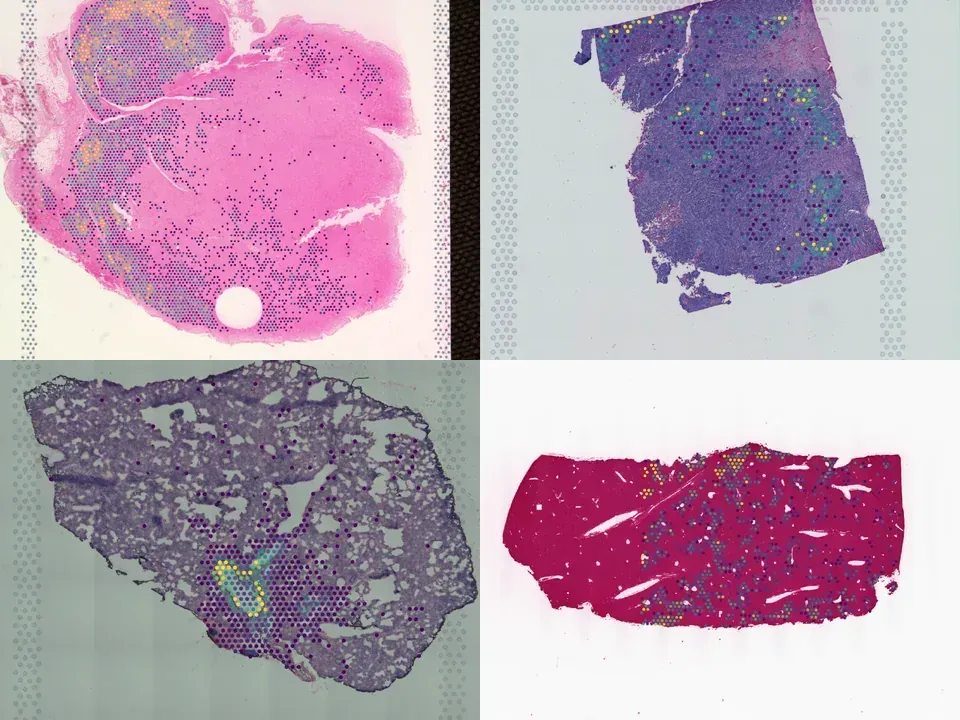
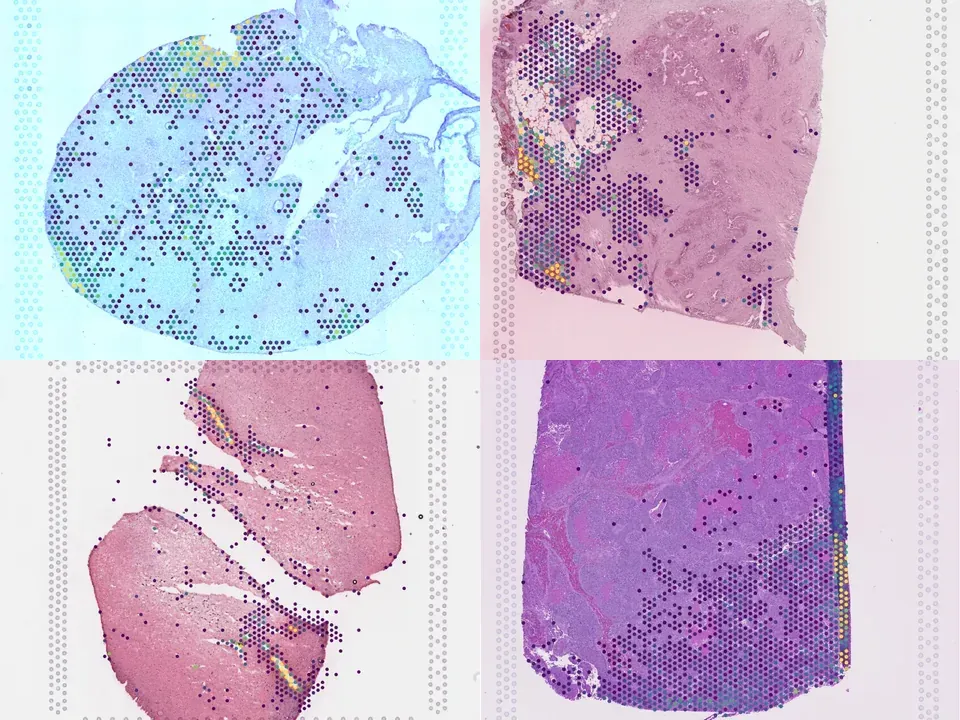
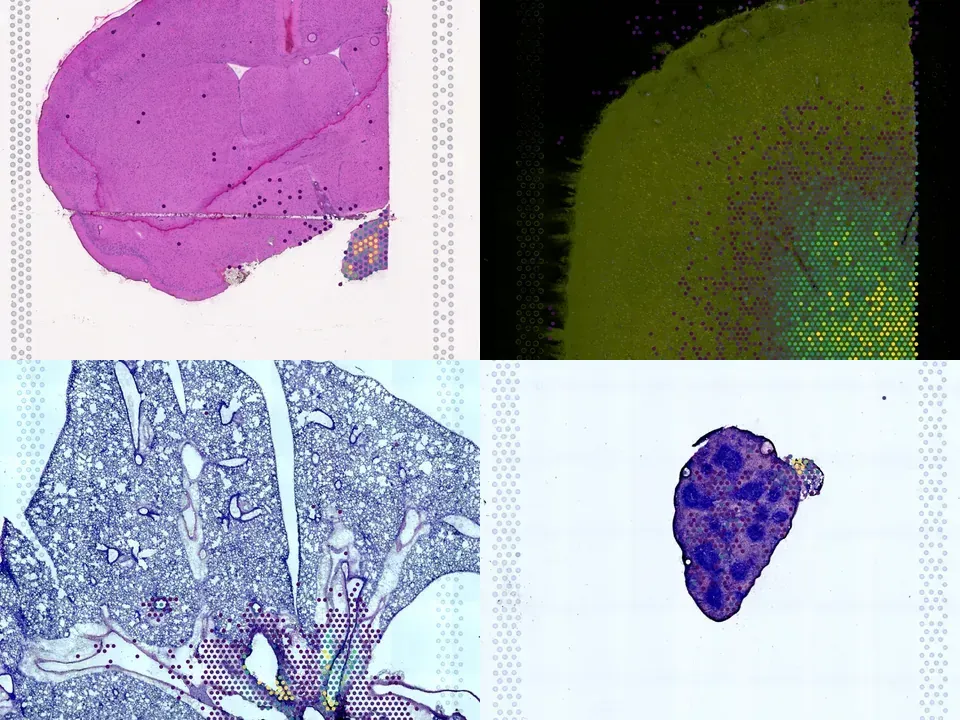
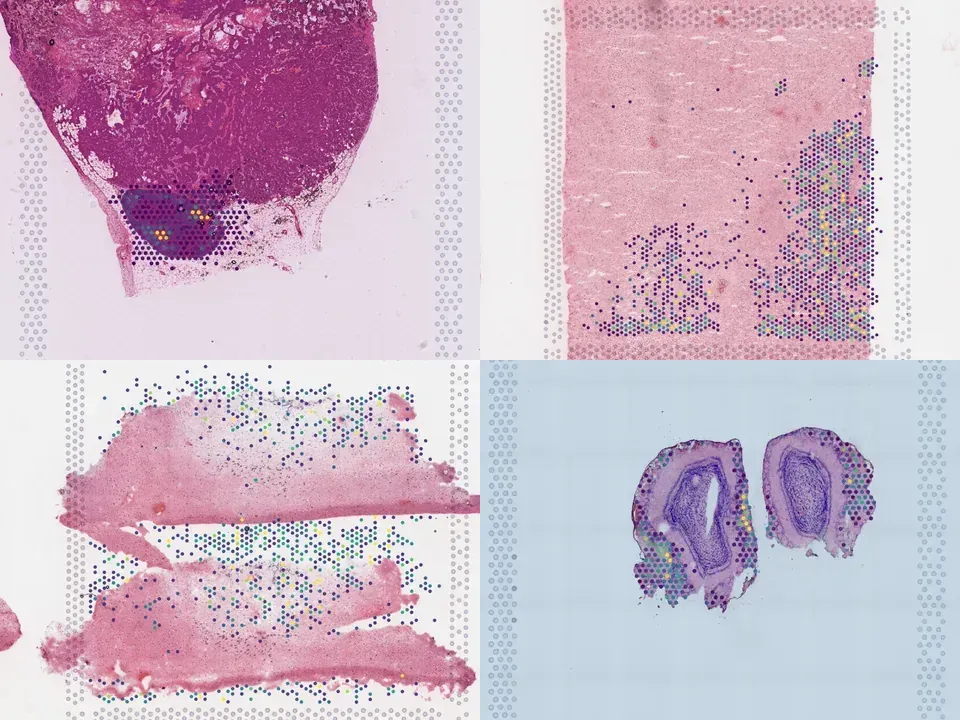
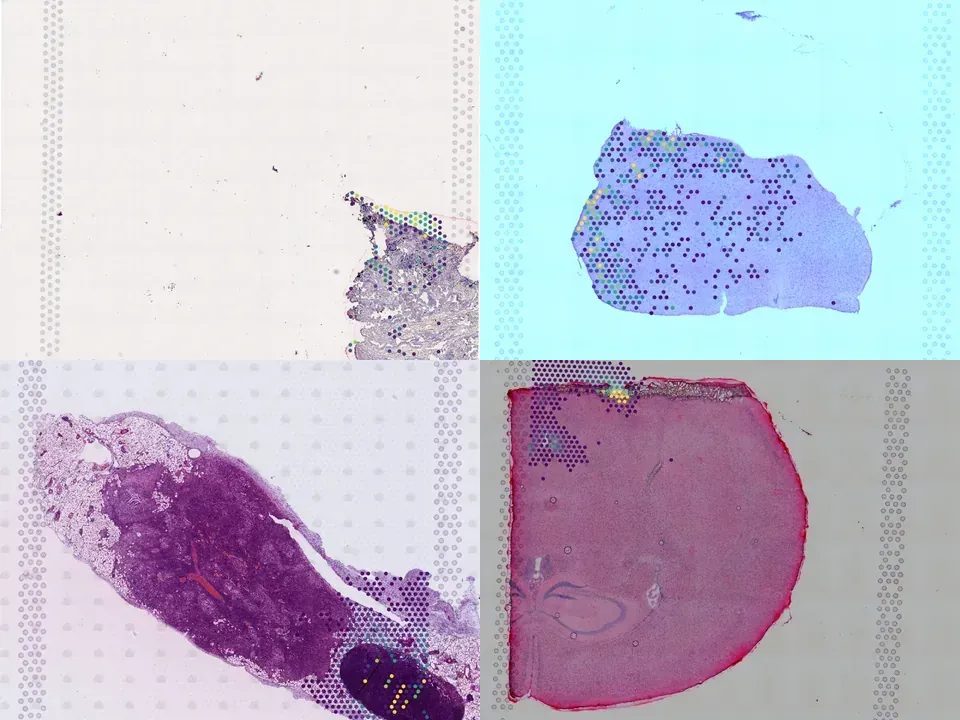
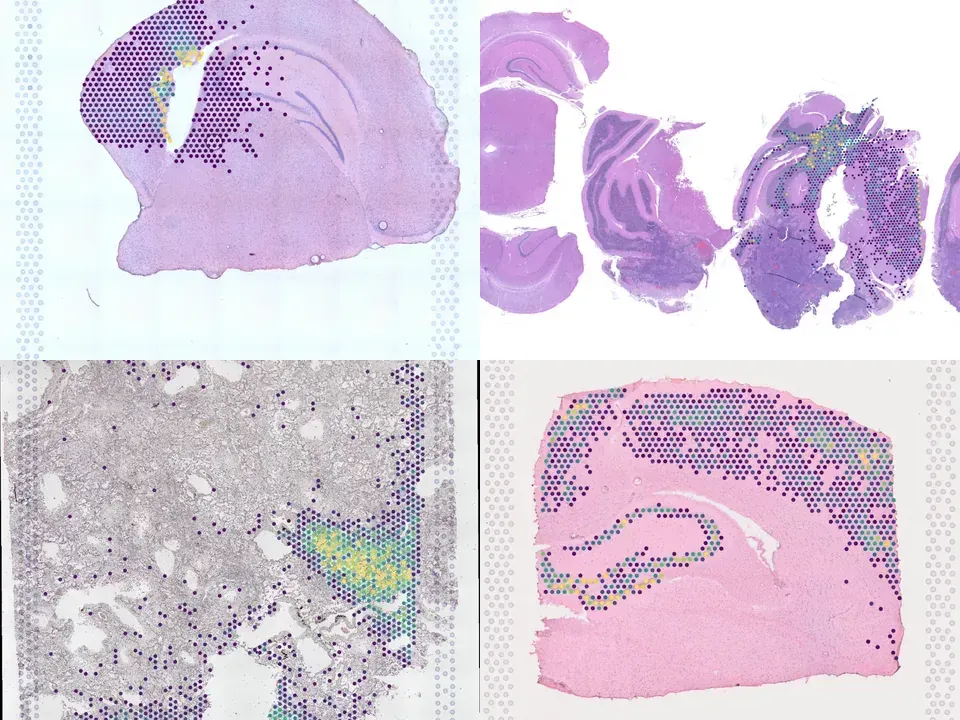
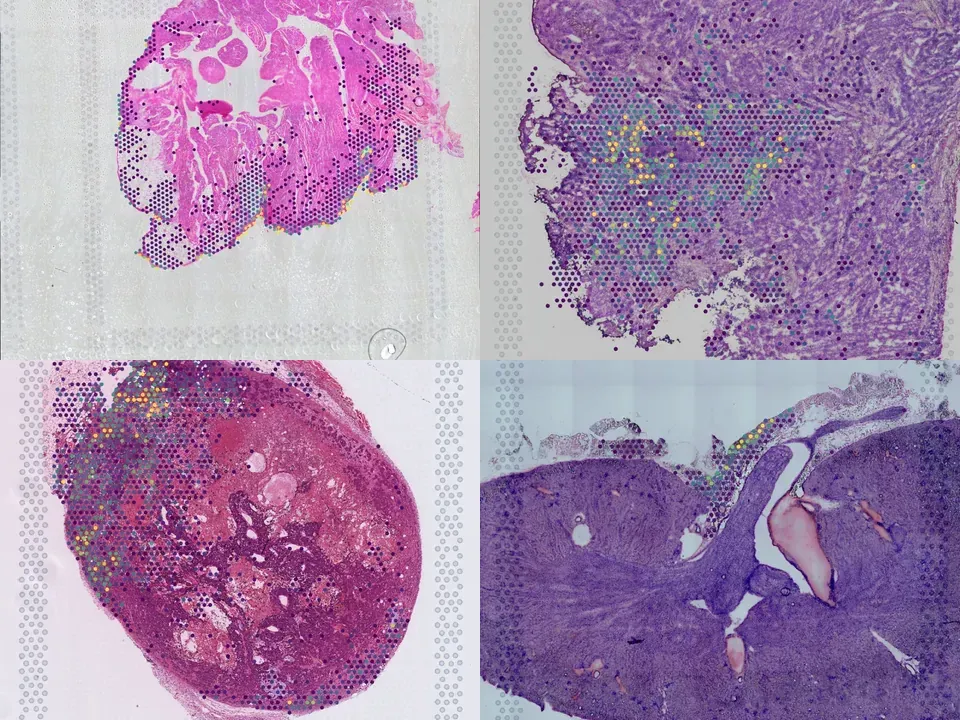
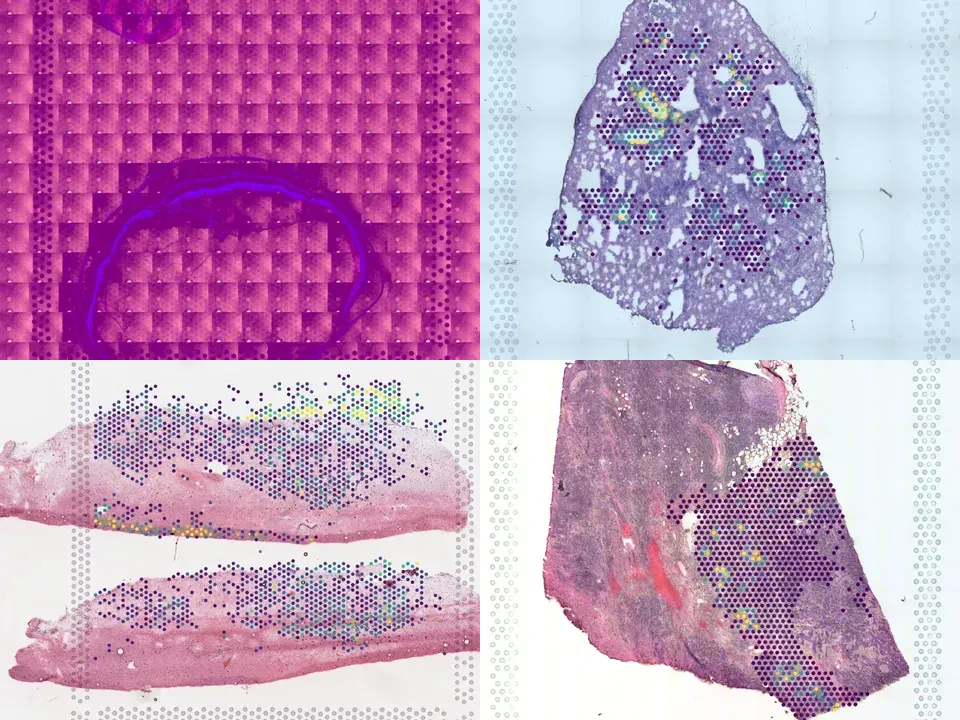
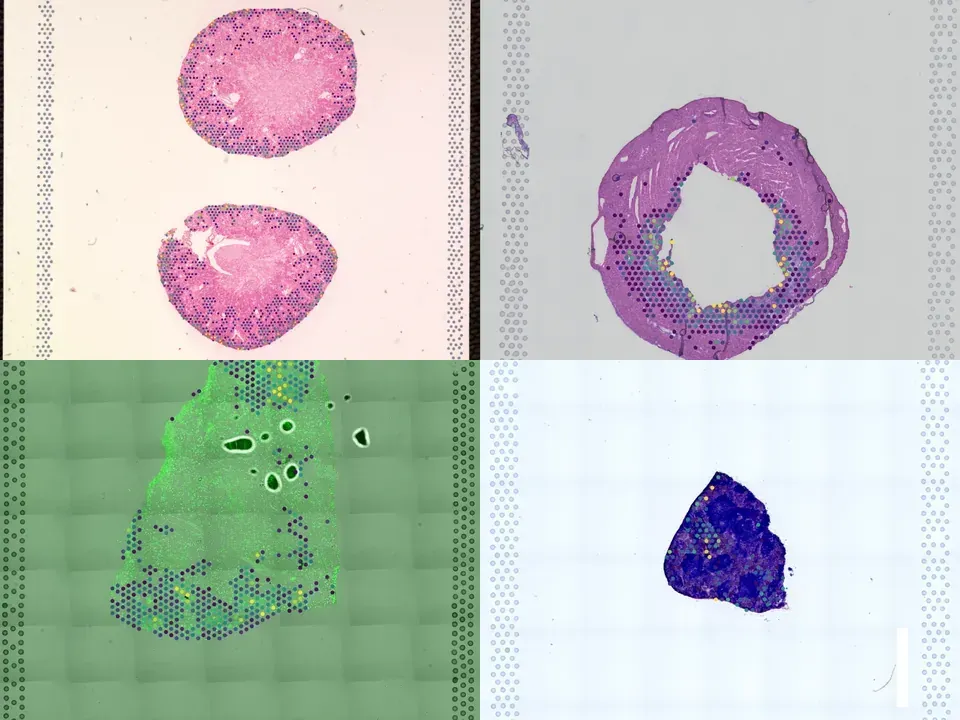
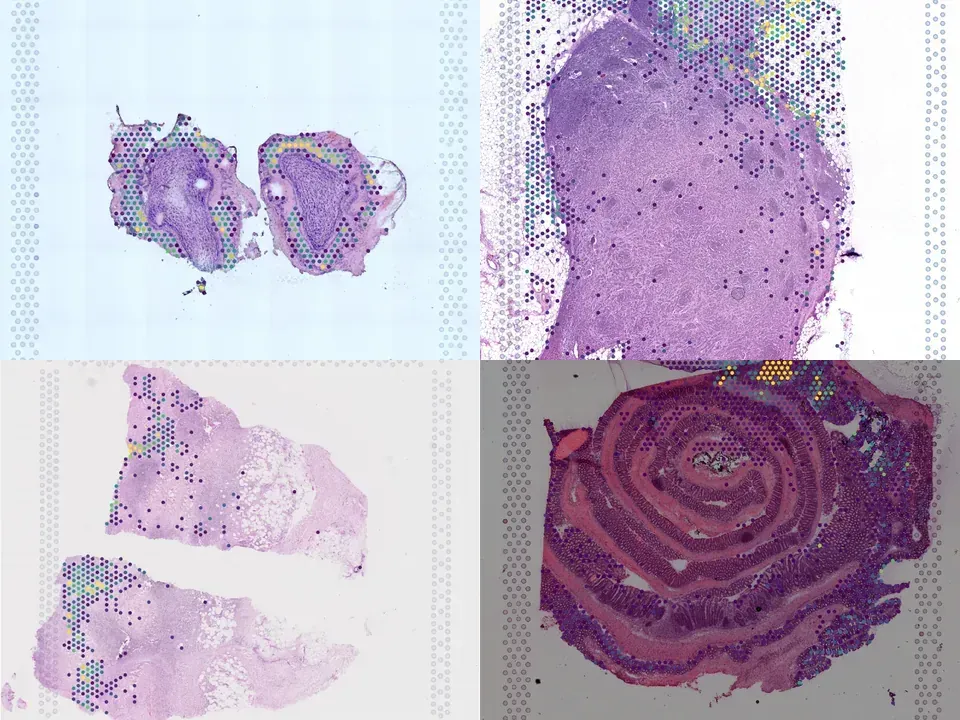
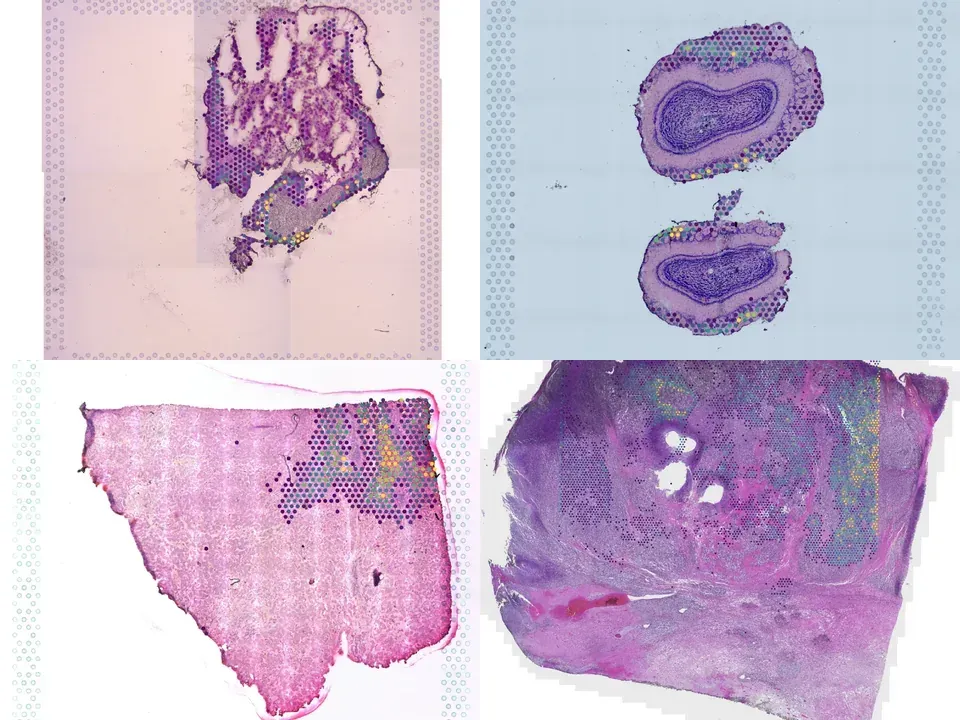
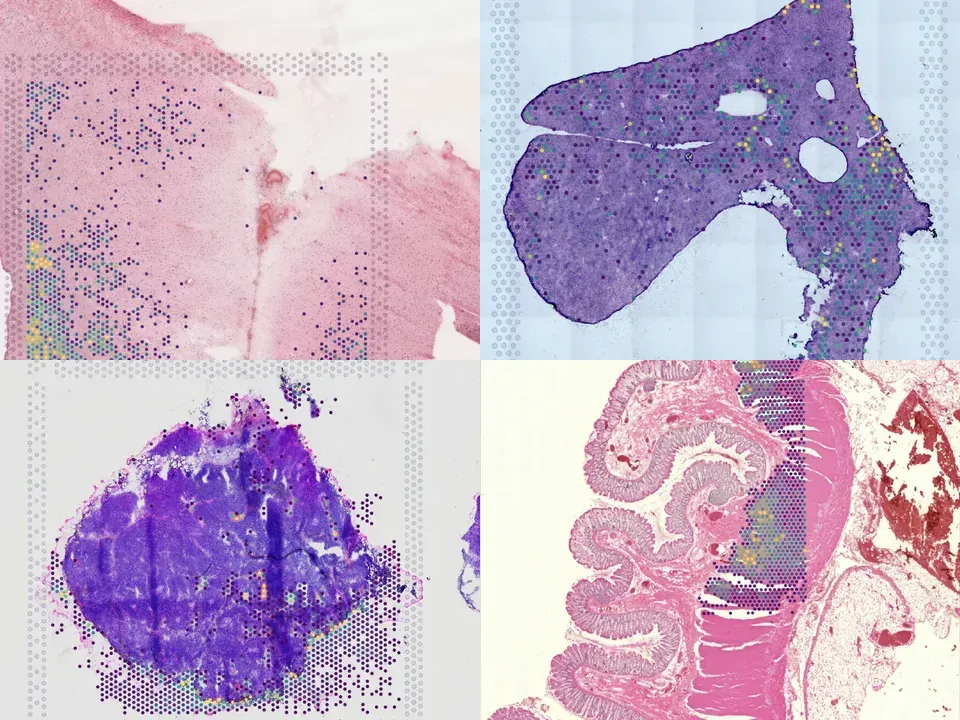
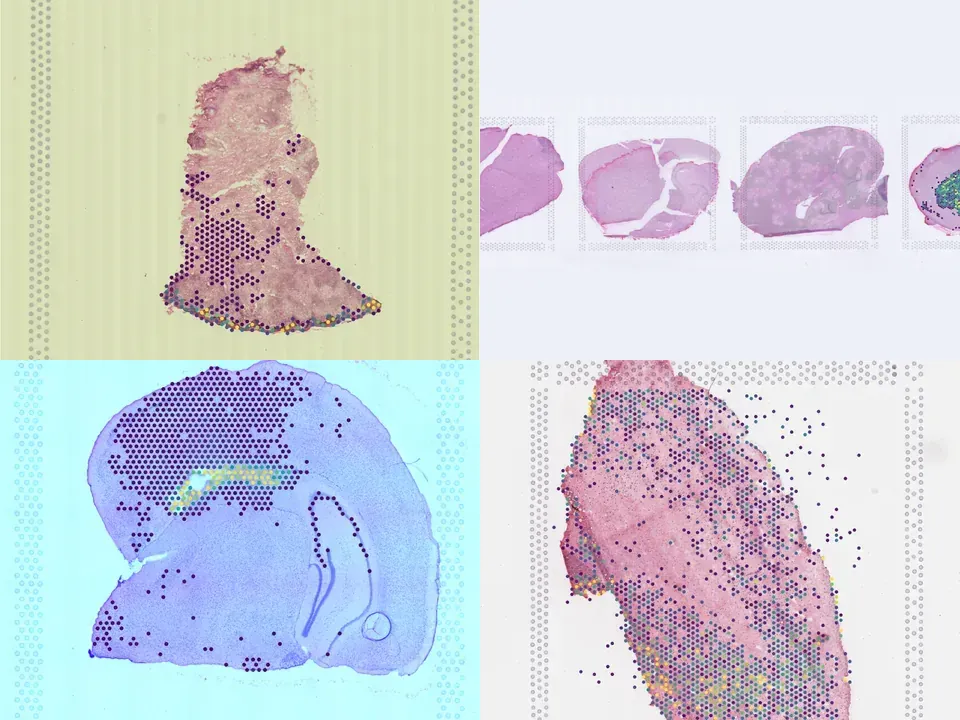
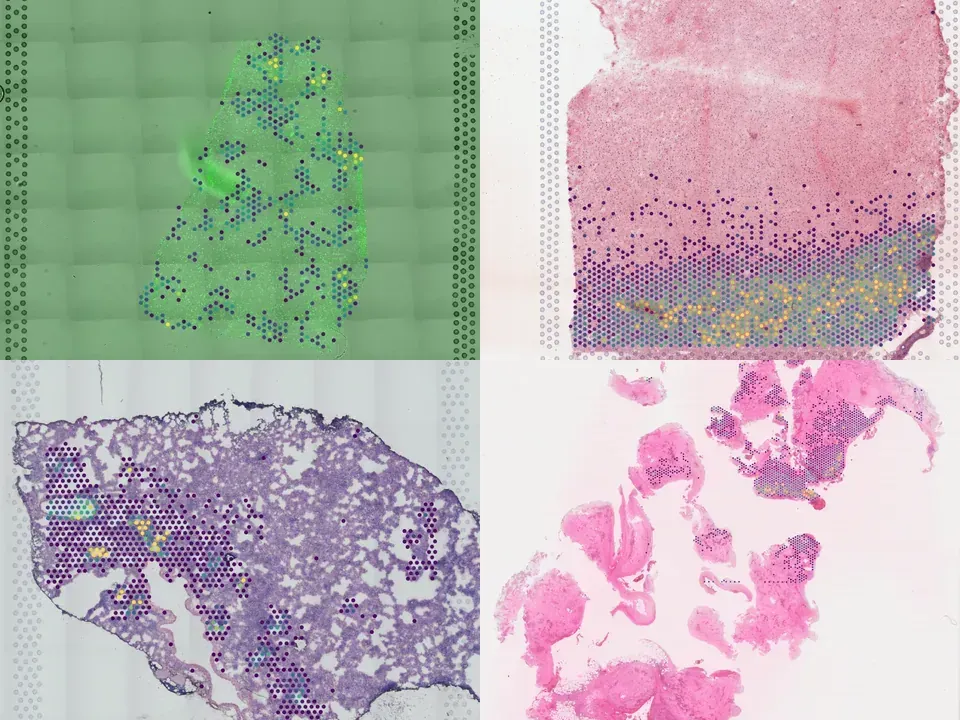
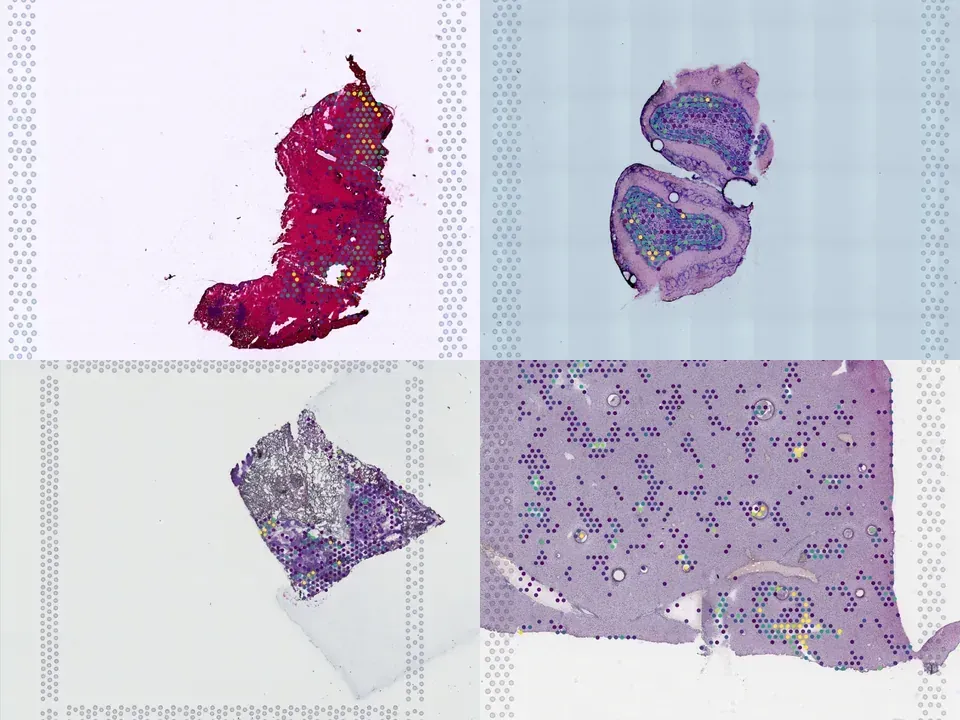
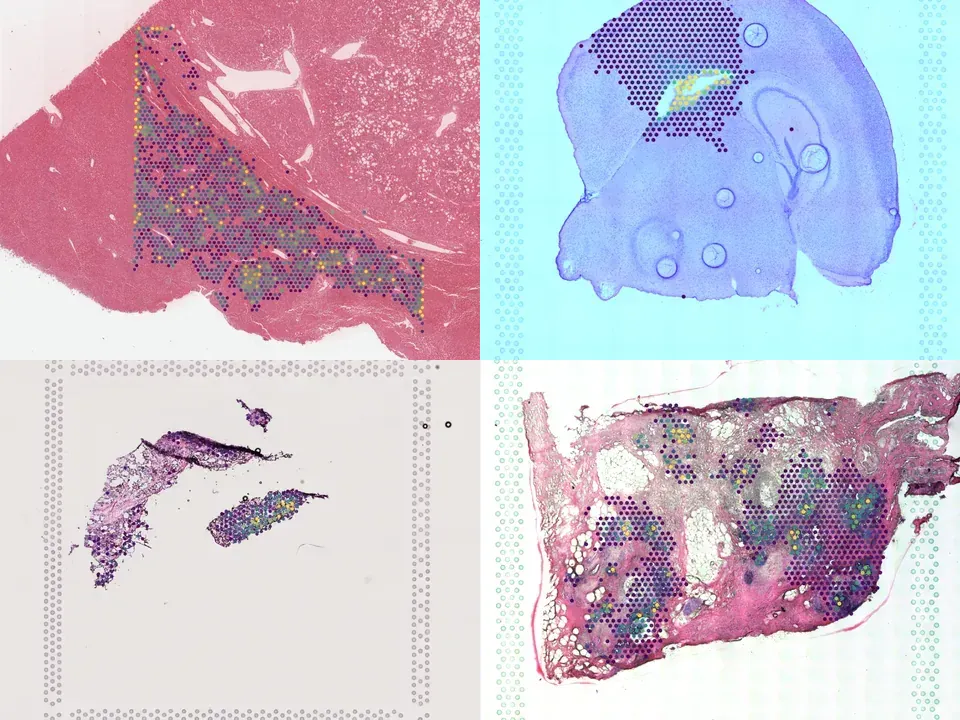
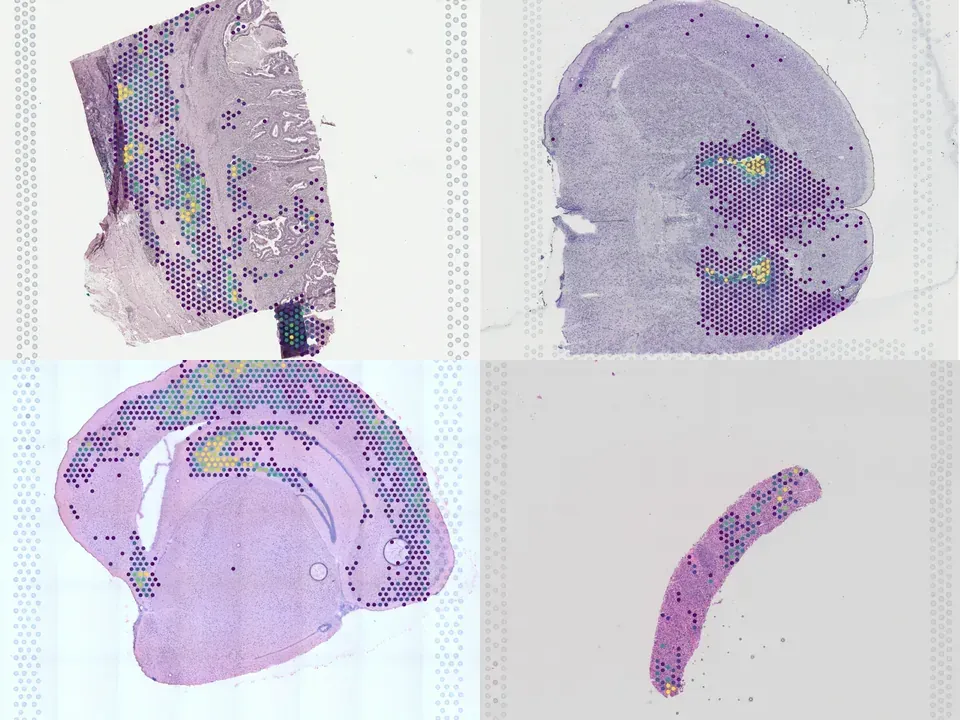
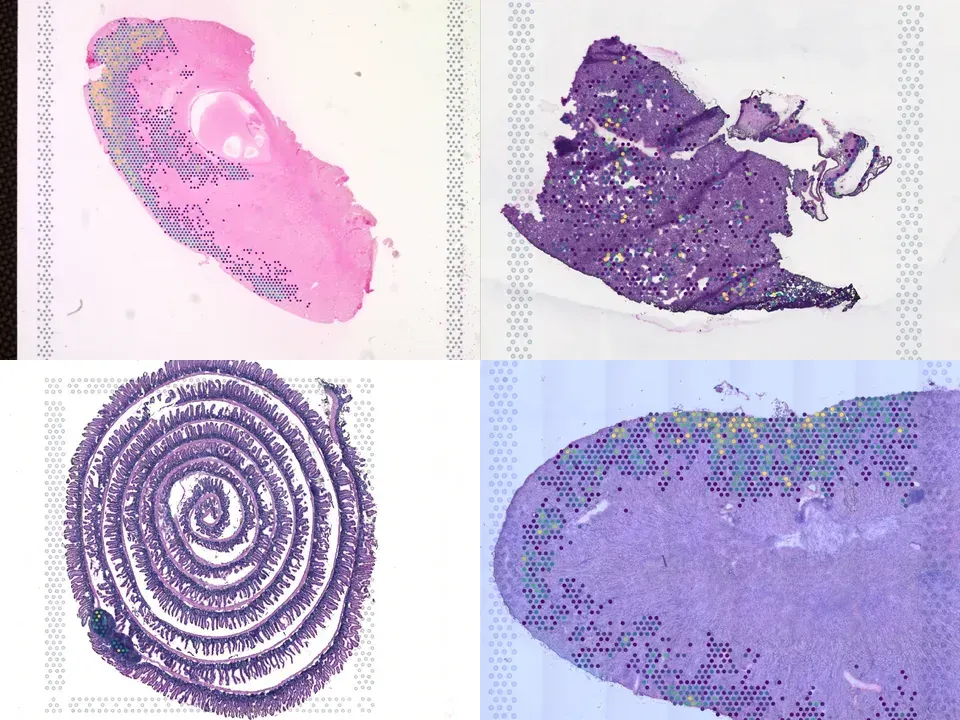
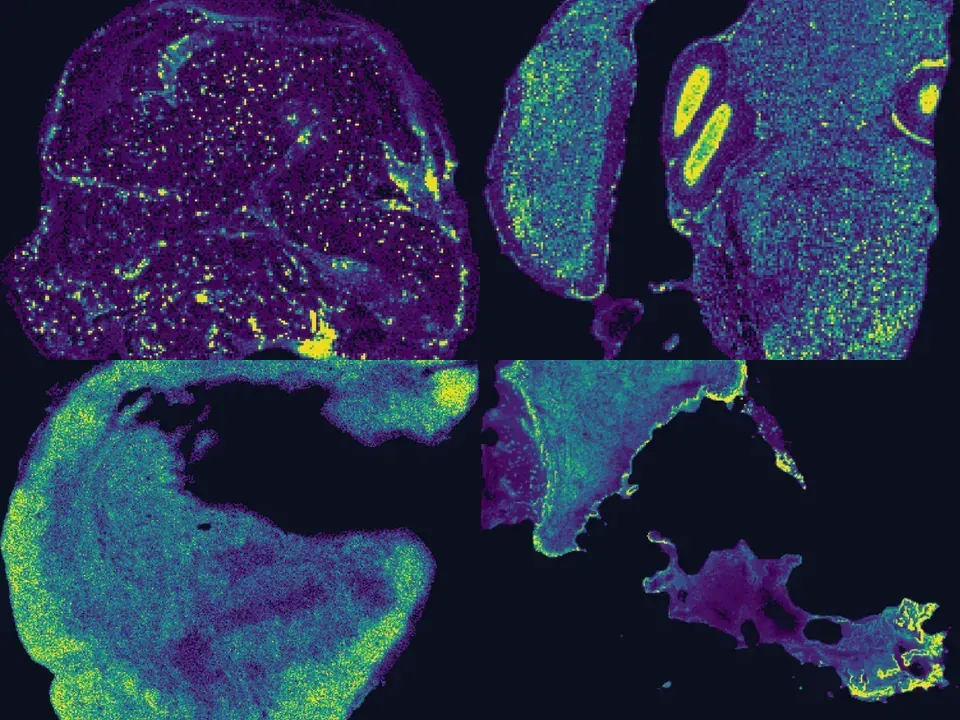
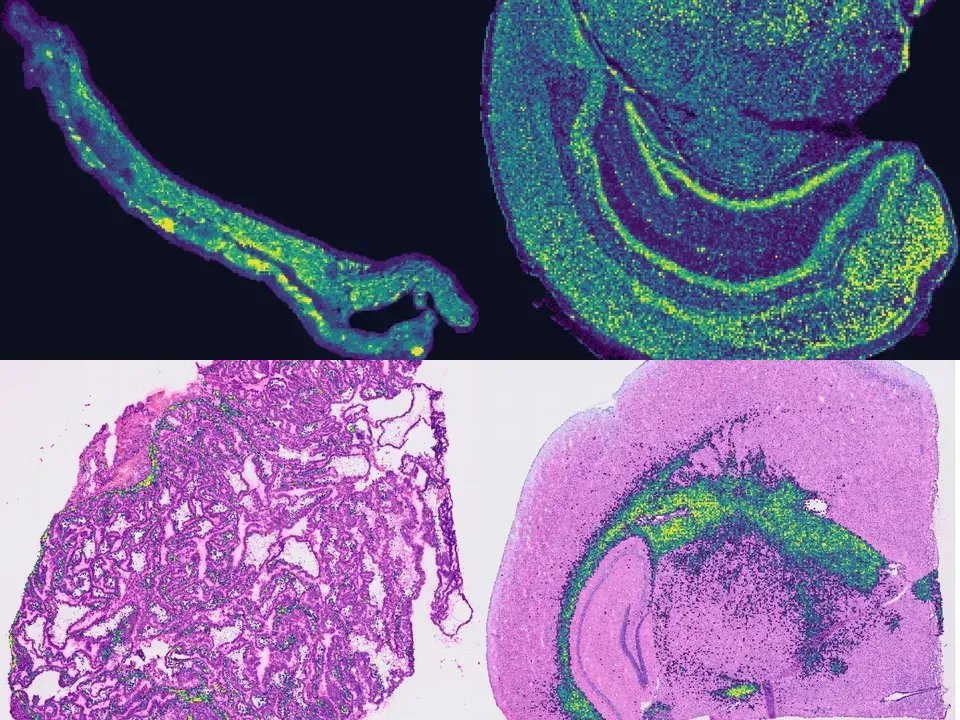
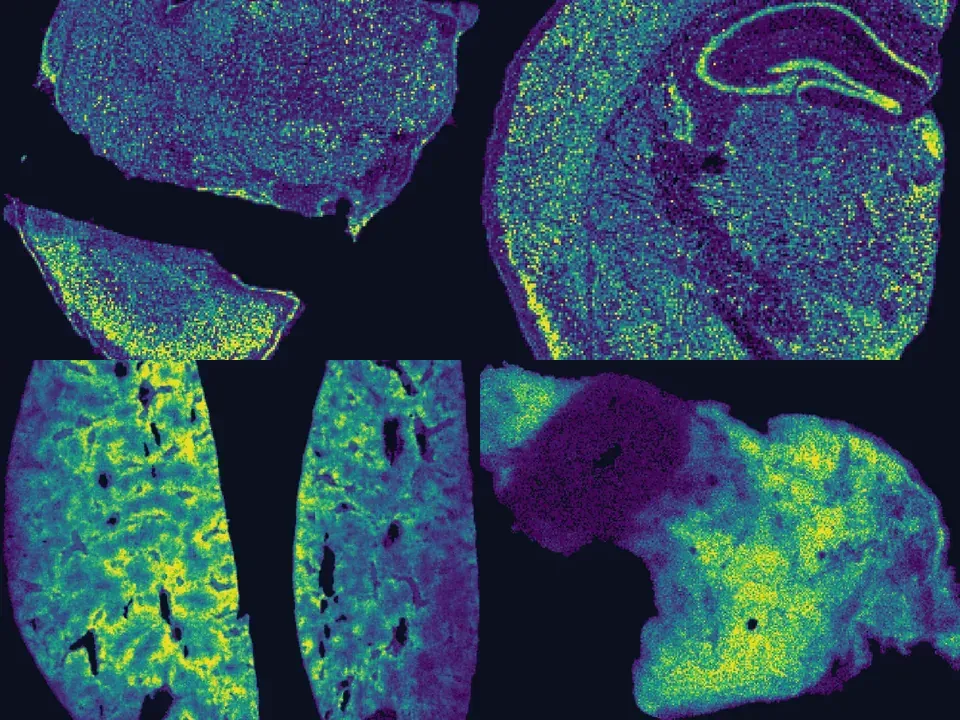
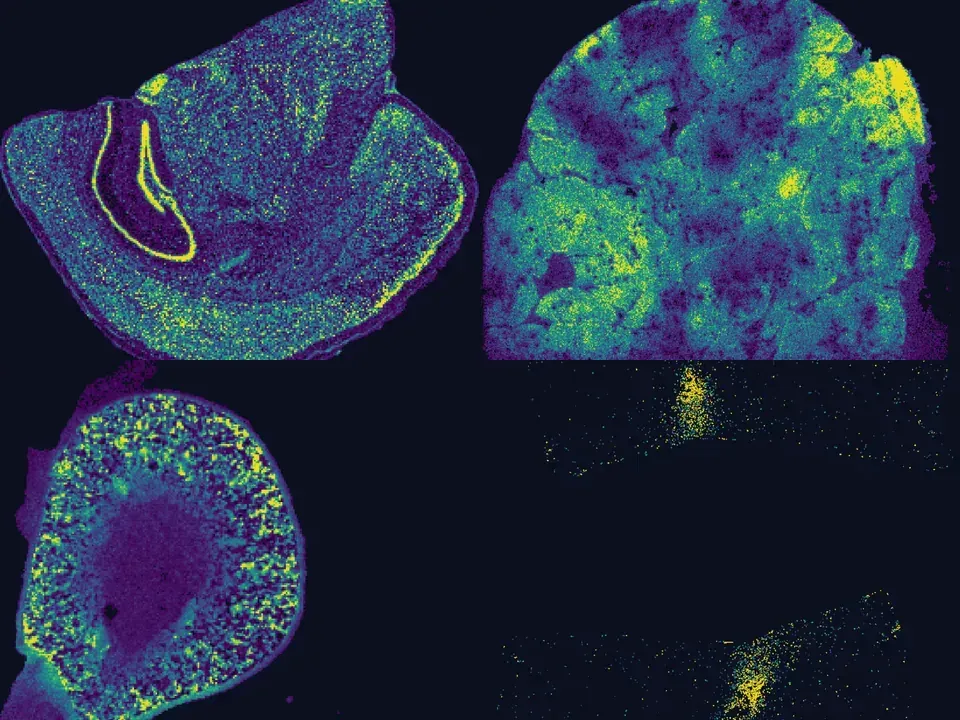
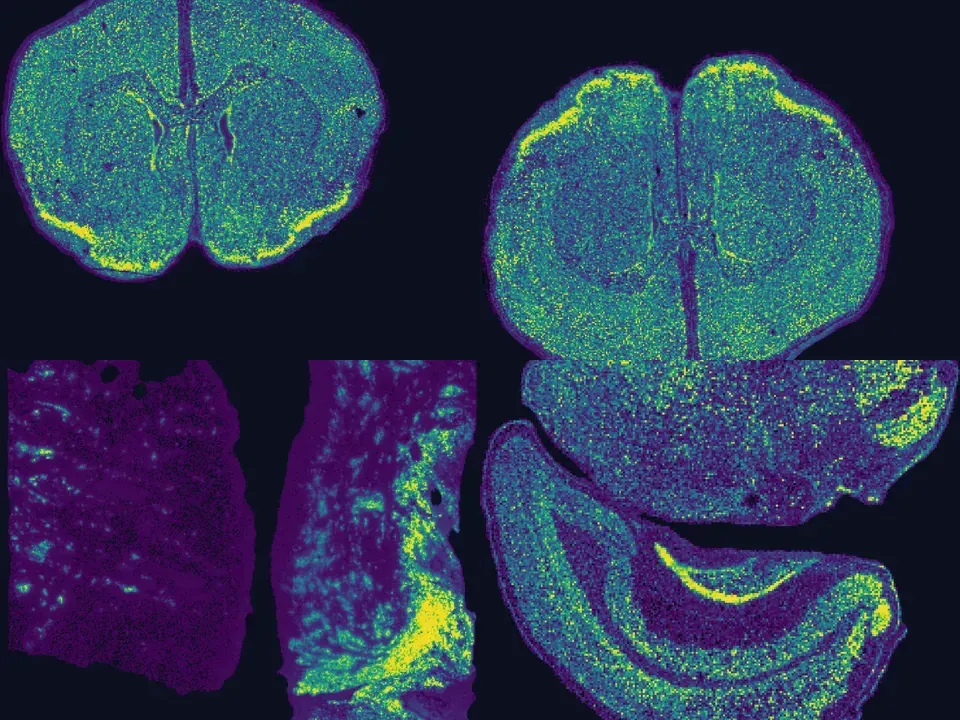
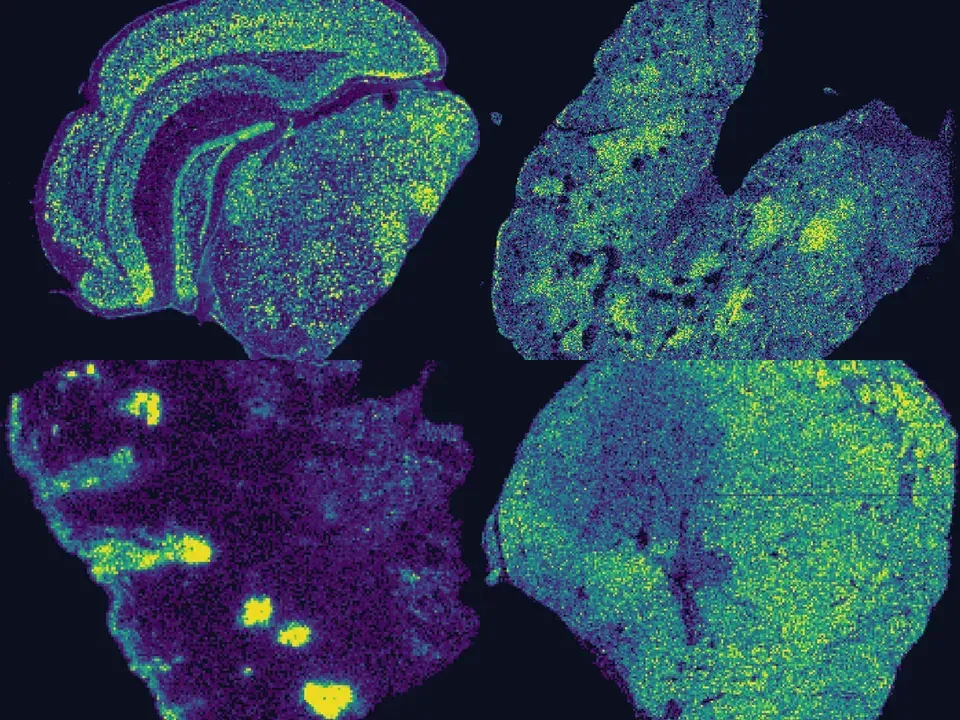
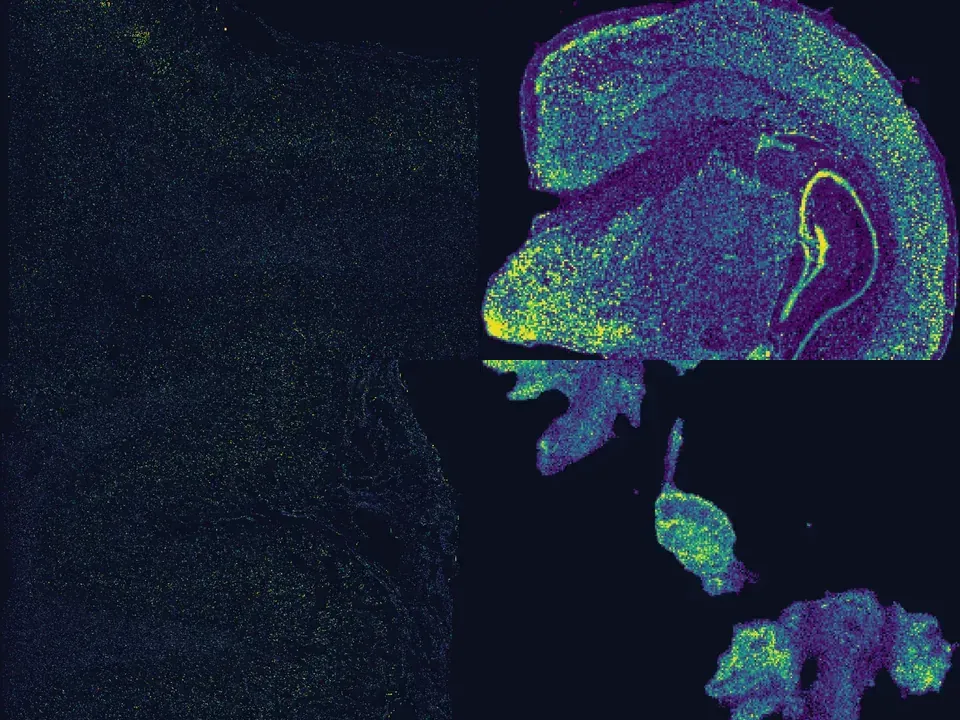
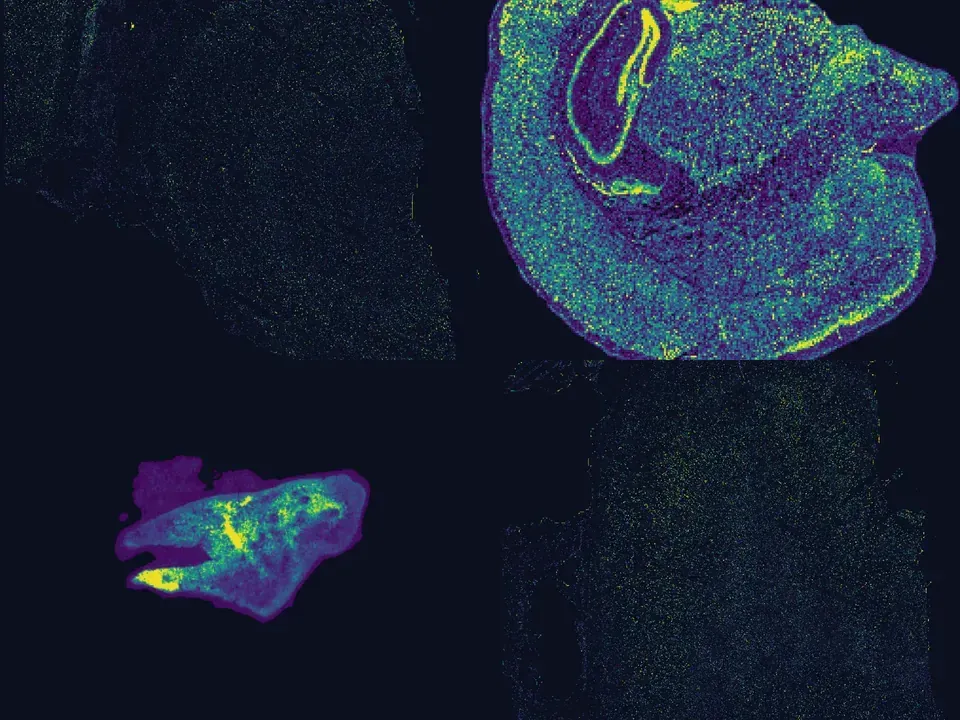
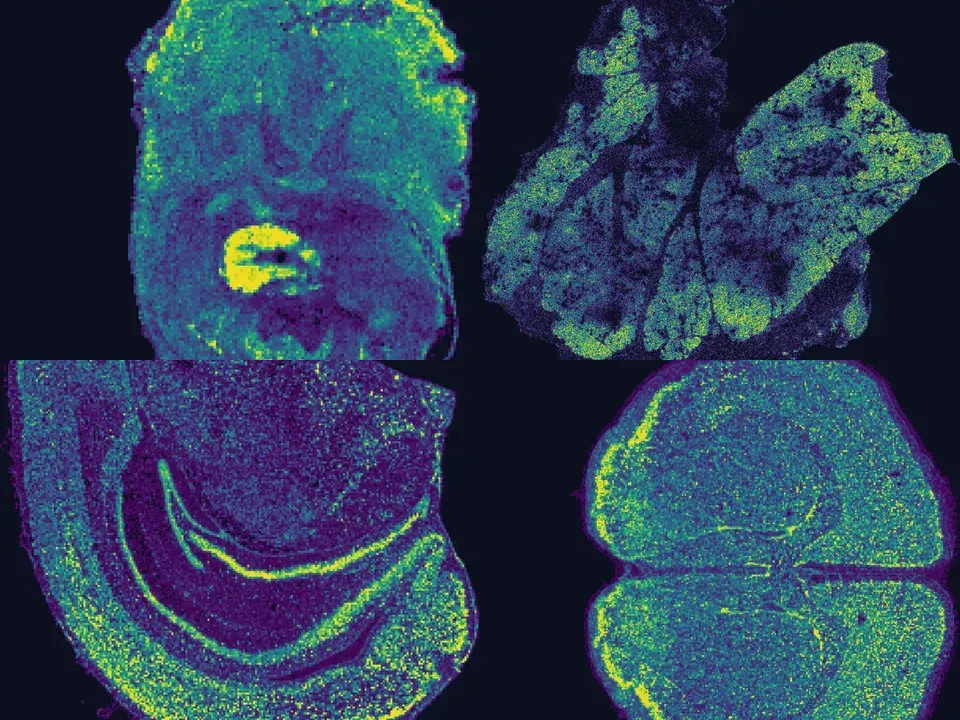
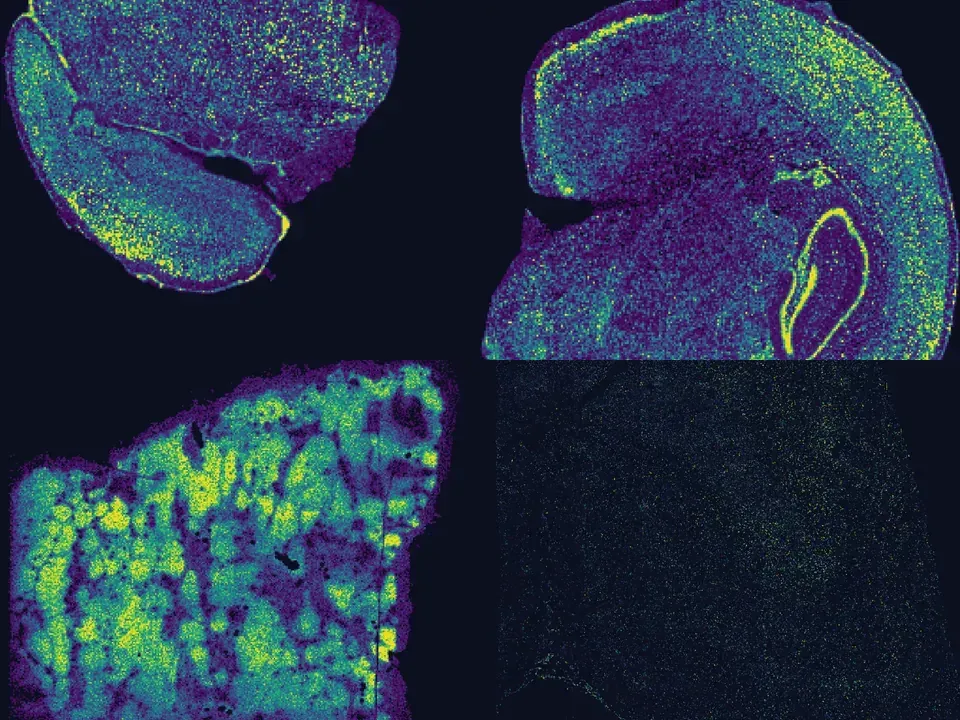
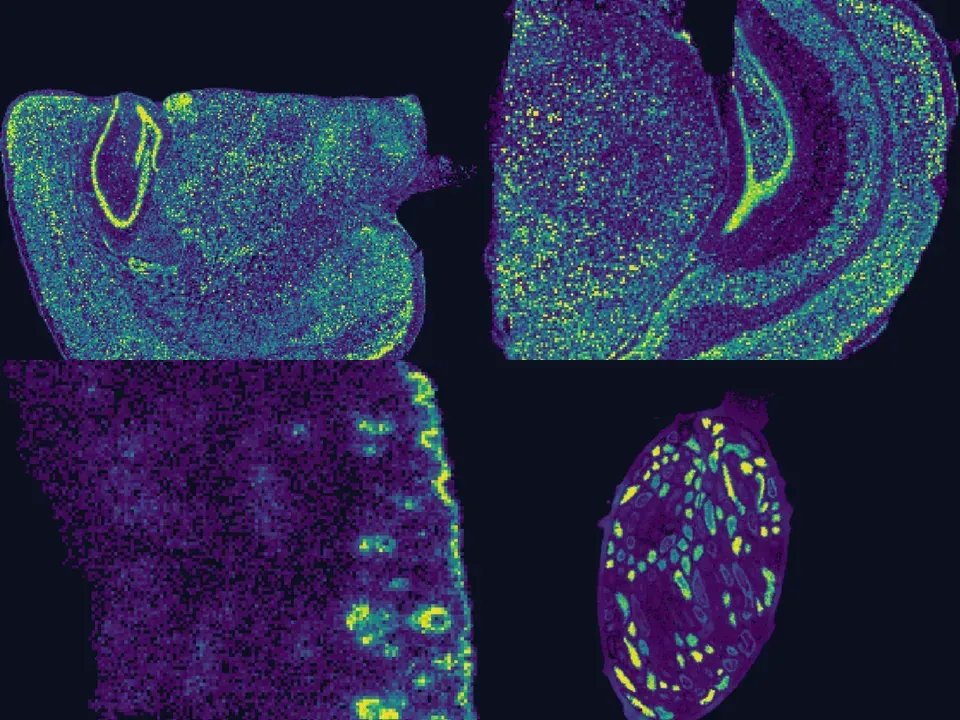
Aging is a multifactorial and complex physiological process, affecting every organ with characteristic manifestations. Understanding the molecular mechanisms that drive aging processes is crucial to targeting age-related disorders. Recent reports suggest that severe post-infection syndromes can partially accelerate aging. However, the underlying gene-encoded regulatory interplay, whether being shared or distinct between aging and infection biology are poorly understood. Here, we employed spatial transcriptomics to establish a multi-organ atlas (brain, heart, kidney, liver, lung, and spleen) across the mouse lifespan (4, 17, and 26 months). Dissecting high-quality fresh-frozen tissue samples at unbiased molecular resolution, we found both organ-specific and cross-organ gene dysregulation upon aging. We identified age-related trajectories in gene expression and cell state, some only detectable within their spatial context, and provide validation at subcellular resolution. The most prominent effect was organ-wide immune system activation with spatially variable severity. We therefore evaluated how aging mimics the expression signatures observed in systemic infection, using spatial transcriptomics slices from young mice infected with Plasmodium berghei ANKA. While on the gene level the effect sizes caused by the infection outweighed those of aging, we reveal a shared activation of the early complement pathway (C4b) and serine protease inhibitors (Serpin gene family) within by phenotype distinct spatial niches. We show that this common RNA signature is driven by tissue-specific cell types and eventually affects protein levels in the aged brain, rendering them a target for future mechanistic and drug discovery studies. Taken together, our study provides a coherent in-depth and cross-organ transcriptomics atlas to systematically study aging and infection in the mouse at spatiotemporal resolution.
from sddb import Catalog

cohort = Catalog().collection("geo-gse283283")
cohort.members        # the 165 datasets as a table

print(cohort.licenses())              # check the terms before you download

sdatas = cohort.to_dict()             # {uid: SpatialData}, cached locally
# or keep the .zarr files in a folder of your choice:
# sdatas = cohort.to_dict(dest="data/")Needs pip install lamindb and network access to the Lamin database, which is limited during the alpha. If it fails, use the Client tab.
import lamindb as ln

db = ln.DB("scverse/spatialdata-db")
coll = db.Collection.get(key="geo-gse283283")
coll.ordered_artifacts.to_dataframe()   # the 165 members, ordered

# download every member .zarr to the local cache:
paths = [a.cache() for a in coll.ordered_artifacts.all()]# sddb client: download every member .zarr into data/
sddb-cli download --collection geo-gse283283 --dest data/Licenses: 165 NCBI GEO policy
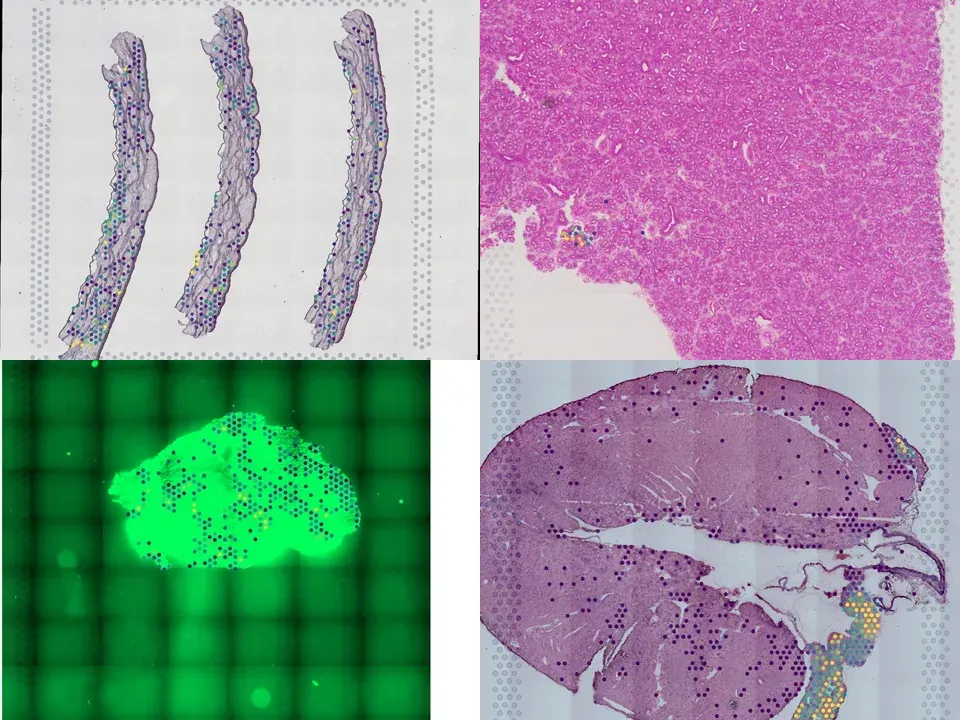
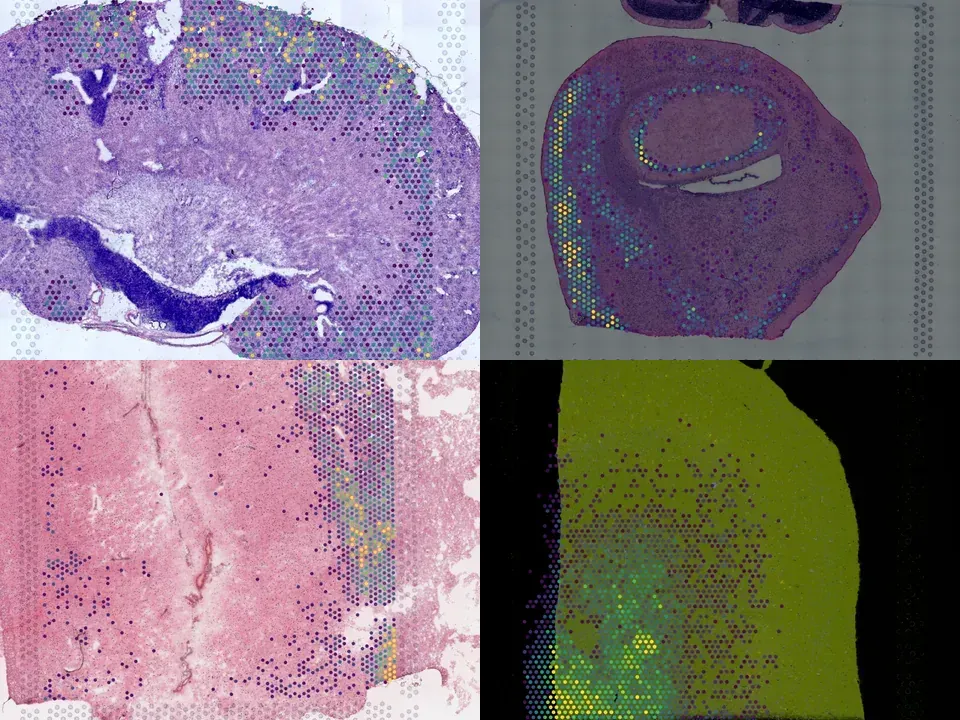
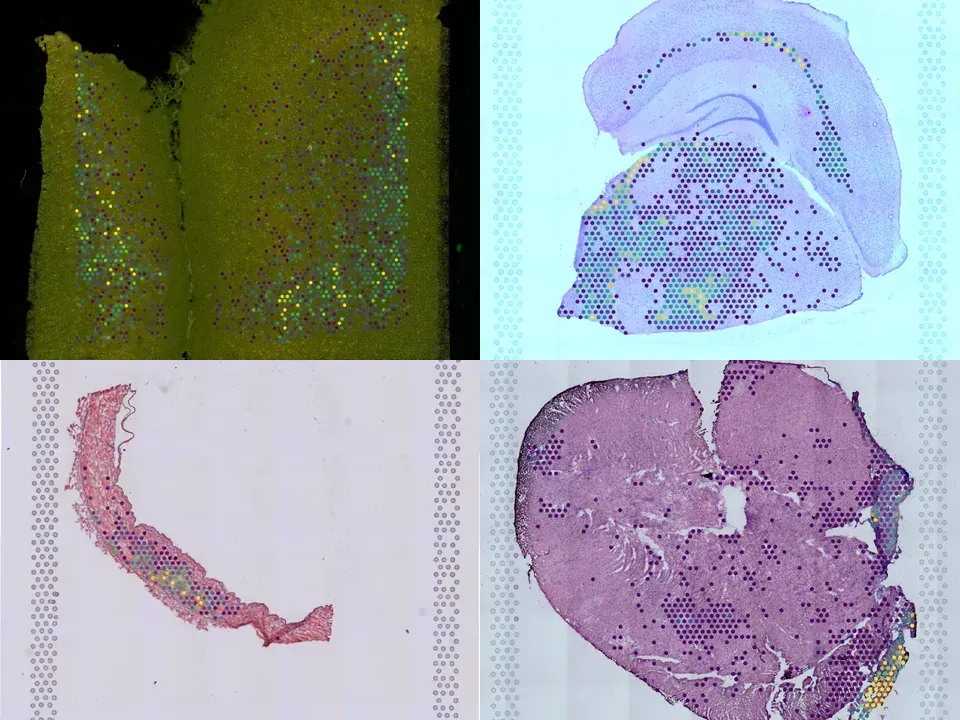
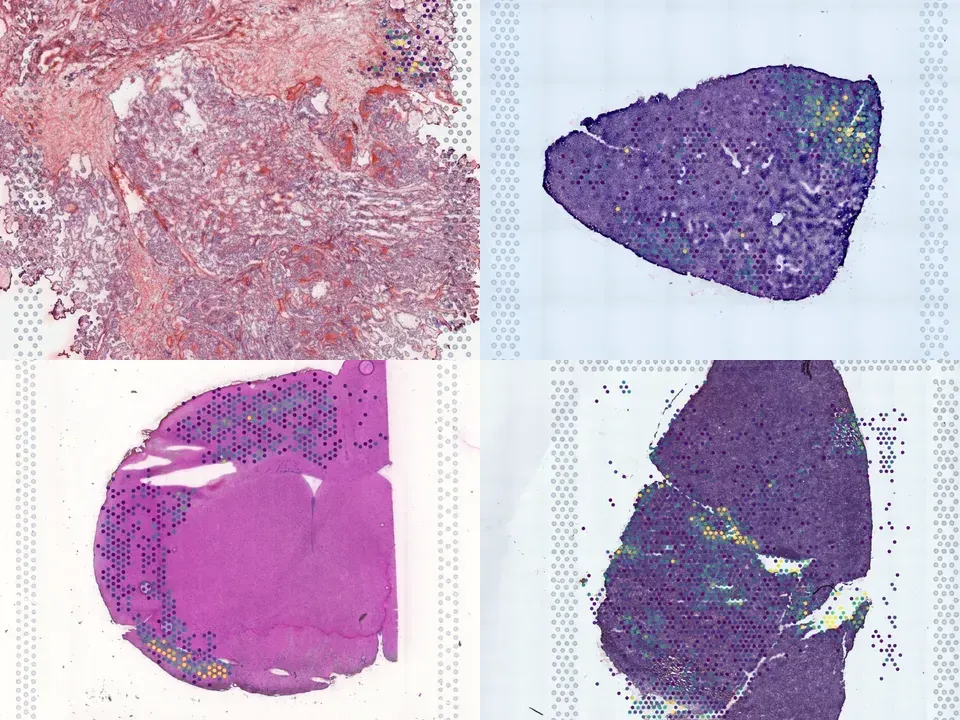
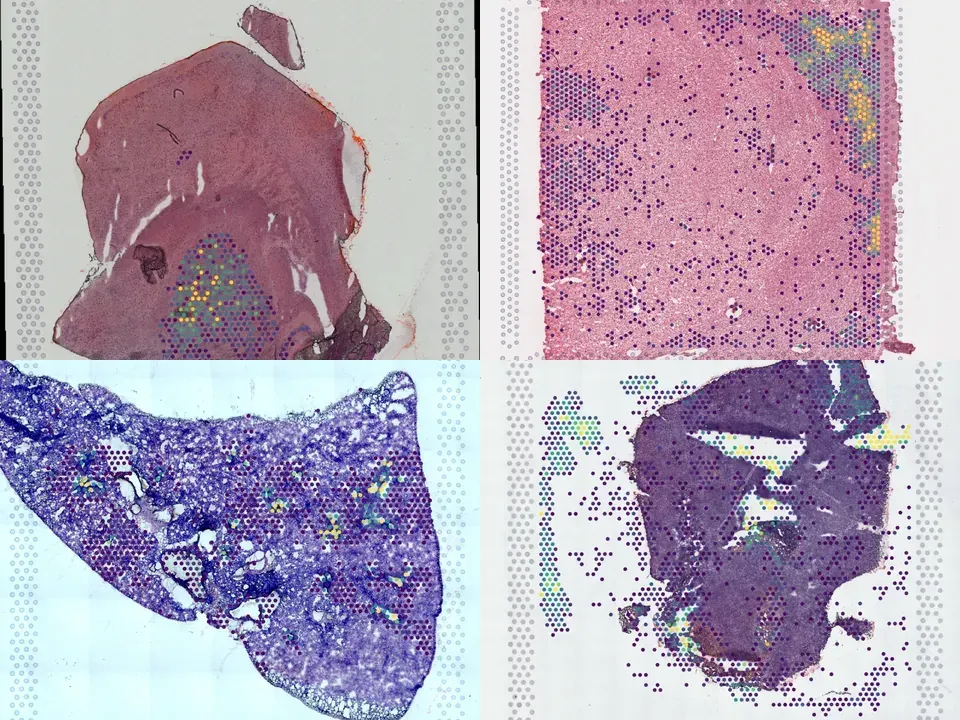
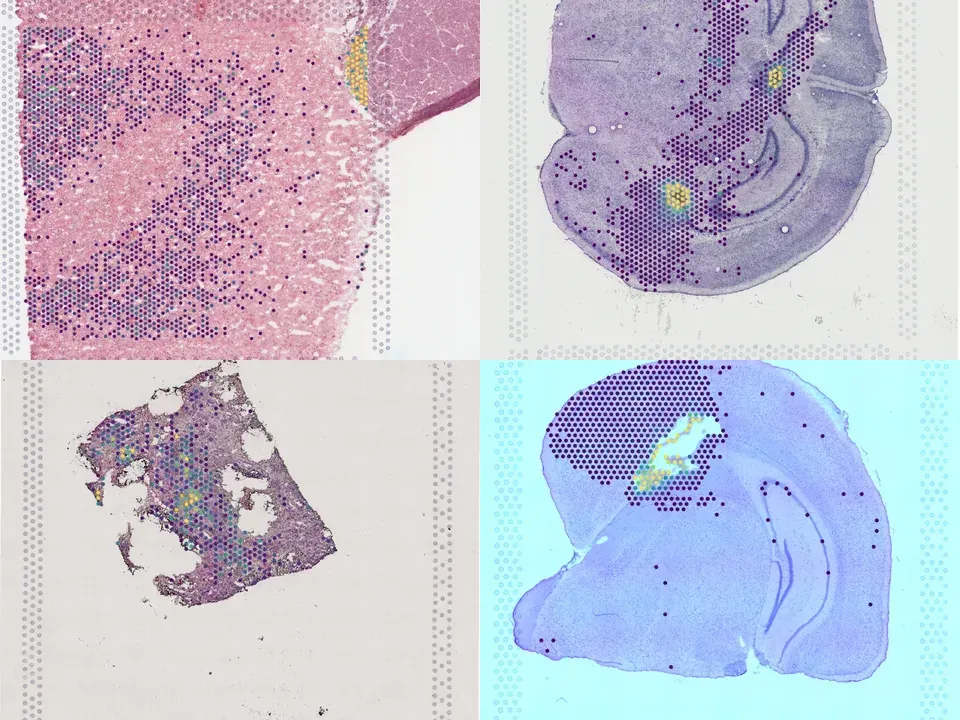
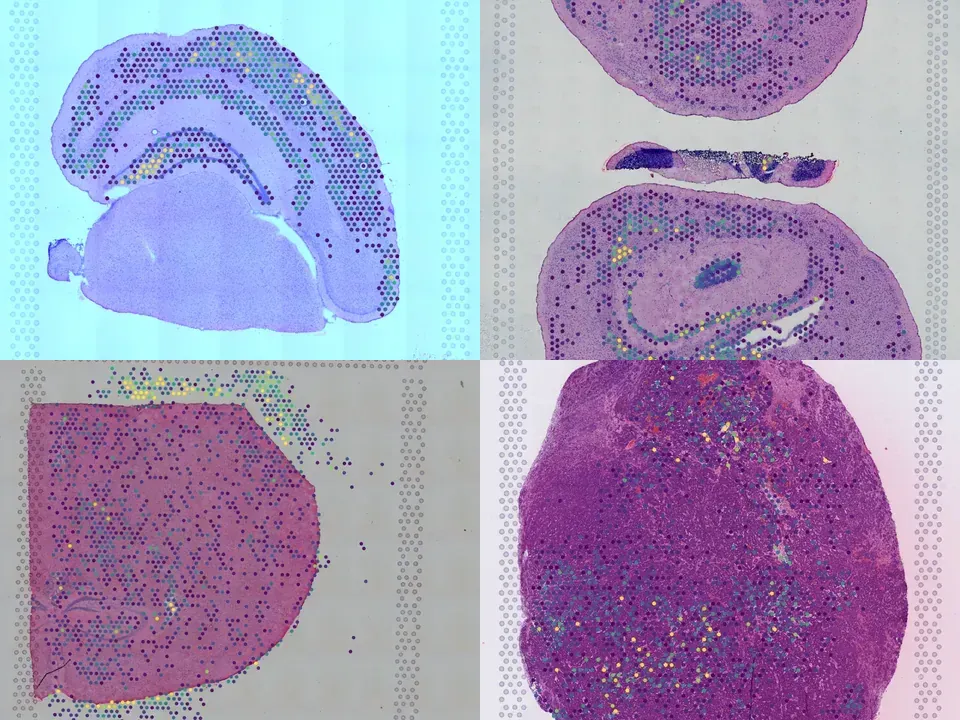
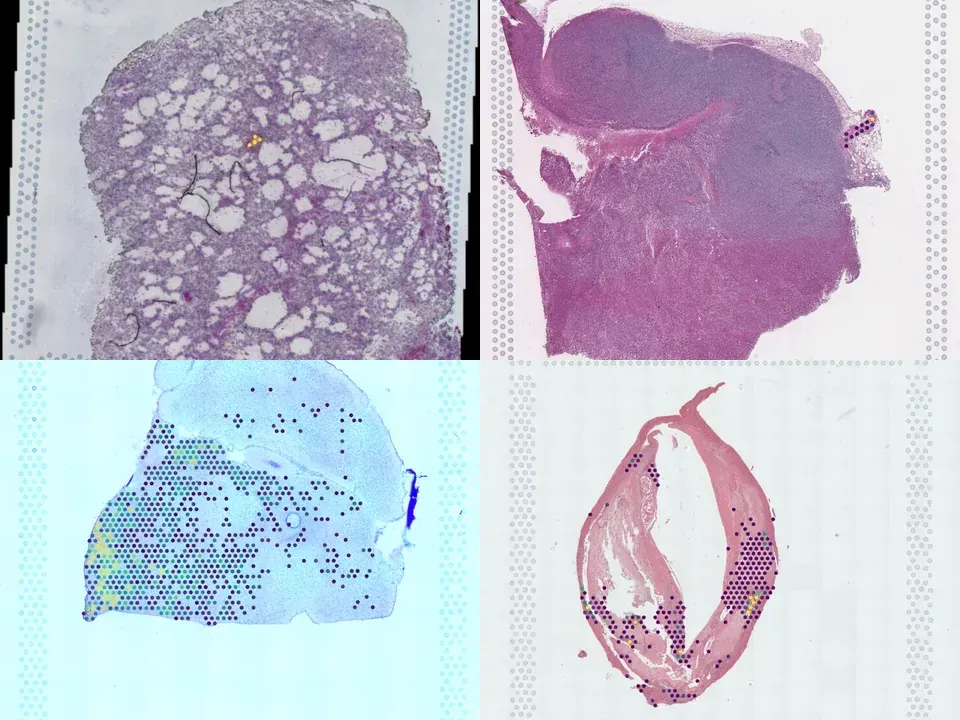
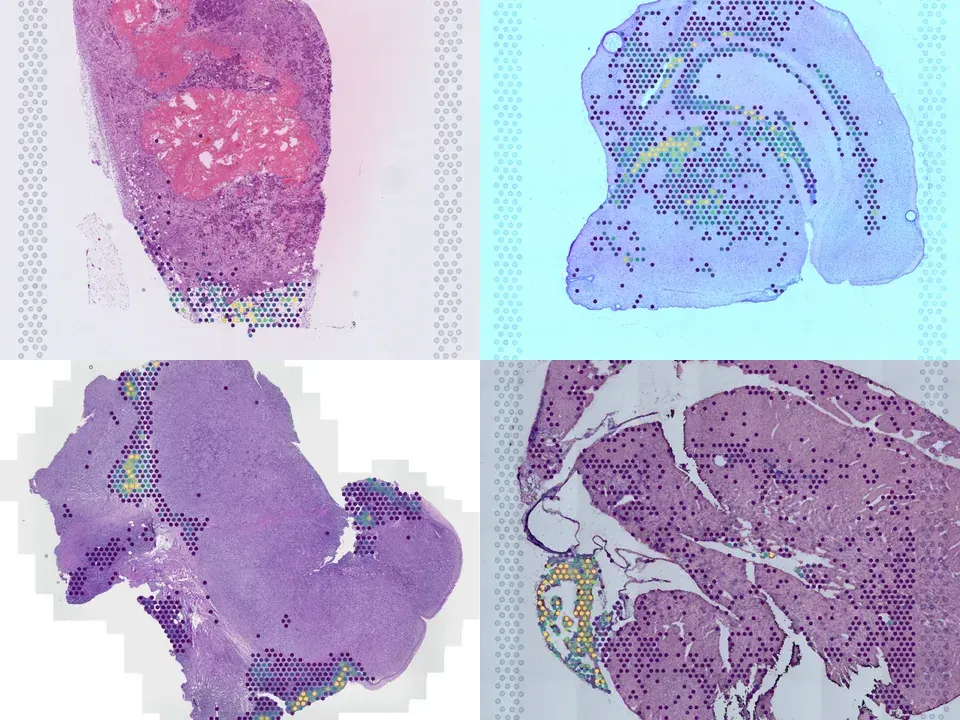
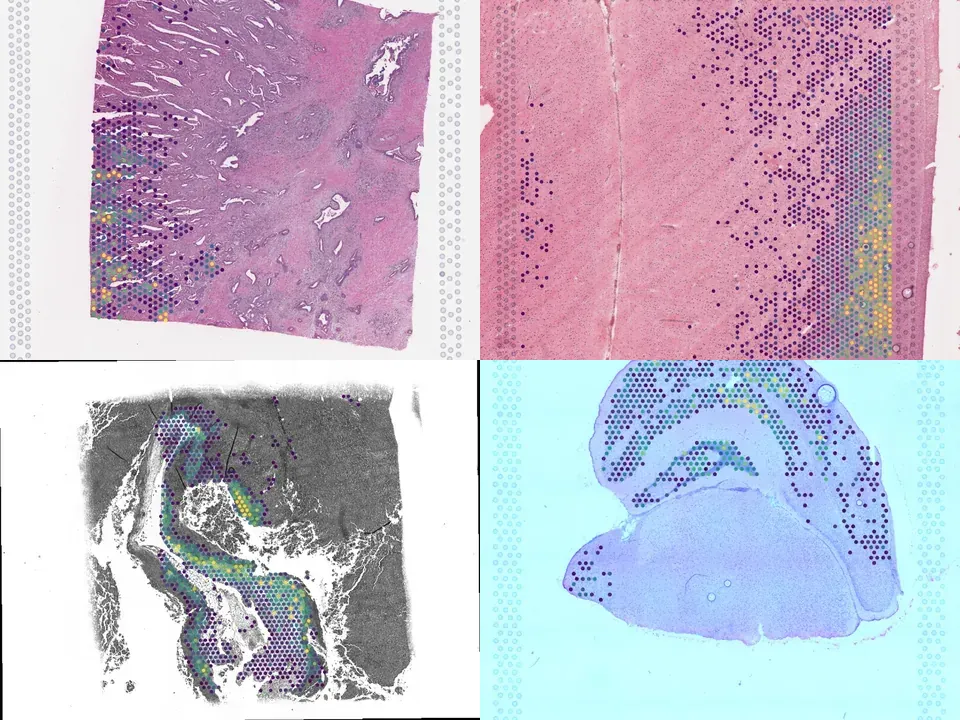
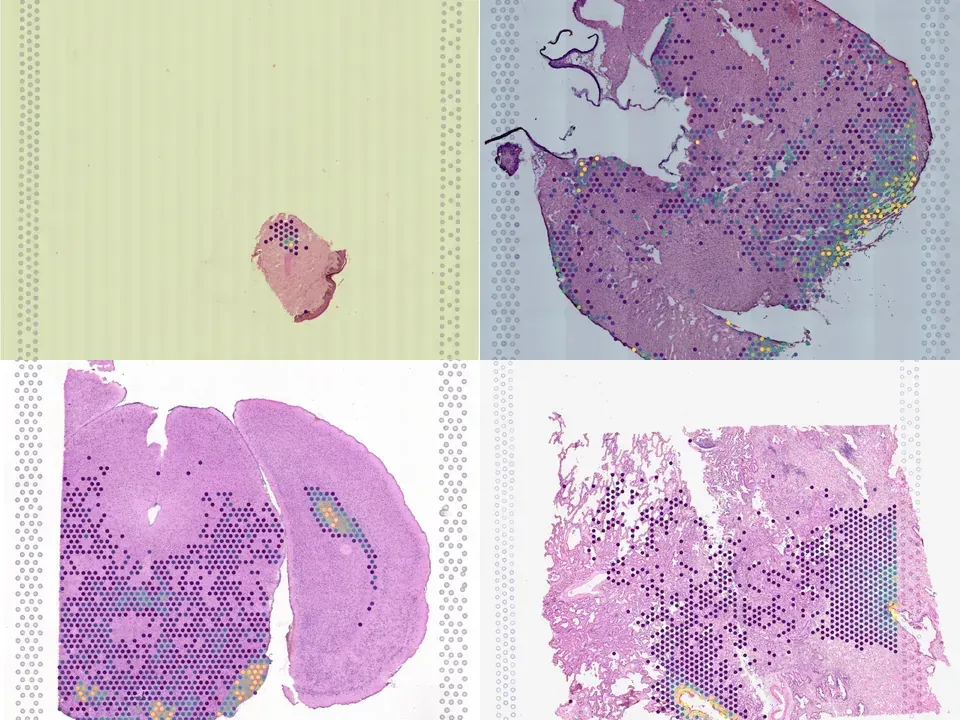
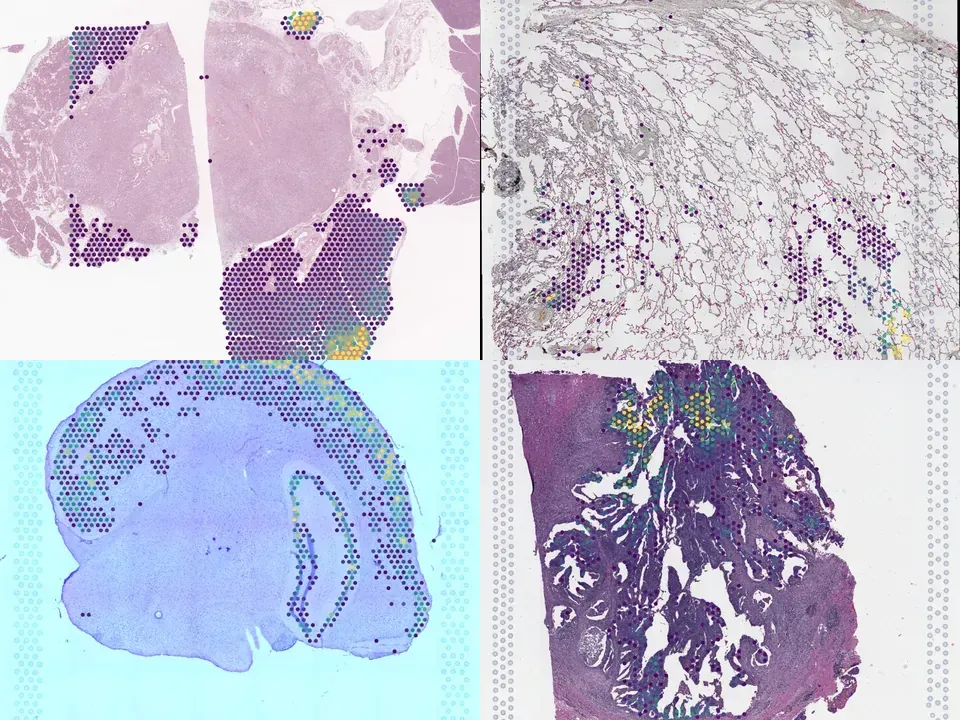
No linked publication found — please cite the data source.