
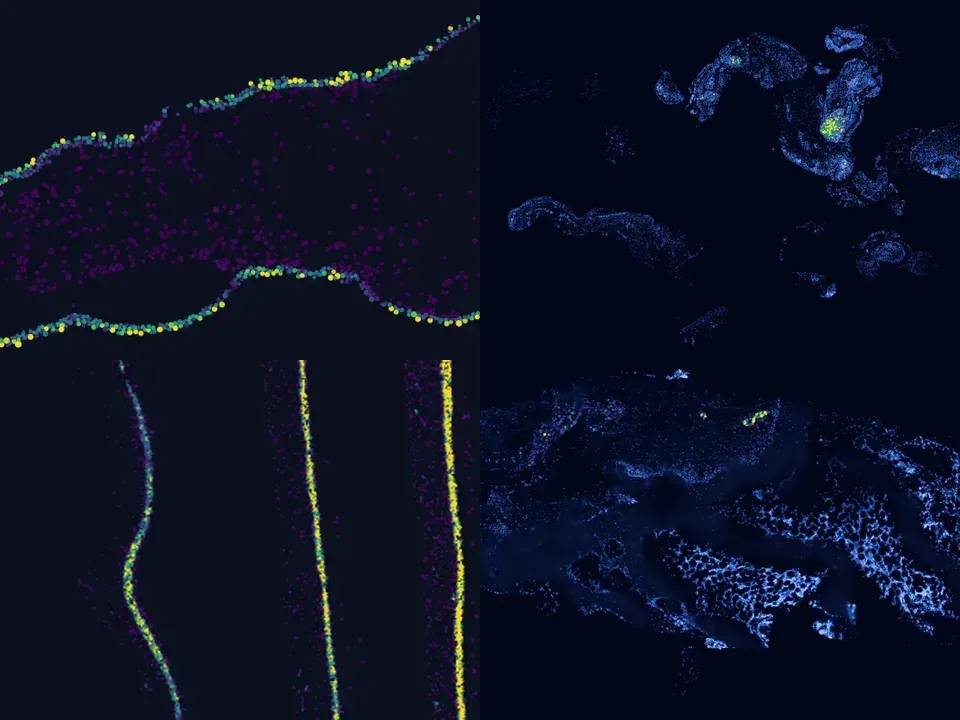
Mouse skin of back
GSM8586920
mouse skin of back 419 MB 91,345 cells bronze NCBI GEO policy
Technology10x Xenium
Organismmouse
Tissueskin of back
Cells91,345
bronze NCBI GEO policy
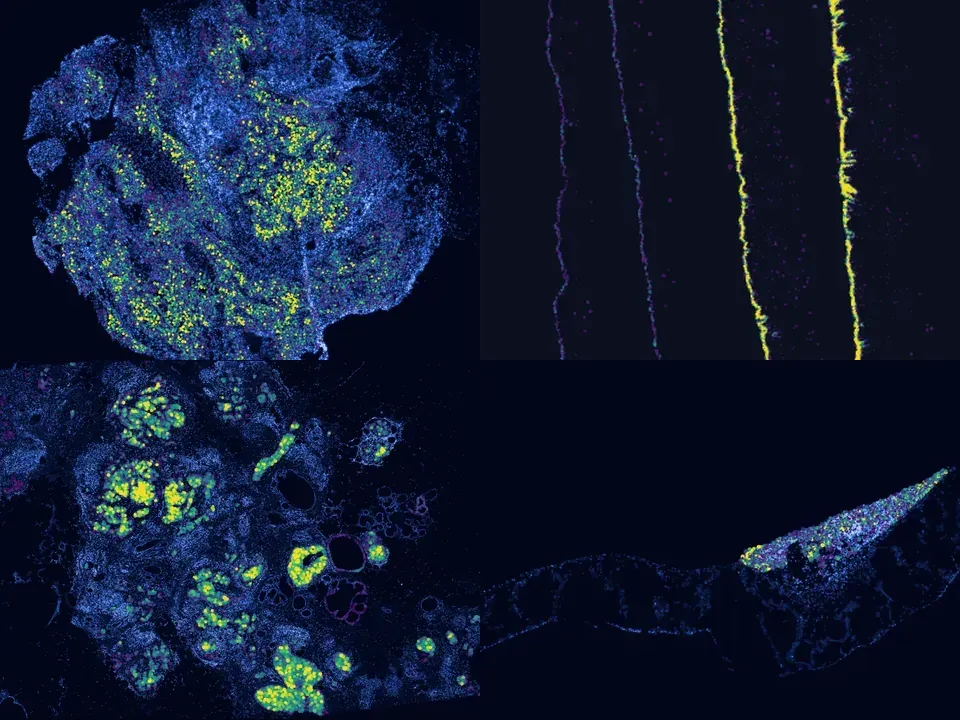
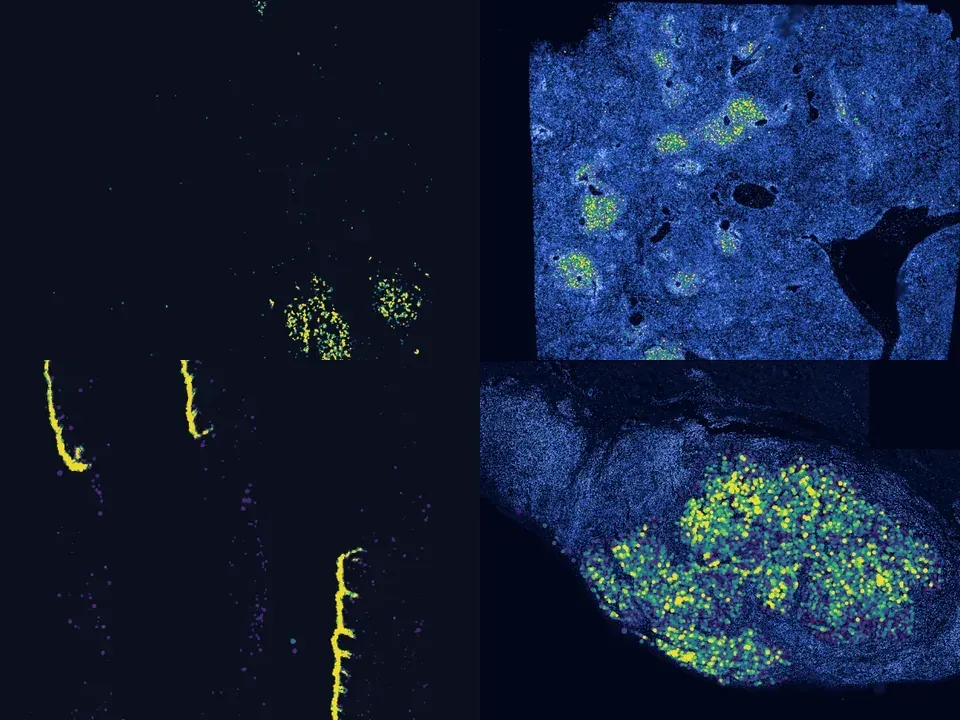
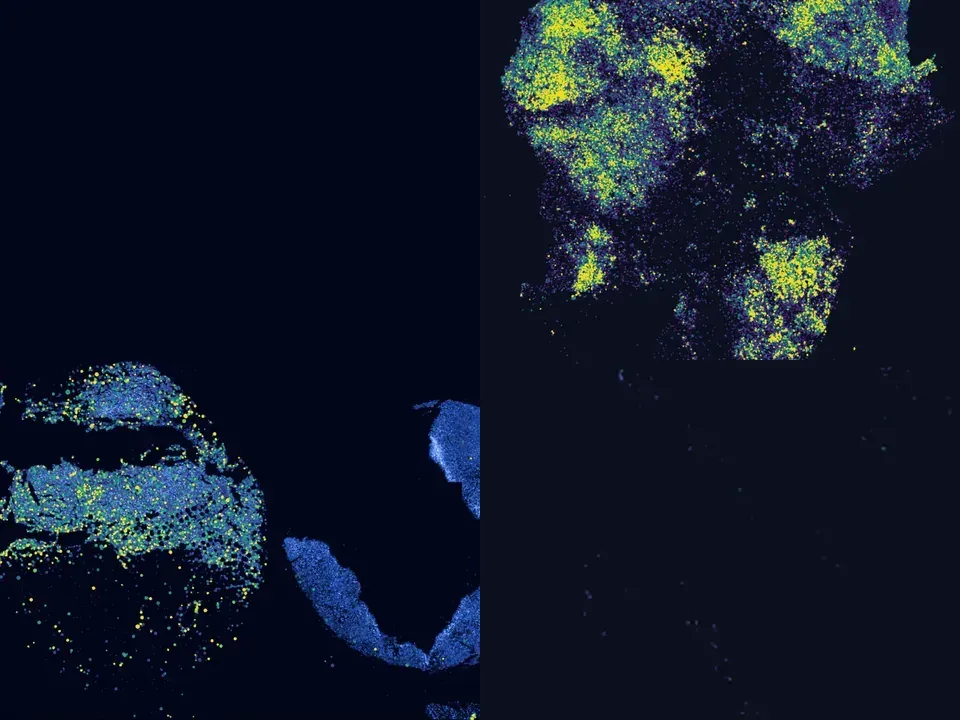
Skin injuries heal slowly, compared to oral epithelial tissues, and often do not regenerate lost adnexa. Using a murine mouse model expressing the oral epithelial transcription factor PITX1 in the skin, we performed Xenium in situ analysis in healthy and wounded skin and healthy oral mucosa to delineate the cellular and molecular changes underpinning the superior oral wounding response.
from sddb import Catalog

cohort = Catalog().collection("geo-gse280069")
cohort.members        # the 4 datasets as a table

print(cohort.licenses())              # check the terms before you download

sdatas = cohort.to_dict()             # {uid: SpatialData}, cached locally
# or keep the .zarr files in a folder of your choice:
# sdatas = cohort.to_dict(dest="data/")Needs pip install lamindb and network access to the Lamin database, which is limited during the alpha. If it fails, use the Client tab.
import lamindb as ln

db = ln.DB("scverse/spatialdata-db")
coll = db.Collection.get(key="geo-gse280069")
coll.ordered_artifacts.to_dataframe()   # the 4 members, ordered

# download every member .zarr to the local cache:
paths = [a.cache() for a in coll.ordered_artifacts.all()]# sddb client: download every member .zarr into data/
sddb-cli download --collection geo-gse280069 --dest data/Licenses: 4 NCBI GEO policy
No linked publication found — please cite the data source.