
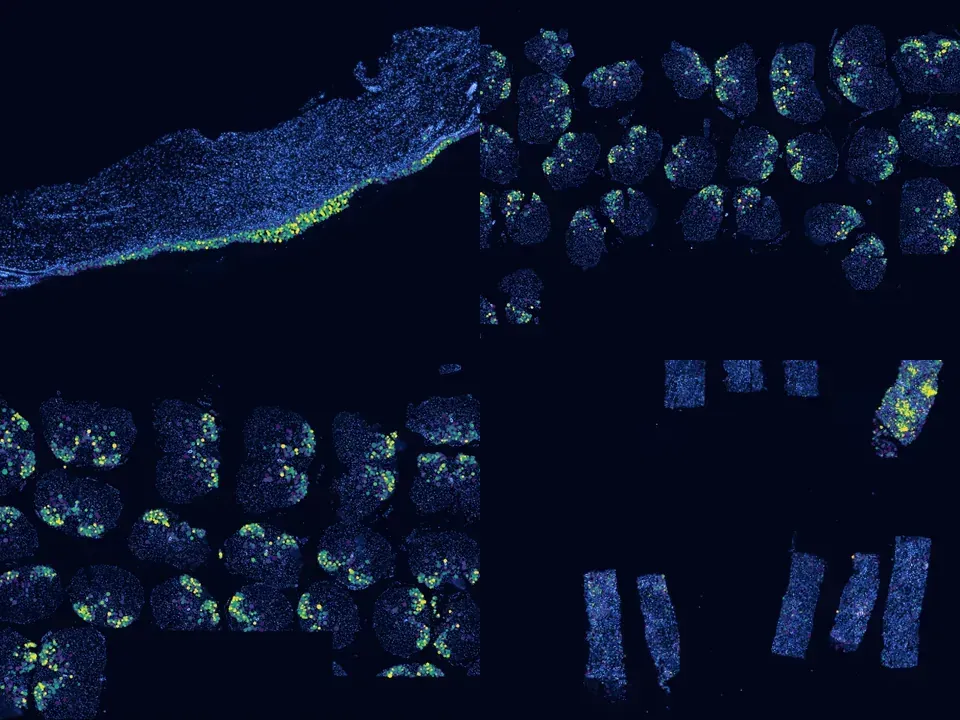
Mouse hair follicle
GSM8546227
mouse hair follicle injury 443 MB 24,144 cells bronze NCBI GEO policy
Technology10x Xenium
Organismmouse
Tissuehair follicle
Conditioninjury
Cells24,144
bronze NCBI GEO policy
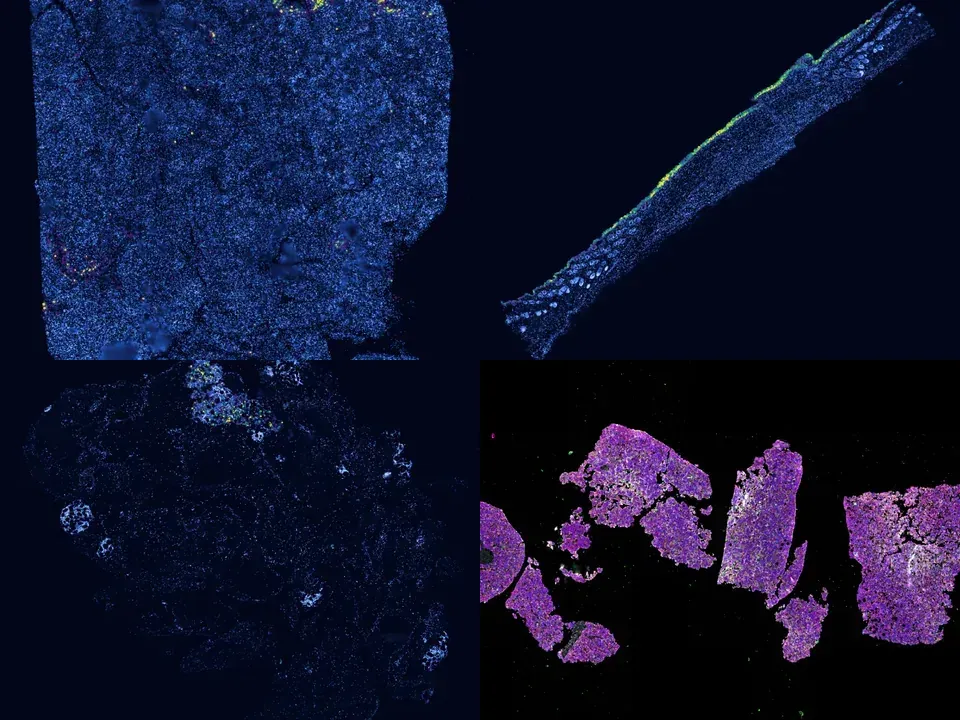
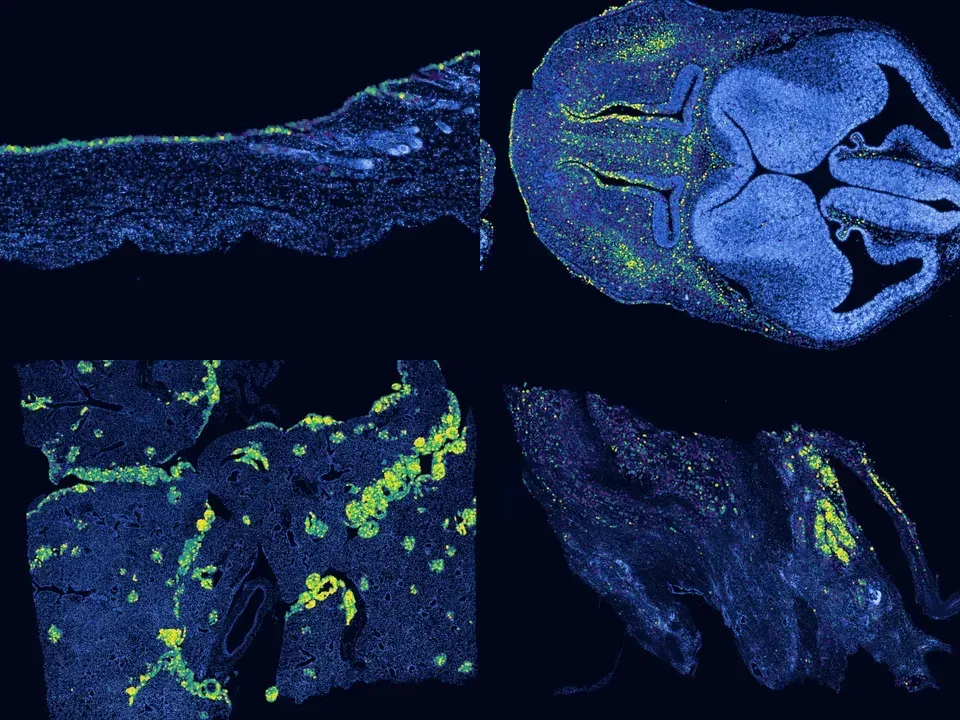
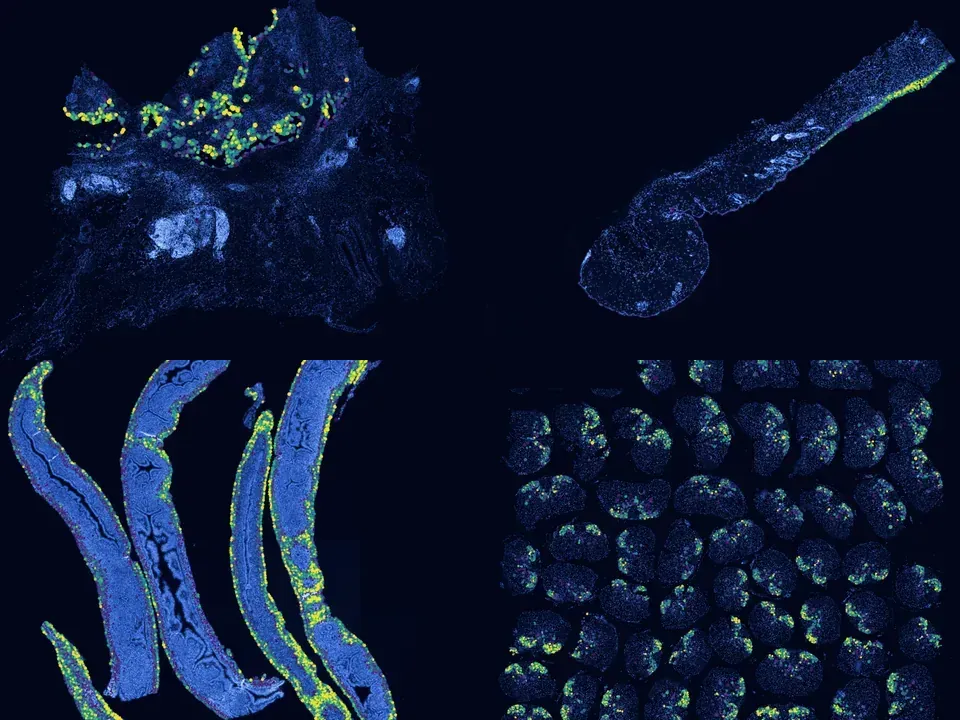
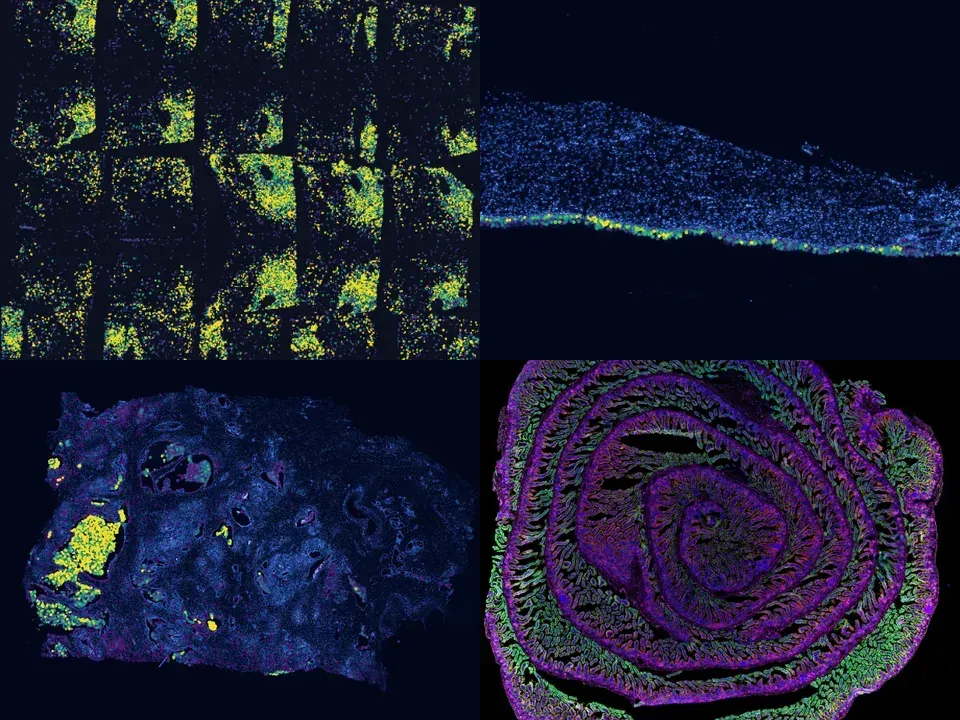
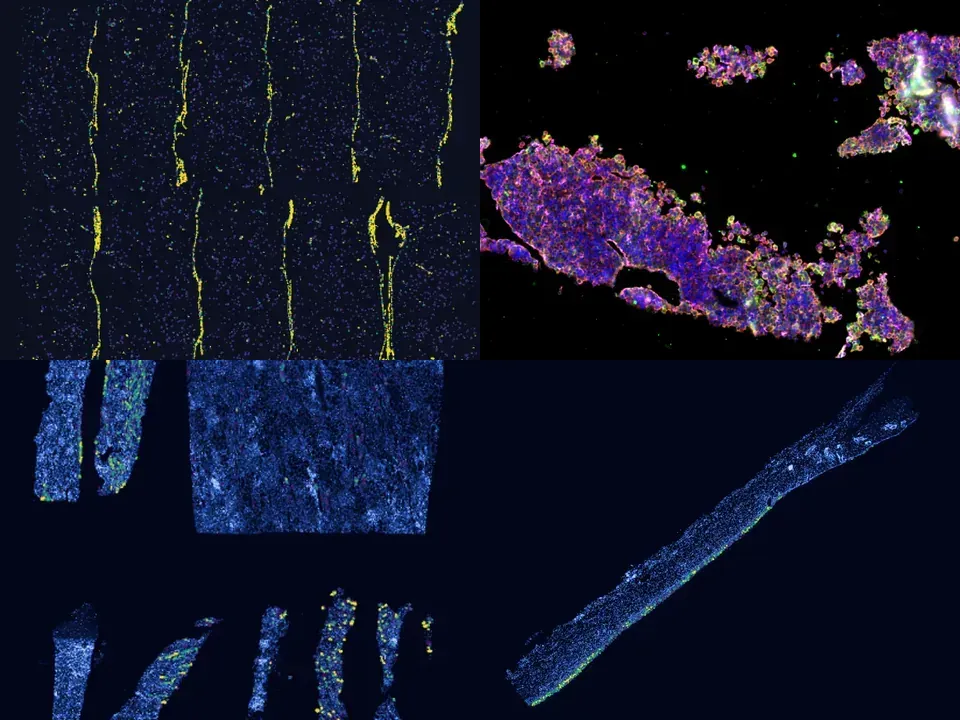
We generated a spatial transcriptomics dataset of wildtype (C57BL/6, n = 3)and Rnasel knockout (Rnaseltm1Slvm, n =3) mice at scab detachment day 0, to investigate specific type of cell populations and their gene expressions.
from sddb import Catalog

cohort = Catalog().collection("geo-gse278431")
cohort.members        # the 6 datasets as a table

print(cohort.licenses())              # check the terms before you download

sdatas = cohort.to_dict()             # {uid: SpatialData}, cached locally
# or keep the .zarr files in a folder of your choice:
# sdatas = cohort.to_dict(dest="data/")Needs pip install lamindb and network access to the Lamin database, which is limited during the alpha. If it fails, use the Client tab.
import lamindb as ln

db = ln.DB("scverse/spatialdata-db")
coll = db.Collection.get(key="geo-gse278431")
coll.ordered_artifacts.to_dataframe()   # the 6 members, ordered

# download every member .zarr to the local cache:
paths = [a.cache() for a in coll.ordered_artifacts.all()]# sddb client: download every member .zarr into data/
sddb-cli download --collection geo-gse278431 --dest data/Licenses: 6 NCBI GEO policy
Mammalian injury responses are predominantly characterized by fibrosis and scarring rather than functional regeneration. This limited regenerative capacity in mammals could reflect a loss of proregeneration programs or active suppression by genes functioning akin to tumor suppressors. To uncover programs governing regeneration in mammals, we screened transcripts in human participants following laser rejuvenation treatment and compared them with mice with enhanced wound-induced hair neogenesis (WIHN), a rare example of mammalian organogenesis. We found that Rnasel-/- mice exhibit an increased regenerative capacity, with elevated WIHN through enhanced IL-36α. Consistent with RNase L's known role to stimulate caspase-1, we found that pharmacologic inhibition of caspases promoted regeneration in an IL-36-dependent manner in multiple epithelial tissues. We identified a negative feedback loop, where RNase L-activated caspase-1 restrains the proregenerative dsRNA-TLR3 signaling cascade through the cleavage of toll-like adaptor protein TRIF. Through integrated single-cell RNA-seq and spatial transcriptomic profiling, we confirmed OAS & IL-36 genes to be highly expressed at the site of wounding and elevated in Rnasel-/- mouse wounds. This work suggests that RNase L functions as a regeneration repressor gene, in a functional trade off that tempers immune hyperactivation during viral infection at the cost of inhibiting regeneration.
@article{Kirby_2025,
  title = {RNase L represses hair follicle regeneration through altered innate immune signaling},
  volume = {135},
  ISSN = {1558-8238},
  url = {http://dx.doi.org/10.1172/jci172595},
  DOI = {10.1172/jci172595},
  number = {6},
  journal = {Journal of Clinical Investigation},
  publisher = {American Society for Clinical Investigation},
  author = {Kirby, Charles S. and Islam, Nasif and Wier, Eric and Alphonse, Martin P. and Sweren, Evan and Wang, Gaofeng and Liu, Haiyun and Kim, Dongwon and Li, Ang and Lee, Sam S. and Overmiller, Andrew M. and Xue, Yingchao and Reddy, Sashank and Archer, Nathan K. and Miller, Lloyd S. and Yu, Jianshi and Huang, Weiliang and Jones, Jace W. and Kim, Sooah and Kane, Maureen A. and Silverman, Robert H. and Garza, Luis A.},
  year = {2025},
  month = Feb
}