
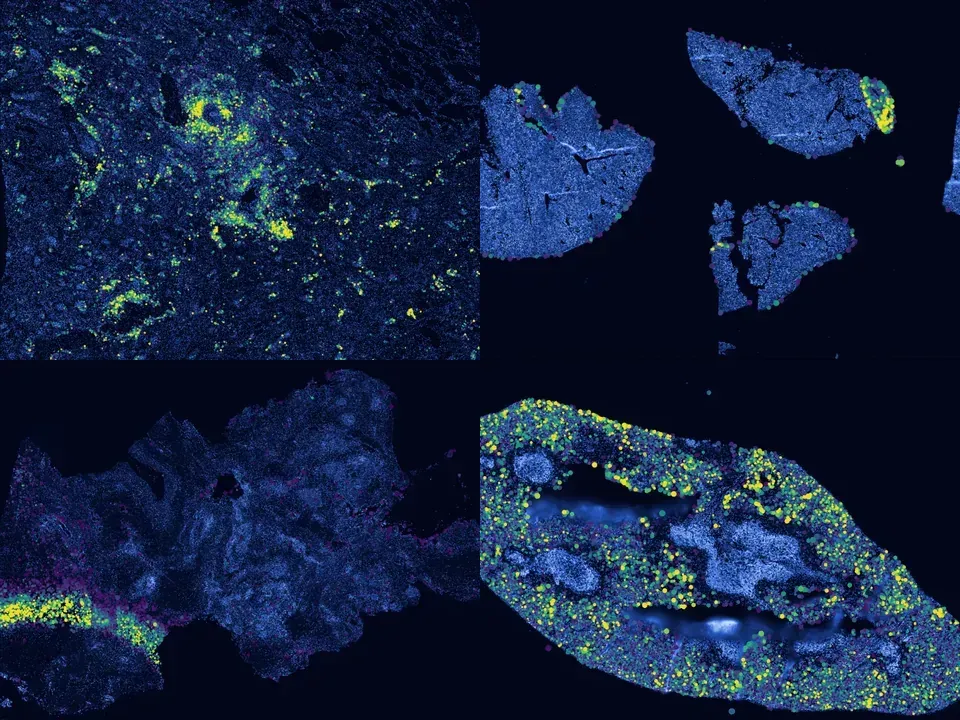
Mouse spleen
GSM8382629
mouse spleen 1.6 GB 94,582 cells bronze NCBI GEO policy
Technology10x Xenium
Organismmouse
Tissuespleen
Cells94,582
bronze NCBI GEO policy
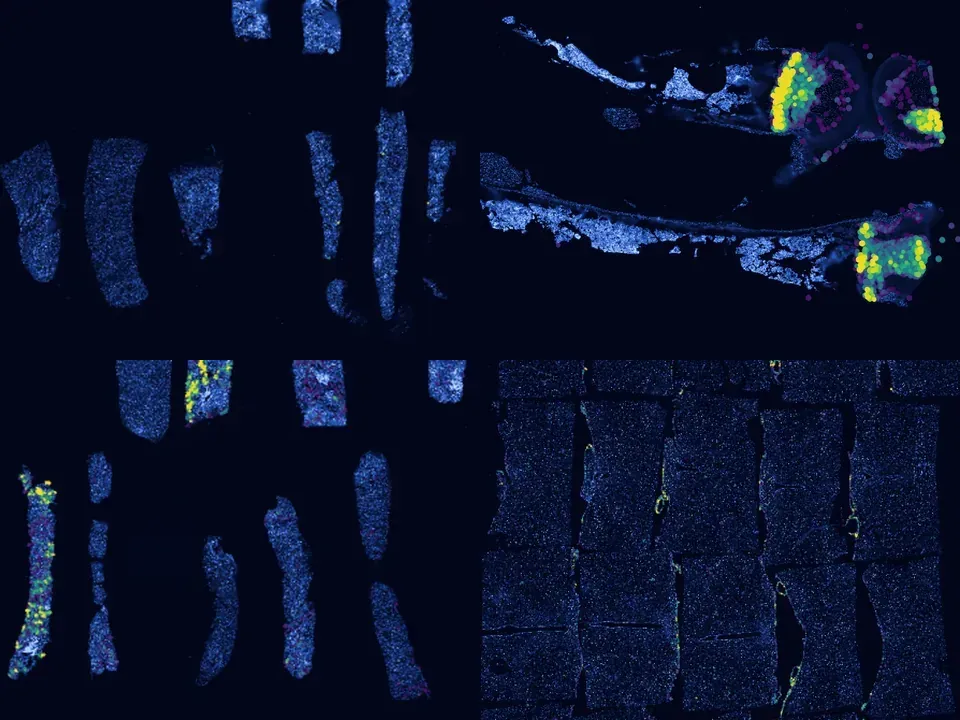
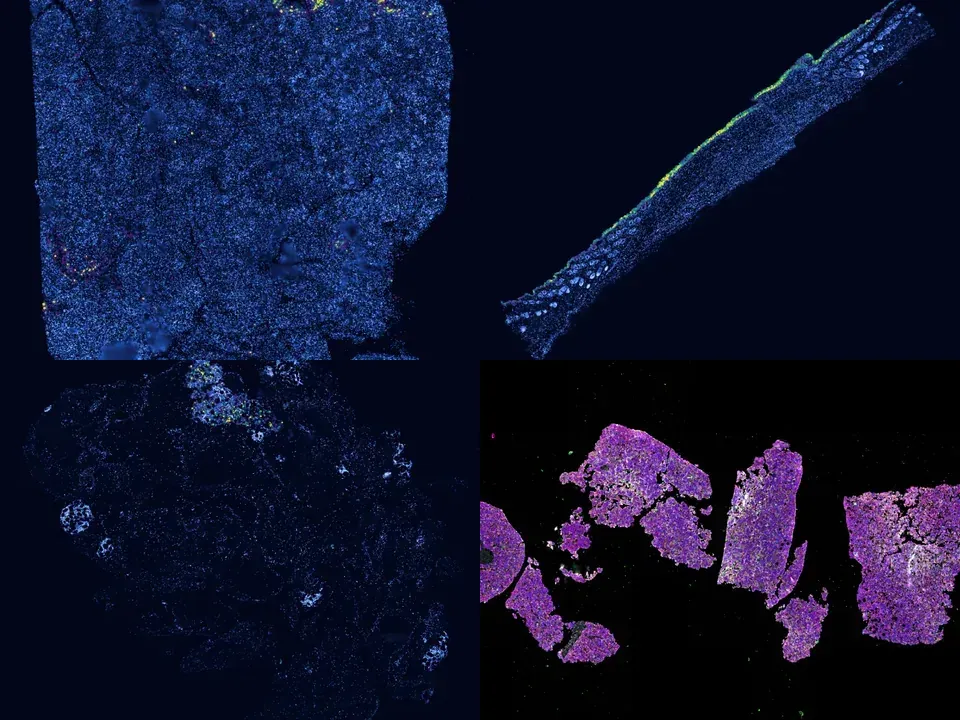
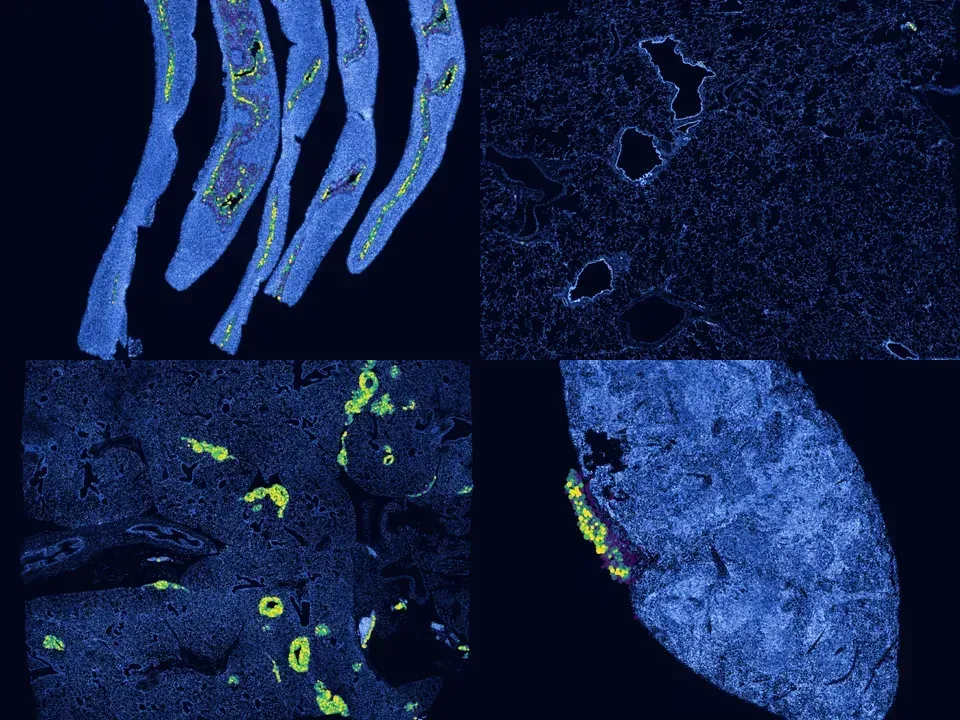
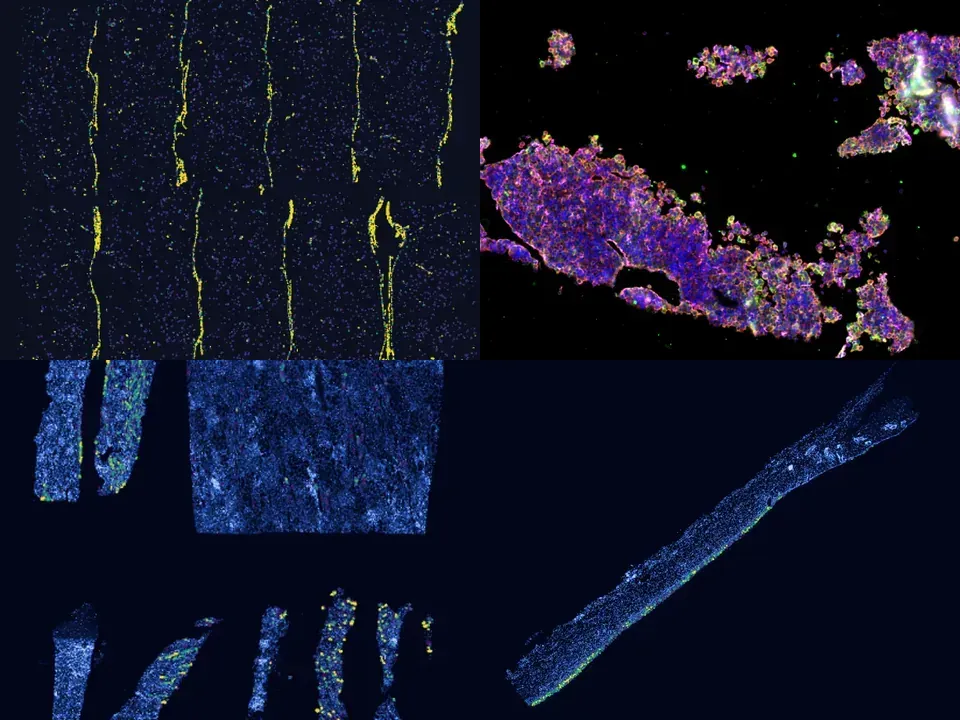
Like hematopoiesis, erythropoiesis requires erythroid niches nurturing and support. We performed subcellular spatial transcriptomics to reveal the erythroid niches in mice. Our results identified novel erythroblastic island macrophage marker in mouse during development and stress.
from sddb import Catalog

cohort = Catalog().collection("geo-gse271693")
cohort.members        # the 6 datasets as a table

print(cohort.licenses())              # check the terms before you download

sdatas = cohort.to_dict()             # {uid: SpatialData}, cached locally
# or keep the .zarr files in a folder of your choice:
# sdatas = cohort.to_dict(dest="data/")Needs pip install lamindb and network access to the Lamin database, which is limited during the alpha. If it fails, use the Client tab.
import lamindb as ln

db = ln.DB("scverse/spatialdata-db")
coll = db.Collection.get(key="geo-gse271693")
coll.ordered_artifacts.to_dataframe()   # the 6 members, ordered

# download every member .zarr to the local cache:
paths = [a.cache() for a in coll.ordered_artifacts.all()]# sddb client: download every member .zarr into data/
sddb-cli download --collection geo-gse271693 --dest data/Licenses: 6 NCBI GEO policy
Erythroid cells require specialized microenvironments called erythroblastic islands (EBIs), niches comprising a central macrophage surrounded by developing erythroid precursors, to complete their maturation. Understanding EBI composition and function has been limited by two-dimensional in vitro models and the unclear composition of EBIs in human hematopoietic tissues. Using spatial transcriptomic mapping in mouse and human hematopoietic tissues during development and under stress conditions, we show that EBI architecture is unexpectedly species-specific. In mice, C1q-expressing macrophages serve as a hallmark of EBI central macrophages and mediate clearance of ejected erythroid nuclei. In humans, however, EBIs are characterized by macrophage-independent erythroid clusters in fetal liver and bone marrow, whose integrity depends critically on the adhesion molecule ICAM4. These human erythroid clusters are disrupted in myeloid diseases but can be restored with therapy. These findings redefine conventional models of erythroid niche biology and establish a framework for understanding niche dynamics across species.
@article{Han_2026,
  title = {Spatial transcriptomic analyses highlight distinct erythroid niches in mice and humans},
  volume = {58},
  ISSN = {1546-1718},
  url = {http://dx.doi.org/10.1038/s41588-026-02671-2},
  DOI = {10.1038/s41588-026-02671-2},
  number = {7},
  journal = {Nature Genetics},
  publisher = {Springer Science and Business Media LLC},
  author = {Han, Xu and Ren, Kehan and Wang, Pan and Bi, Honghao and Li, Ermin and Aydemir, Inci and Ji, Amy and Cai, Wenjie and Soleimanisardoo, Laya and Wai, Ching Man and Schipma, Matthew J. and Liu, Yijie and Goldstein, Jeffery and Sukhanova, Madina and Yang, Jing and Ji, Peng},
  year = {2026},
  month = July,
  pages = {1620–1631}
}