from sddb import Catalog

cohort = Catalog().collection("geo-gse268492")
cohort.members        # the 2 datasets as a table

print(cohort.licenses())              # check the terms before you download

sdatas = cohort.to_dict()             # {uid: SpatialData}, cached locally
# or keep the .zarr files in a folder of your choice:
# sdatas = cohort.to_dict(dest="data/")
Needs pip install lamindb and network access to the Lamin database, which is limited during the alpha. If it fails, use the Client tab.
import lamindb as ln

db = ln.DB("scverse/spatialdata-db")
coll = db.Collection.get(key="geo-gse268492")
coll.ordered_artifacts.to_dataframe()   # the 2 members, ordered

# download every member .zarr to the local cache:
paths = [a.cache() for a in coll.ordered_artifacts.all()]
Senescent-like microglia limit remyelination through the senescence associated secretory phenotype.
The capacity to regenerate myelin in the central nervous system diminishes with age. This decline is particularly evident in multiple sclerosis (MS), a chronic demyelinating disease. Whether cellular senescence, a hallmark of aging, contributes to remyelination impairment remains unknown. Here, we show that senescent cells accumulate within demyelinated lesions after injury, and treatments with senolytics enhances remyelination in young and middle-aged mice but not aged mice. In young mice, we observe the upregulation of senescence-associated transcripts, primarily in microglia and macrophages, after demyelination, followed by a reduction during remyelination. However, in aged mice, senescence-associated factors persist within lesions, correlating with inefficient remyelination. Proteomic analysis of the senescence-associated secretory phenotype (SASP) reveals elevated levels of CCL11/Eotaxin-1 in lesions of aged mice, which is found to inhibit oligodendrocyte maturation. These results suggest therapeutic targeting of SASP components, such as CCL11, may improve remyelination in aging and MS.
Member datasets · 2
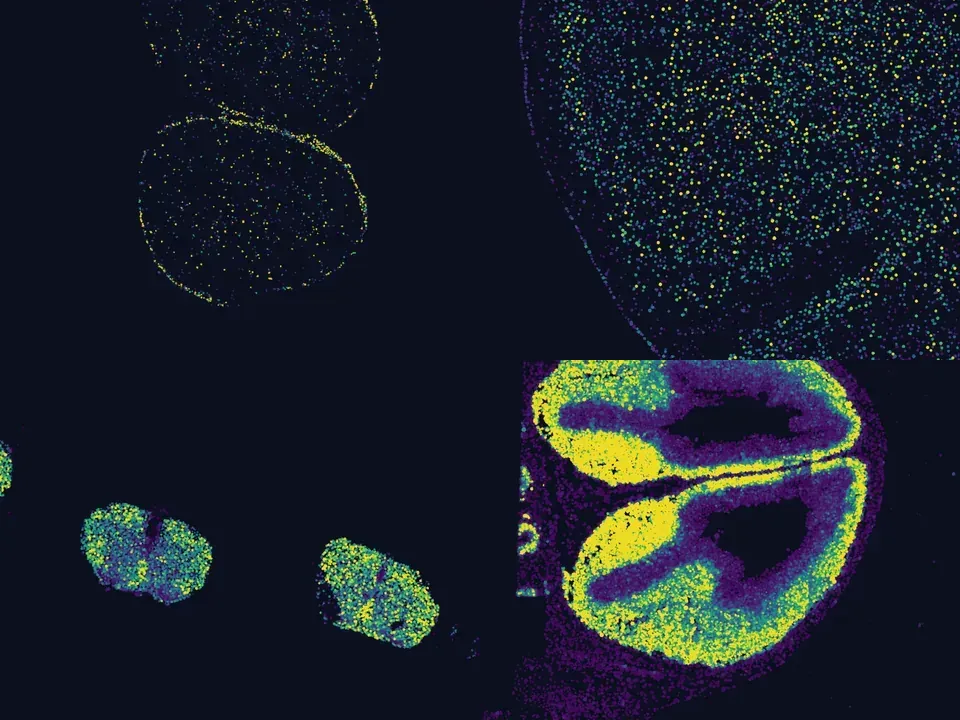
Vizgen MERSCOPE
Mouse spinal cord
GSM8291962
mousespinal corddemyelinating disease of central nervous system11.2 MB24,113 cellssilverNCBI GEO policy
TechnologyVizgen MERSCOPE
Organismmouse
Tissuespinal cord
Conditiondemyelinating disease of central nervous system
Size11.2 MB
Cells24,113
silverNCBI GEO policy
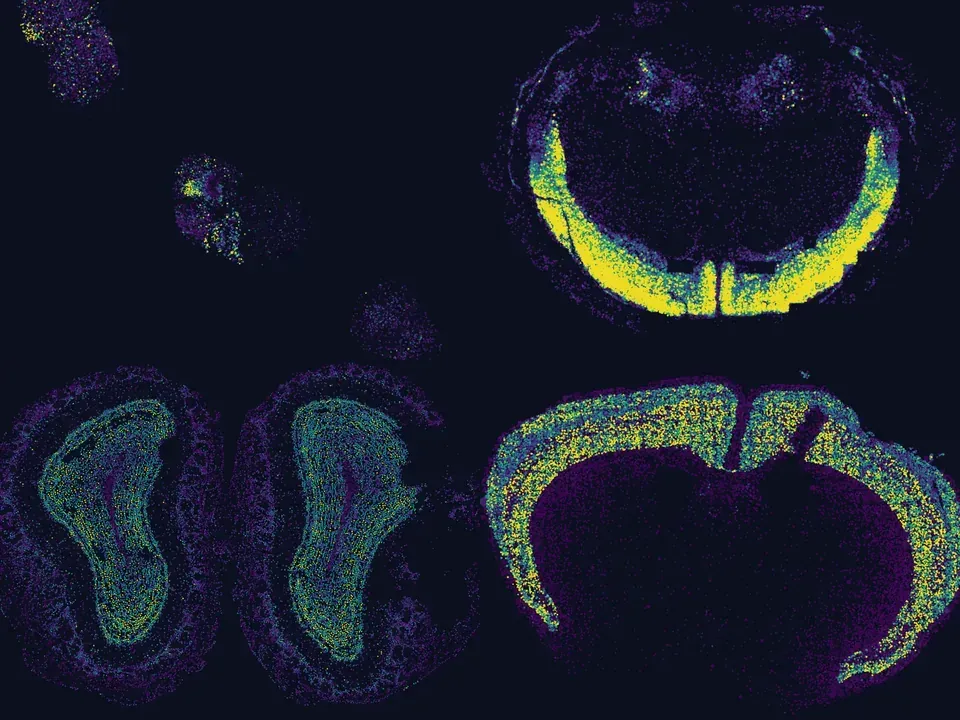
Vizgen MERSCOPE
Mouse spinal cord
GSM8291963
mousespinal corddemyelinating disease of central nervous system3.1 MB10,999 cellssilverNCBI GEO policy
TechnologyVizgen MERSCOPE
Organismmouse
Tissuespinal cord
Conditiondemyelinating disease of central nervous system
Size3.1 MB
Cells10,999
silverNCBI GEO policy
Cite this collection
No linked publication found — please cite the data source.