
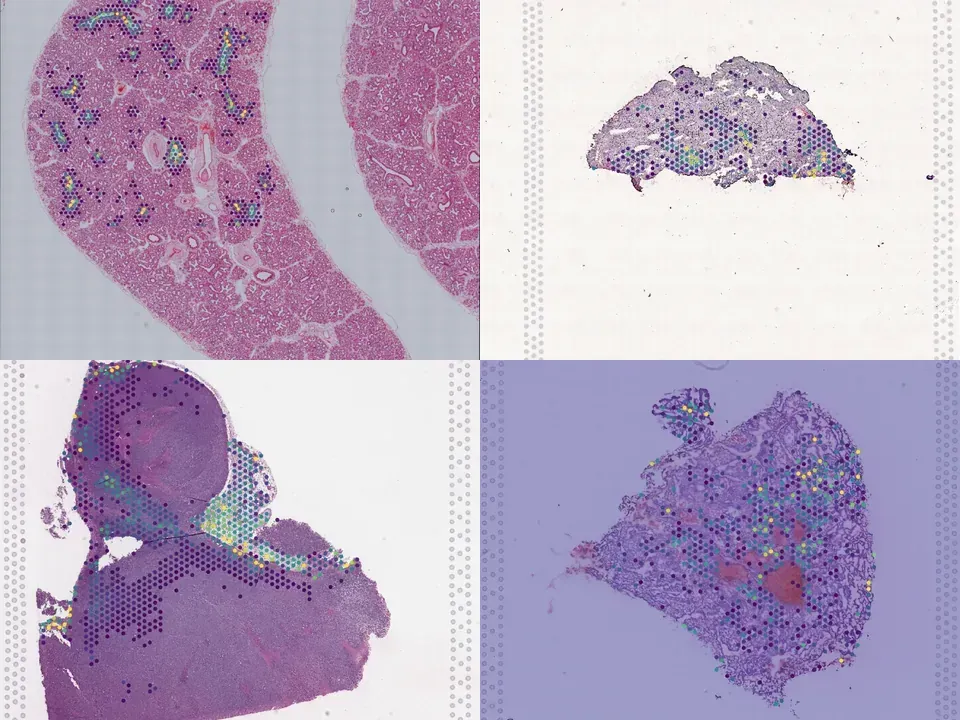
Human lung
GSM8217625
human lung 95.7 MB 4,002 spots bronze H&E NCBI GEO policy
TechnologyVisium
Organismhuman
Tissuelung
Spots4,002
Magnificationother · 5.127 µm/px
bronze H&E NCBI GEO policy
While animal models have provided key insights into conserved mechanisms of how the lung forms during development, human-specific developmental mechanisms are not always captured. To fully appreciate how developmental defects and disease states alter the function of the lungs, studies in human lung models are important. Here, we sequenced >150,000 single single-cells from 19 healthy human fetal lung tissues from gestational weeks 10-19 and identified at least 58 unique cell types/states contributing to the developing lung. We captured novel dynamic developmental trajectories from various progenitor cells that give rise to ciliated, pulmonary neuroendocrine cells, and other specialized cell types. We also identified four CFTR-expressing progenitor cell types and pinpointed the temporal emergence and spatial localization of these cell types. These developmental dynamics reveal broader epithelial cell plasticity and novel lineage hierarchies that were not previously reported. Combined with spatial transcriptomics, we identified both cell autonomous and non-cell autonomous signalling pathways that may dictate the temporal and spatial emergence of cell lineages. Finally, we showed that human pluripotent stem cell (hPSC)-derived fetal lung models capture similar cell lineage trajectories specifically through progenitor cells that express abundant levels of the CFTR gene. Overall, this study provides a comprehensive single-cell atlas of the developing human lung, outlining the temporal and spatial complexities of cell lineage development and benchmarks fetal lung cultures from hPSC differentiations to similar developmental window.
from sddb import Catalog

cohort = Catalog().collection("geo-gse264398")
cohort.members        # the 2 datasets as a table

print(cohort.licenses())              # check the terms before you download

sdatas = cohort.to_dict()             # {uid: SpatialData}, cached locally
# or keep the .zarr files in a folder of your choice:
# sdatas = cohort.to_dict(dest="data/")Needs pip install lamindb and network access to the Lamin database, which is limited during the alpha. If it fails, use the Client tab.
import lamindb as ln

db = ln.DB("scverse/spatialdata-db")
coll = db.Collection.get(key="geo-gse264398")
coll.ordered_artifacts.to_dataframe()   # the 2 members, ordered

# download every member .zarr to the local cache:
paths = [a.cache() for a in coll.ordered_artifacts.all()]# sddb client: download every member .zarr into data/
sddb-cli download --collection geo-gse264398 --dest data/Licenses: 2 NCBI GEO policy
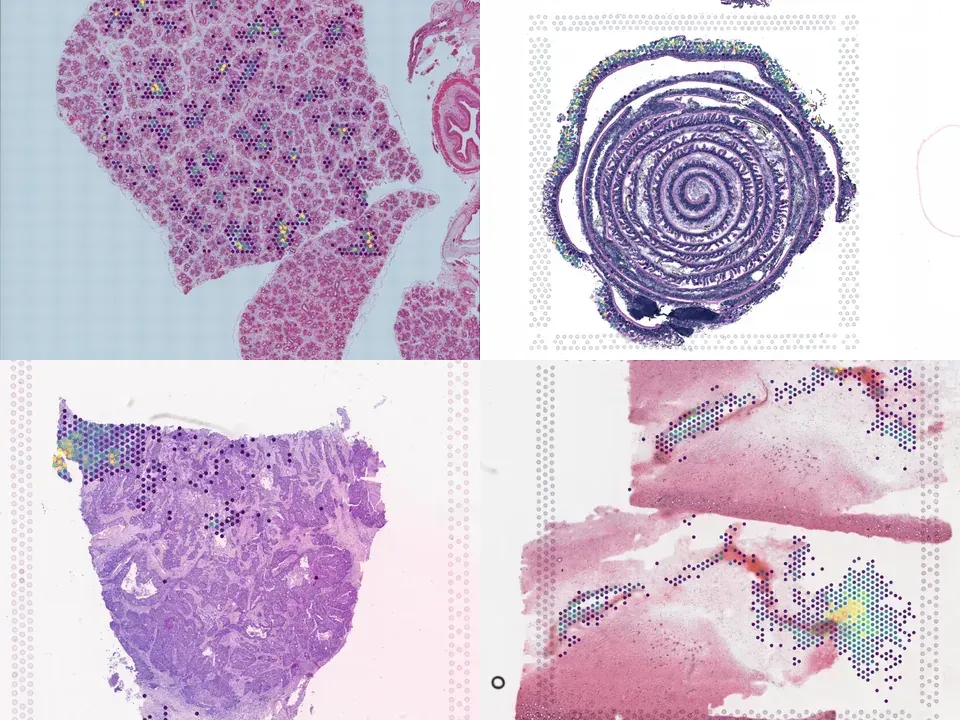
@article{Quach_2024,
  title = {Early human fetal lung atlas reveals the temporal dynamics of epithelial cell plasticity},
  volume = {15},
  ISSN = {2041-1723},
  url = {http://dx.doi.org/10.1038/s41467-024-50281-5},
  DOI = {10.1038/s41467-024-50281-5},
  number = {1},
  journal = {Nature Communications},
  publisher = {Springer Science and Business Media LLC},
  author = {Quach, Henry and Farrell, Spencer and Wu, Ming Jia Michael and Kanagarajah, Kayshani and Leung, Joseph Wai-Hin and Xu, Xiaoqiao and Kallurkar, Prajkta and Turinsky, Andrei L. and Bear, Christine E. and Ratjen, Felix and Kalish, Brian and Goyal, Sidhartha and Moraes, Theo J. and Wong, Amy P.},
  year = {2024},
  month = July
}