
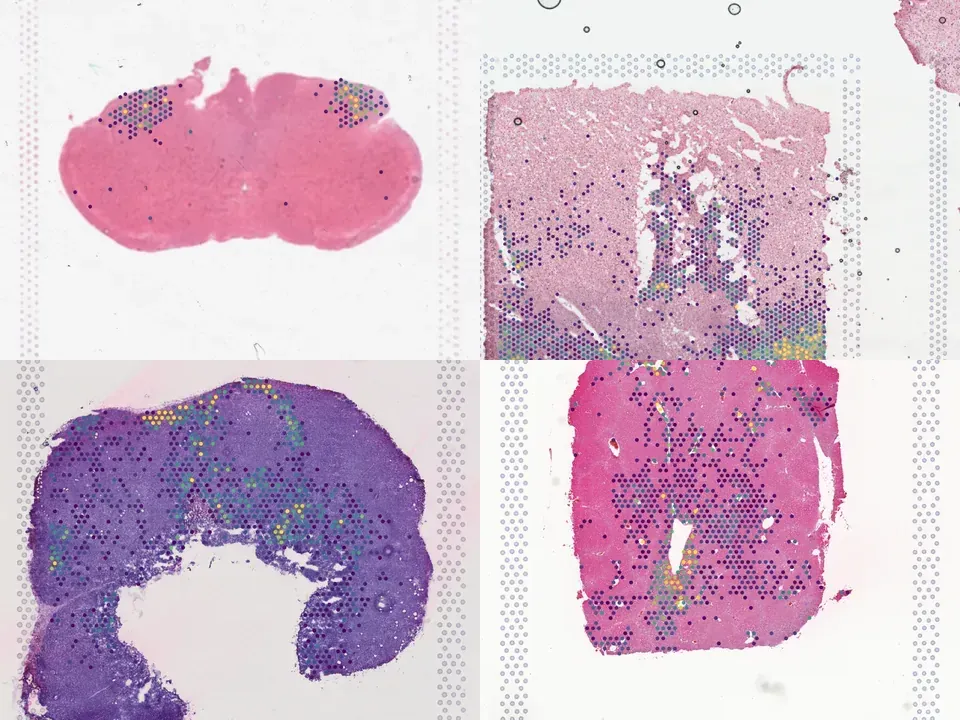
Mouse liver
GSM8114830
mouse liver fibrotic liver disease 39.5 MB 2,577 spots silver H&E NCBI GEO policy
TechnologyVisium
Organismmouse
Tissueliver
Conditionfibrotic liver disease
Spots2,577
silver H&E NCBI GEO policy
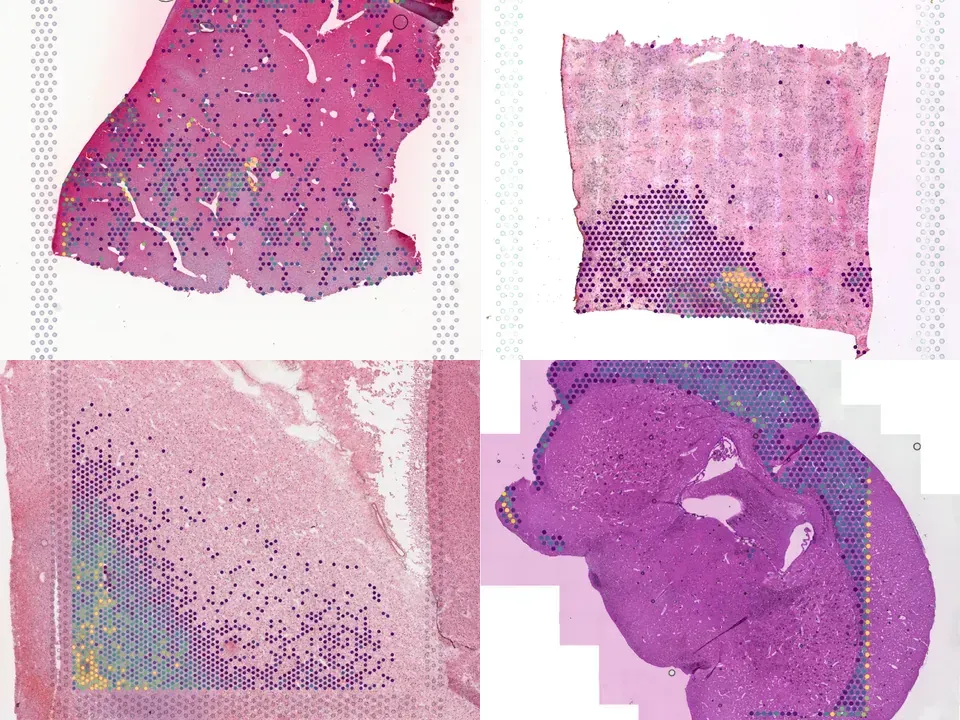
Liver fibrosis is characterized by the activation of hepatic stellate cells (HSCs) and the release of fibrogenic nano-sized extracellular vesicles (EVs). Activated HSCs increase their glucose metabolism via glycolysis to satisfy high energy demands. Nevertheless, the mechanism of how glycolysis in HSCs coordinates fibrosis amplification in the fibrogenic zones in the liver is elusive and is the scope of this study. Single cell RNA sequencing (scRNAseq) and bulk RNAseq demonstrated that several glycolysis enzymes, including hexokinase 2 (HK2), were upregulated in activated HSCs. HSC-selective glycolysis-deficient mice (HK2ΔHSC) showed abrogated CCl4-mediated fibrosis as compared to littermate controls (HK2fl/fl). Spatial transcriptomics revealed an upregulation of several EV-related pathways in the fibrotic pericentral zone during liver fibrosis in control HK2fl/fl mice. However, glycolysis-deficient HK2ΔHSC mice showed downregulation of these EV-related pathways in the pericentral zone. Consistently, induction of glycolysis in HSCs in vitro, either by glucose or platelet-derived growth factor B (PDGF), upregulated the expression of several extracellular vesicle (EV)-related genes, including RAB31. Glycolysis in HSCs epigenetically enhanced RAB31 expression through histone-3 lysine-9 acetylation (H3K9ac) on the promoter region, leading to increased EV release. Functionally, glycolysis-dependent EVs were enriched with fibrogenic molecules and increased the expression of fibrotic markers in recipient HSCs. Finally, EVs derived from glycolysis-deficient HK2ΔHSC mice abrogated liver fibrosis amplification as compared to EVs derived from littermate control HK2fl/fl mice. In summary, glycolysis in HSCs amplifies liver fibrosis by promoting fibrogenic EV release in the pericentral fibrotic regions in the liver.
from sddb import Catalog

cohort = Catalog().collection("geo-gse259363")
cohort.members        # the 2 datasets as a table

print(cohort.licenses())              # check the terms before you download

sdatas = cohort.to_dict()             # {uid: SpatialData}, cached locally
# or keep the .zarr files in a folder of your choice:
# sdatas = cohort.to_dict(dest="data/")Needs pip install lamindb and network access to the Lamin database, which is limited during the alpha. If it fails, use the Client tab.
import lamindb as ln

db = ln.DB("scverse/spatialdata-db")
coll = db.Collection.get(key="geo-gse259363")
coll.ordered_artifacts.to_dataframe()   # the 2 members, ordered

# download every member .zarr to the local cache:
paths = [a.cache() for a in coll.ordered_artifacts.all()]# sddb client: download every member .zarr into data/
sddb-cli download --collection geo-gse259363 --dest data/Licenses: 2 NCBI GEO policy
No linked publication found — please cite the data source.