Collections / Spatial transcriptomics reveal signatures of histopathological changes in muscular sarcoidosis

Spatial transcriptomics reveal signatures of histopathological changes in muscular sarcoidosis

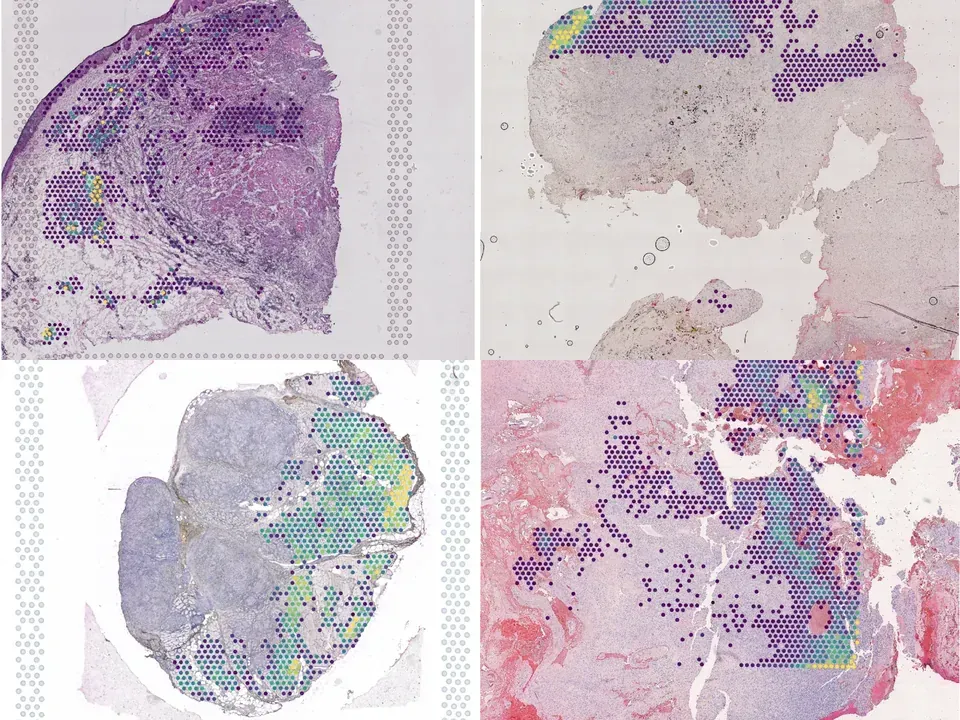
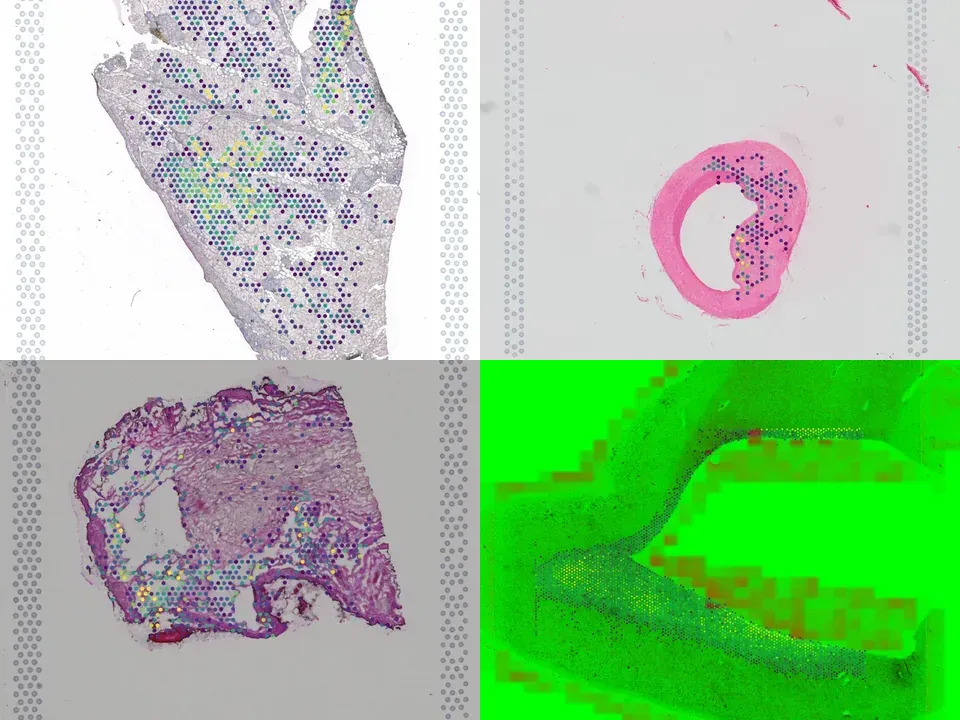
Sarcoidosis is a multisystemic disease characterized by non-caseating granuloma infiltrating various organs. The form with symptomatic muscular involvement is called muscular sarcoidosis. The impact of immune cells composing the granuloma on the skeletal muscle is misunderstood. Here, we investigated the granuloma-skeletal muscle interactions through spatial transcriptomics. Five major transcriptomic clusters corresponding to perigranuloma, granuloma, and three successive muscle tissue areas (proximal, intermediate and distal) around the granuloma were identified. Analyses revealed upregulated pathways in the granuloma corresponding to the activation of T-lymphocytes and monocytes/macrophages cytokines and upregulation of extracellular matrix signatures and induction of the TGF-β signaling in the perigranuloma. Comparison between proximal and distal muscles to the granuloma revealed an inverse correlation between distance to the granuloma and upregulation of cellular response to interferon-γ/α, TNF-α, IL-1,4,6, fibroblast proliferation, epithelial to mesenchymal cell transition and downregulation of muscle gene expression. These data shed light on the intercommunications between granulomas and the muscle tissue and provides pathophysiological mechanisms by showing that granuloma immune-cells have a direct impact on proximal muscle tissue by promoting its progressive replacement by fibrosis via the expression of pro-inflammatory and pro-fibrosing signatures. These data could possibly explain the evolution towards a state of disability for some patients.

Datasets2
Size~85.0 MB
AssayVisium
Samplehuman · skeletal muscle tissue
KindOther
Flag a data issue
PMID:38067175 ↗
Python · sddb client
from sddb import Catalog

cohort = Catalog().collection("geo-gse243291")
cohort.members        # the 2 datasets as a table

print(cohort.licenses())              # check the terms before you download

sdatas = cohort.to_dict()             # {uid: SpatialData}, cached locally
# or keep the .zarr files in a folder of your choice:
# sdatas = cohort.to_dict(dest="data/")
Python · lamindb

Needs pip install lamindb and network access to the Lamin database, which is limited during the alpha. If it fails, use the Client tab.

import lamindb as ln

db = ln.DB("scverse/spatialdata-db")
coll = db.Collection.get(key="geo-gse243291")
coll.ordered_artifacts.to_dataframe()   # the 2 members, ordered

# download every member .zarr to the local cache:
paths = [a.cache() for a in coll.ordered_artifacts.all()]
Shell
# sddb client: download every member .zarr into data/
sddb-cli download --collection geo-gse243291 --dest data/

Licenses: 2 NCBI GEO policy

Open in Vitessce
Visium
Human skeletal muscle tissue
GSM7782915
human skeletal muscle tissue sarcoidosis 44.4 MB 2,723 spots bronze H&E NCBI GEO policy
TechnologyVisium
Organismhuman
Tissueskeletal muscle tissue
Conditionsarcoidosis
Size44.4 MB
Spots2,723
bronze H&E NCBI GEO policy Open in Vitessce
Open in Vitessce
Visium
Human skeletal muscle tissue
GSM7782914
human skeletal muscle tissue sarcoidosis 40.7 MB 2,299 spots bronze H&E NCBI GEO policy
TechnologyVisium
Organismhuman
Tissueskeletal muscle tissue
Conditionsarcoidosis
Size40.7 MB
Spots2,299
bronze H&E NCBI GEO policy Open in Vitessce

Cite this collection

No linked publication found — please cite the data source.