
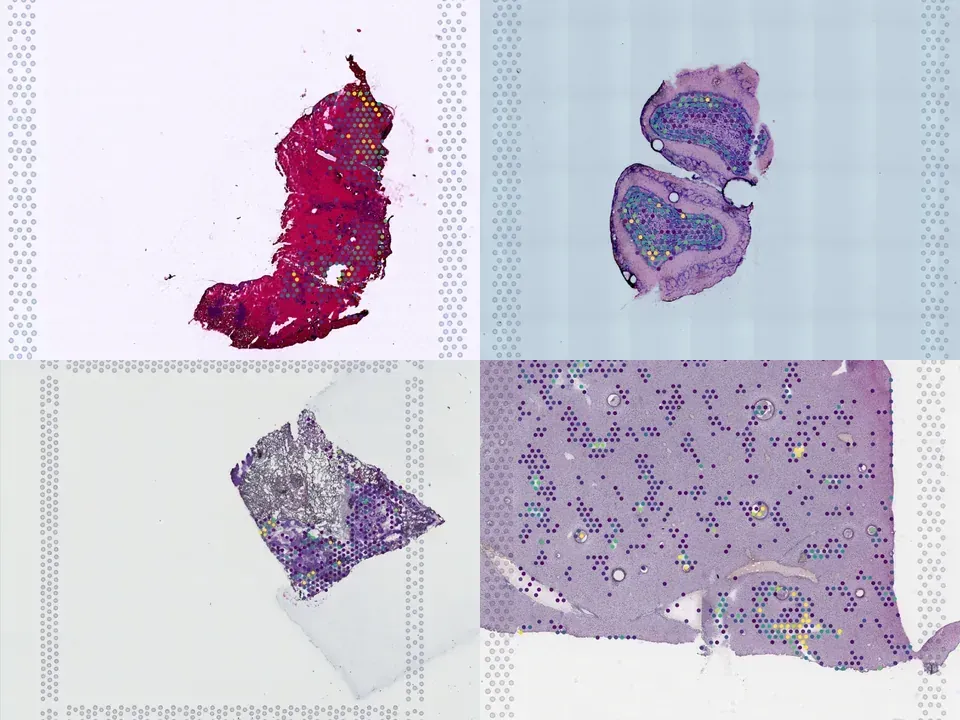
Human breast
GSM7777523
human breast breast cancer 13.6 MB 849 spots silver H&E NCBI GEO policy
TechnologyVisium
Organismhuman
Tissuebreast
Conditionbreast cancer
Spots849
silver H&E NCBI GEO policy
The tumor microenvironment (TME) and its multifaceted interactions with cancer cells are major targets for cancer treatment. Single-cell technologies have brought major insights into the TME, but the resulting complexity frequently precludes conclusions on function. Therefore, we combined single-cell RNA sequencing and spatial transcriptomic data to explore the relationship between different cancer-associated fibroblast (CAF) populations and immune cell exclusion in breast tumors. Our data show for the first time the degree of spatial organization of different CAF populations in breast cancer. We found that IL-iCAFs, Detox-iCAFs, and IFNγ-iCAFs tended to cluster together, while Wound-myCAFs, TGFb-myCAFs, and ECM-myCAFs formed another group that overlapped with elevated TGF-b signaling. Differential gene expression analysis of areas with CD8+ T-cell infiltration/exclusion within the TGF-b signaling-rich zones identified elastin microfibrillar interface protein 1 (EMILIN1) as a top modulated gene. EMILIN1, a TGF-b inhibitor, was upregulated in IFNγ-iCAFs directly modulating TGFb immunosuppressive function. Histological analysis of 74 breast cancer samples confirmed that high EMILIN-1 expression in the tumor margins was related to high CD8+ T-cell infiltration, consistent with our spatial gene expression analysis. High EMILIN-1 expression was also associated with better prognosis of patients with breast cancer, underscoring its functional significance for the recruitment of cytotoxic T cells into the tumor area. In conclusion, our data show that correlating TGF-b signaling to a CAF subpopulation is not enough because proteins with TGF-b-modulating activity originating from other CAF subpopulations can alter its activity. Therefore, therapeutic targeting should remain focused on biological processes rather than on specific CAF subtypes.
from sddb import Catalog

cohort = Catalog().collection("geo-gse243022")
cohort.members        # the 4 datasets as a table

print(cohort.licenses())              # check the terms before you download

sdatas = cohort.to_dict()             # {uid: SpatialData}, cached locally
# or keep the .zarr files in a folder of your choice:
# sdatas = cohort.to_dict(dest="data/")Needs pip install lamindb and network access to the Lamin database, which is limited during the alpha. If it fails, use the Client tab.
import lamindb as ln

db = ln.DB("scverse/spatialdata-db")
coll = db.Collection.get(key="geo-gse243022")
coll.ordered_artifacts.to_dataframe()   # the 4 members, ordered

# download every member .zarr to the local cache:
paths = [a.cache() for a in coll.ordered_artifacts.all()]# sddb client: download every member .zarr into data/
sddb-cli download --collection geo-gse243022 --dest data/Licenses: 4 NCBI GEO policy
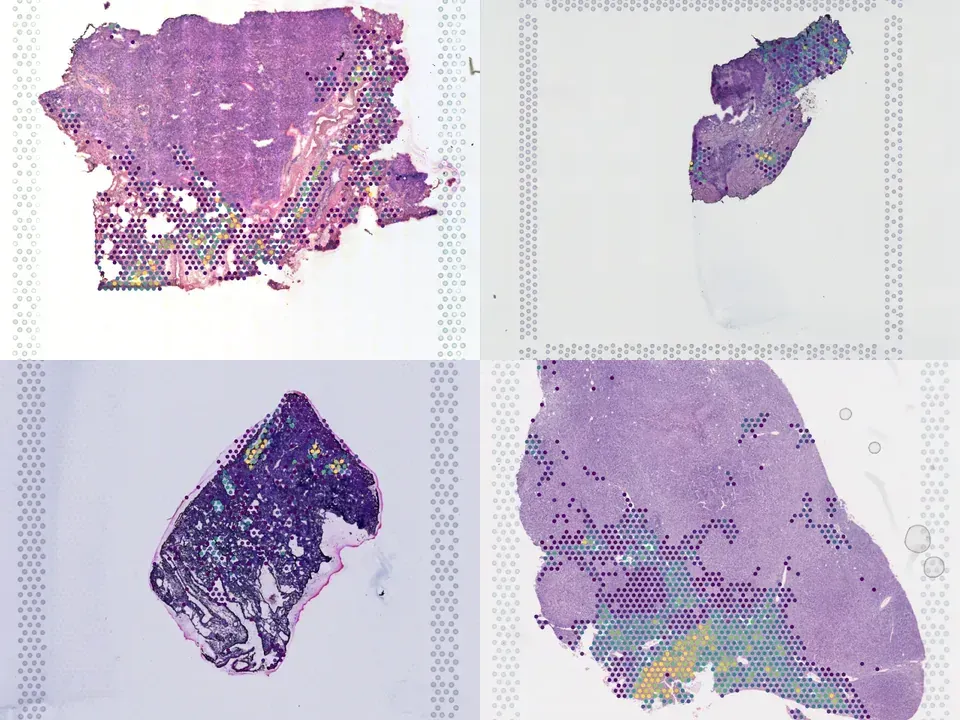
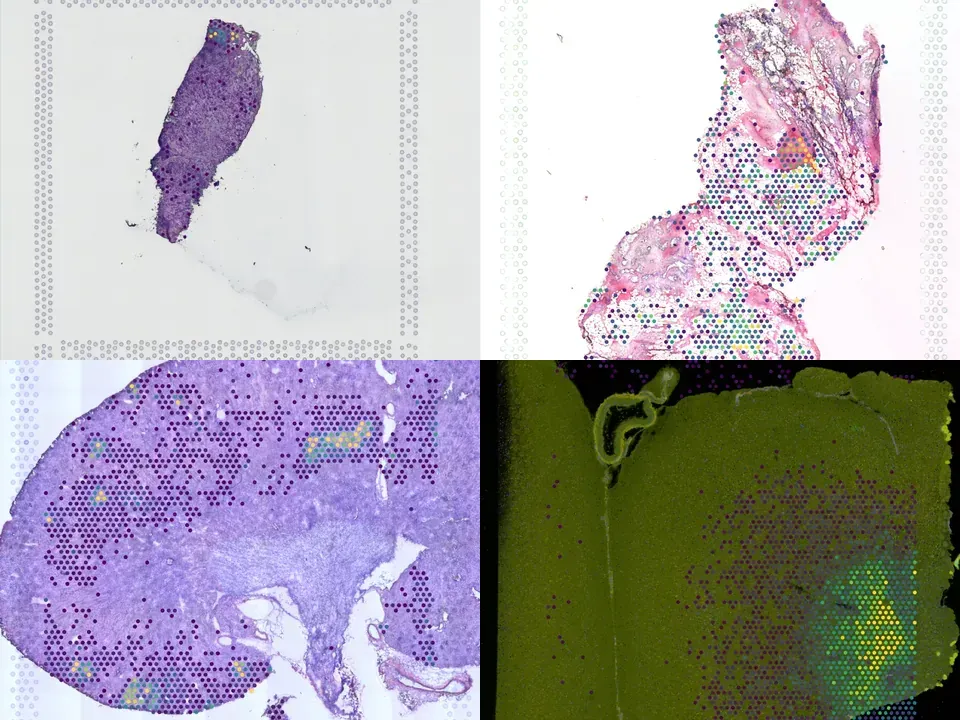
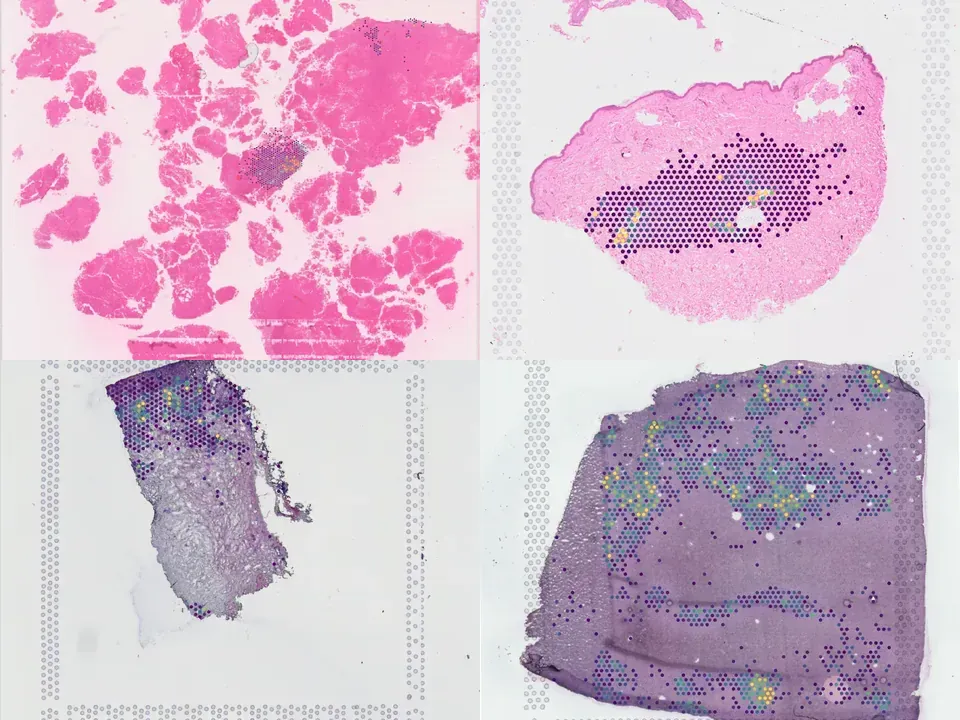
No linked publication found — please cite the data source.