
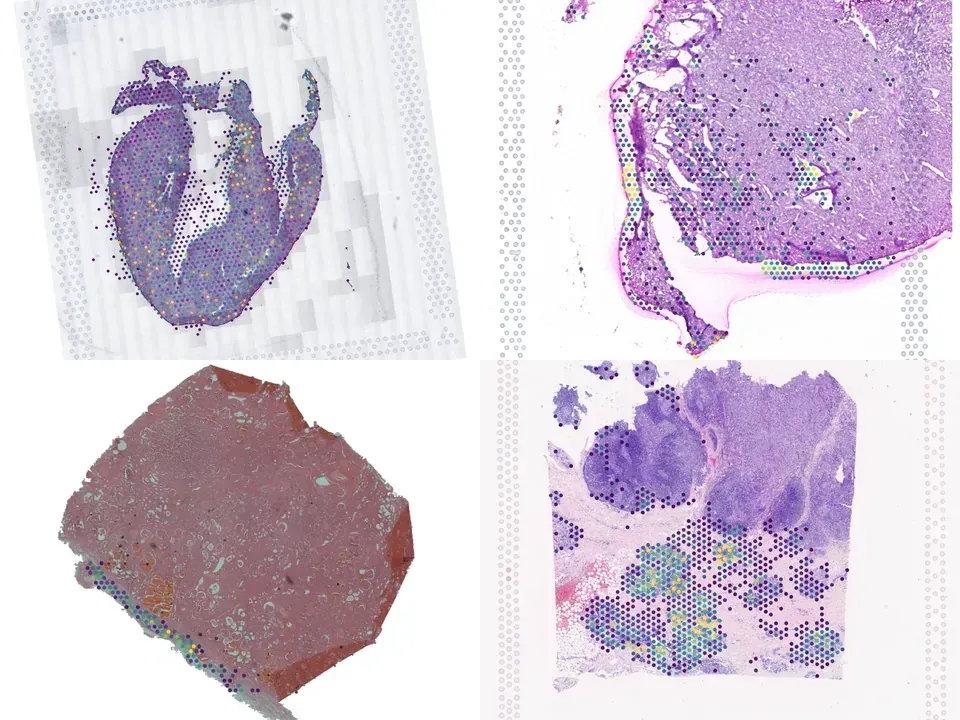
Human breast
GSM7757970
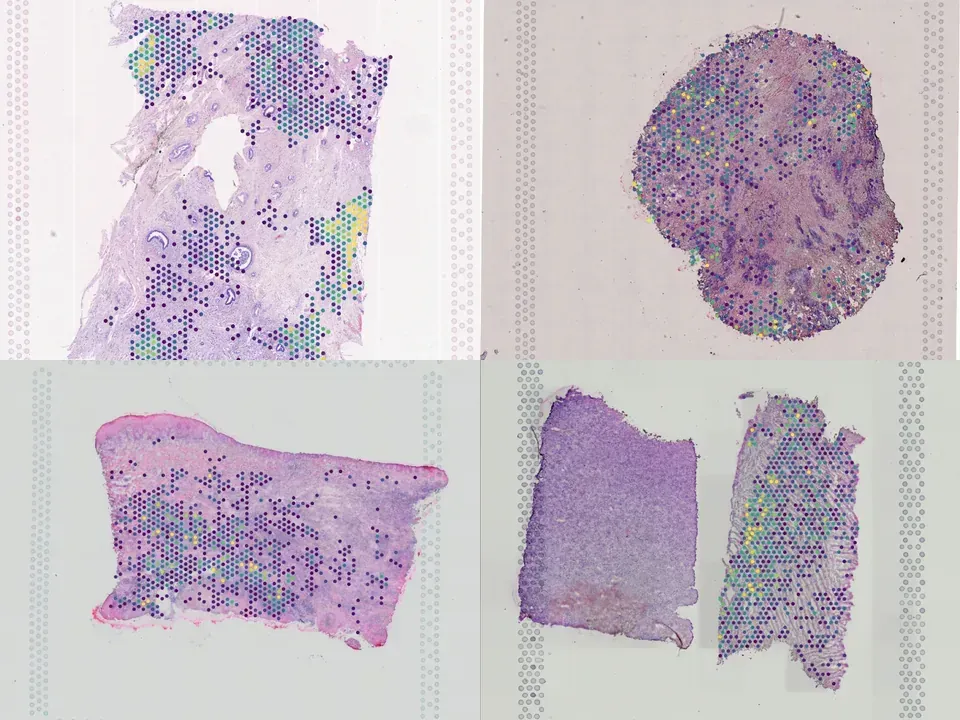
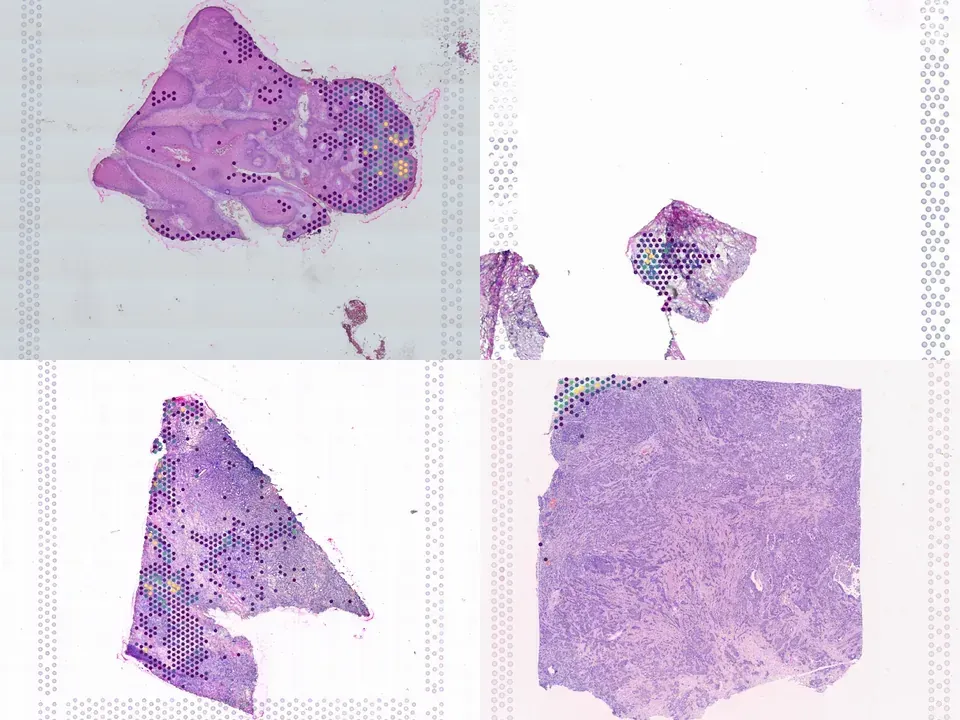
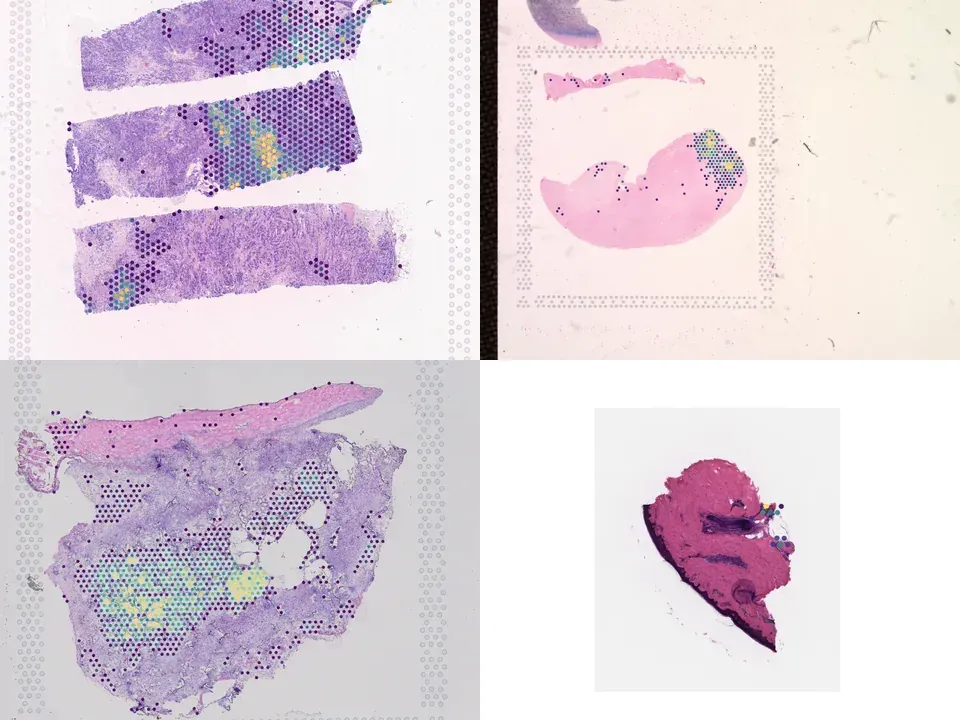
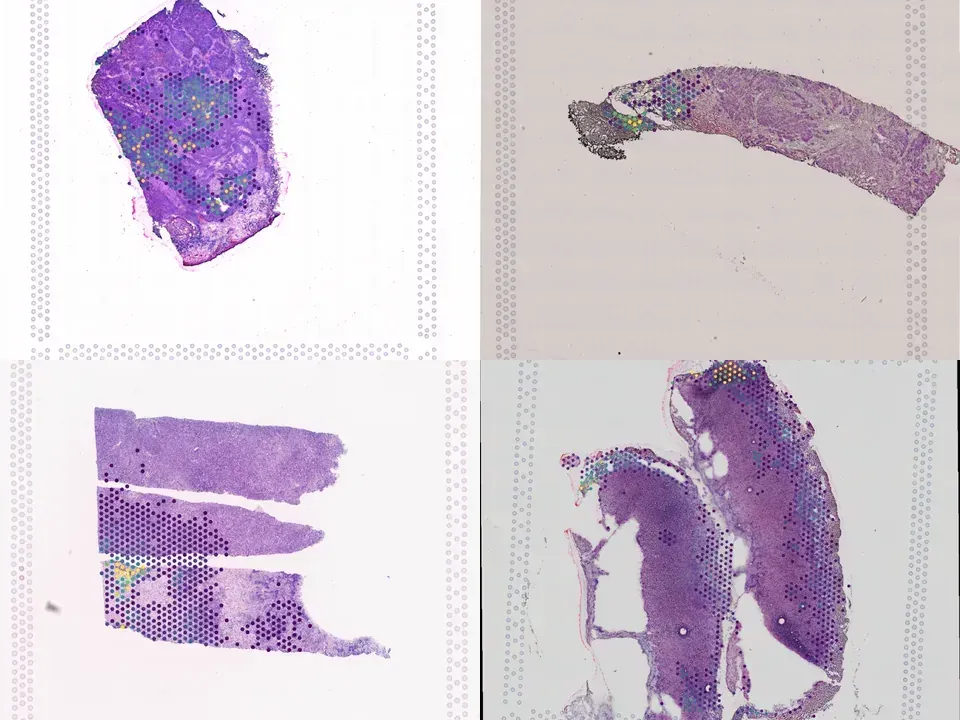
human breast breast cancer 49.6 MB 2,830 spots bronze H&E NCBI GEO policy
TechnologyVisium
Organismhuman
Tissuebreast
Conditionbreast cancer
Spots2,830
bronze H&E NCBI GEO policy
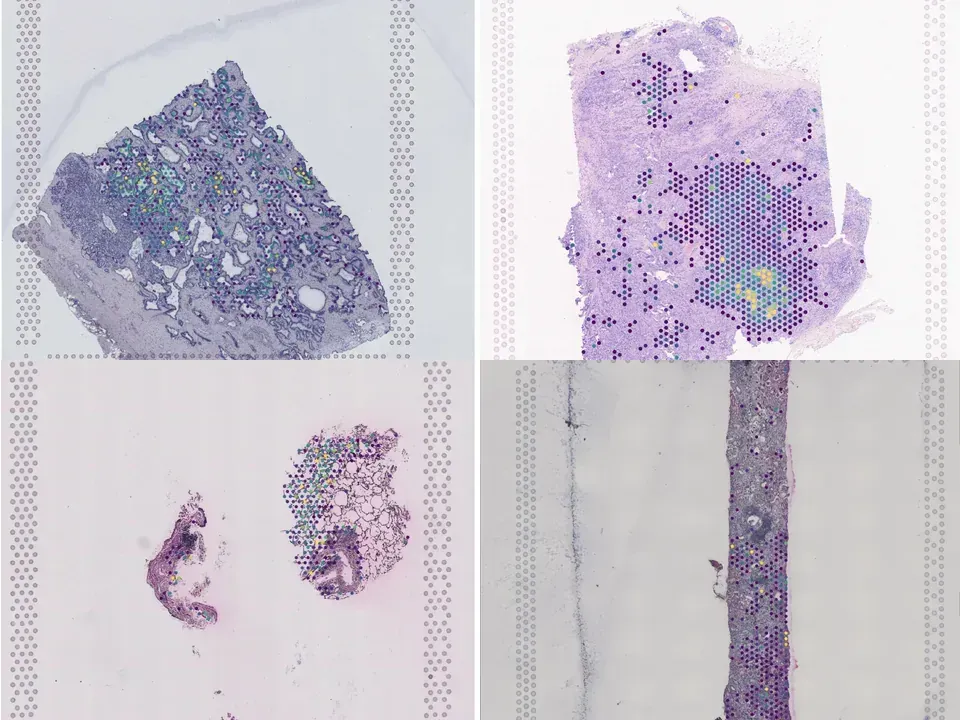
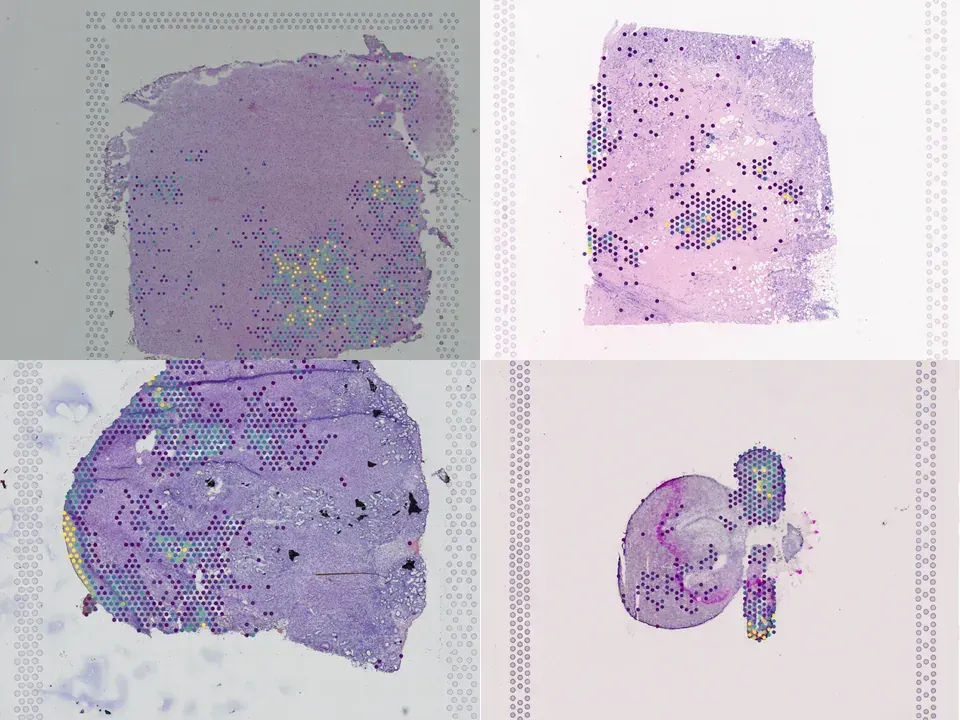
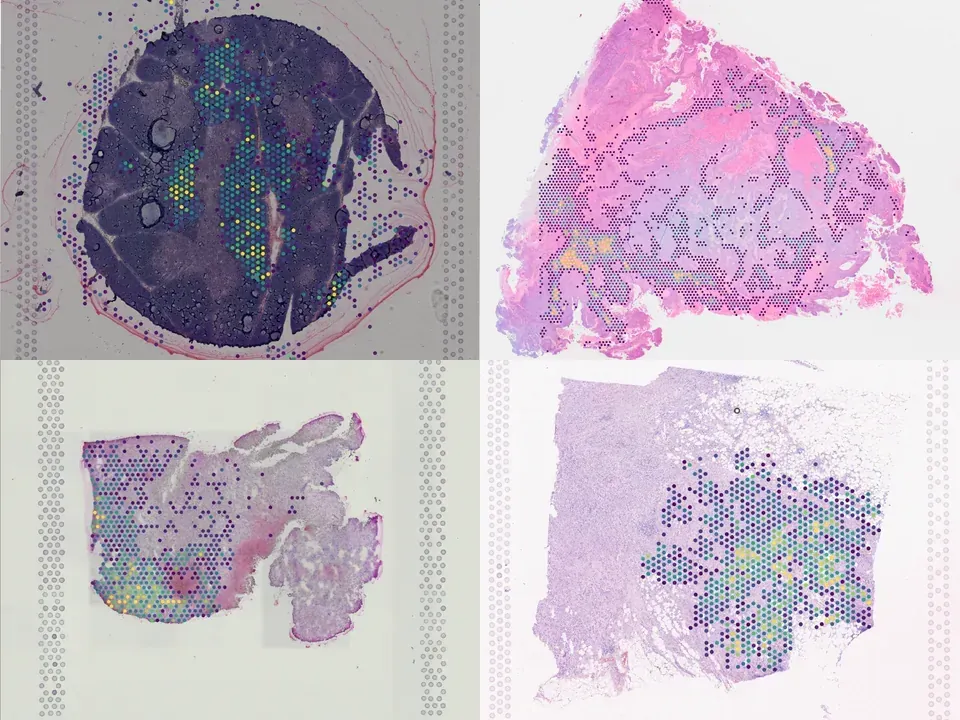
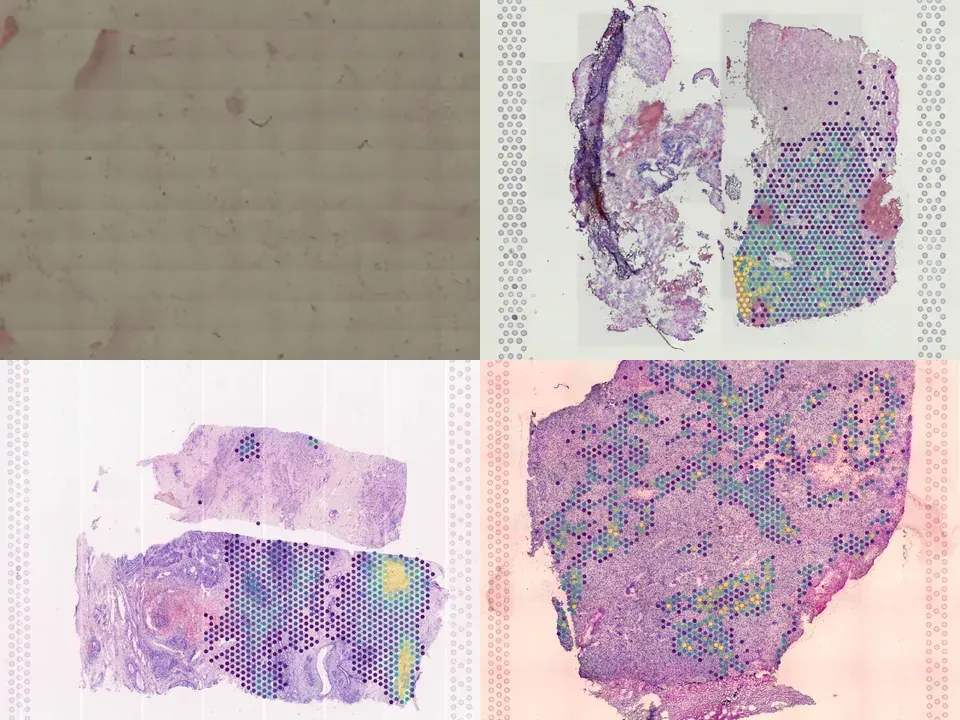
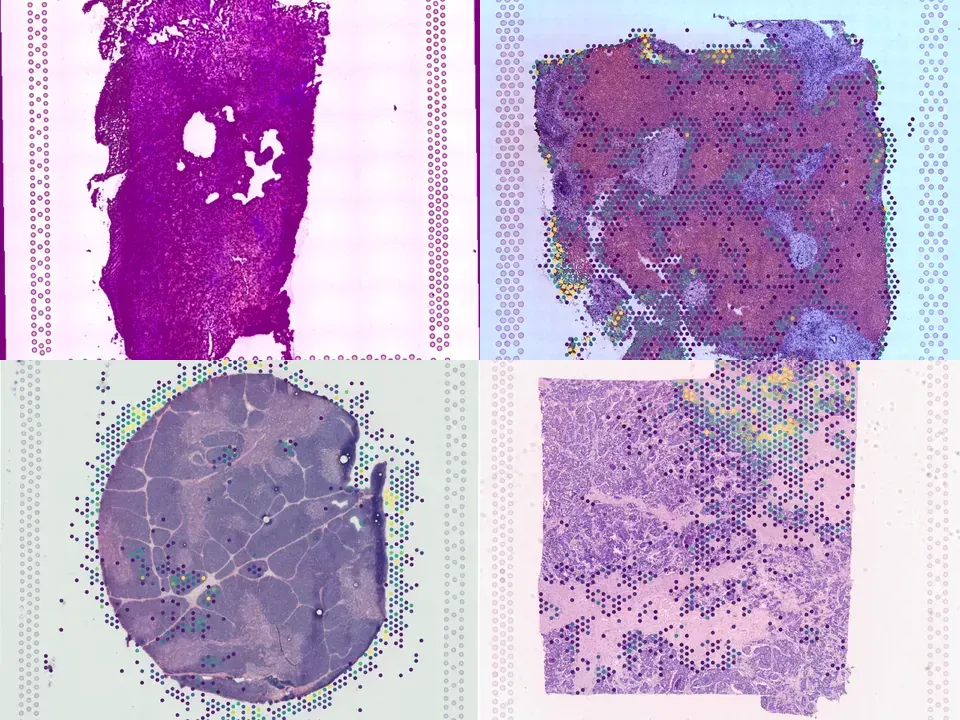
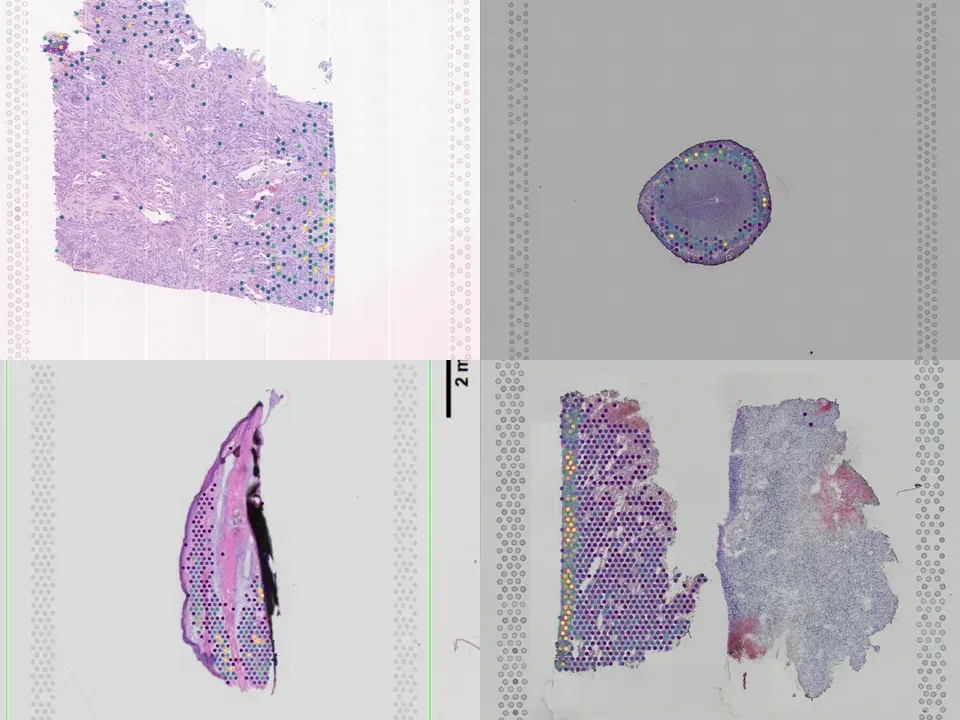
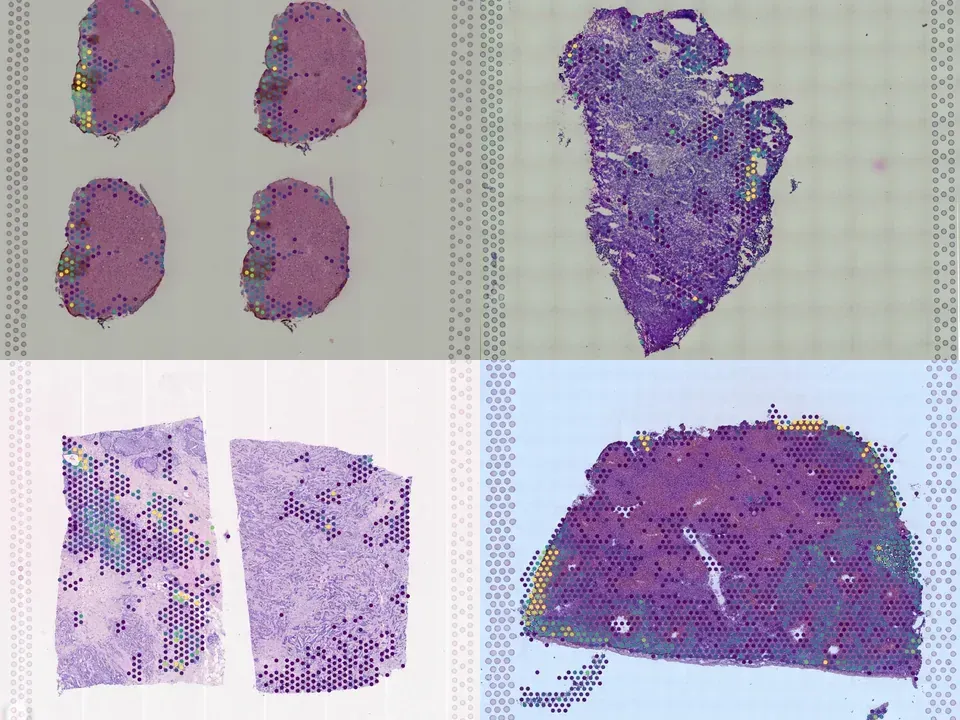
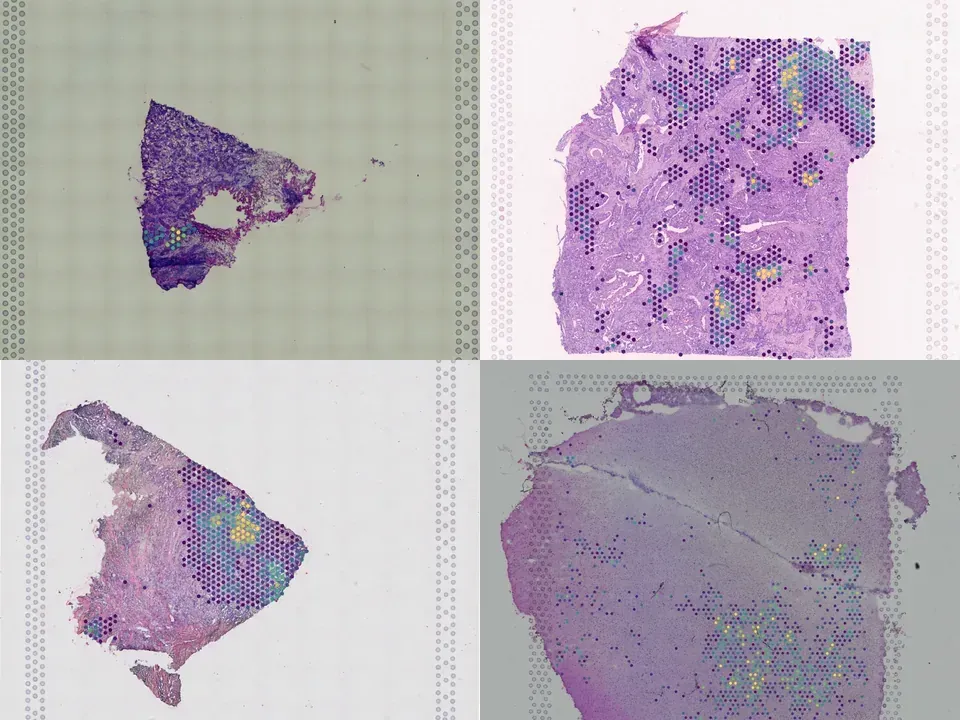
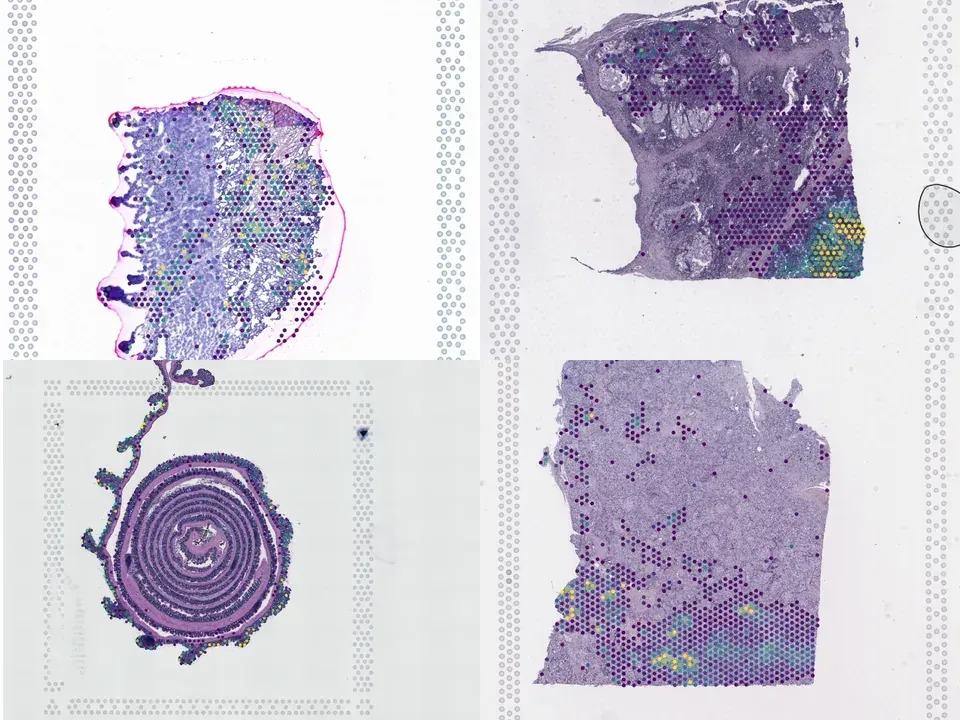
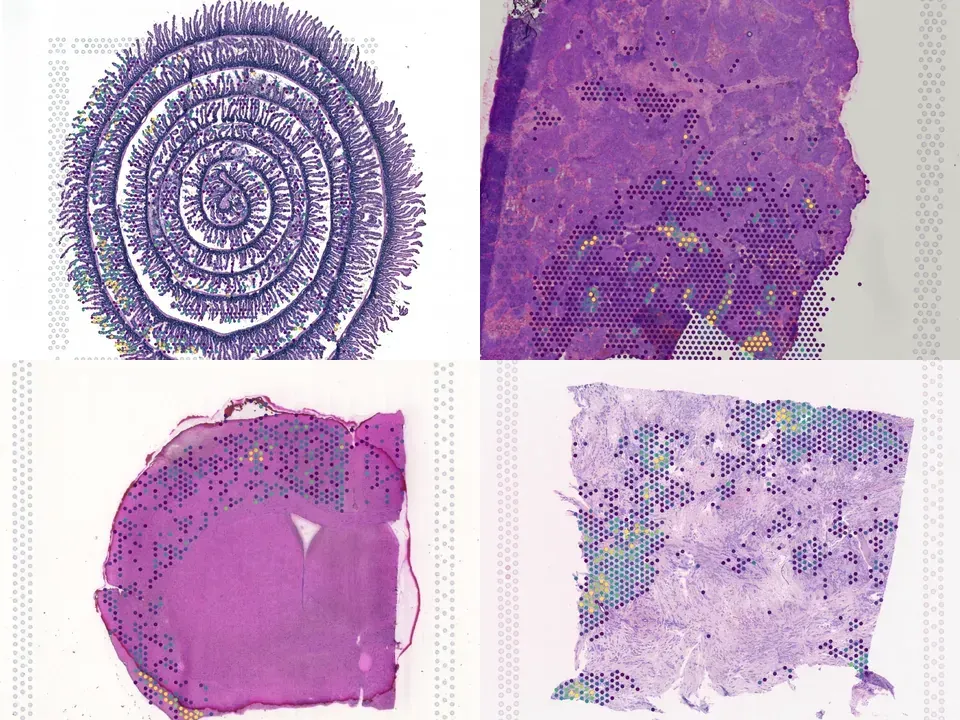
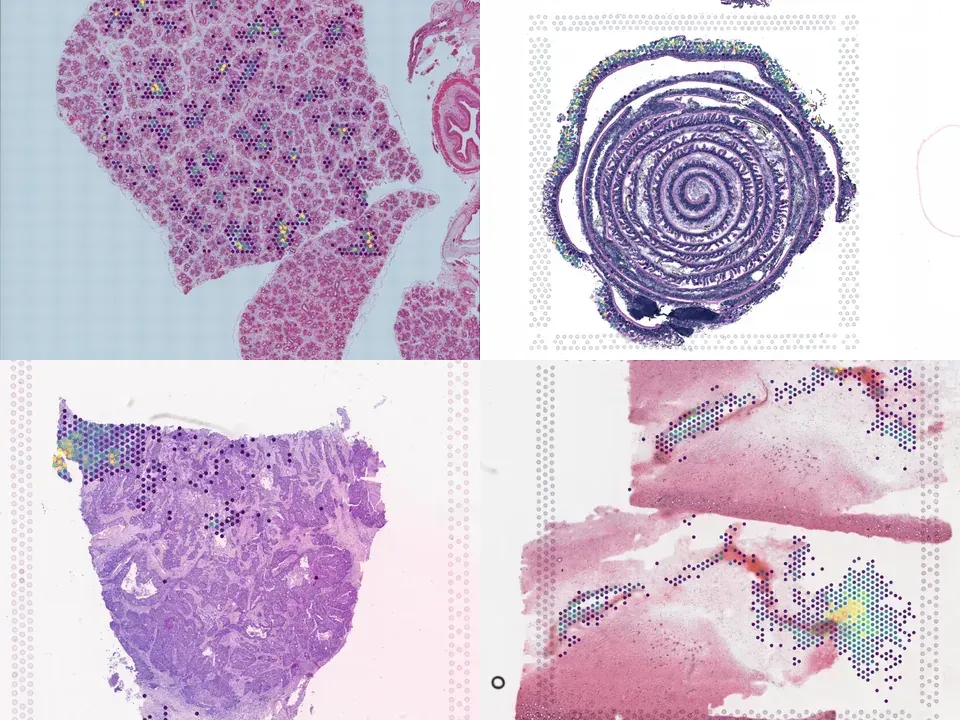
The diversity of cell-cell interactions in different regions of a tumor reflects the functional heterogeneity of cancer, which poses challenges in early diagnosis, selection of treatment strategies, and prognosis of breast cancer. Cancer cells interact with each other to form different morphological structures in the tumor and stromal host cells via integrins. The objective of this study was to characterize the morphological and spatial heterogeneity of primary breast tumors in the context of expression profiles of integrins and their ligands. We studied spatial transcriptomics using the 10X Visium approach and the NICHES algorithm to map ligand-receptor signaling pathways and visualize the heterogeneity of signaling archetypes in tumor clusters. Cluster analysis of the expression profiles of tumor spots from the samples indicated pronounced inter-tumoral heterogeneity. Integrin-ligand functional clusters were associated with intratumoral heterogeneity, which was manifested by the presence of several morphological loci as observed in histological tumor samples. Inter-tumoral heterogeneity was manifested by a different number of functional clusters, ranging from 2 to 9 for each tumor sample. The main characteristic of these clusters was the significant predominance of non-complementary integrin subunits. Of the 42 functional integrin-ligand pairs in 21 clusters of five samples, 41 pairs occurred only once. The exception was the LAMA5-ITGB4 pair, which was detected in two clusters of different samples. The spatial heterogeneity of integrin-ligand expression clusters in breast cancer contributes significantly to the functional heterogeneity of the tumor, which sets the stage for many scenarios of parenchymatous-stromal relationships, some of which may be effective in the emergence of metastasizing tumor seed cells. The intra- and inter-tumoral spatio-functional heterogeneity of the tumor tissue that we discovered may largely explain why it is difficult to achieve success in most patients with breast cancer using any therapeutic strategy targeting one molecule of the vast array, regardless of the importance of its pathogenetic significance.
from sddb import Catalog

cohort = Catalog().collection("geo-gse242311")
cohort.members        # the 16 datasets as a table

print(cohort.licenses())              # check the terms before you download

sdatas = cohort.to_dict()             # {uid: SpatialData}, cached locally
# or keep the .zarr files in a folder of your choice:
# sdatas = cohort.to_dict(dest="data/")Needs pip install lamindb and network access to the Lamin database, which is limited during the alpha. If it fails, use the Client tab.
import lamindb as ln

db = ln.DB("scverse/spatialdata-db")
coll = db.Collection.get(key="geo-gse242311")
coll.ordered_artifacts.to_dataframe()   # the 16 members, ordered

# download every member .zarr to the local cache:
paths = [a.cache() for a in coll.ordered_artifacts.all()]# sddb client: download every member .zarr into data/
sddb-cli download --collection geo-gse242311 --dest data/Licenses: 16 NCBI GEO policy
@article{Perelmuter_2024,
  title = {Characterization of EpCAM-Positive and EpCAM-Negative Tumor Cells in Early-Stage Breast Cancer},
  volume = {25},
  ISSN = {1422-0067},
  url = {http://dx.doi.org/10.3390/ijms252011109},
  DOI = {10.3390/ijms252011109},
  number = {20},
  journal = {International Journal of Molecular Sciences},
  publisher = {MDPI AG},
  author = {Perelmuter, Vladimir M. and Grigoryeva, Evgeniya S. and Alifanov, Vladimir V. and Kalinchuk, Anna Yu. and Andryuhova, Elena S. and Savelieva, Olga E. and Patskan, Ivan A. and Bragina, Olga D. and Garbukov, Evgeniy Yu. and Vostrikova, Mariya A. and Zavyalova, Marina V. and Denisov, Evgeny V. and Cherdyntseva, Nadezhda V. and Tashireva, Liubov A.},
  year = {2024},
  month = Oct,
  pages = {11109}
}