Collections / Nextflow Pipeline for Visium and H&E Data from Patient-Derived Xenograft Samples

Nextflow Pipeline for Visium and H&E Data from Patient-Derived Xenograft Samples

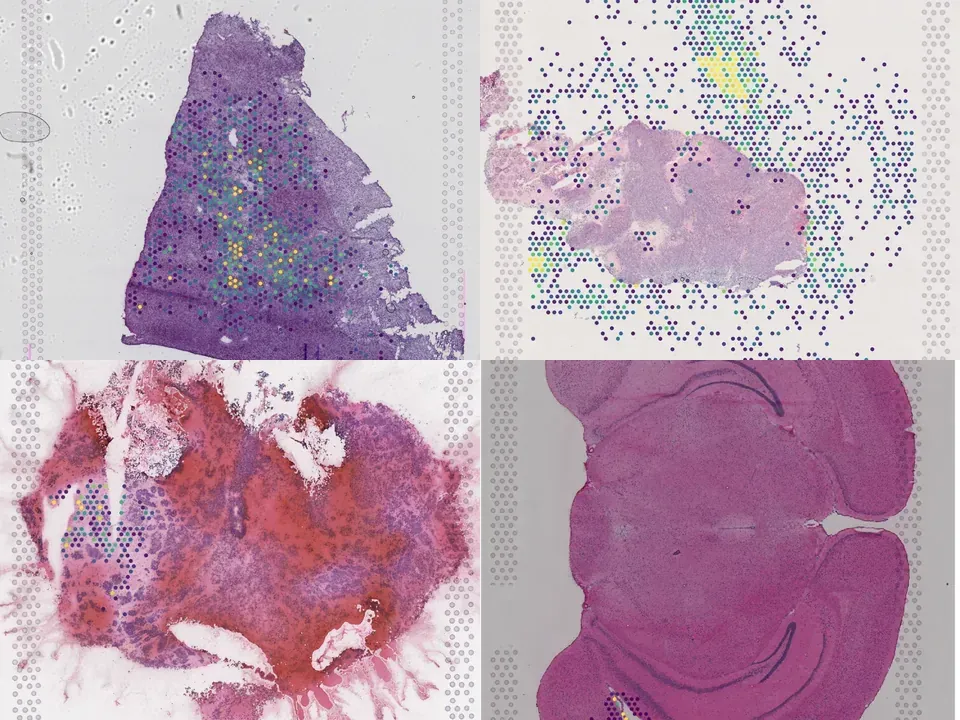
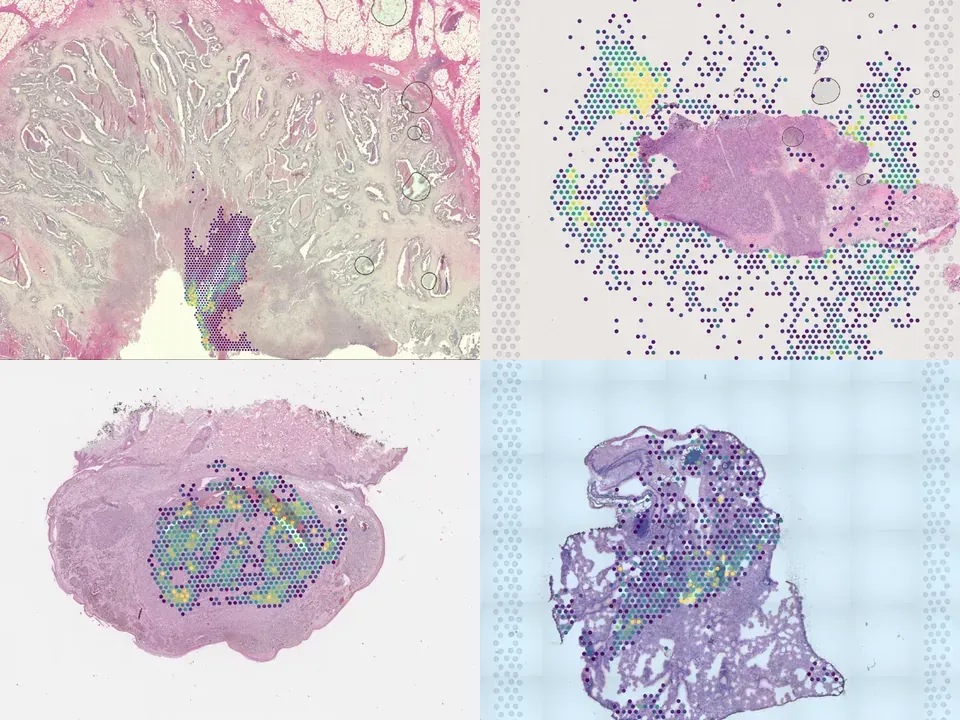
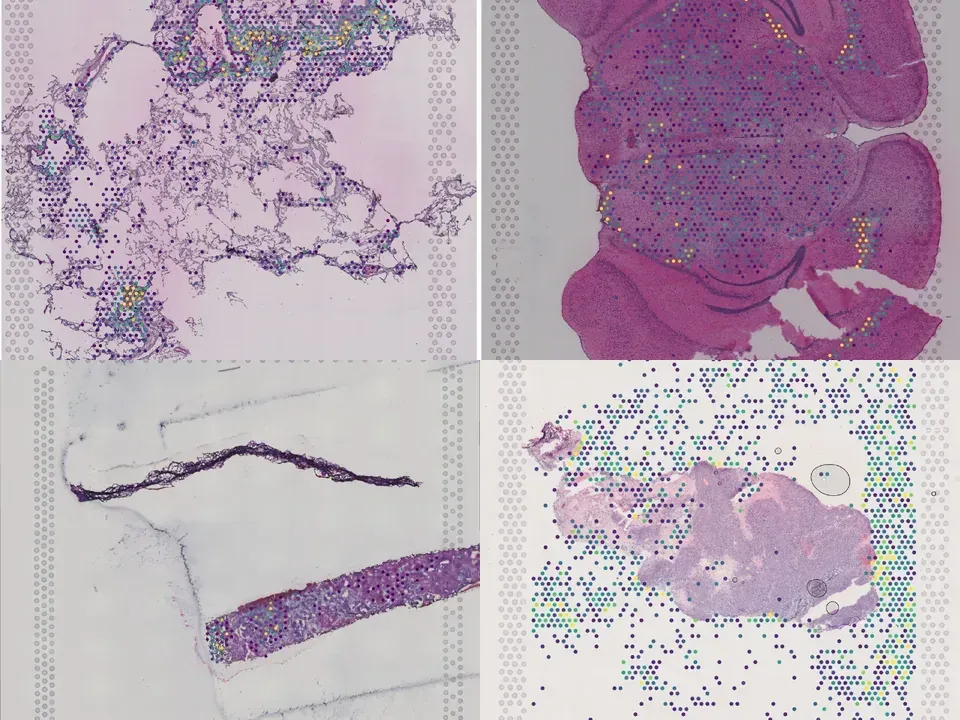
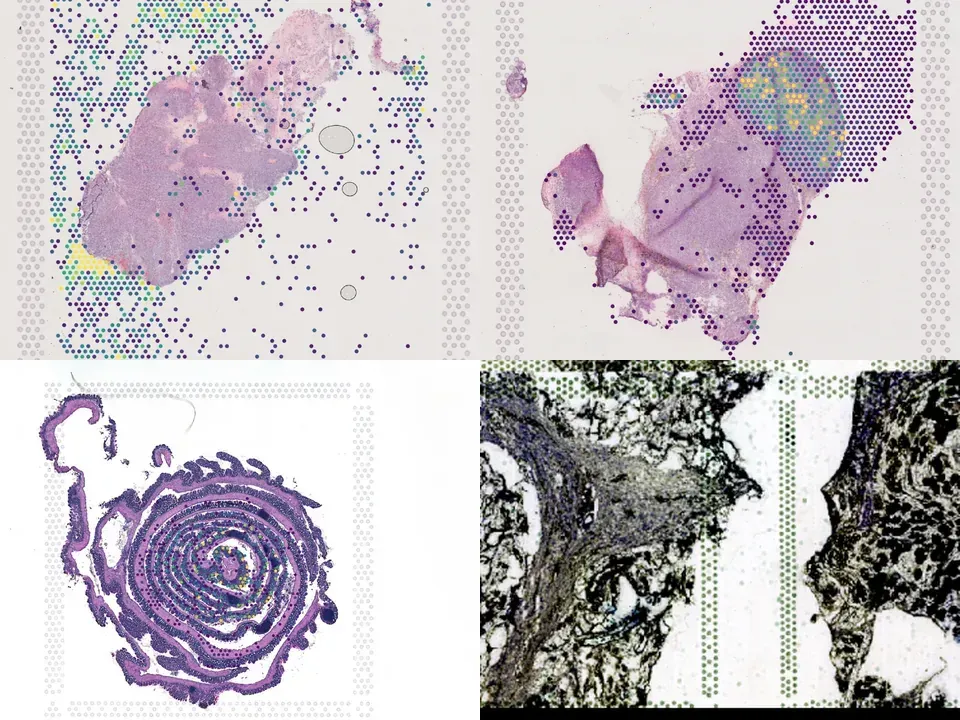
We designed a Nextflow DSL2-based pipeline, Spatial Transcriptomics Quantification (STQ), for simultaneous processing of 10x Genomics Visium spatial transcriptomics data and a matched hematoxylin and eosin (H&E)-stained whole slide image (WSI), optimized for Patient-Derived Xenograft (PDX) cancer specimens. Our pipeline enables the classification of sequenced transcripts for deconvolving the mouse and human species and mapping the transcripts to reference transcriptomes. We align the H&E WSI with the spatial layout of the Visium slide and generate imaging and quantitative morphology features for each Visium spot. The pipeline design enables multiple analysis workflows, including single or dual reference genomes input and stand-alone image analysis. We show the utility of our pipeline on a dataset from Visium profiling of four melanoma PDX samples. The clustering of Visium spots and clustering of H&E imaging features reveal similar patterns arising from the two data modalities.

Datasets4
Size~199 MB
AssayVisium
Samplehuman · skin of body
KindOther
Flag a data issue
PMID:38626768 ↗
Python · sddb client
from sddb import Catalog

cohort = Catalog().collection("geo-gse238004")
cohort.members        # the 4 datasets as a table

print(cohort.licenses())              # check the terms before you download

sdatas = cohort.to_dict()             # {uid: SpatialData}, cached locally
# or keep the .zarr files in a folder of your choice:
# sdatas = cohort.to_dict(dest="data/")
Python · lamindb

Needs pip install lamindb and network access to the Lamin database, which is limited during the alpha. If it fails, use the Client tab.

import lamindb as ln

db = ln.DB("scverse/spatialdata-db")
coll = db.Collection.get(key="geo-gse238004")
coll.ordered_artifacts.to_dataframe()   # the 4 members, ordered

# download every member .zarr to the local cache:
paths = [a.cache() for a in coll.ordered_artifacts.all()]
Shell
# sddb client: download every member .zarr into data/
sddb-cli download --collection geo-gse238004 --dest data/

Licenses: 4 NCBI GEO policy

Open in Vitessce
Visium
Human skin of body
GSM7657719
human skin of body melanoma 54.2 MB 4,991 spots bronze H&E NCBI GEO policy
TechnologyVisium
Organismhuman
Tissueskin of body
Conditionmelanoma
Size54.2 MB
Spots4,991
Magnificationother · 3.414 µm/px
bronze H&E NCBI GEO policy Open in Vitessce
Open in Vitessce
Visium
Human skin of body
GSM7657718
human skin of body melanoma 47.5 MB 4,992 spots bronze H&E NCBI GEO policy
TechnologyVisium
Organismhuman
Tissueskin of body
Conditionmelanoma
Size47.5 MB
Spots4,992
Magnificationother · 3.454 µm/px
bronze H&E NCBI GEO policy Open in Vitessce
Open in Vitessce
Visium
Human skin of body
GSM7657720
human skin of body melanoma 51.7 MB 4,992 spots bronze H&E NCBI GEO policy
TechnologyVisium
Organismhuman
Tissueskin of body
Conditionmelanoma
Size51.7 MB
Spots4,992
Magnificationother · 3.419 µm/px
bronze H&E NCBI GEO policy Open in Vitessce
Open in Vitessce
Visium
Human skin of body
GSM7657717
human skin of body melanoma 45.4 MB 4,991 spots bronze H&E NCBI GEO policy
TechnologyVisium
Organismhuman
Tissueskin of body
Conditionmelanoma
Size45.4 MB
Spots4,991
Magnificationother · 3.402 µm/px
bronze H&E NCBI GEO policy Open in Vitessce

Cite this collection

doi.org/10.1016/j.crmeth.2024.100759 ↗
BibTeX
@article{Domanskyi_2024,
  title = {Nextflow pipeline for Visium and H&E data from patient-derived xenograft samples},
  volume = {4},
  ISSN = {2667-2375},
  url = {http://dx.doi.org/10.1016/j.crmeth.2024.100759},
  DOI = {10.1016/j.crmeth.2024.100759},
  number = {5},
  journal = {Cell Reports Methods},
  publisher = {Elsevier BV},
  author = {Domanskyi, Sergii and Srivastava, Anuj and Kaster, Jessica and Li, Haiyin and Herlyn, Meenhard and Rubinstein, Jill C. and Chuang, Jeffrey H.},
  year = {2024},
  month = May,
  pages = {100759}
}