Collections / Spatial Transcriptomic profiling of day2 wounds and intact tissues of Hgfac WT and KO mice
Spatial Transcriptomic profiling of day2 wounds and intact tissues of Hgfac WT and KO mice
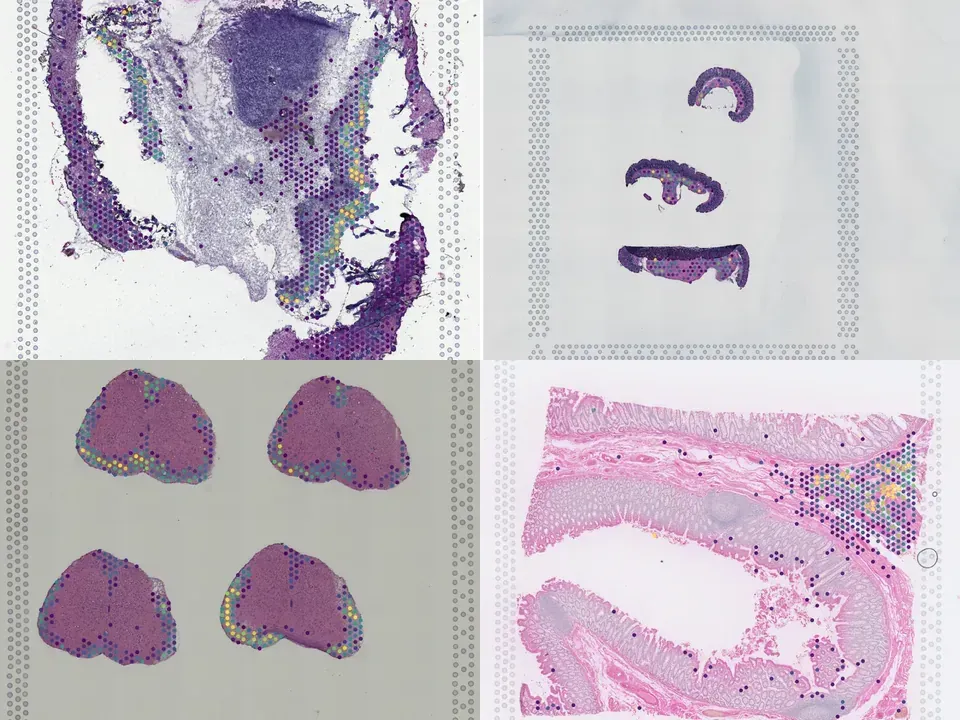
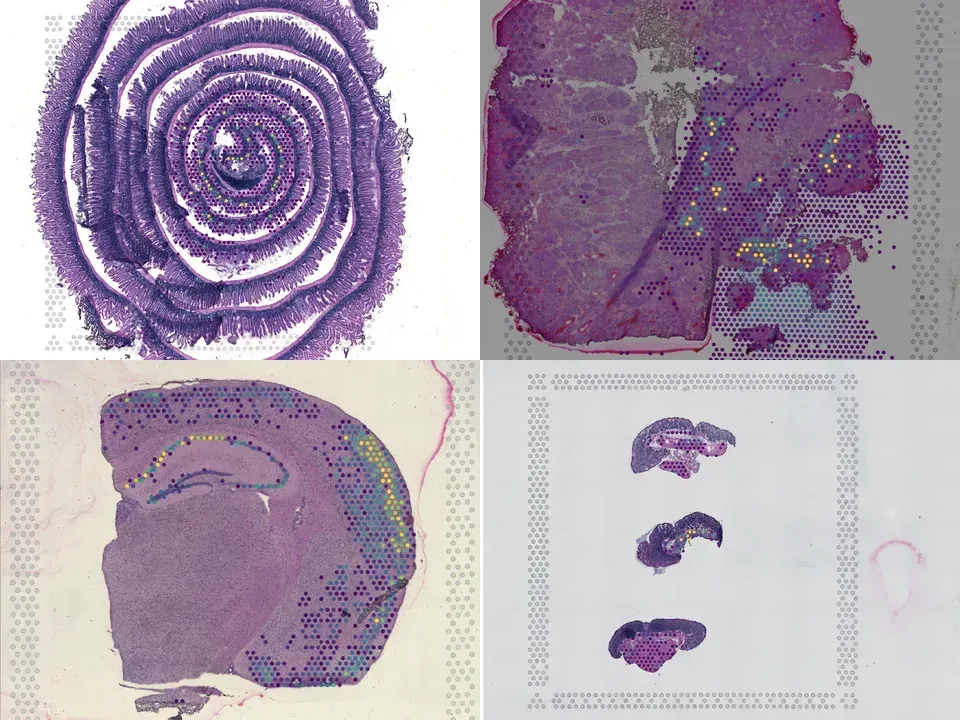
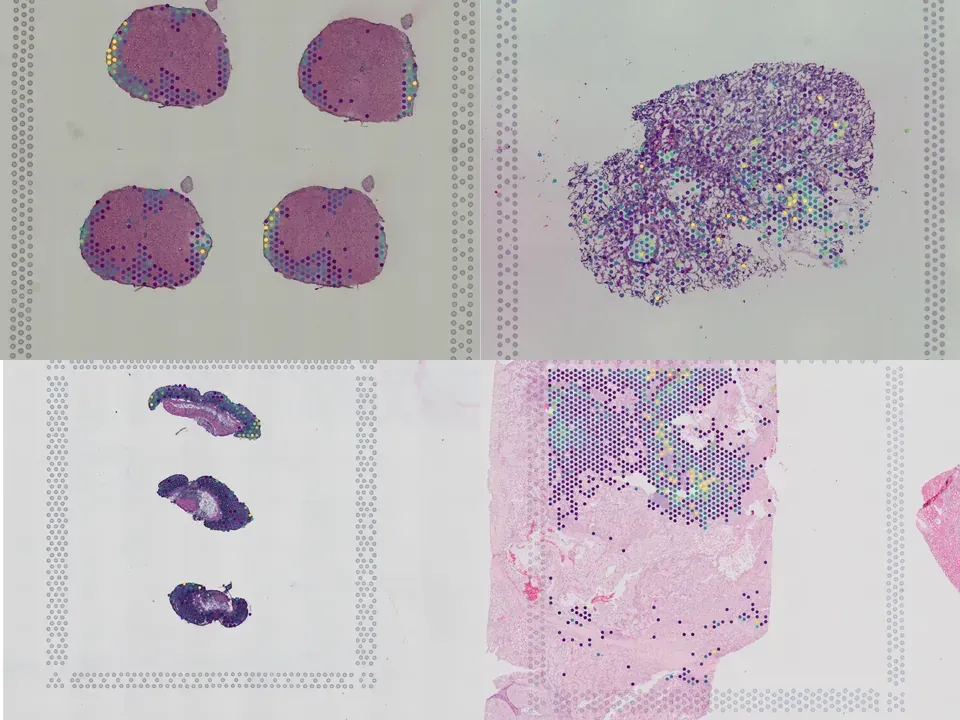
Wound healing is orchestrated by a spatial and temporal network of intercellular communication between epithelial cells, the stromal compartment, and the immune system. Our scRNA-seq analysis of Hgfac WT and KO wounds reveals that Aldh1a3 is downstream of the HGFAC system and Aldh1a3 is highly upregulated in wound-asociated epithelial (WAE) cells in responce to endoscopic wounding, suggesting WAE cells can potentially secrete retinoic acid into wound bed. To dissect the healing responce in the intestinal mucosa, we peformed spatial transcriptomics analysis.
from sddb import Catalog

cohort = Catalog().collection("geo-gse235742")
cohort.members        # the 3 datasets as a table

print(cohort.licenses())              # check the terms before you download

sdatas = cohort.to_dict()             # {uid: SpatialData}, cached locally
# or keep the .zarr files in a folder of your choice:
# sdatas = cohort.to_dict(dest="data/")
Needs pip install lamindb and network access to the Lamin database, which is limited during the alpha. If it fails, use the Client tab.
import lamindb as ln

db = ln.DB("scverse/spatialdata-db")
coll = db.Collection.get(key="geo-gse235742")
coll.ordered_artifacts.to_dataframe()   # the 3 members, ordered

# download every member .zarr to the local cache:
paths = [a.cache() for a in coll.ordered_artifacts.all()]
@article{Nakata_2023,
  title = {Genetic vulnerability to Crohn’s disease reveals a spatially resolved epithelial restitution program},
  volume = {15},
  ISSN = {1946-6242},
  url = {http://dx.doi.org/10.1126/scitranslmed.adg5252},
  DOI = {10.1126/scitranslmed.adg5252},
  number = {719},
  journal = {Science Translational Medicine},
  publisher = {American Association for the Advancement of Science (AAAS)},
  author = {Nakata, Toru and Li, Chenhao and Mayassi, Toufic and Lin, Helen and Ghosh, Koushik and Segerstolpe, Åsa and Diamond, Emma L. and Herbst, Paula and Biancalani, Tommaso and Gaddam, Shreya and Parkar, Saurabh and Lu, Ziqing and Jaiswal, Alok and Li, Bihua and Creasey, Elizabeth A. and Lefkovith, Ariel and Daly, Mark J. and Graham, Daniel B. and Xavier, Ramnik J.},
  year = {2023},
  month = Oct
}