
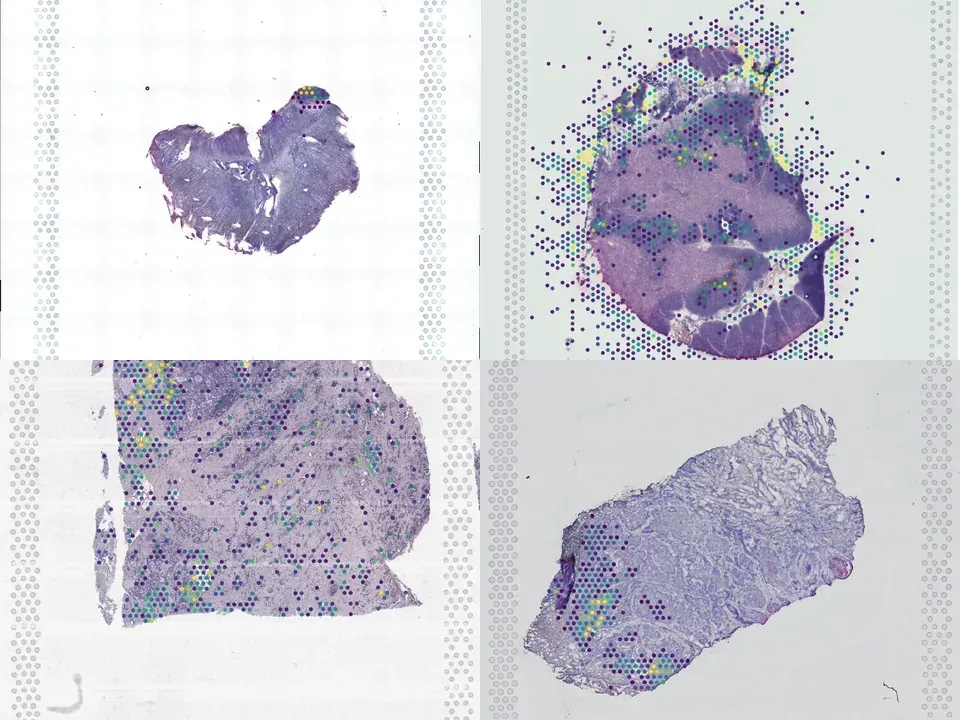
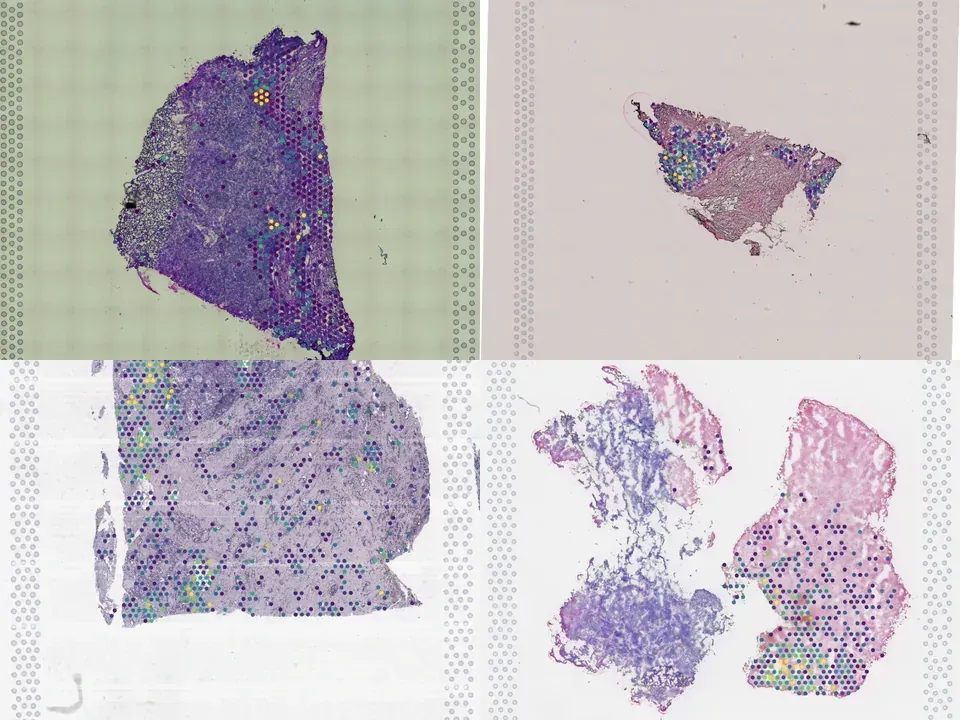
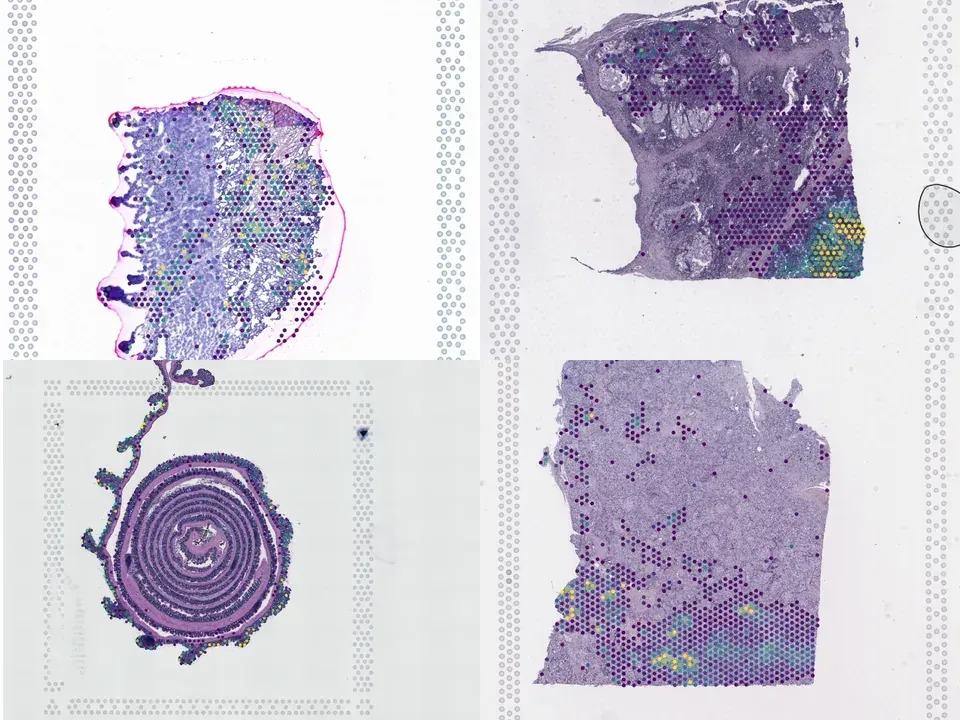
Human ovary
GSM7090087
human ovary ovarian cancer 23.6 MB 2,567 spots bronze H&E NCBI GEO policy
TechnologyVisium
Organismhuman
Tissueovary
Conditionovarian cancer
Spots2,567
bronze H&E NCBI GEO policy
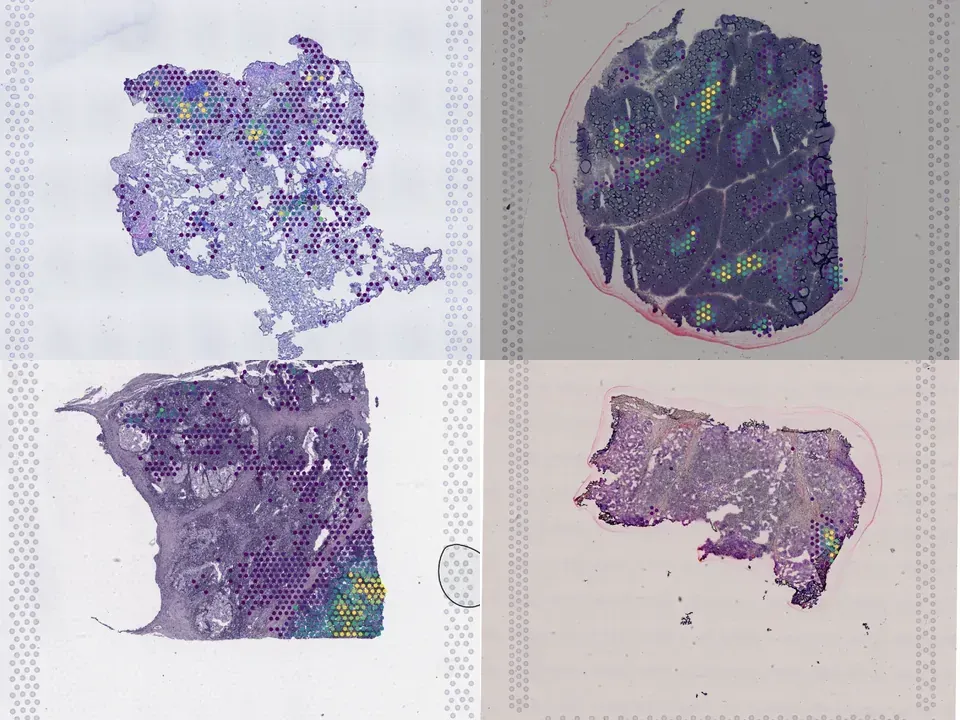
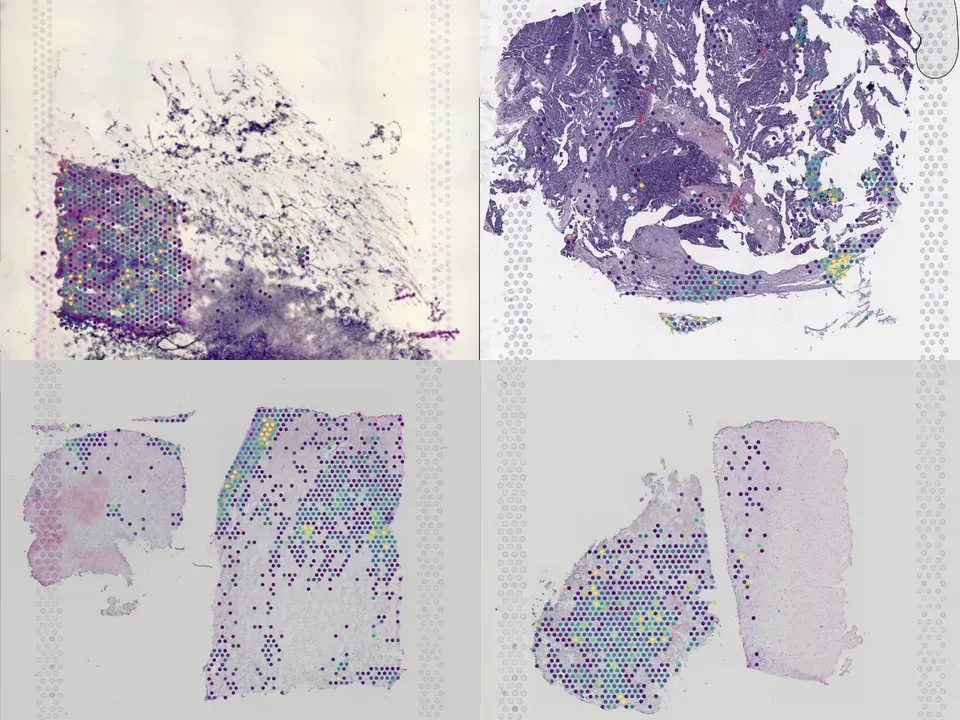
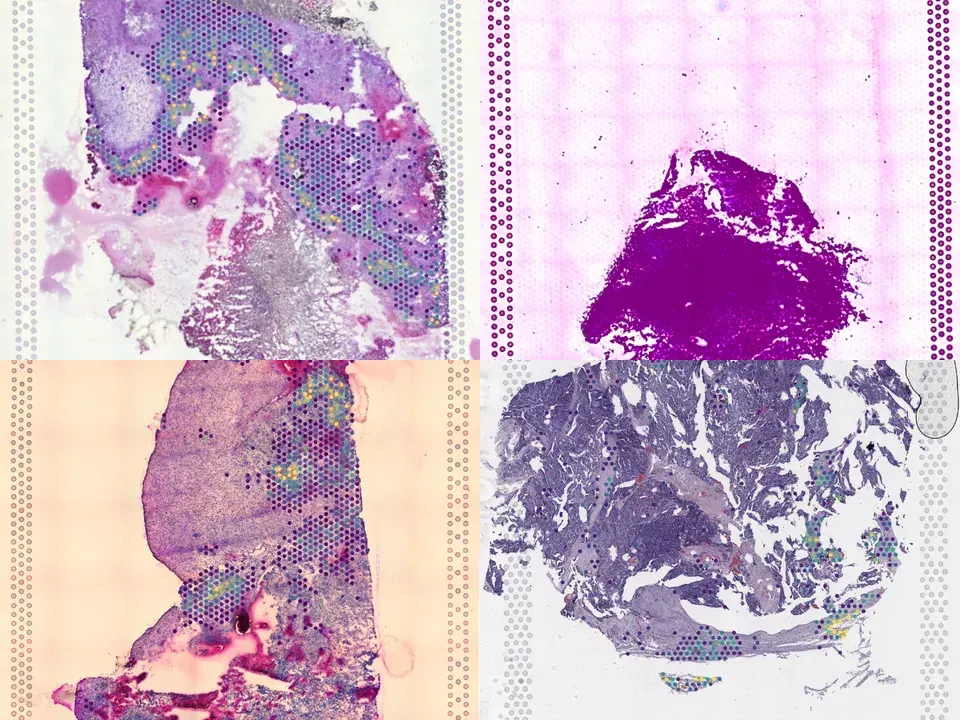
The Illumina sequencing systems demonstrate high efficiency and power and remain the most popular platforms. Platforms with similar throughput and quality profiles but lower costs are under intensive development. In this study, we compared two platforms Illumina NextSeq 2000 and GeneMind Genolab M for 10x Genomics Visium spatial transcriptomics.
from sddb import Catalog

cohort = Catalog().collection("geo-gse227019")
cohort.members        # the 6 datasets as a table

print(cohort.licenses())              # check the terms before you download

sdatas = cohort.to_dict()             # {uid: SpatialData}, cached locally
# or keep the .zarr files in a folder of your choice:
# sdatas = cohort.to_dict(dest="data/")Needs pip install lamindb and network access to the Lamin database, which is limited during the alpha. If it fails, use the Client tab.
import lamindb as ln

db = ln.DB("scverse/spatialdata-db")
coll = db.Collection.get(key="geo-gse227019")
coll.ordered_artifacts.to_dataframe()   # the 6 members, ordered

# download every member .zarr to the local cache:
paths = [a.cache() for a in coll.ordered_artifacts.all()]# sddb client: download every member .zarr into data/
sddb-cli download --collection geo-gse227019 --dest data/Licenses: 6 NCBI GEO policy
@article{Pavel_2023,
  title = {Comparison of the Illumina NextSeq 2000 and GeneMind Genolab M sequencing platforms for spatial transcriptomics},
  volume = {24},
  ISSN = {1471-2164},
  url = {http://dx.doi.org/10.1186/s12864-023-09192-w},
  DOI = {10.1186/s12864-023-09192-w},
  number = {1},
  journal = {BMC Genomics},
  publisher = {Springer Science and Business Media LLC},
  author = {Pavel, Iamshchikov and Irina, Larionova and Tatiana, Gerashchenko and Denis, Piankov and Philipp, Koshkin and Sergei, Korostelev and Evgeny, Denisov},
  year = {2023},
  month = Mar
}