
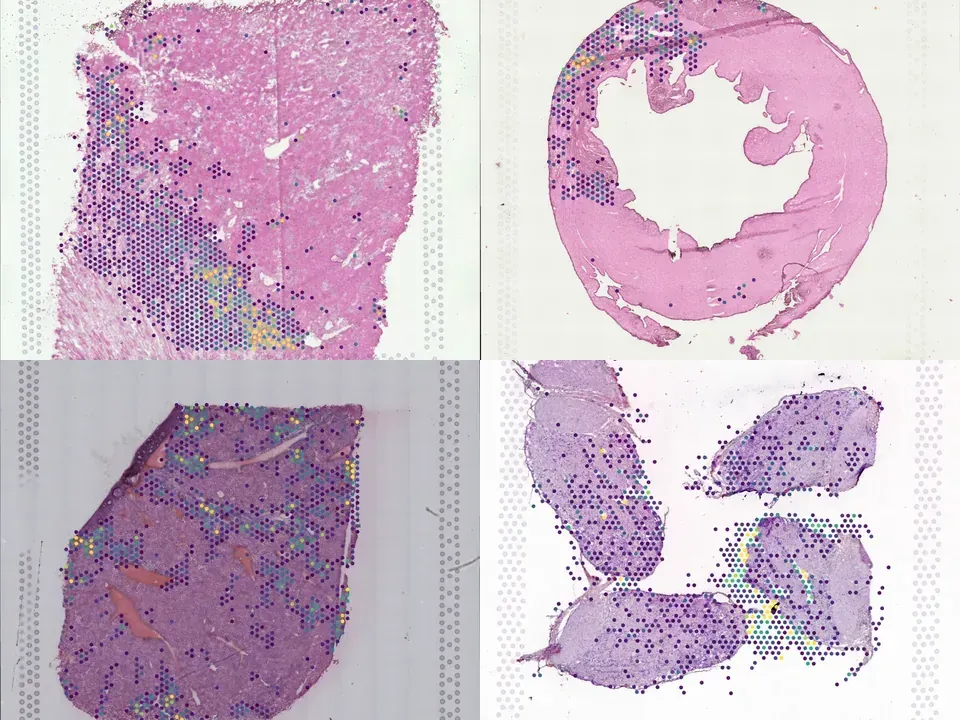
Human kidney
GSM7078497
human kidney acute kidney failure 22.5 MB 4,237 spots silver H&E NCBI GEO policy
TechnologyVisium
Organismhuman
Tissuekidney
Conditionacute kidney failure
Spots4,237
silver H&E NCBI GEO policy
Acute kidney injury (AKI) is a major health burden in the United States. Macrophages have been shown to mediate AKI in murine models. Murine kidneys contain multiple subpopulations of kidney resident macrophages (KRM) that are transcriptionally and spatially distinct. We hypothesized the human kidney contains orthologous KRM subpopulations, both transcriptionally and spatially. We utilized kidney sections from donors diagnosed with mild to moderate AKI in order to increase the translatability of murine research to clinical settings. We used spatial transcriptomics and single cell RNA sequencing to identify five distinct human KRM subpopulations. Using the AddModuleScore function in Seurat, we were able to compare the murine KRM transcriptional profiles from pre and post-AKI to the human KRM subpopulations. As a result, we identified four orthologous to known murine KRM subpopulations. The remaining population was identified in the kidney cortex and expresses a profile similar to activate microglia, the resident macrophage population in the brain. Again, we used AddModuleScore to determine a set of marker genes that will allow for the identification of KRM subsets across species and injury.
from sddb import Catalog

cohort = Catalog().collection("geo-gse226533")
cohort.members        # the 2 datasets as a table

print(cohort.licenses())              # check the terms before you download

sdatas = cohort.to_dict()             # {uid: SpatialData}, cached locally
# or keep the .zarr files in a folder of your choice:
# sdatas = cohort.to_dict(dest="data/")Needs pip install lamindb and network access to the Lamin database, which is limited during the alpha. If it fails, use the Client tab.
import lamindb as ln

db = ln.DB("scverse/spatialdata-db")
coll = db.Collection.get(key="geo-gse226533")
coll.ordered_artifacts.to_dataframe()   # the 2 members, ordered

# download every member .zarr to the local cache:
paths = [a.cache() for a in coll.ordered_artifacts.all()]# sddb client: download every member .zarr into data/
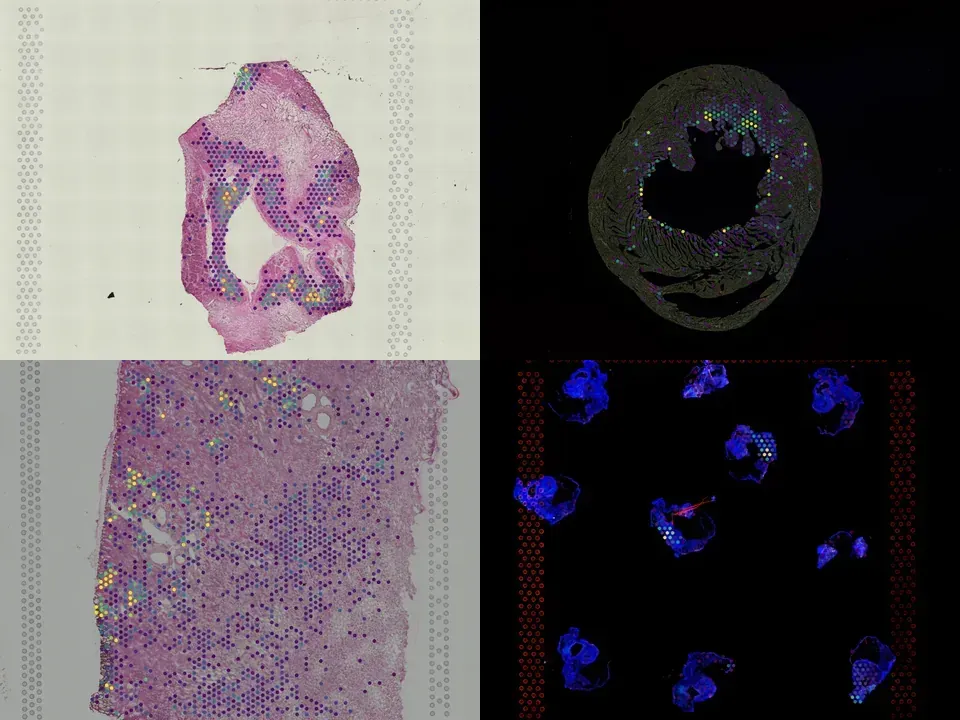
sddb-cli download --collection geo-gse226533 --dest data/Licenses: 2 NCBI GEO policy
No linked publication found — please cite the data source.