
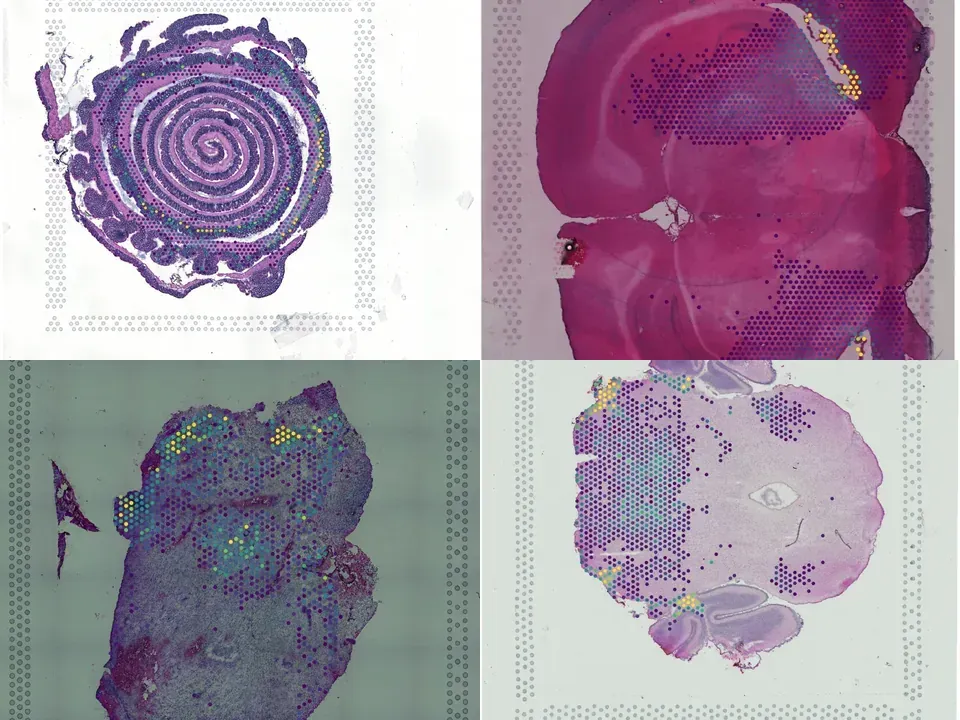
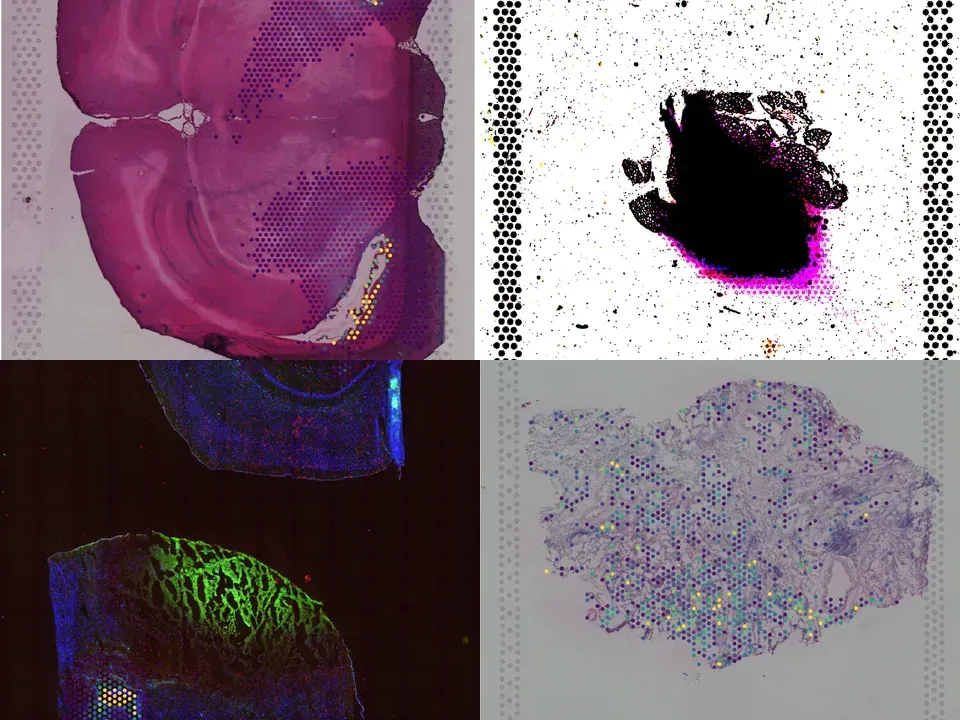
Mouse brain
GSM6886501
mouse brain 83.9 MB 4,426 spots bronze H&E NCBI GEO policy
TechnologyVisium
Organismmouse
Tissuebrain
Spots4,426
Magnificationother · 3.480 µm/px
bronze H&E NCBI GEO policy
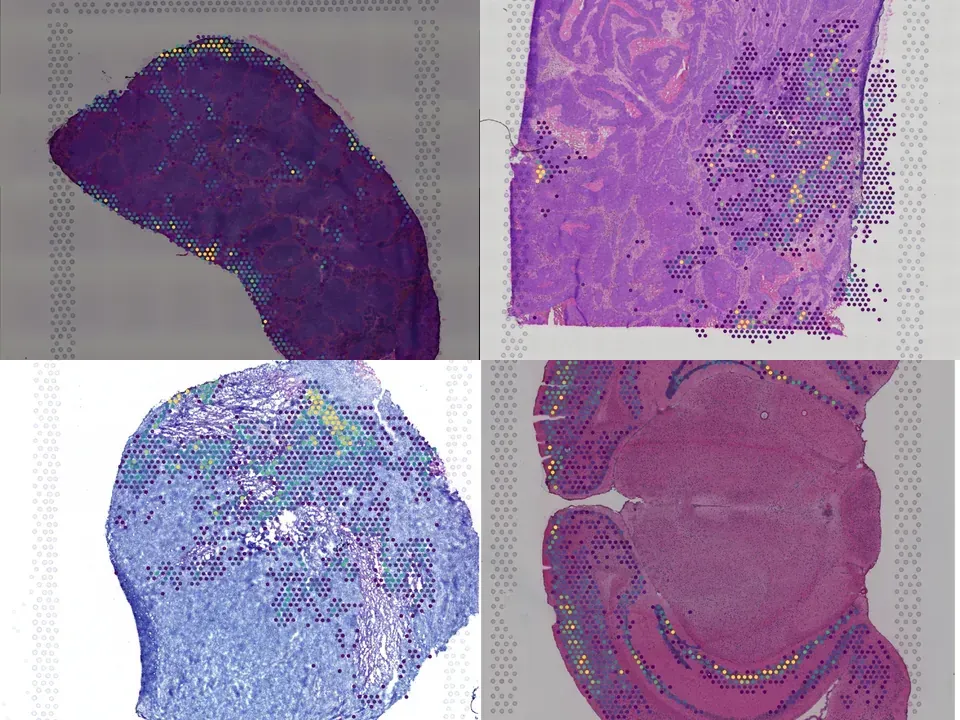
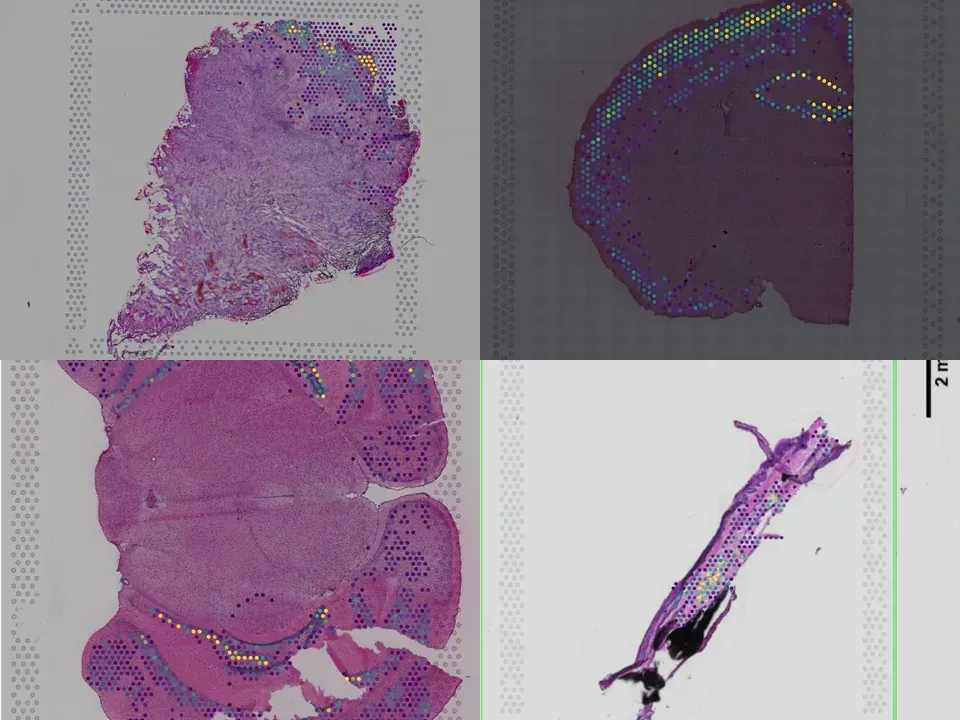
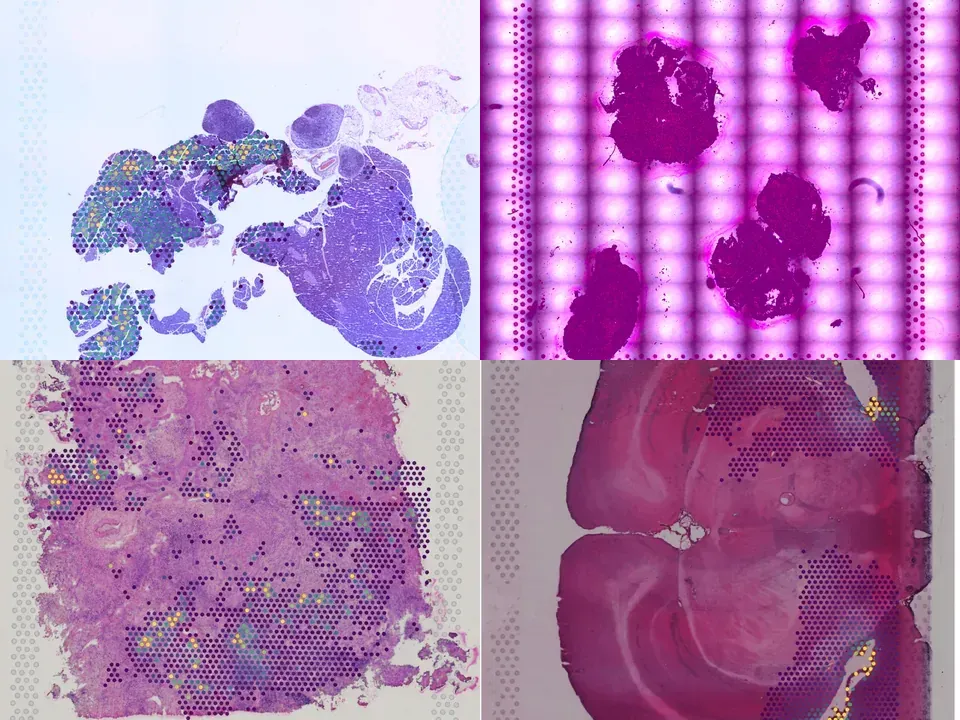
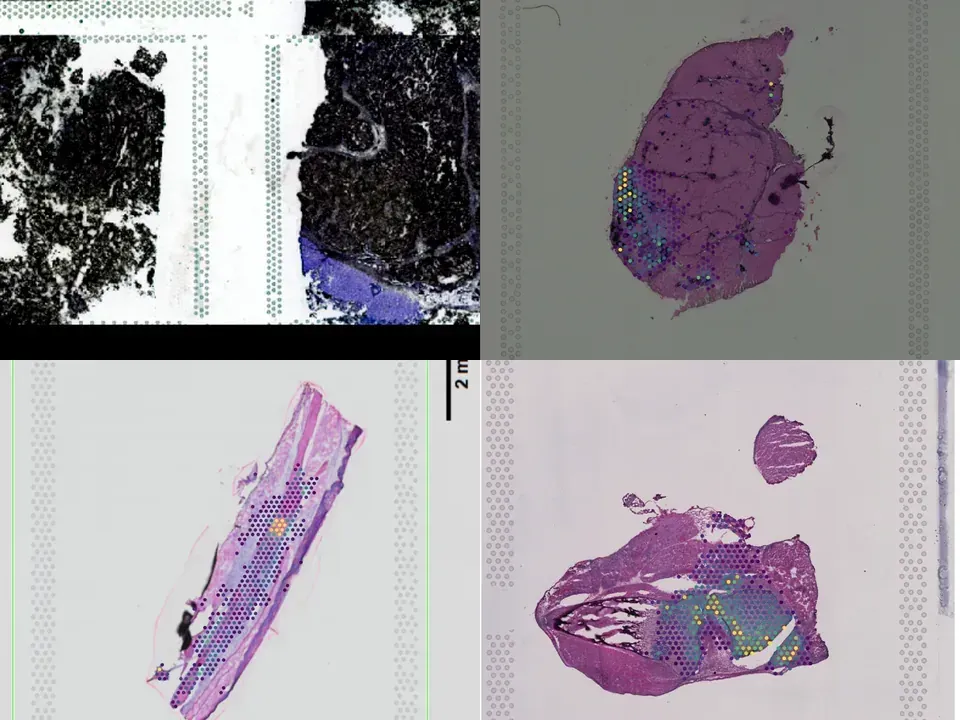
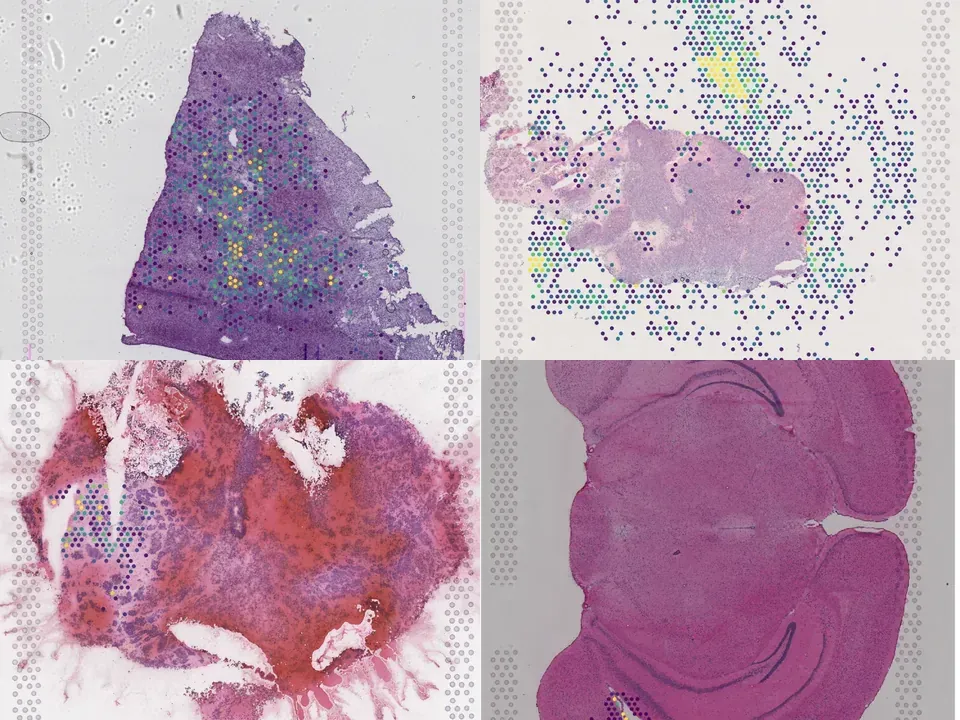
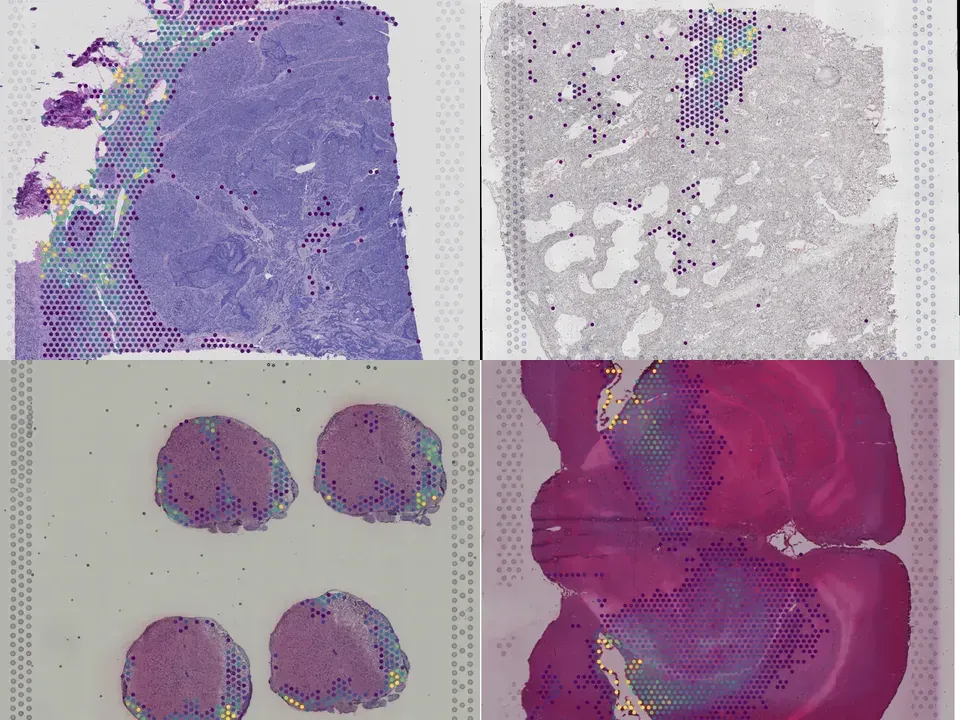
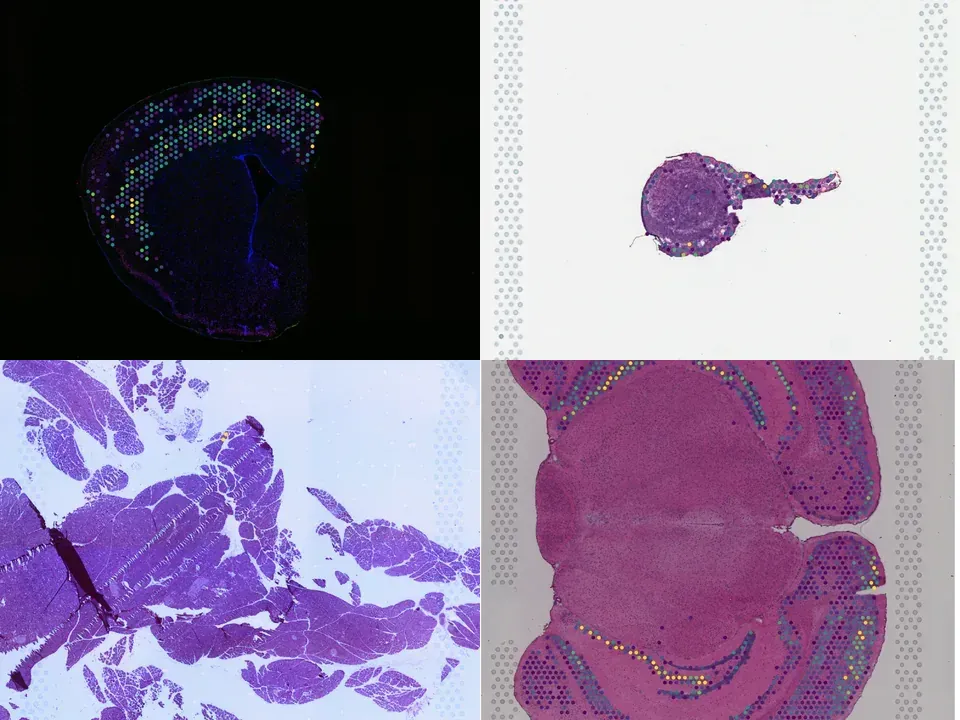
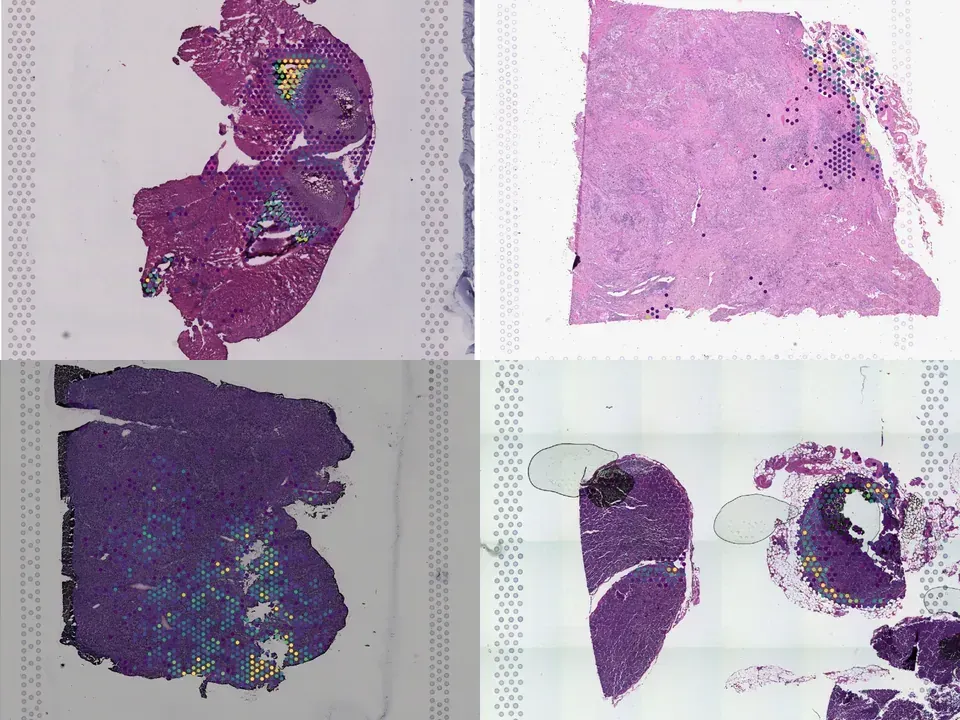
Spatially resolved transcriptomics has enabled precise genome-wide mRNA expression profiling within tissue sections. The performance of unbiased SRT methods targeting the polyA tail of mRNA, relies on the availability of specimens with high RNA quality. Moreover, the high cost of currently available SRT assays requires a careful sample screening process to increase the chance of obtaining high-quality data. Indeed, the upfront analysis of RNA quality can show considerable variability due to sample handling, storage, and/or intrinsic factors. We present RNA-Rescue Spatial Transcriptomics (RRST), an SRT workflow designed to improve mRNA recovery from fresh frozen specimens with moderate to low RNA quality. First, we provide a benchmark of RRST against the standard Visium spatial gene expression protocol on high RNA quality samples represented by mouse brain and prostate cancer samples. Then, we demonstrate the RRST protocol on tissue sections collected from five challenging tissue types, including: human lung, colon, small intestine, pediatric brain tumor, and mouse bone/cartilage. In total, we analyzed 52 tissue sections and our results demonstrate that RRST is a versatile, powerful, and reproducible protocol for FF specimens of different qualities and origins.
from sddb import Catalog

cohort = Catalog().collection("geo-gse221571")
cohort.members        # the 14 datasets as a table

print(cohort.licenses())              # check the terms before you download

sdatas = cohort.to_dict()             # {uid: SpatialData}, cached locally
# or keep the .zarr files in a folder of your choice:
# sdatas = cohort.to_dict(dest="data/")Needs pip install lamindb and network access to the Lamin database, which is limited during the alpha. If it fails, use the Client tab.
import lamindb as ln

db = ln.DB("scverse/spatialdata-db")
coll = db.Collection.get(key="geo-gse221571")
coll.ordered_artifacts.to_dataframe()   # the 14 members, ordered

# download every member .zarr to the local cache:
paths = [a.cache() for a in coll.ordered_artifacts.all()]# sddb client: download every member .zarr into data/
sddb-cli download --collection geo-gse221571 --dest data/Licenses: 14 NCBI GEO policy
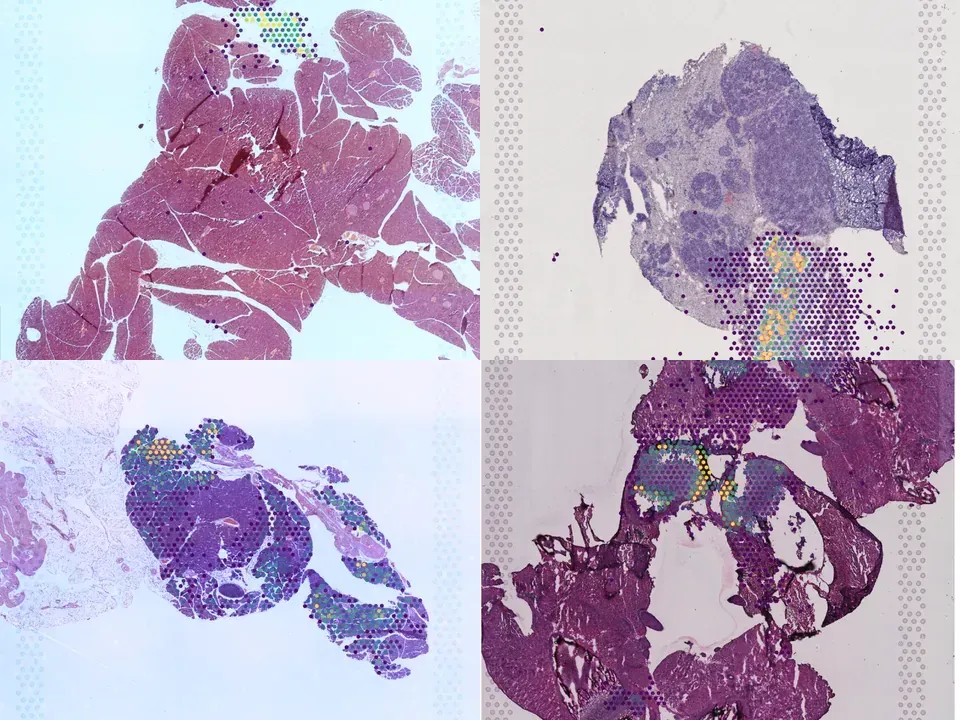
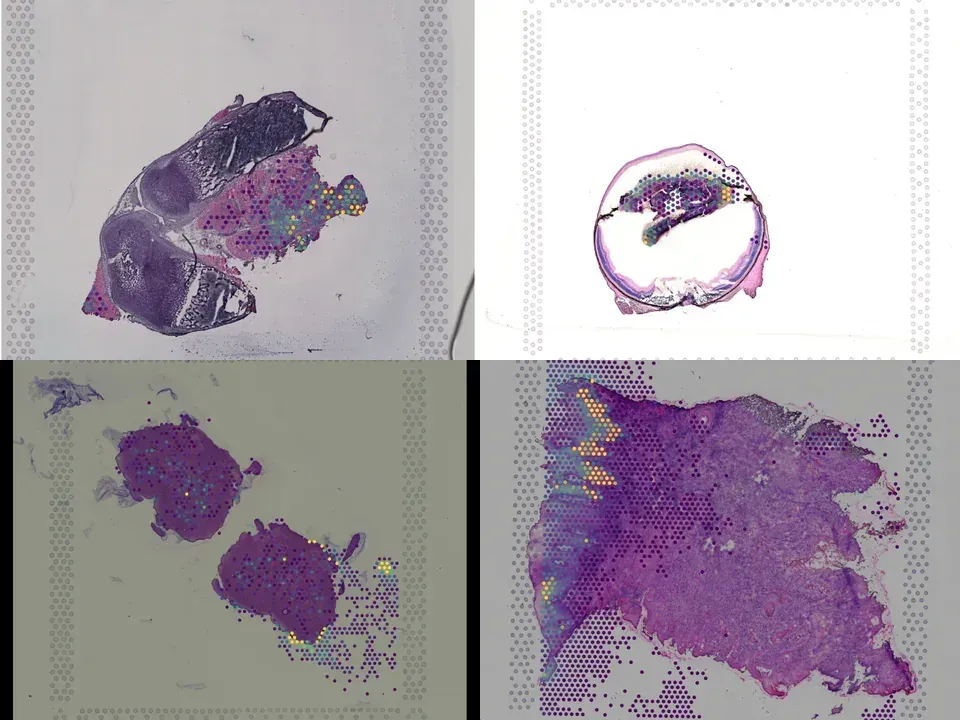
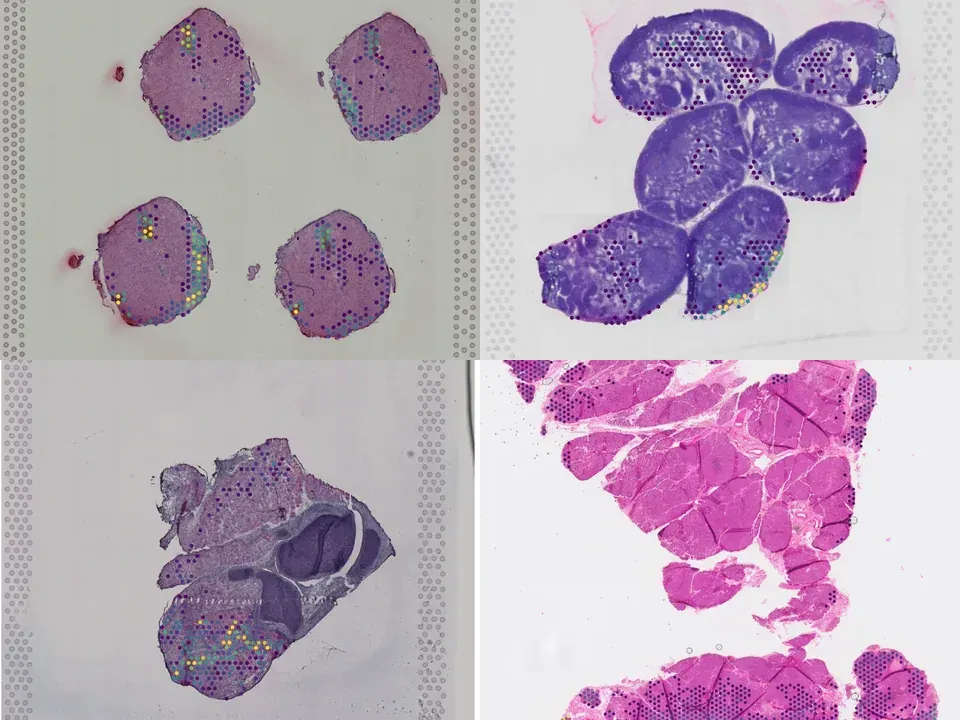
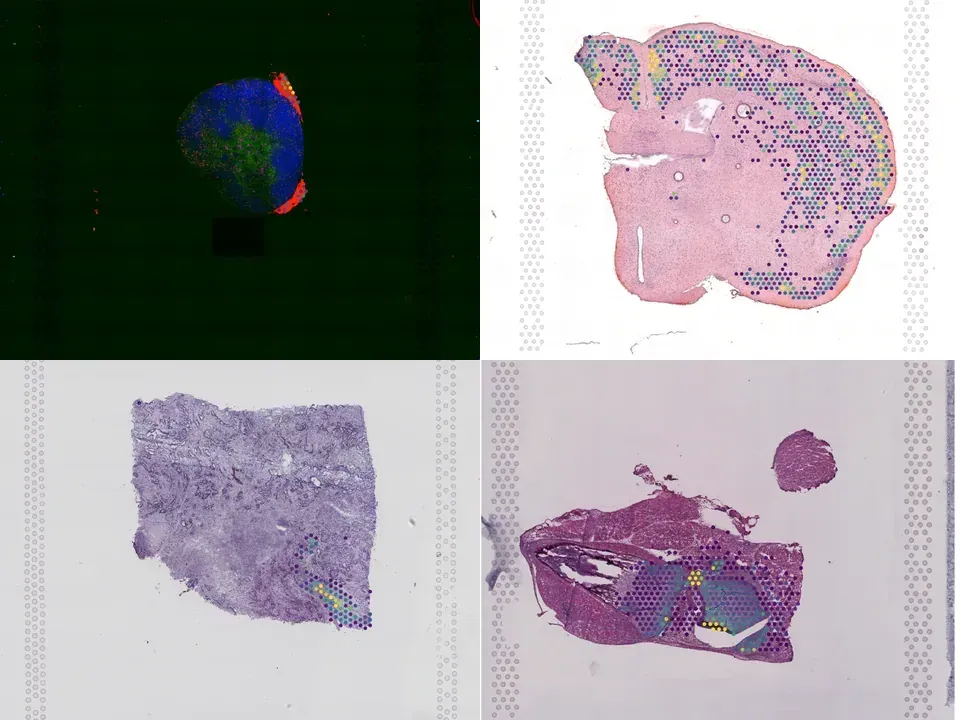
No linked publication found — please cite the data source.