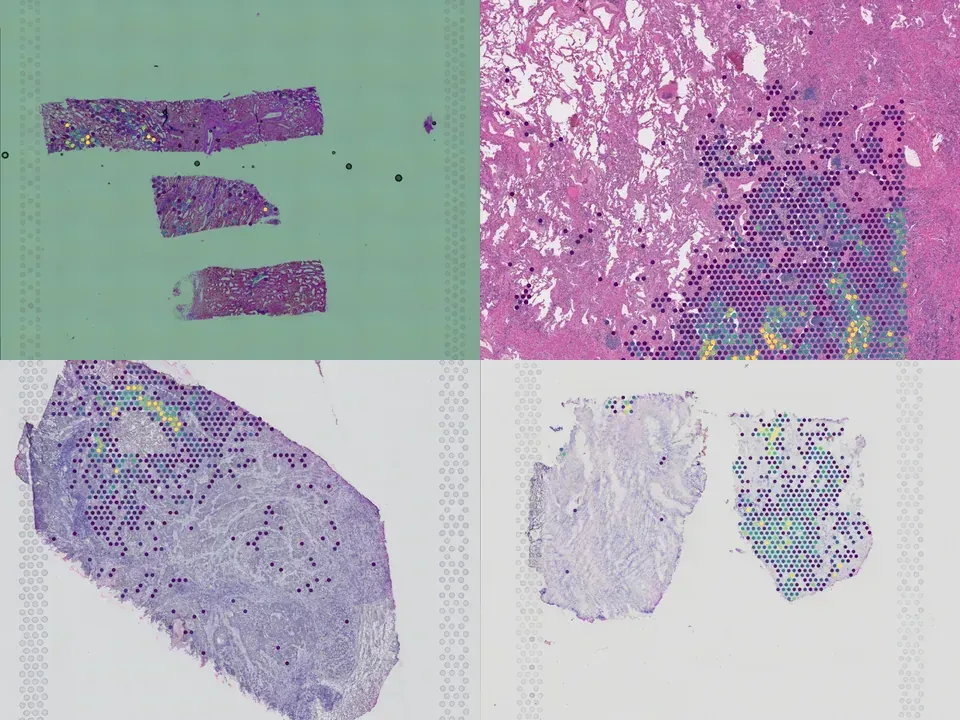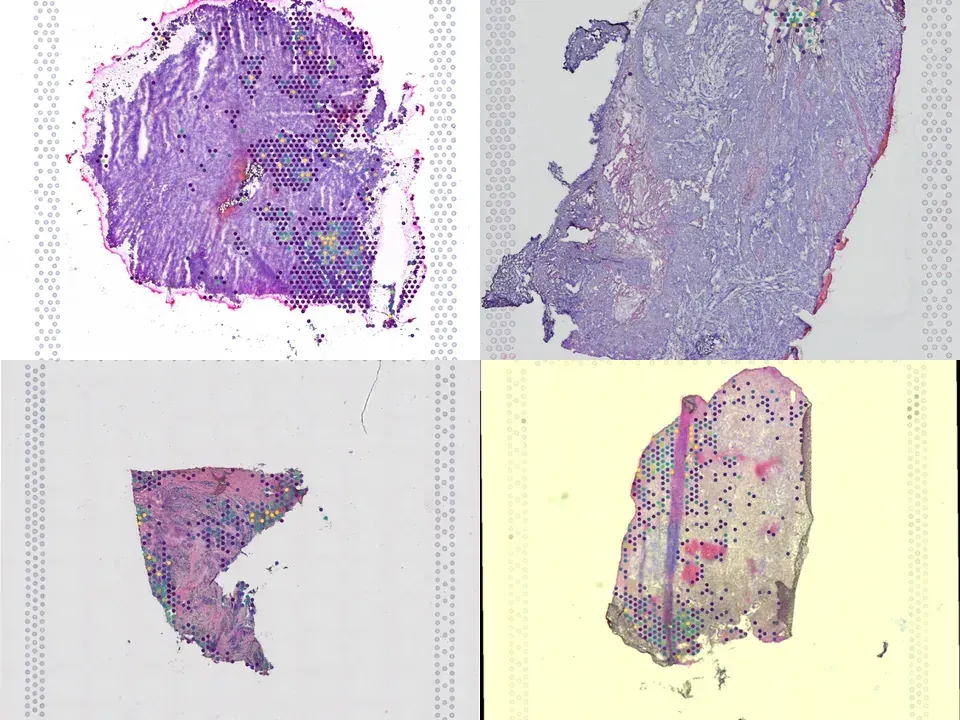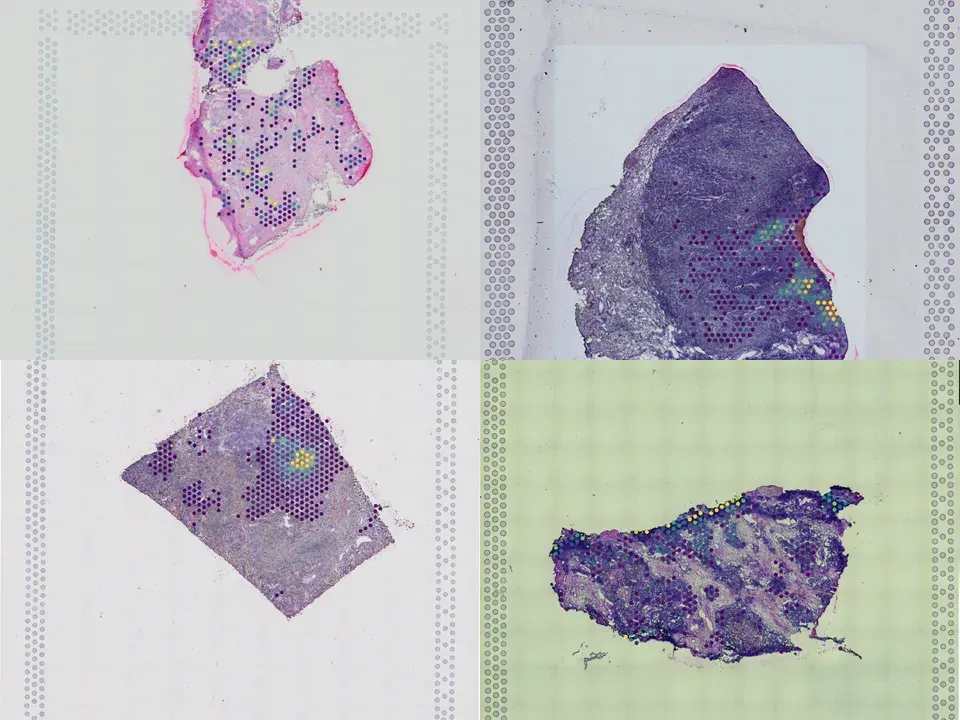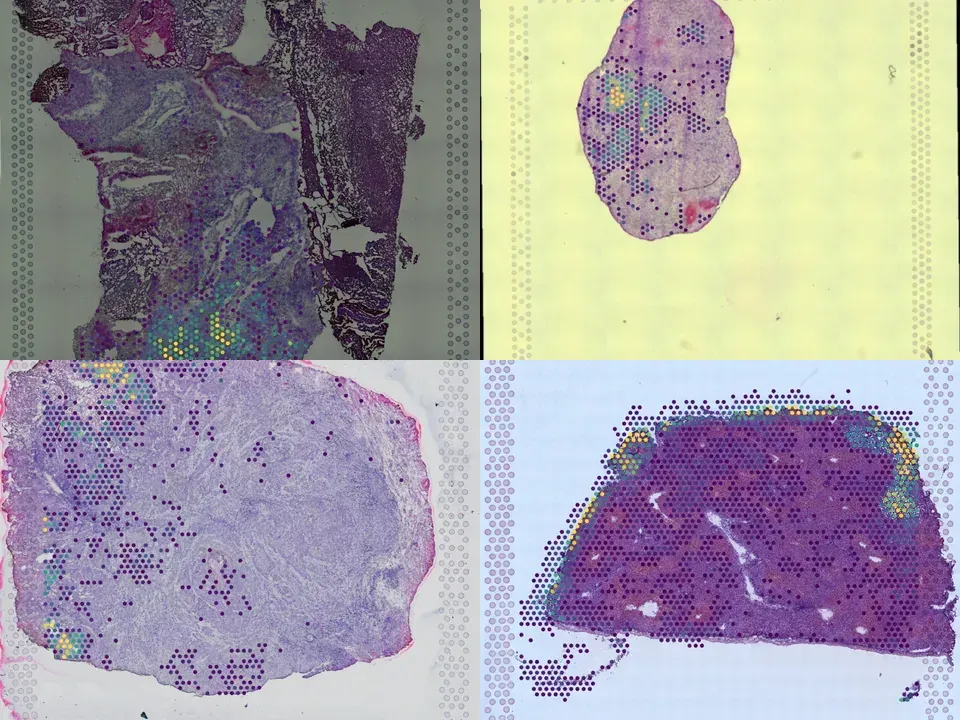
Collections / Spatial transcriptomics reveals distinct and conserved tumor core and edge architectures that predict survival and targeted therapy response

Spatial transcriptomics reveals distinct and conserved tumor core and edge architectures that predict survival and targeted therapy response

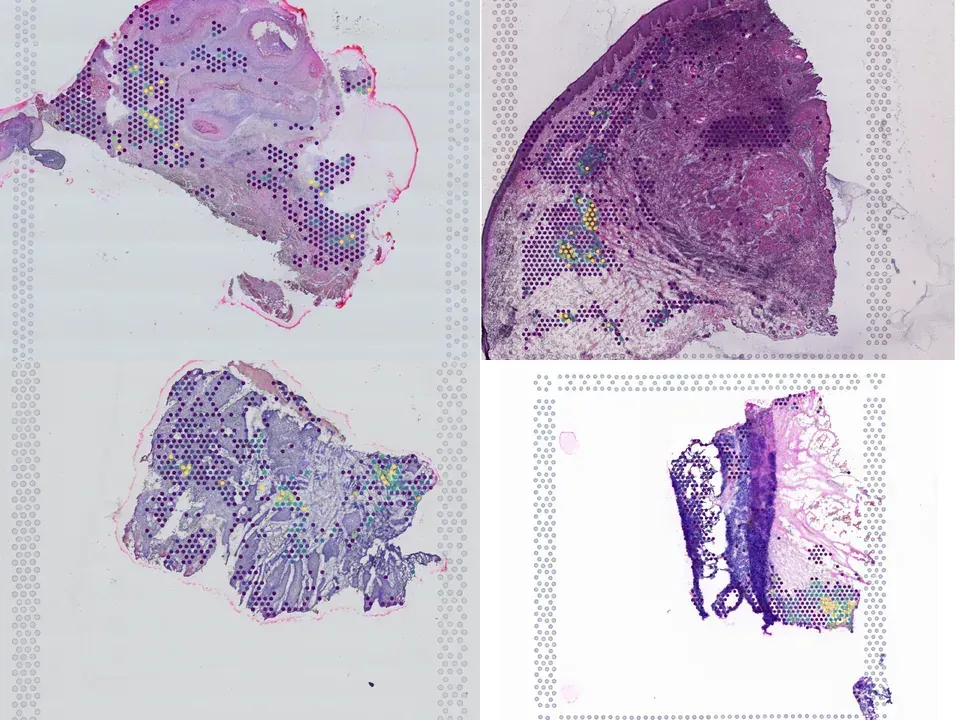
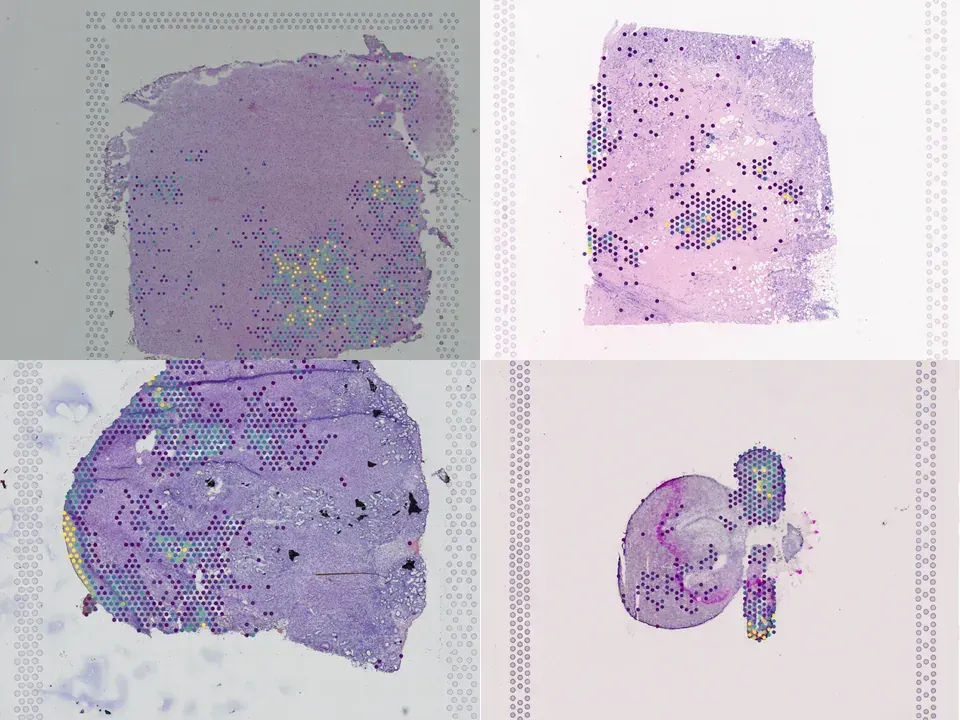
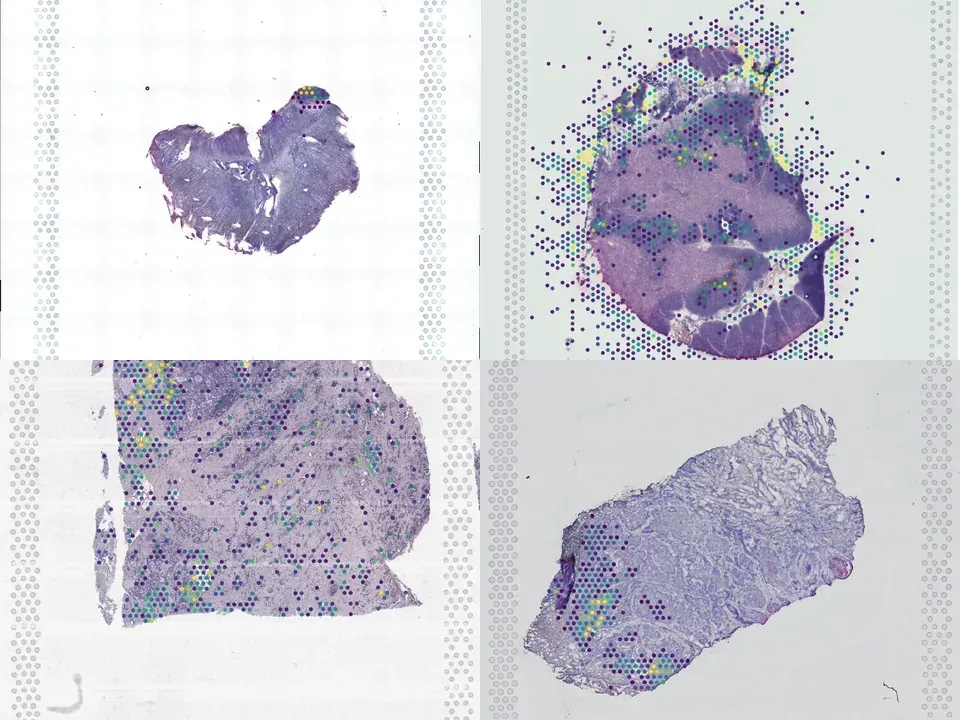
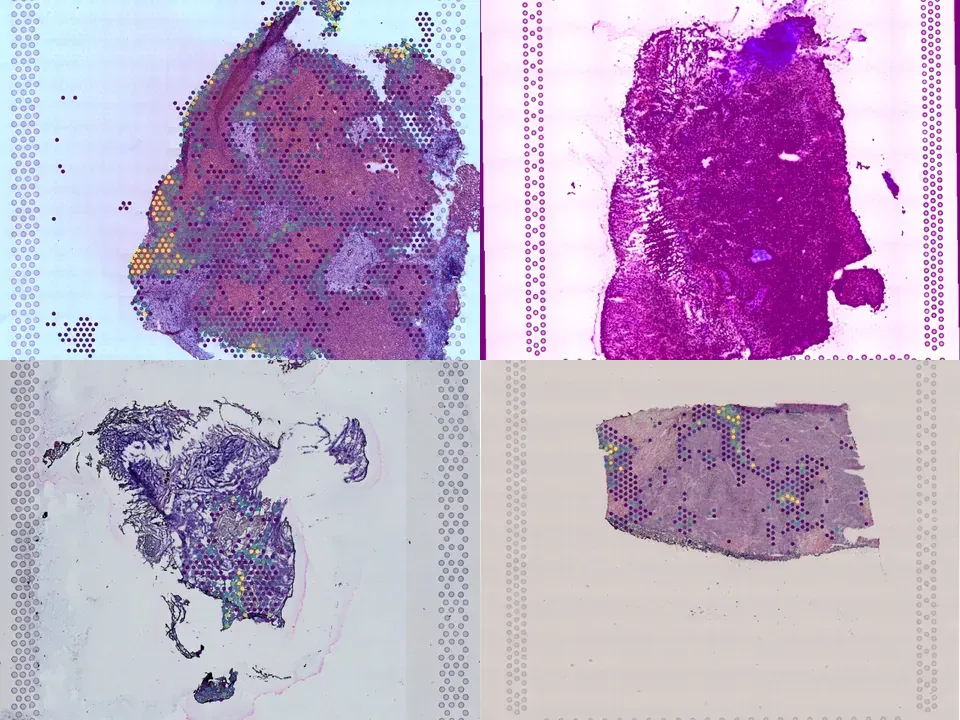
We performed the first integrative single-cell and spatial transcriptomic analysis on HPV-negative oral squamous cell carcinoma (OSCC) to comprehensively characterize tumor core (TC) and leading edge (LE) transcriptional architectures. We show that the TC and LE are characterized by unique transcriptional profiles, cellular compositions, and ligand-receptor interactions. We demonstrate that LE regions are conserved across multiple cancers while TC states are more tissue specific, highlighting the existence of common mechanisms underlying tumor progression and invasion. Additionally, we found our LE gene signature is associated with worse clinical outcomes while the TC gene signature is associated with improved prognosis across multiple cancer types. Finally, using an in silico modeling approach, we describe spatially-regulated patterns of cell development in OSCC that are predictably associated with drug response. Our work provides pan-cancer insights into TC and LE biology and a platform for data exploration (http://www.pboselab.ca/spatial_OSCC/) that can be foundational for developing novel targeted therapies.

Datasets12
Size~309 MB
AssayVisium
Samplehuman · oral cavity
KindTime course
Flag a data issue
PMID:37596273 ↗
Python · sddb client
from sddb import Catalog

cohort = Catalog().collection("geo-gse208253")
cohort.members        # the 12 datasets as a table

print(cohort.licenses())              # check the terms before you download

sdatas = cohort.to_dict()             # {uid: SpatialData}, cached locally
# or keep the .zarr files in a folder of your choice:
# sdatas = cohort.to_dict(dest="data/")
Python · lamindb

Needs pip install lamindb and network access to the Lamin database, which is limited during the alpha. If it fails, use the Client tab.

import lamindb as ln

db = ln.DB("scverse/spatialdata-db")
coll = db.Collection.get(key="geo-gse208253")
coll.ordered_artifacts.to_dataframe()   # the 12 members, ordered

# download every member .zarr to the local cache:
paths = [a.cache() for a in coll.ordered_artifacts.all()]
Shell
# sddb client: download every member .zarr into data/
sddb-cli download --collection geo-gse208253 --dest data/

Licenses: 12 NCBI GEO policy

Open in Vitessce
Visium
Human oral cavity
GSM6339631
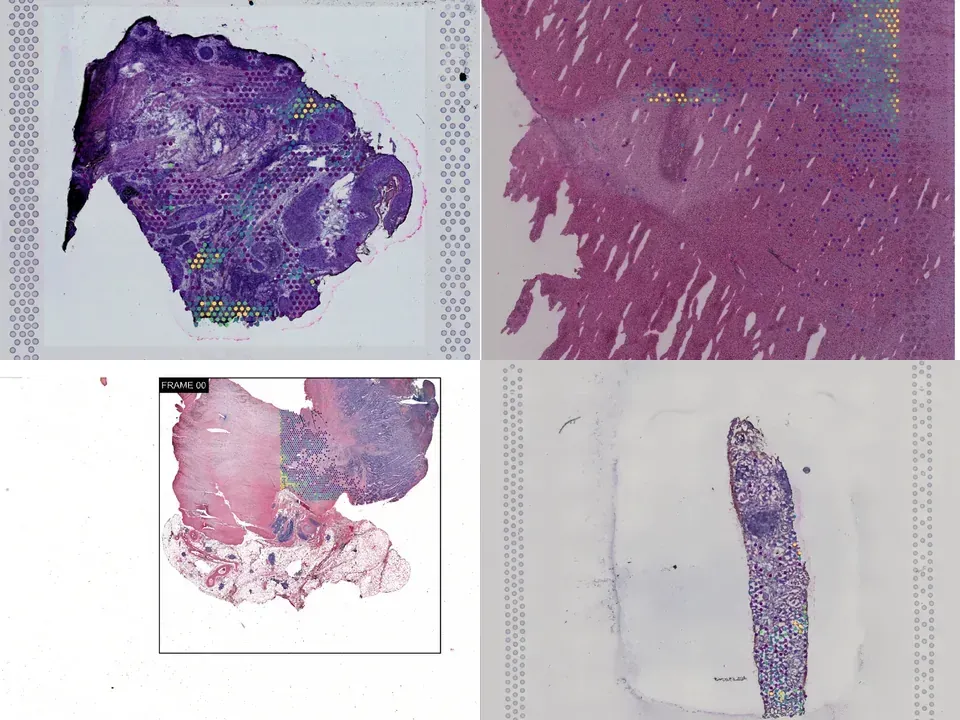
human oral cavity oral cavity squamous cell carcinoma 18.0 MB 1,185 spots bronze H&E NCBI GEO policy
TechnologyVisium
Organismhuman
Tissueoral cavity
Conditionoral cavity squamous cell carcinoma
Size18.0 MB
Spots1,185
Magnificationother · 3.346 µm/px
bronze H&E NCBI GEO policy Open in Vitessce
Open in Vitessce
Visium
Human oral cavity
GSM6339634
human oral cavity oral cavity squamous cell carcinoma 35.0 MB 2,046 spots bronze H&E NCBI GEO policy
TechnologyVisium
Organismhuman
Tissueoral cavity
Conditionoral cavity squamous cell carcinoma
Size35.0 MB
Spots2,046
bronze H&E NCBI GEO policy Open in Vitessce
Open in Vitessce
Visium
Human oral cavity
GSM6339642
human oral cavity oral cavity squamous cell carcinoma 20.0 MB 1,559 spots bronze H&E NCBI GEO policy
TechnologyVisium
Organismhuman
Tissueoral cavity
Conditionoral cavity squamous cell carcinoma
Size20.0 MB
Spots1,559
bronze H&E NCBI GEO policy Open in Vitessce
Open in Vitessce
Visium
Human oral cavity
GSM6339637
human oral cavity oral cavity squamous cell carcinoma 28.7 MB 2,860 spots bronze H&E NCBI GEO policy
TechnologyVisium
Organismhuman
Tissueoral cavity
Conditionoral cavity squamous cell carcinoma
Size28.7 MB
Spots2,860
bronze H&E NCBI GEO policy Open in Vitessce
Open in Vitessce
Visium
Human oral cavity
GSM6339635
human oral cavity oral cavity squamous cell carcinoma 22.9 MB 1,678 spots bronze H&E NCBI GEO policy
TechnologyVisium
Organismhuman
Tissueoral cavity
Conditionoral cavity squamous cell carcinoma
Size22.9 MB
Spots1,678
bronze H&E NCBI GEO policy Open in Vitessce
Open in Vitessce
Visium
Human oral cavity
GSM6339633
human oral cavity oral cavity squamous cell carcinoma 20.5 MB 969 spots bronze H&E NCBI GEO policy
TechnologyVisium
Organismhuman
Tissueoral cavity
Conditionoral cavity squamous cell carcinoma
Size20.5 MB
Spots969
bronze H&E NCBI GEO policy Open in Vitessce
Open in Vitessce
Visium
Human oral cavity
GSM6339640
human oral cavity oral cavity squamous cell carcinoma 31.3 MB 2,731 spots bronze H&E NCBI GEO policy
TechnologyVisium
Organismhuman
Tissueoral cavity
Conditionoral cavity squamous cell carcinoma
Size31.3 MB
Spots2,731
bronze H&E NCBI GEO policy Open in Vitessce
Open in Vitessce
Visium
Human oral cavity
GSM6339641
human oral cavity oral cavity squamous cell carcinoma 22.9 MB 2,130 spots bronze H&E NCBI GEO policy
TechnologyVisium
Organismhuman
Tissueoral cavity
Conditionoral cavity squamous cell carcinoma
Size22.9 MB
Spots2,130
bronze H&E NCBI GEO policy Open in Vitessce
Open in Vitessce
Visium
Human oral cavity
GSM6339636
human oral cavity oral cavity squamous cell carcinoma 28.7 MB 3,311 spots bronze H&E NCBI GEO policy
TechnologyVisium
Organismhuman
Tissueoral cavity
Conditionoral cavity squamous cell carcinoma
Size28.7 MB
Spots3,311
bronze H&E NCBI GEO policy Open in Vitessce
Open in Vitessce
Visium
Human oral cavity
GSM6339632
human oral cavity oral cavity squamous cell carcinoma 23.0 MB 1,836 spots bronze H&E NCBI GEO policy
TechnologyVisium
Organismhuman
Tissueoral cavity
Conditionoral cavity squamous cell carcinoma
Size23.0 MB
Spots1,836
bronze H&E NCBI GEO policy Open in Vitessce
Open in Vitessce
Visium
Human oral cavity
GSM6339639
human oral cavity oral cavity squamous cell carcinoma 30.3 MB 3,591 spots bronze H&E NCBI GEO policy
TechnologyVisium
Organismhuman
Tissueoral cavity
Conditionoral cavity squamous cell carcinoma
Size30.3 MB
Spots3,591
bronze H&E NCBI GEO policy Open in Vitessce
Open in Vitessce
Visium
Human oral cavity
GSM6339638
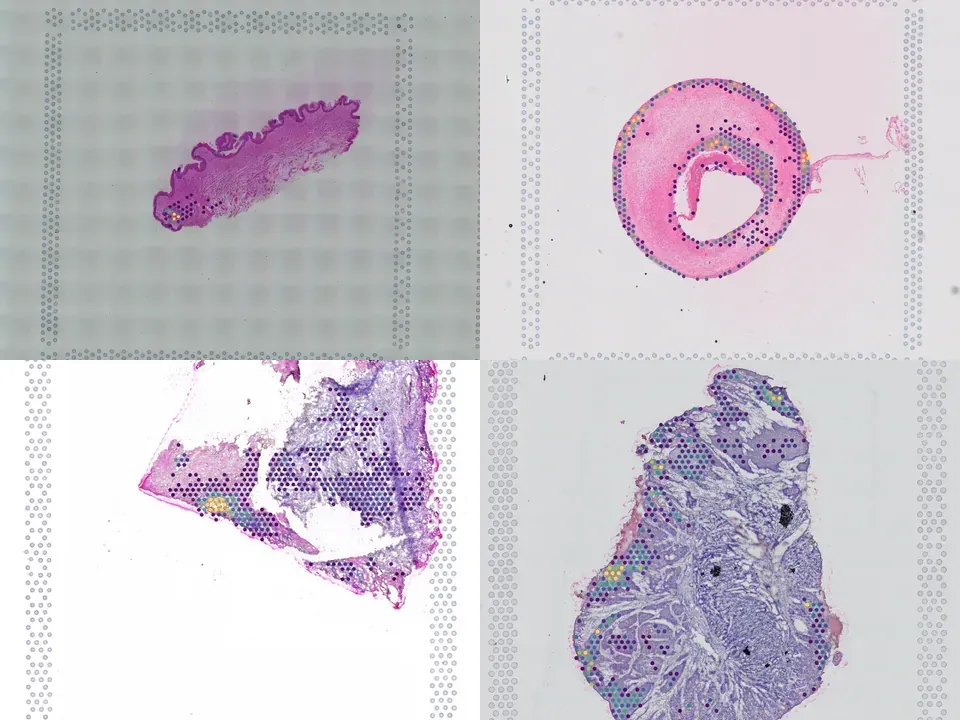
human oral cavity oral cavity squamous cell carcinoma 28.1 MB 2,475 spots bronze H&E NCBI GEO policy
TechnologyVisium
Organismhuman
Tissueoral cavity
Conditionoral cavity squamous cell carcinoma
Size28.1 MB
Spots2,475
Magnificationother · 3.324 µm/px
bronze H&E NCBI GEO policy Open in Vitessce
Cite this collection

doi.org/10.1038/s41467-023-40271-4 ↗
BibTeX
@article{Arora_2023,
  title = {Spatial transcriptomics reveals distinct and conserved tumor core and edge architectures that predict survival and targeted therapy response},
  volume = {14},
  ISSN = {2041-1723},
  url = {http://dx.doi.org/10.1038/s41467-023-40271-4},
  DOI = {10.1038/s41467-023-40271-4},
  number = {1},
  journal = {Nature Communications},
  publisher = {Springer Science and Business Media LLC},
  author = {Arora, Rohit and Cao, Christian and Kumar, Mehul and Sinha, Sarthak and Chanda, Ayan and McNeil, Reid and Samuel, Divya and Arora, Rahul K. and Matthews, T. Wayne and Chandarana, Shamir and Hart, Robert and Dort, Joseph C. and Biernaskie, Jeff and Neri, Paola and Hyrcza, Martin D. and Bose, Pinaki},
  year = {2023},
  month = Aug
}