
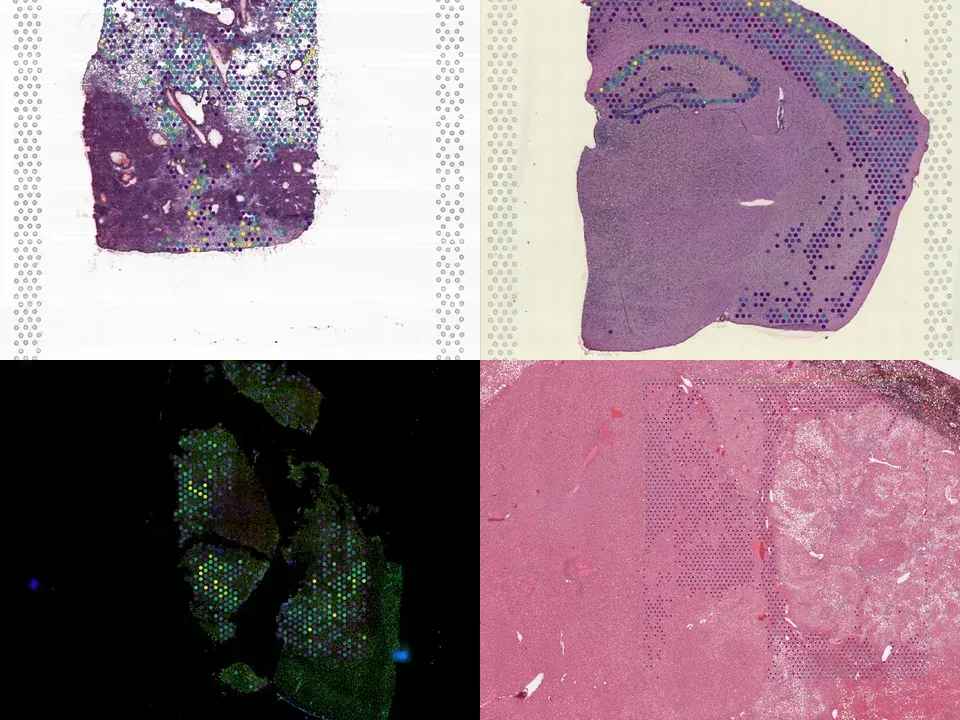
Mouse lung
GSM6439492
mouse lung influenza 39.5 MB 1,899 spots bronze H&E NCBI GEO policy
TechnologyVisium
Organismmouse
Tissuelung
Conditioninfluenza
Spots1,899
Magnificationother · 3.479 µm/px
bronze H&E NCBI GEO policy
As observed in mice with genetic depletion of stem cells, epithelial plasticity is a critical component of tissue repair in response to injury; however, the physiological relevance of this process and the involved progenitor populations are not well understood. Severe respiratory viral infection and chronic lung disease share pathological features including stem cell loss in the gas-exchange regions, basal cell (BC) hyperplasia in small airways, and innate immune activation. Collectively, these processes contribute to epithelial remodeling and loss of diffusion capacity. Here, we show that small airways harbor a previously undescribed lineage of secretory cells, intralobar serous (IS) cells, that are activated to assume BC fates following influenza virus infection. Nascent BC were distinguished from pre-existing BC by high expression of IL-22Ra1 and a dependency on innate immune activation and local IL-22 production for self-renewal and colonization of injured alveoli. Resolution of virus-elicited inflammation and the associated decline in IL-22 signaling resulted in basal to serous re-differentiation in repopulated alveoli, and increased local expression of antimicrobial factors, but failed to replace normal alveolar epithelium. We define a mechanism whereby epithelial plasticity confers protection against mortality from acute respiratory viral infection but has potential to contribute to progressive lung remodeling and life-threatening declines in lung function among patients with chronic lung disease.
from sddb import Catalog

cohort = Catalog().collection("geo-gse184384")
cohort.members        # the 2 datasets as a table

print(cohort.licenses())              # check the terms before you download

sdatas = cohort.to_dict()             # {uid: SpatialData}, cached locally
# or keep the .zarr files in a folder of your choice:
# sdatas = cohort.to_dict(dest="data/")Needs pip install lamindb and network access to the Lamin database, which is limited during the alpha. If it fails, use the Client tab.
import lamindb as ln

db = ln.DB("scverse/spatialdata-db")
coll = db.Collection.get(key="geo-gse184384")
coll.ordered_artifacts.to_dataframe()   # the 2 members, ordered

# download every member .zarr to the local cache:
paths = [a.cache() for a in coll.ordered_artifacts.all()]# sddb client: download every member .zarr into data/
sddb-cli download --collection geo-gse184384 --dest data/Licenses: 2 NCBI GEO policy
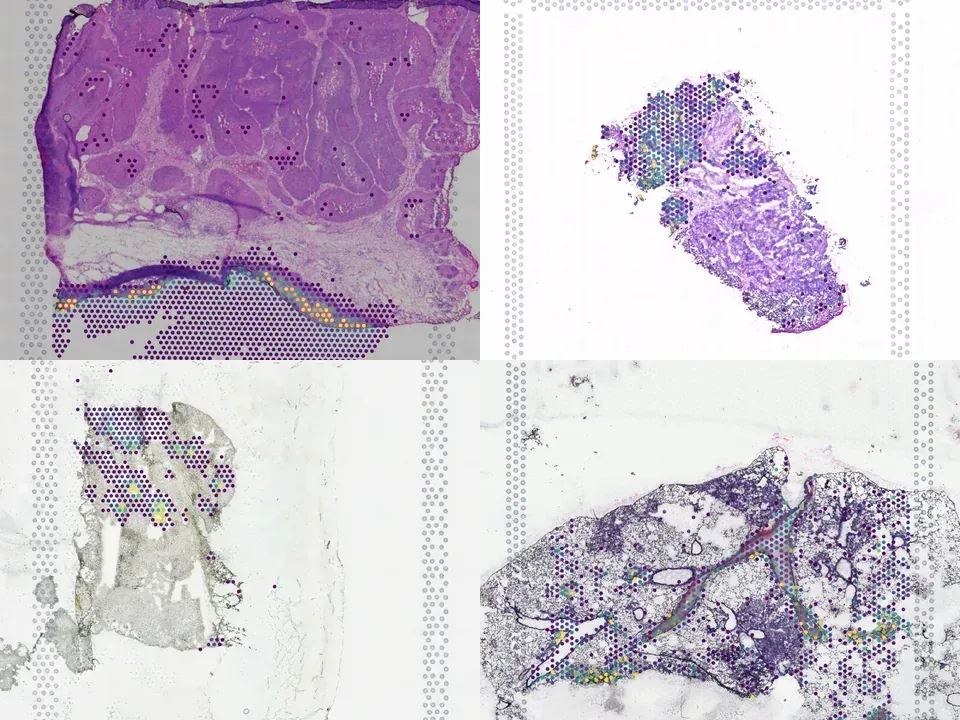
No linked publication found — please cite the data source.