
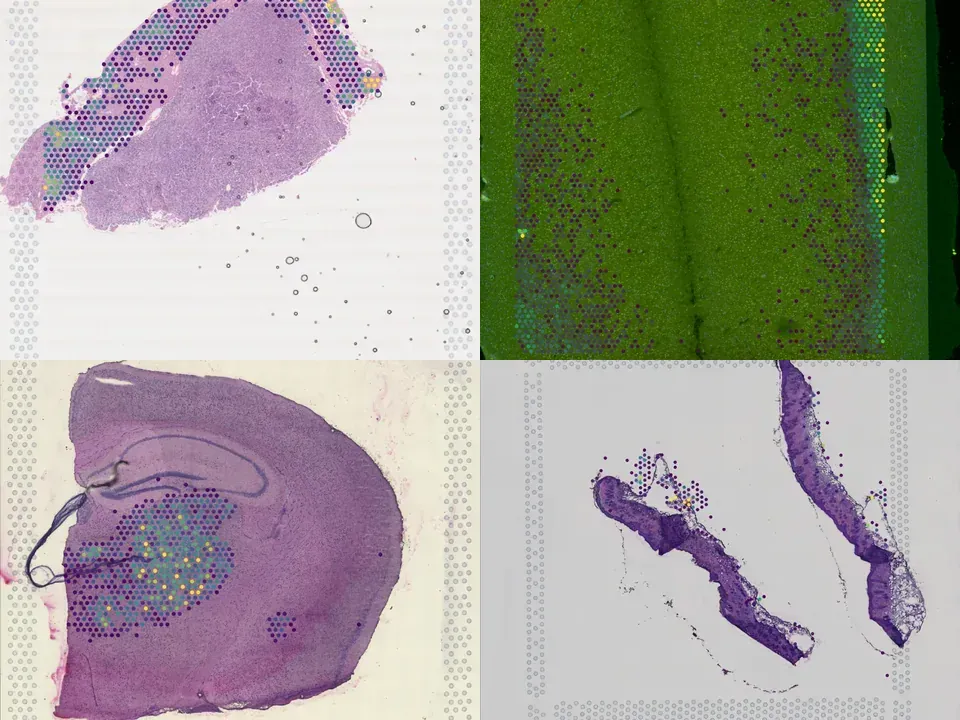
Mouse skin of body
GSM6443210
mouse skin of body 18.3 MB 4,992 spots bronze H&E NCBI GEO policy
TechnologyVisium
Organismmouse
Tissueskin of body
Spots4,992
Magnificationother · 4.053 µm/px
bronze H&E NCBI GEO policy
In the skin, tissue injury results in fibrosis in the form of scars composed of dense extracellular matrix deposited by fibroblasts. The therapeutic goal of regenerative wound healing has remained elusive in part because principles of fibroblast programming and adaptive response to injury remain incompletely understood. Here, we present a multimodal -omics platform for the comprehensive study of cell populations in complex tissue, which has allowed us to characterize the cells involved in wound healing across both time and space. We employ a stented wound model that recapitulates human tissue repair kinetics and multiple Rainbow transgenic lines to precisely track fibroblast fate during the physiologic response to injury. Through integrated analysis of single cell chromatin landscapes and gene expression states, coupled with spatial transcriptomic profiling, we are able to impute fibroblast epigenomes with temporospatial resolution. This has allowed us to define the mechanisms controlling cell fate during migration, proliferation, and differentiation following tissue injury and thereby reexamine the canonical phases of wound healing. We show that wounding triggers a polyclonal proliferation of tissue-resident, mechano-responsive fibroblasts, the subpopulations of which inhabit spatially-distinct regions within the wound and harbor distinct activities. These findings have broad implications for the study of tissue repair in complex organ systems.
from sddb import Catalog

cohort = Catalog().collection("geo-gse178758")
cohort.members        # the 4 datasets as a table

print(cohort.licenses())              # check the terms before you download

sdatas = cohort.to_dict()             # {uid: SpatialData}, cached locally
# or keep the .zarr files in a folder of your choice:
# sdatas = cohort.to_dict(dest="data/")Needs pip install lamindb and network access to the Lamin database, which is limited during the alpha. If it fails, use the Client tab.
import lamindb as ln

db = ln.DB("scverse/spatialdata-db")
coll = db.Collection.get(key="geo-gse178758")
coll.ordered_artifacts.to_dataframe()   # the 4 members, ordered

# download every member .zarr to the local cache:
paths = [a.cache() for a in coll.ordered_artifacts.all()]# sddb client: download every member .zarr into data/
sddb-cli download --collection geo-gse178758 --dest data/Licenses: 4 NCBI GEO policy
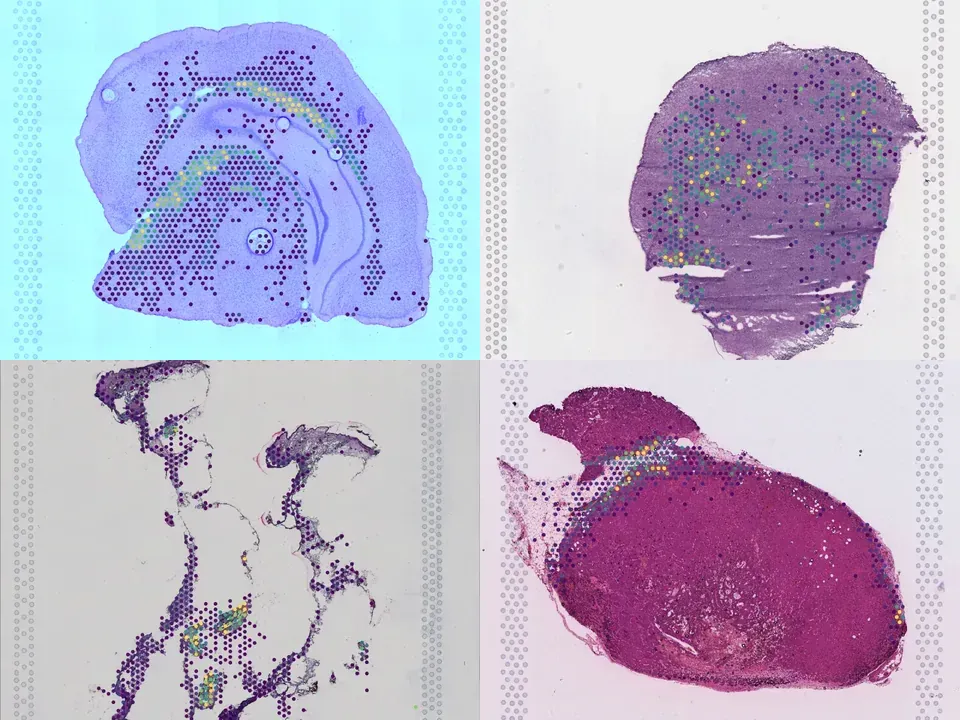
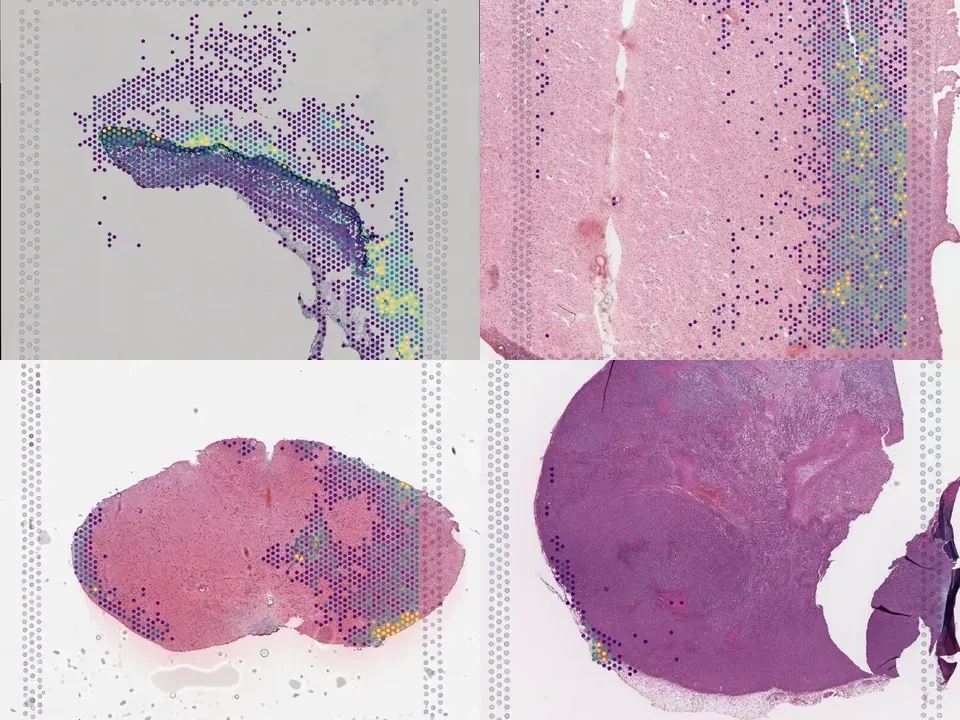
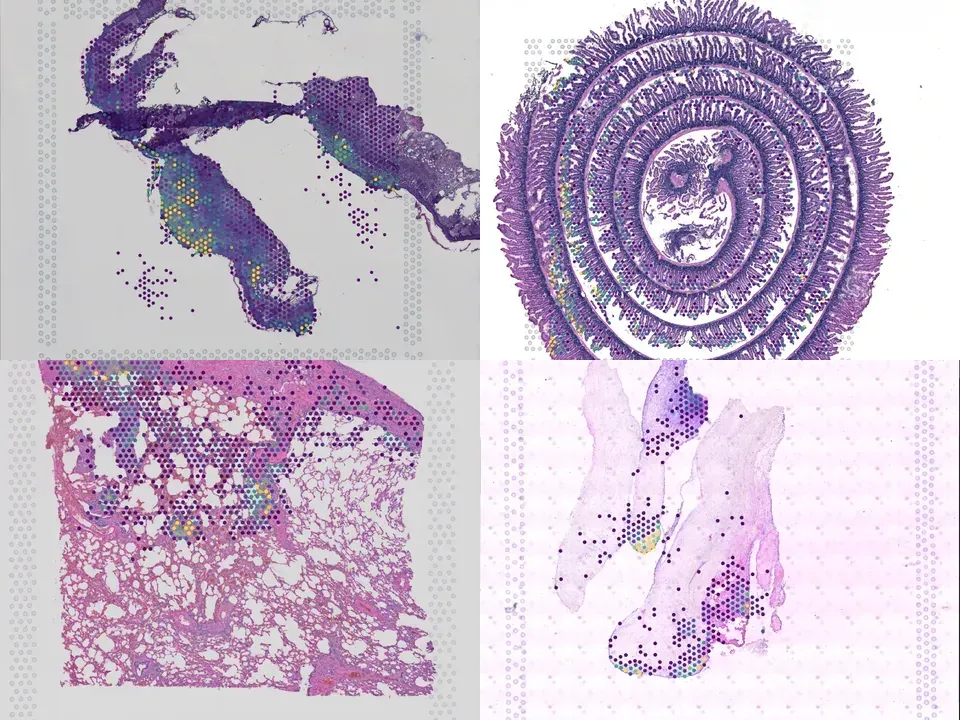
@article{Foster_2021,
  title = {Integrated spatial multiomics reveals fibroblast fate during tissue repair},
  volume = {118},
  ISSN = {1091-6490},
  url = {http://dx.doi.org/10.1073/pnas.2110025118},
  DOI = {10.1073/pnas.2110025118},
  number = {41},
  journal = {Proceedings of the National Academy of Sciences},
  publisher = {National Academy of Sciences},
  author = {Foster, Deshka S. and Januszyk, Michael and Yost, Kathryn E. and Chinta, Malini S. and Gulati, Gunsagar S. and Nguyen, Alan T. and Burcham, Austin R. and Salhotra, Ankit and Ransom, R. Chase and Henn, Dominic and Chen, Kellen and Mascharak, Shamik and Tolentino, Karen and Titan, Ashley L. and Jones, R. Ellen and da Silva, Oscar and Leavitt, W. Tripp and Marshall, Clement D. and des Jardins-Park, Heather E. and Hu, Michael S. and Wan, Derrick C. and Wernig, Gerlinde and Wagh, Dhananjay and Coller, John and Norton, Jeffrey A. and Gurtner, Geoffrey C. and Newman, Aaron M. and Chang, Howard Y. and Longaker, Michael T.},
  year = {2021},
  month = Oct
}