
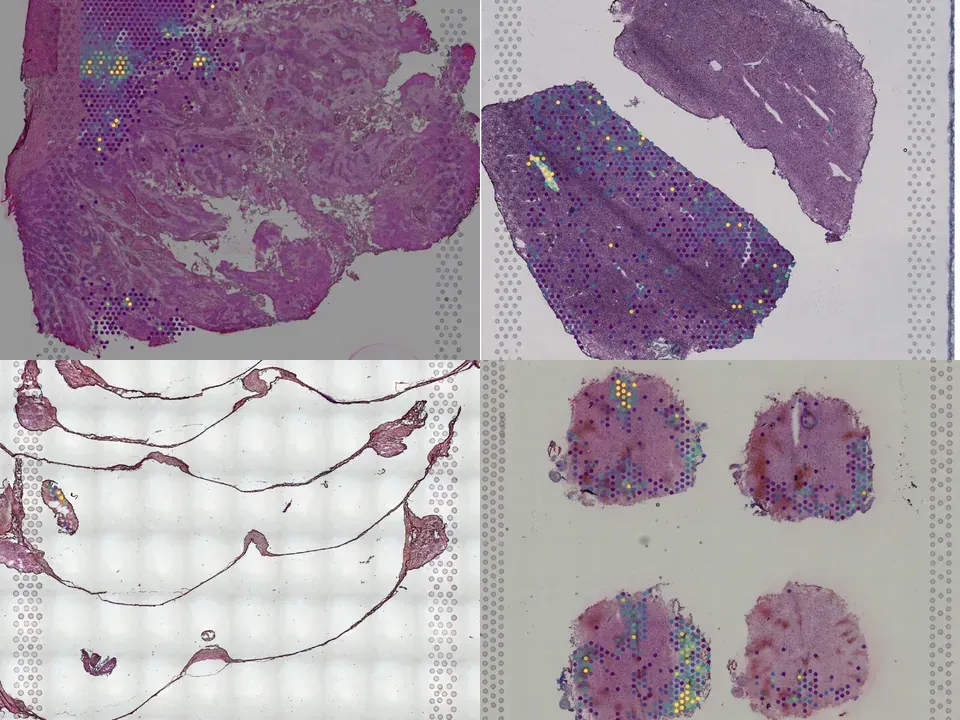
Mouse sagittal suture
GSM5291683
mouse sagittal suture 13.7 MB 423 spots bronze H&E NCBI GEO policy
TechnologyVisium
Organismmouse
Tissuesagittal suture
Spots423
Magnificationother · 3.444 µm/px
bronze H&E NCBI GEO policy
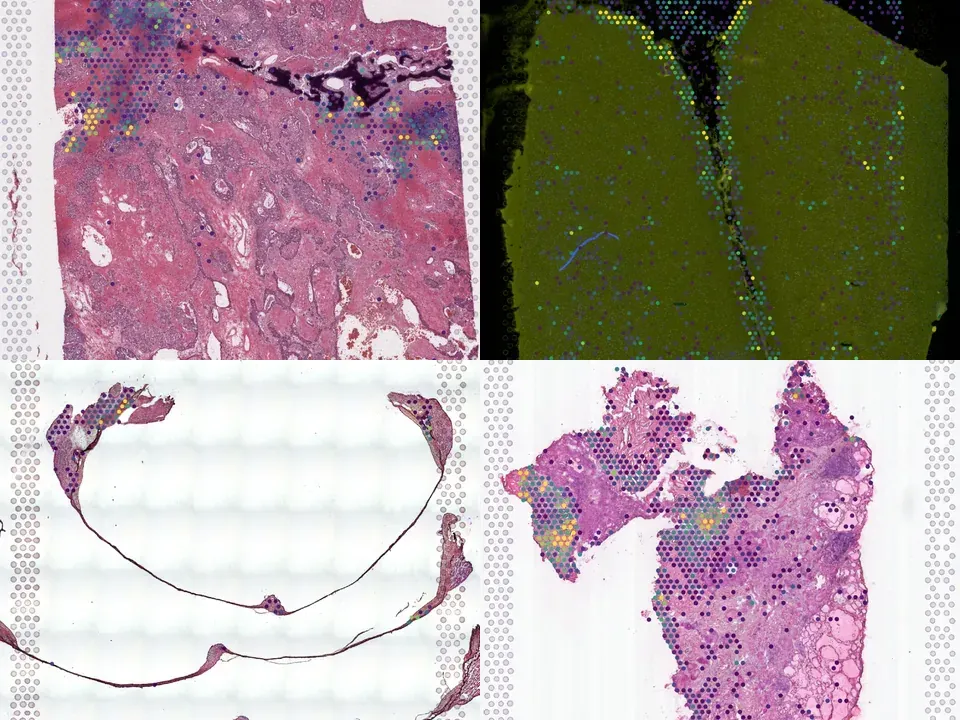
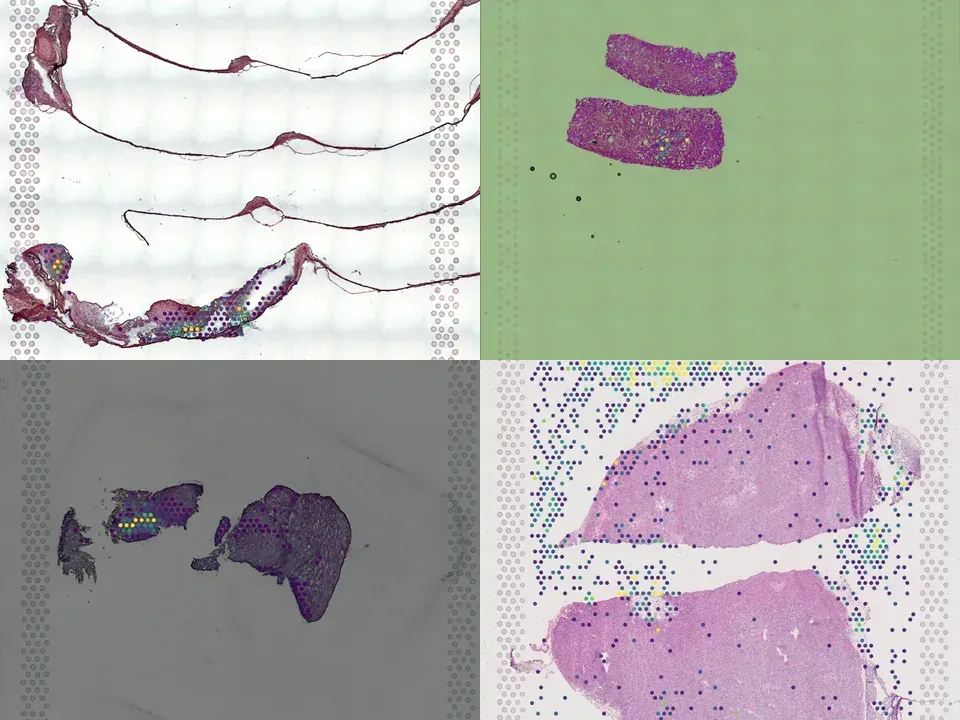
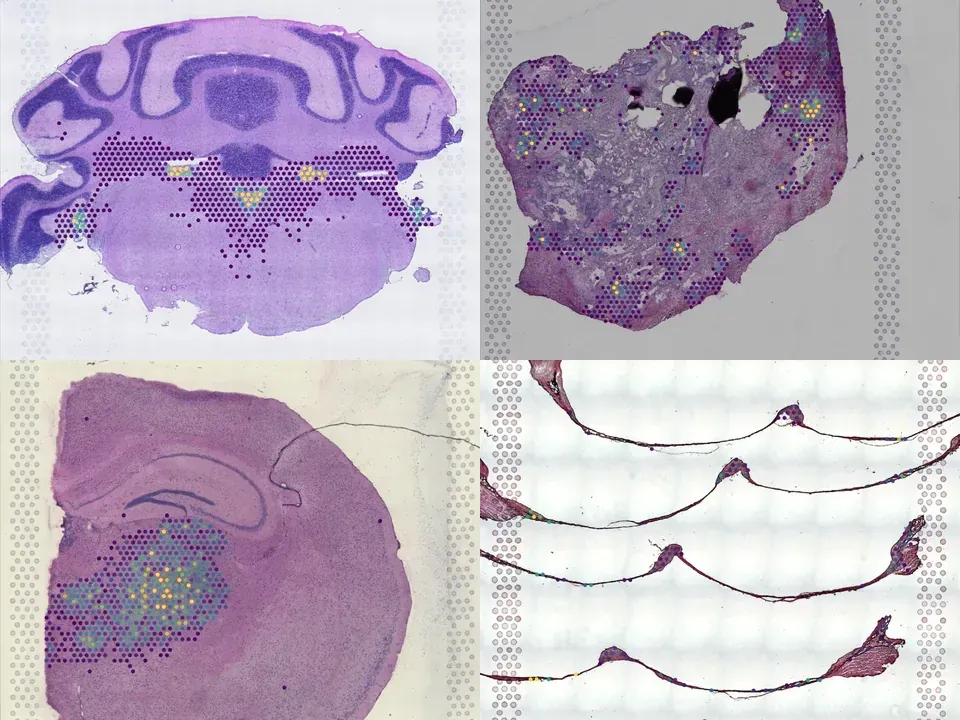
The patterning and ossification of the mammalian skeleton requires the coordinated actions of both intrinsic bone morphogens and extrinsic neurovascular signals, which function in a temporal and spatial fashion to control mesenchymal progenitor cell (MPC) fate. Here we show genetic inhibition of Tropomyosin receptor kinase A (TrkA) sensory nerve innervation of the developing cranium results in premature calvarial suture closure, associated with a decrease in suture MPC proliferation. In vitro, axons from peripheral afferent neurons derived from DRGs of wild type mice induce MPC proliferation in a spatially-restricted manner via a soluble factor when co-cultured in microfluidic chambers. Comparative spatial transcriptomic analysis of the cranial sutures in vivo confirmed a positive association between sensory axons and proliferative MPCs. SpatialTime analysis across the developing suture revealed regional-specific alterations in BMP and TGFβ signaling pathway transcripts in response to TrkA inhibition. RNA sequencing of DRG cell bodies following direct axonal co-culture with MPCs confirmed alterations in BMP/TGFβ signaling pathway transcripts. Among these, the BMP inhibitor FSTL1 (Follistatin-like 1) replicated key features of the neural-to-bone influence, including mitogenic and anti-osteogenic effects via inhibition of BMP/TGFβ signaling. Taken together, our results demonstrate that sensory nerve-derived signals, including FSTL1, function to coordinate cranial bone patterning by regulating MPC proliferation and differentiation in the suture mesenchyme.
from sddb import Catalog

cohort = Catalog().collection("geo-gse174313")
cohort.members        # the 4 datasets as a table

print(cohort.licenses())              # check the terms before you download

sdatas = cohort.to_dict()             # {uid: SpatialData}, cached locally
# or keep the .zarr files in a folder of your choice:
# sdatas = cohort.to_dict(dest="data/")Needs pip install lamindb and network access to the Lamin database, which is limited during the alpha. If it fails, use the Client tab.
import lamindb as ln

db = ln.DB("scverse/spatialdata-db")
coll = db.Collection.get(key="geo-gse174313")
coll.ordered_artifacts.to_dataframe()   # the 4 members, ordered

# download every member .zarr to the local cache:
paths = [a.cache() for a in coll.ordered_artifacts.all()]# sddb client: download every member .zarr into data/
sddb-cli download --collection geo-gse174313 --dest data/Licenses: 4 NCBI GEO policy
@article{Tower_2021,
  title = {Spatial transcriptomics reveals a role for sensory nerves in preserving cranial suture patency through modulation of BMP/TGF-β signaling},
  volume = {118},
  ISSN = {1091-6490},
  url = {http://dx.doi.org/10.1073/pnas.2103087118},
  DOI = {10.1073/pnas.2103087118},
  number = {42},
  journal = {Proceedings of the National Academy of Sciences},
  publisher = {National Academy of Sciences},
  author = {Tower, Robert J. and Li, Zhu and Cheng, Yu-Hao and Wang, Xue-Wei and Rajbhandari, Labchan and Zhang, Qian and Negri, Stefano and Uytingco, Cedric R. and Venkatesan, Arun and Zhou, Feng-Quan and Cahan, Patrick and James, Aaron W. and Clemens, Thomas L.},
  year = {2021},
  month = Oct
}