
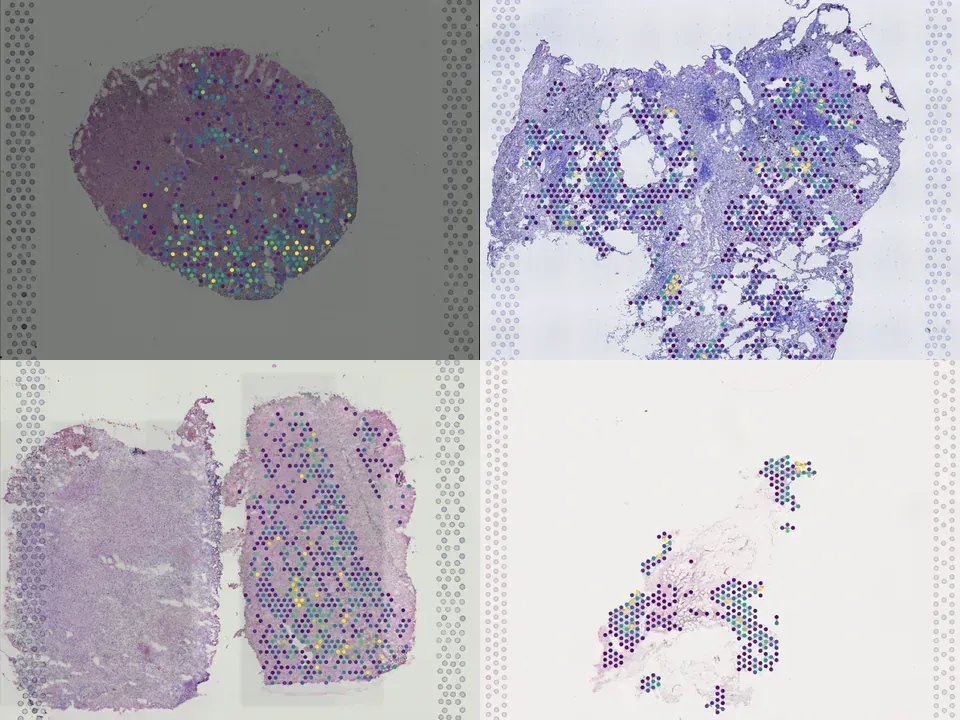
Human lung
GSM5255580
human lung 33.4 MB 2,683 spots bronze H&E NCBI GEO policy
TechnologyVisium
Organismhuman
Tissuelung
Spots2,683
bronze H&E NCBI GEO policy
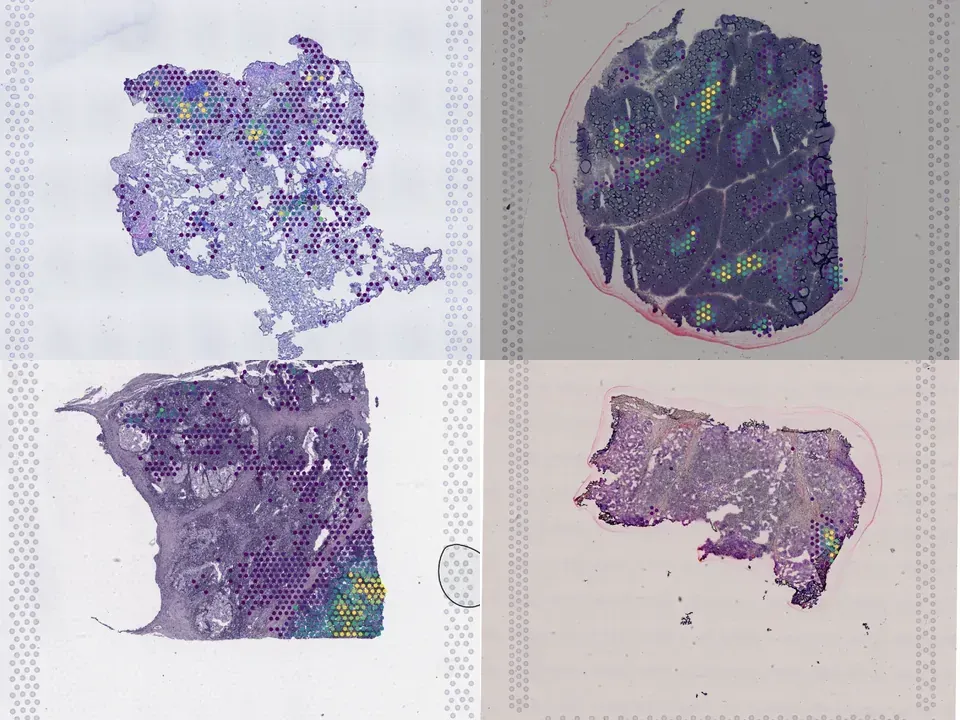
We developed a method, CellDART, which estimates the spatial distribution of cells defined by single-cell level data using domain adaptation of neural networks, and applied to the spatial mapping of human lung tissue. The neural network that predicts the cell proportion in a pseudospot, a virtual mixture of cells from single-cell data, is translated to decompose the cell types in each spatial barcoded region. CellDART elucidated the cell type predominance defined by the human lung cell atlas across the human lung tissue compartments and it corresponded to the known prevalent cell types.
from sddb import Catalog

cohort = Catalog().collection("geo-gse172416")
cohort.members        # the 2 datasets as a table

print(cohort.licenses())              # check the terms before you download

sdatas = cohort.to_dict()             # {uid: SpatialData}, cached locally
# or keep the .zarr files in a folder of your choice:
# sdatas = cohort.to_dict(dest="data/")Needs pip install lamindb and network access to the Lamin database, which is limited during the alpha. If it fails, use the Client tab.
import lamindb as ln

db = ln.DB("scverse/spatialdata-db")
coll = db.Collection.get(key="geo-gse172416")
coll.ordered_artifacts.to_dataframe()   # the 2 members, ordered

# download every member .zarr to the local cache:
paths = [a.cache() for a in coll.ordered_artifacts.all()]# sddb client: download every member .zarr into data/
sddb-cli download --collection geo-gse172416 --dest data/Licenses: 2 NCBI GEO policy
No linked publication found — please cite the data source.