
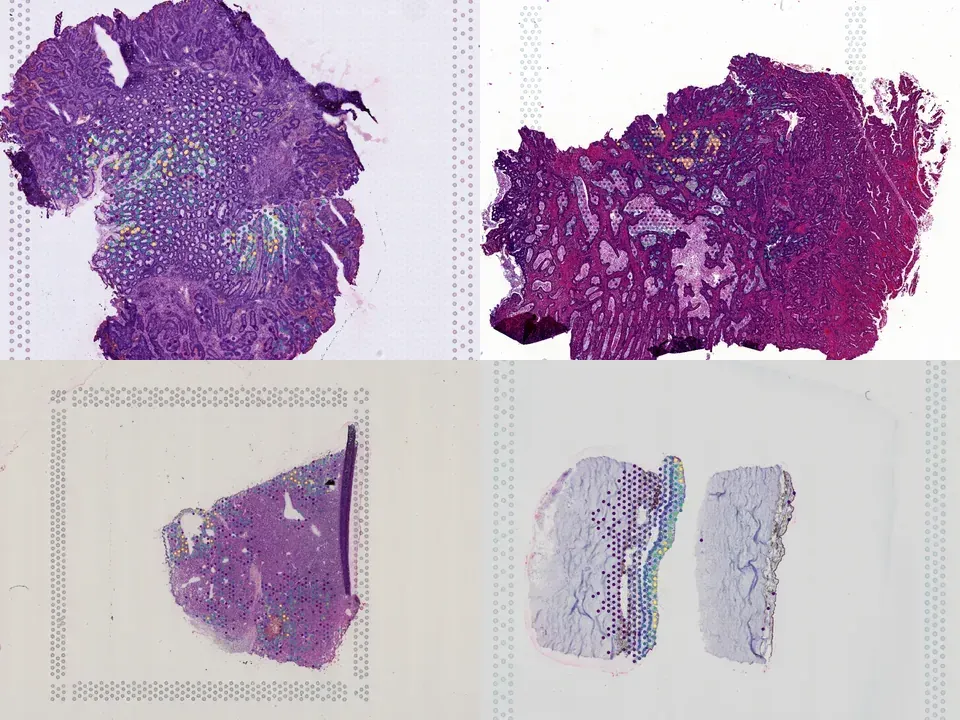
Human intestine
ZEN48
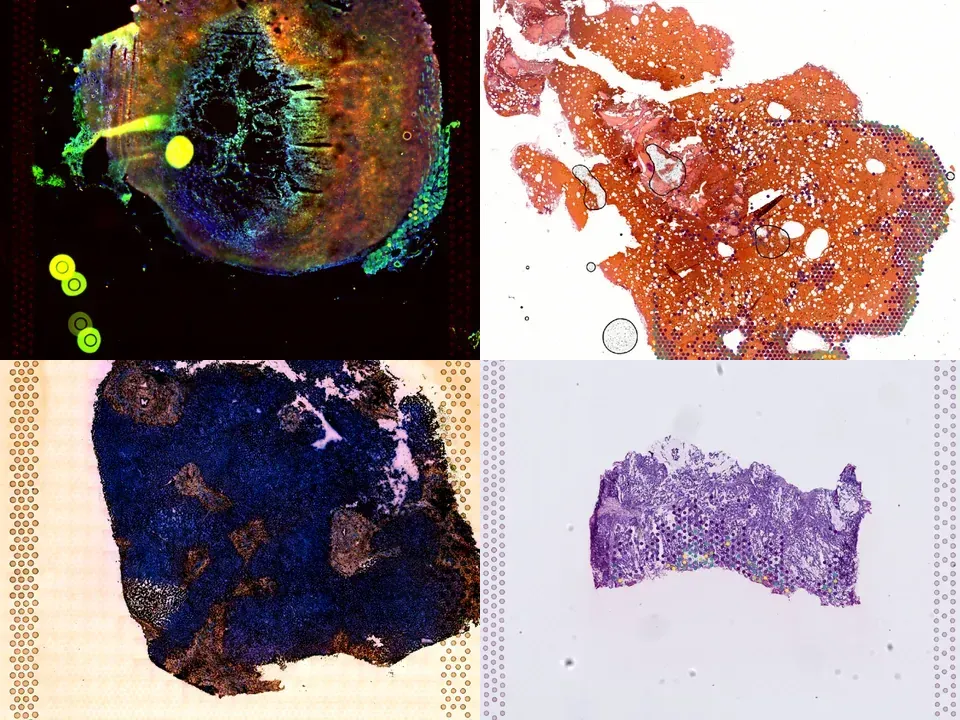
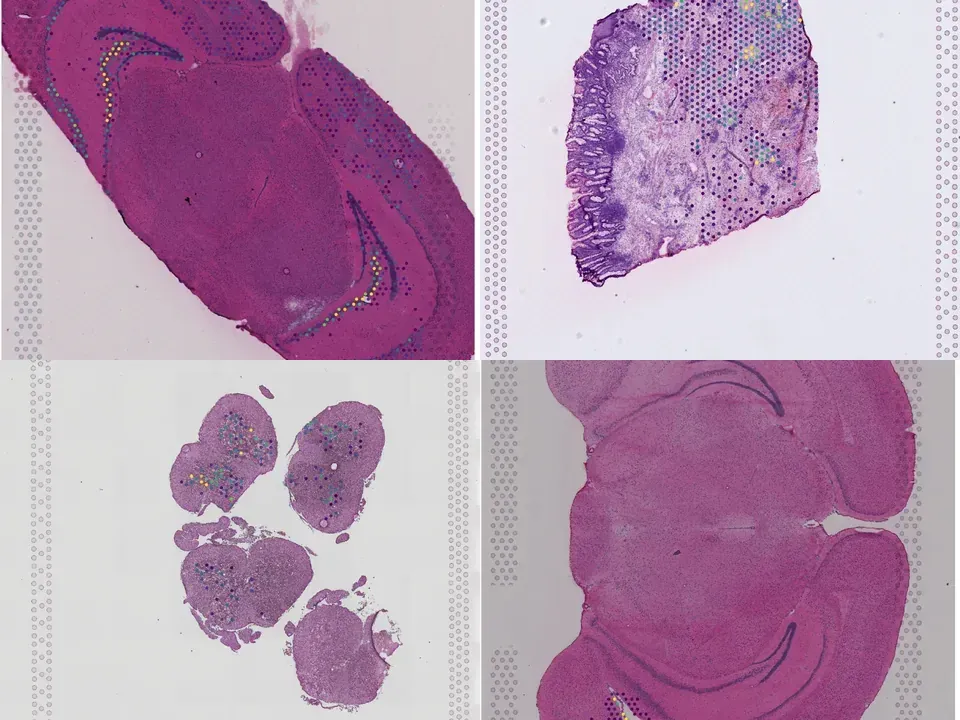
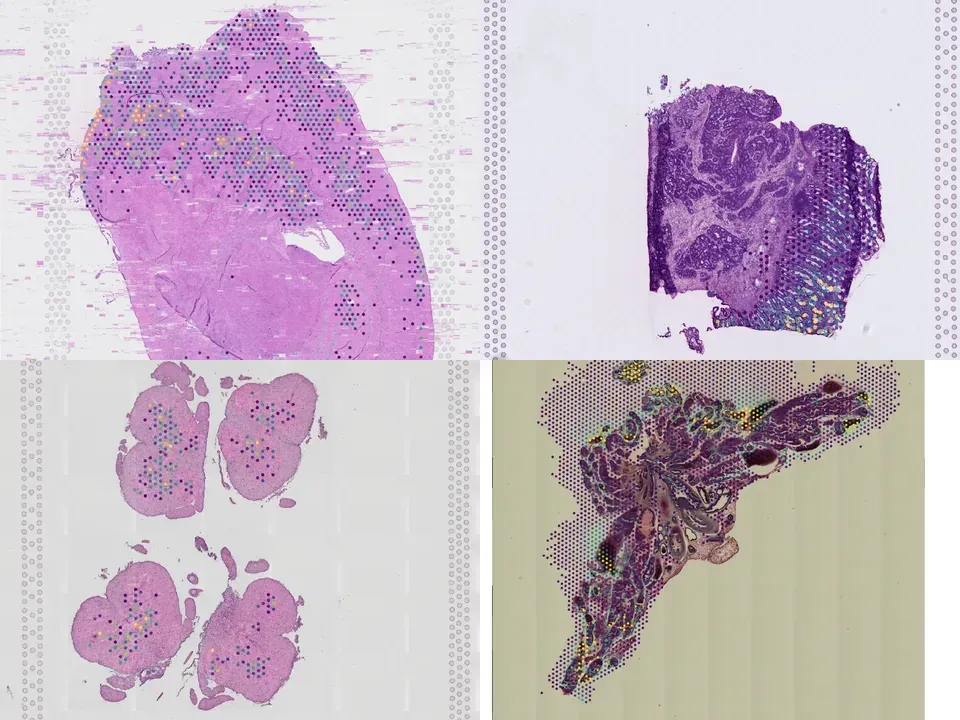
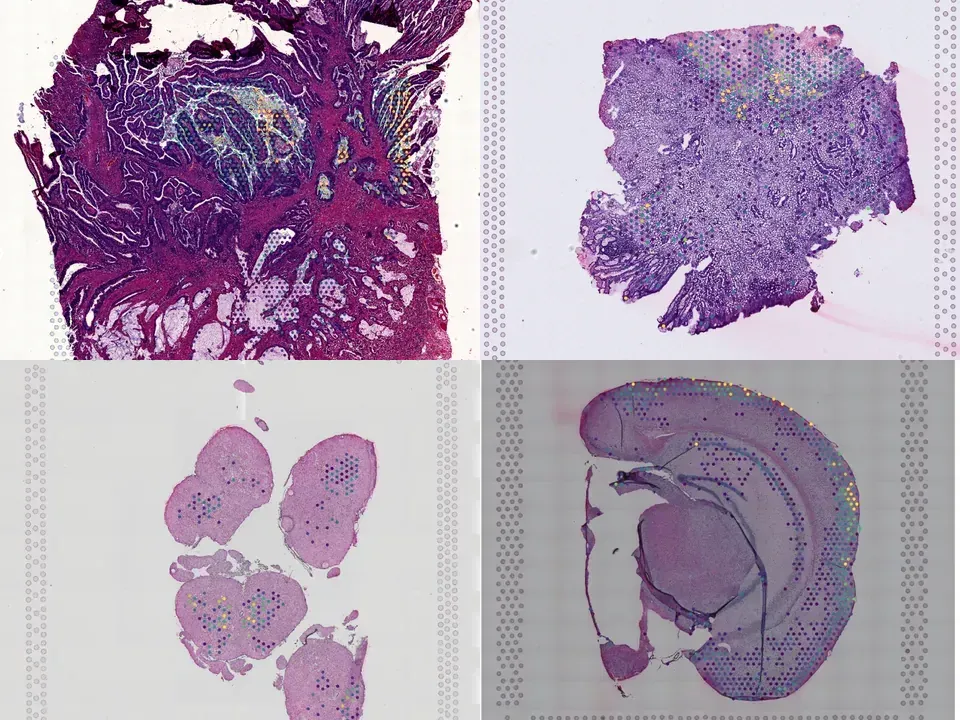
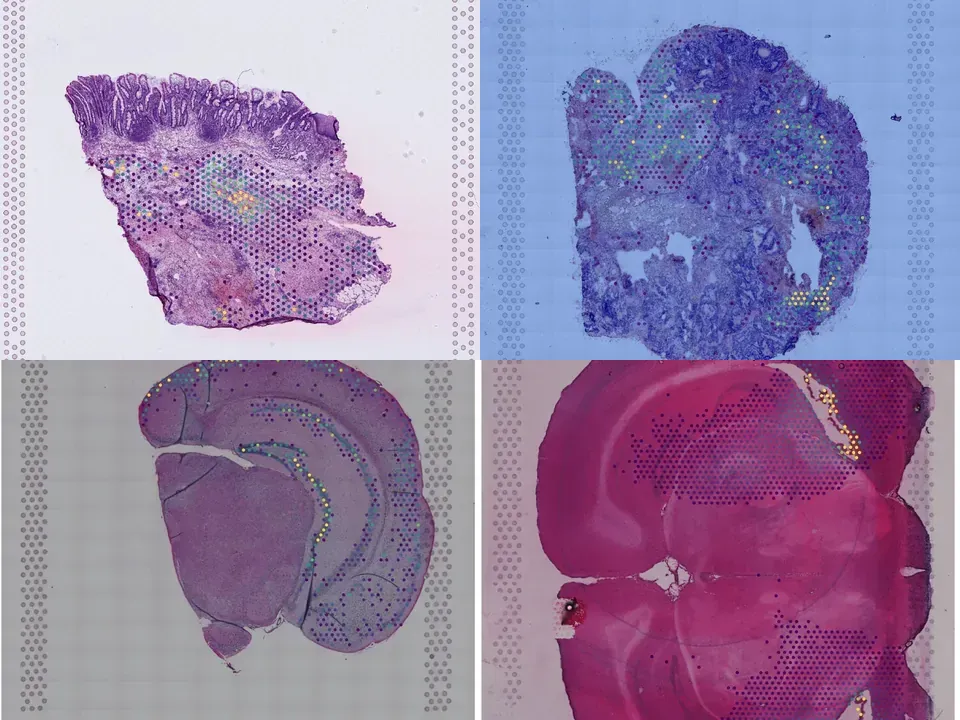
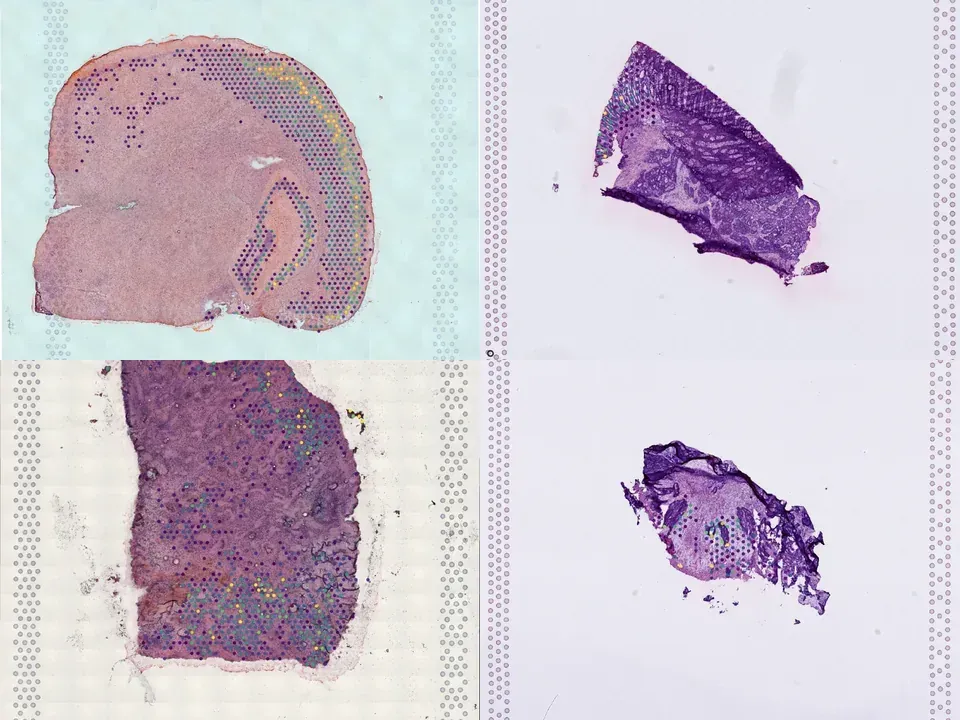
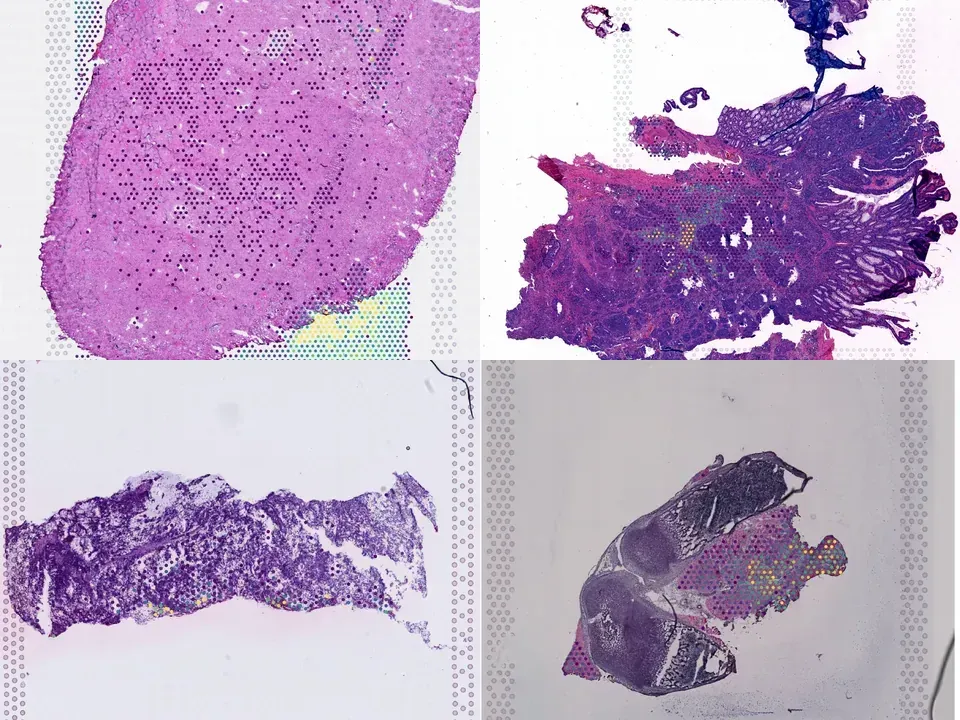
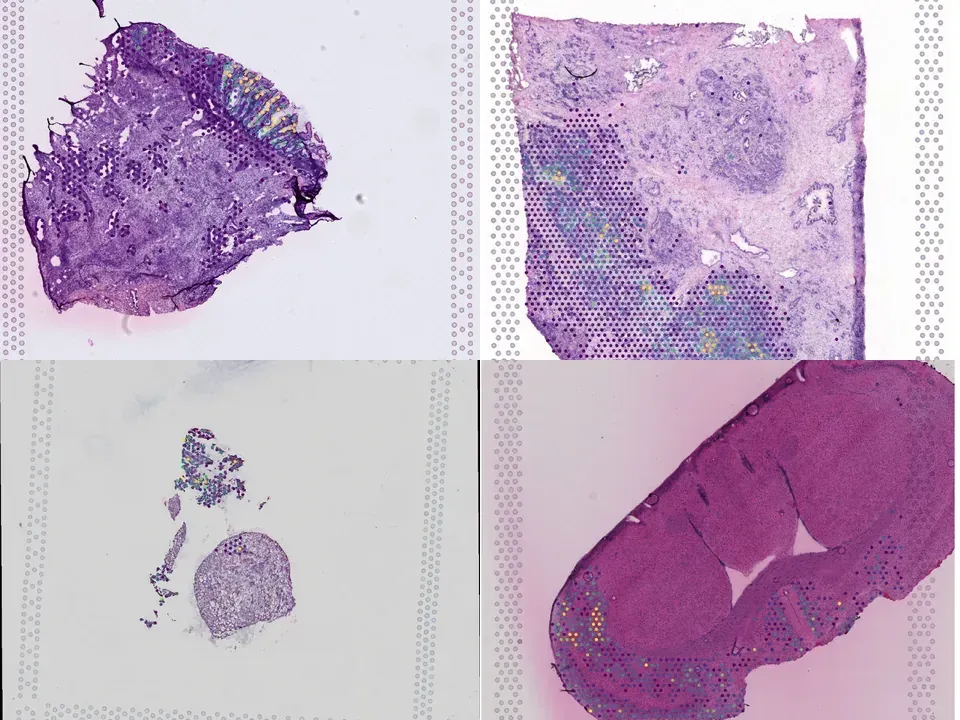
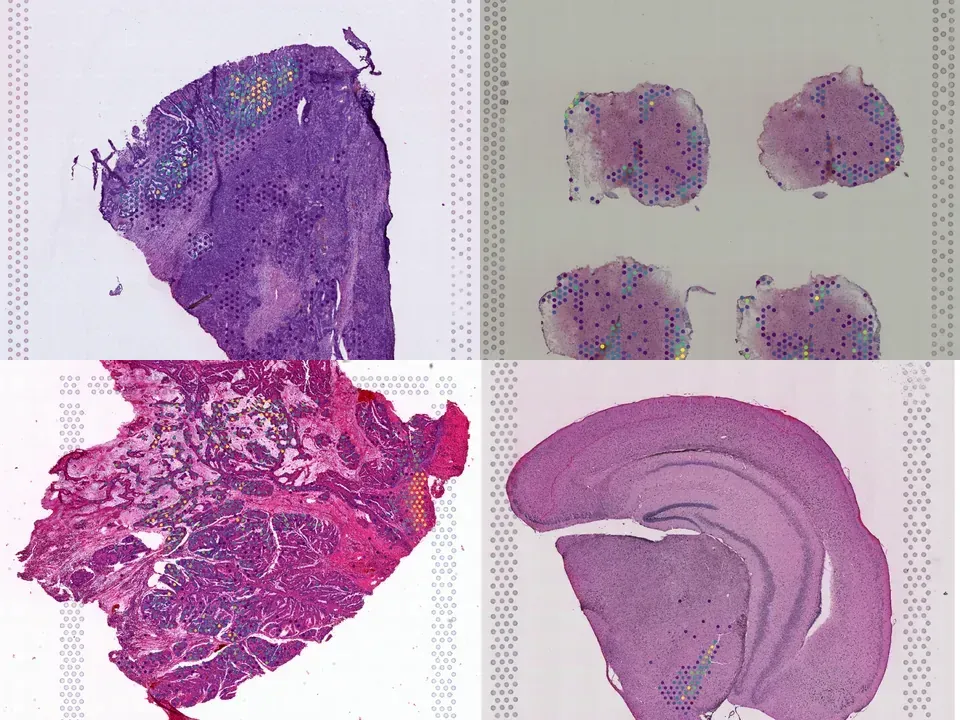
human intestine rectum adenocarcinoma 735 MB 2,385 spots silver H&E
TechnologyVisium
Organismhuman
Tissueintestine
Conditionrectum adenocarcinoma
Spots2,385
Magnification20x · 0.459 µm/px
silver H&E
from sddb import Catalog

cohort = Catalog().collection("doi-10-1101-2023-01-23-525135")
cohort.members        # the 14 datasets as a table

print(cohort.licenses())              # check the terms before you download

sdatas = cohort.to_dict()             # {uid: SpatialData}, cached locally
# or keep the .zarr files in a folder of your choice:
# sdatas = cohort.to_dict(dest="data/")Needs pip install lamindb and network access to the Lamin database, which is limited during the alpha. If it fails, use the Client tab.
import lamindb as ln

db = ln.DB("scverse/spatialdata-db")
coll = db.Collection.get(key="doi-10.1101/2023.01.23.525135")
coll.ordered_artifacts.to_dataframe()   # the 14 members, ordered

# download every member .zarr to the local cache:
paths = [a.cache() for a in coll.ordered_artifacts.all()]# sddb client: download every member .zarr into data/
sddb-cli download --collection doi-10-1101-2023-01-23-525135 --dest data/Licenses: 14 CC BY-NC-SA 4.0
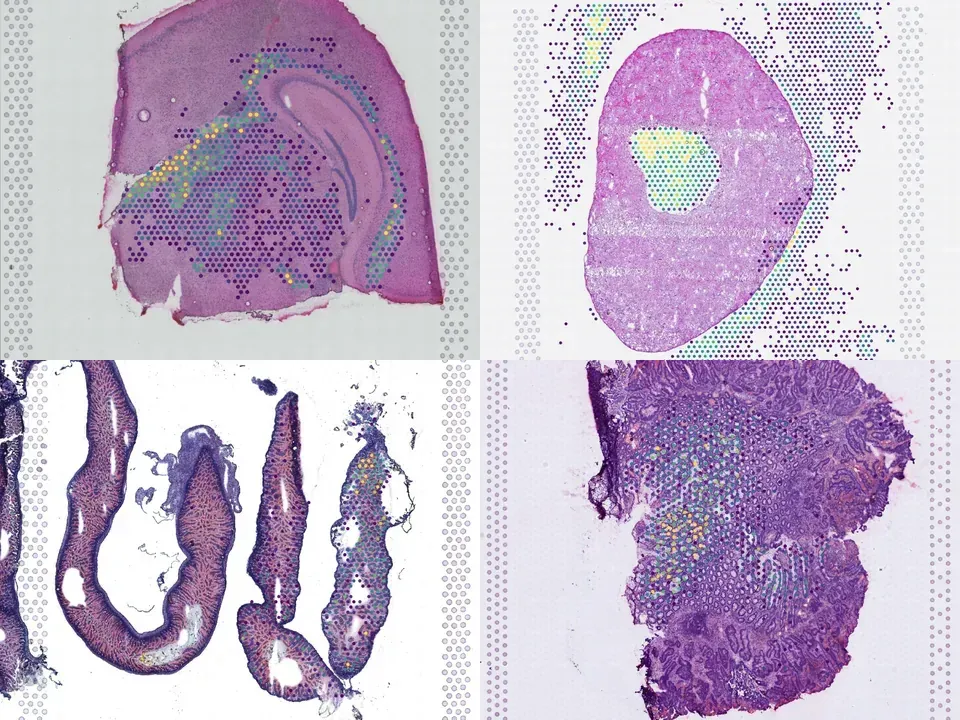
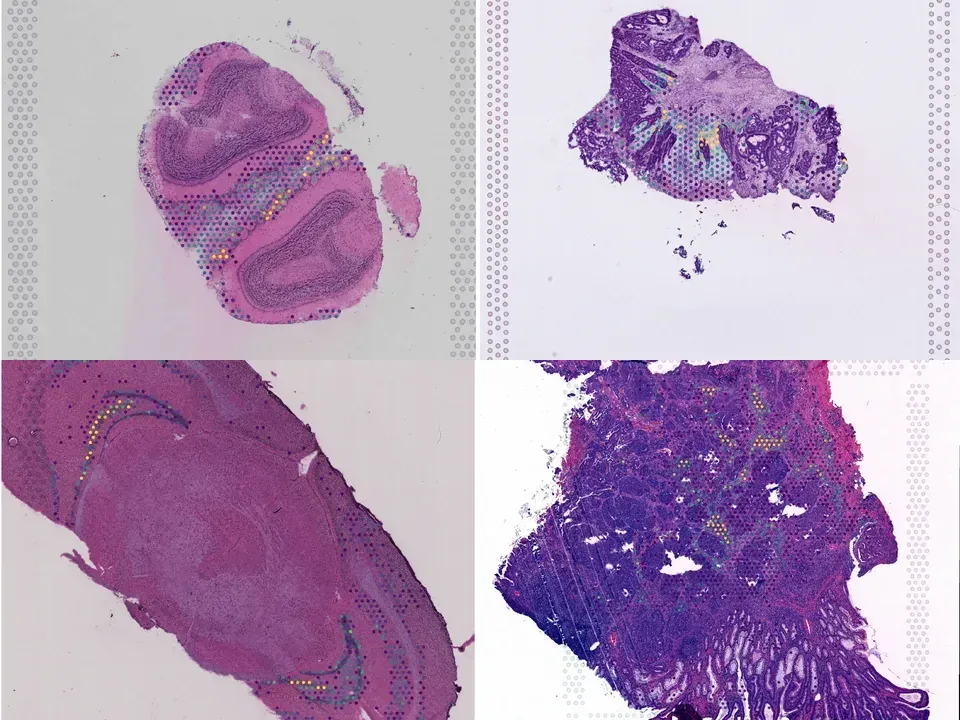
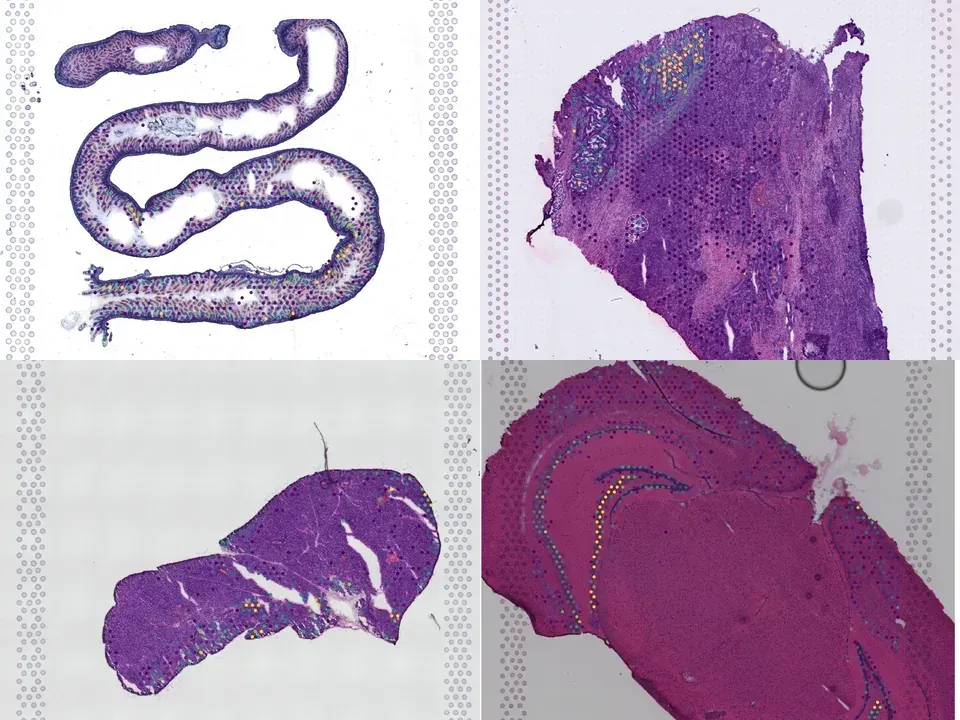
The heterogeneity of colorectal cancer (CRC) contributes to substantial differences in patient response to standard therapies. The consensus molecular subtypes (CMS) of CRC is the most widely-used gene expression-based classification and has contributed to a better understanding of disease heterogeneity and prognosis. Nevertheless, CMS intratumoral heterogeneity restricts its clinical application, stressing the necessity of further characterizing the composition and architecture of CRC. Here, we used Spatial Transcriptomics (ST) in combination with single-cell RNA sequencing (scRNA-seq) to decipher the spatially resolved cellular and molecular composition of CRC. In addition to mapping the intratumoral heterogeneity of CMS and their microenvironment, we identified cell communication events in the tumor-stroma interface of CMS2 carcinomas. This includes tumor growth-inhibiting as well as -activating signatures, such as the potential regulation of the ETV4 transcriptional activity by DCN or the PLAU-PLAUR ligand-receptor interaction. Our data show the power of ST to bring the CMS-based classification of CRC to another level and thereby gain useful molecular insights for personalized therapy.
@article{Valdeolivas_2023,
  title = {Charting the Heterogeneity of Colorectal Cancer Consensus Molecular Subtypes using Spatial Transcriptomics},
  url = {http://dx.doi.org/10.1101/2023.01.23.525135},
  DOI = {10.1101/2023.01.23.525135},
  publisher = {openRxiv},
  author = {Valdeolivas, Alberto and Amberg, Bettina and Giroud, Nicolas and Richardson, Marion and Gálvez, Eric J.C. and Badillo, Solveig and Julien-Laferrière, Alice and Turos, Demeter and von Voithenberg, Lena Voith and Wells, Isabelle and Lo, Amy A. and Yángüez, Emilio and Das Thakur, Meghna and Bscheider, Michael and Sultan, Marc and Kumpesa, Nadine and Jacobsen, Björn and Bergauer, Tobias and Saez-Rodriguez, Julio and Rottenberg, Sven and Schwalie, Petra C. and Hahn, Kerstin},
  year = {2023},
  month = Jan
}