
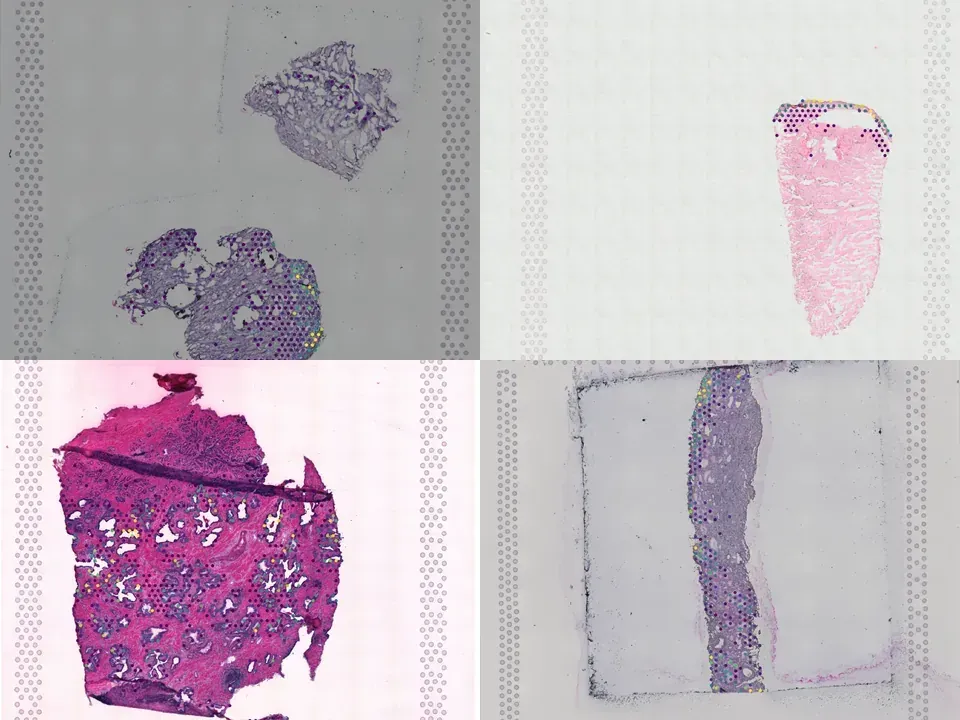
Human kidney
NCBI566
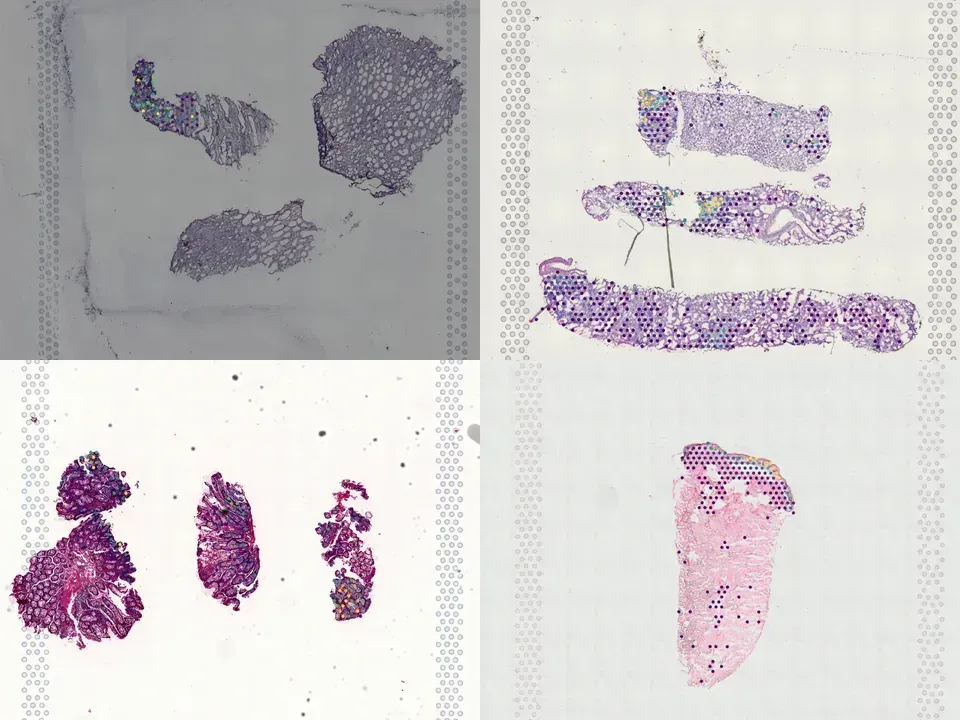
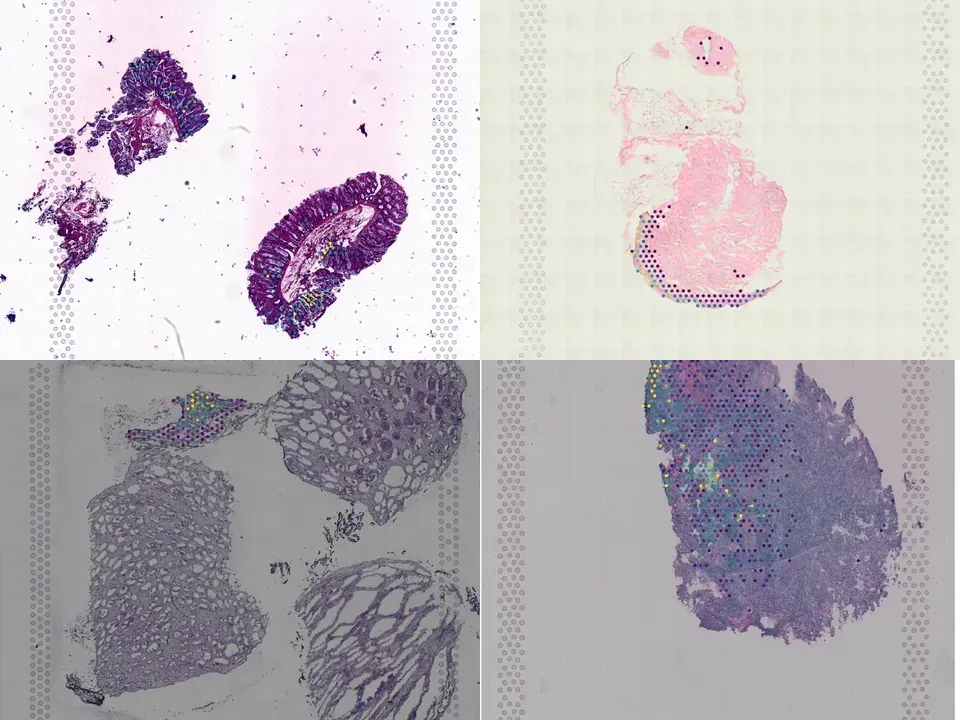
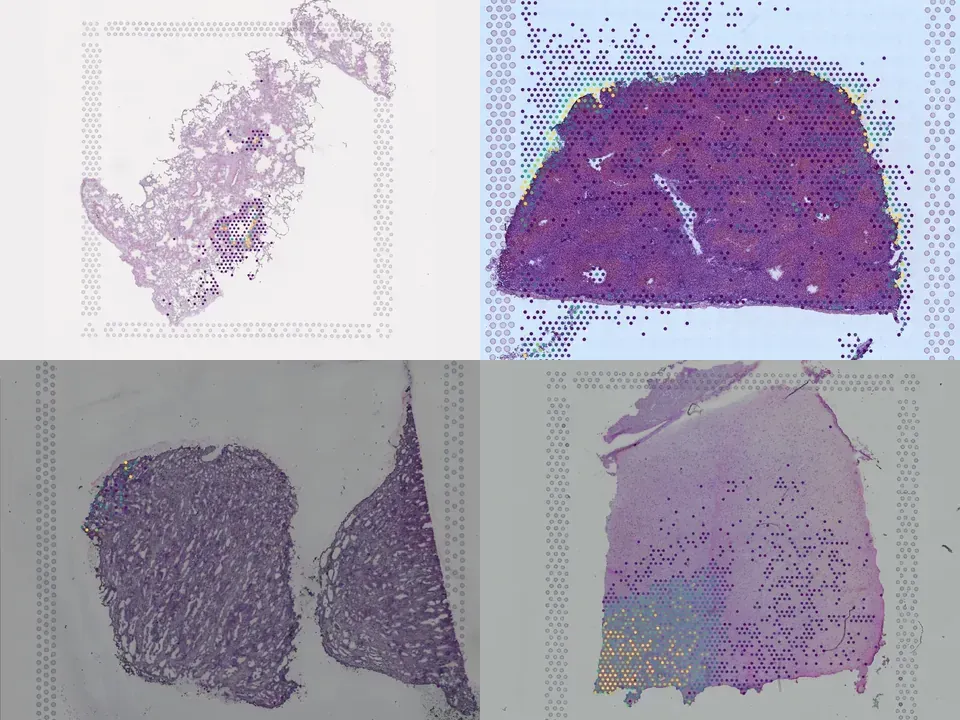
human kidney nephrolithiasis 204 MB 939 spots silver H&E
TechnologyVisium
Organismhuman
Tissuekidney
Conditionnephrolithiasis
Spots939
silver H&E
from sddb import Catalog

cohort = Catalog().collection("doi-10-1038-s41467-023-38975-8")
cohort.members        # the 7 datasets as a table

print(cohort.licenses())              # check the terms before you download

sdatas = cohort.to_dict()             # {uid: SpatialData}, cached locally
# or keep the .zarr files in a folder of your choice:
# sdatas = cohort.to_dict(dest="data/")Needs pip install lamindb and network access to the Lamin database, which is limited during the alpha. If it fails, use the Client tab.
import lamindb as ln

db = ln.DB("scverse/spatialdata-db")
coll = db.Collection.get(key="doi-10.1038/s41467-023-38975-8")
coll.ordered_artifacts.to_dataframe()   # the 7 members, ordered

# download every member .zarr to the local cache:
paths = [a.cache() for a in coll.ordered_artifacts.all()]# sddb client: download every member .zarr into data/
sddb-cli download --collection doi-10-1038-s41467-023-38975-8 --dest data/Licenses: 7 CC BY-NC-SA 4.0
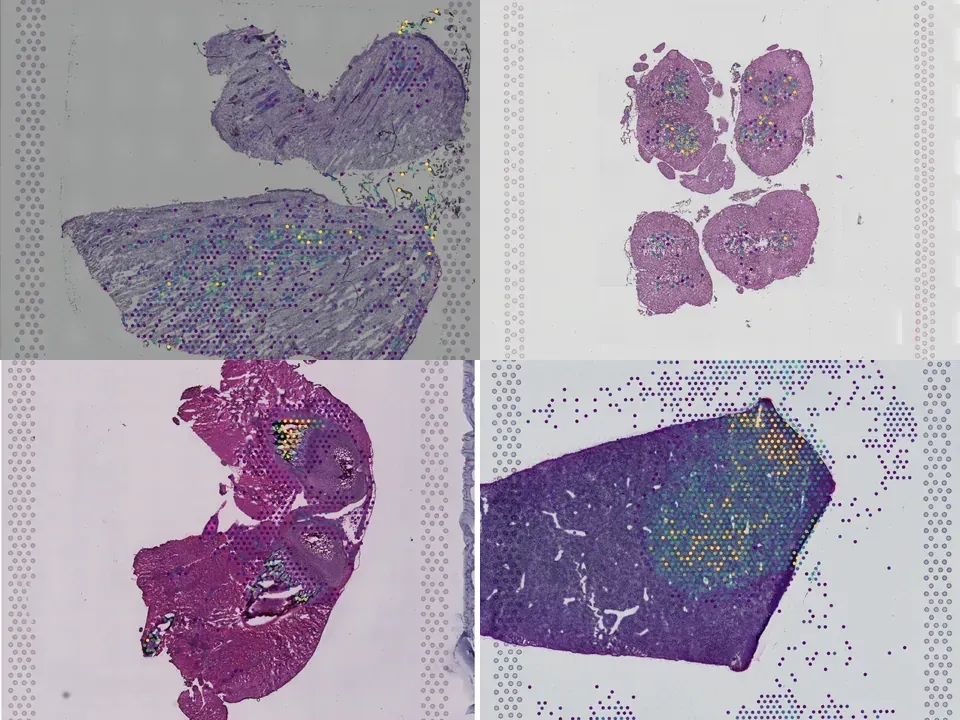
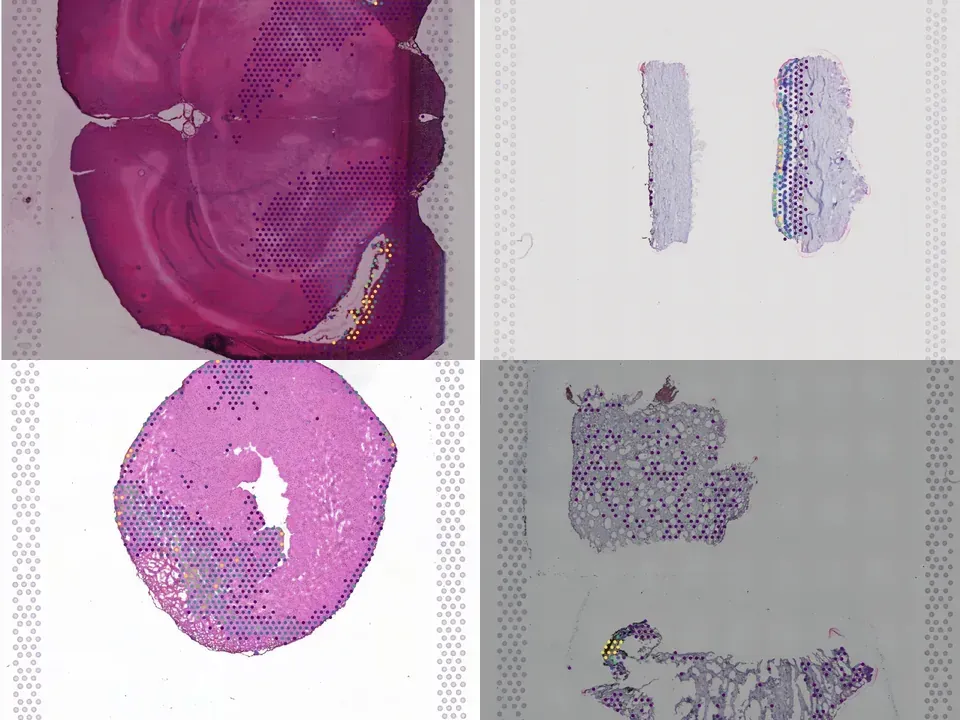
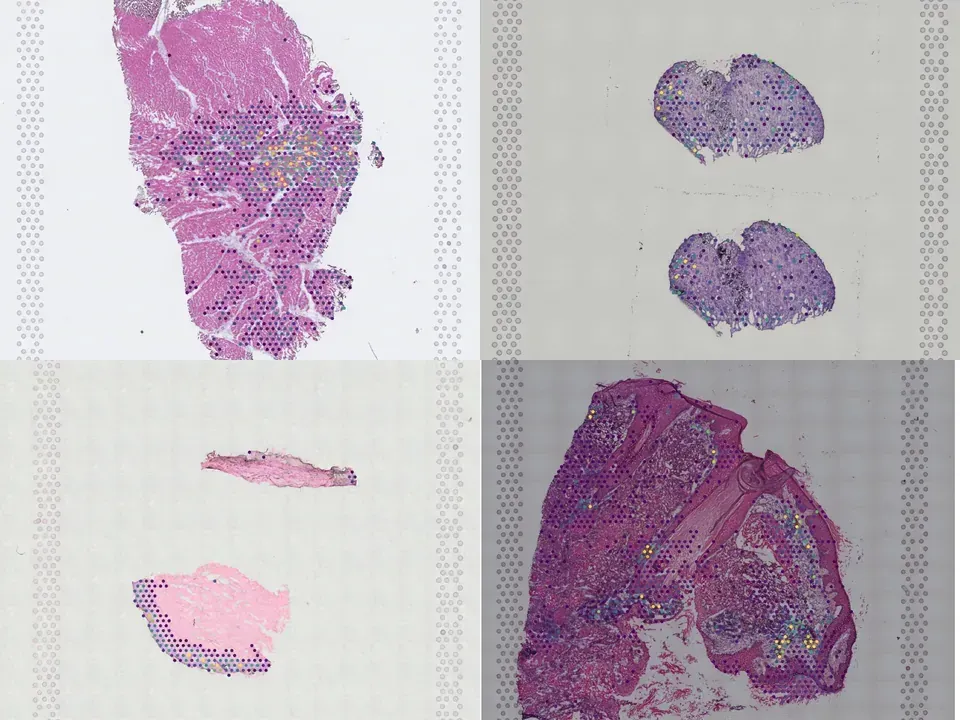
Kidney stone disease causes significant morbidity and increases health care utilization. In this work, we decipher the cellular and molecular niche of the human renal papilla in patients with calcium oxalate (CaOx) stone disease and healthy subjects. In addition to identifying cell types important in papillary physiology, we characterize collecting duct cell subtypes and an undifferentiated epithelial cell type that was more prevalent in stone patients. Despite the focal nature of mineral deposition in nephrolithiasis, we uncover a global injury signature characterized by immune activation, oxidative stress and extracellular matrix remodeling. We also identify the association of MMP7 and MMP9 expression with stone disease and mineral deposition, respectively. MMP7 and MMP9 are significantly increased in the urine of patients with CaOx stone disease, and their levels correlate with disease activity. Our results define the spatial molecular landscape and specific pathways contributing to stone-mediated injury in the human papilla and identify associated urinary biomarkers.
@article{Canela_2023,
  title = {A spatially anchored transcriptomic atlas of the human kidney papilla identifies significant immune injury in patients with stone disease},
  volume = {14},
  ISSN = {2041-1723},
  url = {http://dx.doi.org/10.1038/s41467-023-38975-8},
  DOI = {10.1038/s41467-023-38975-8},
  number = {1},
  journal = {Nature Communications},
  publisher = {Springer Science and Business Media LLC},
  author = {Canela, Victor Hugo and Bowen, William S. and Ferreira, Ricardo Melo and Syed, Farooq and Lingeman, James E. and Sabo, Angela R. and Barwinska, Daria and Winfree, Seth and Lake, Blue B. and Cheng, Ying-Hua and Gaut, Joseph P. and Ferkowicz, Michael and LaFavers, Kaice A. and Zhang, Kun and Coe, Fredric L. and Worcester, Elaine and Jain, Sanjay and Eadon, Michael T. and Williams, James C. and El-Achkar, Tarek M.},
  year = {2023},
  month = July
}