
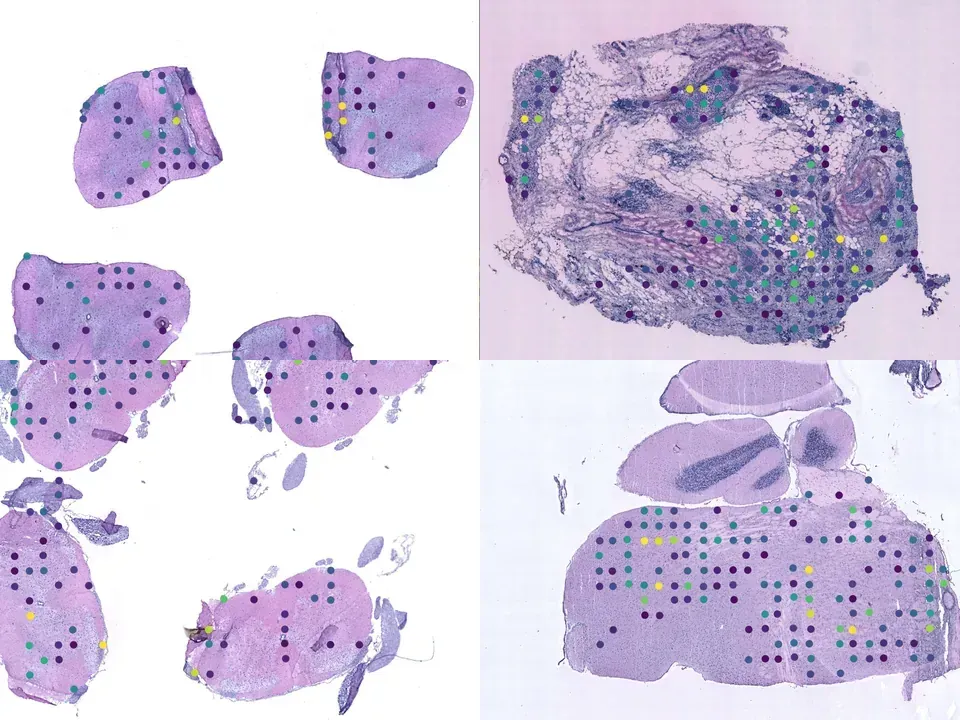
Human breast
SPA122
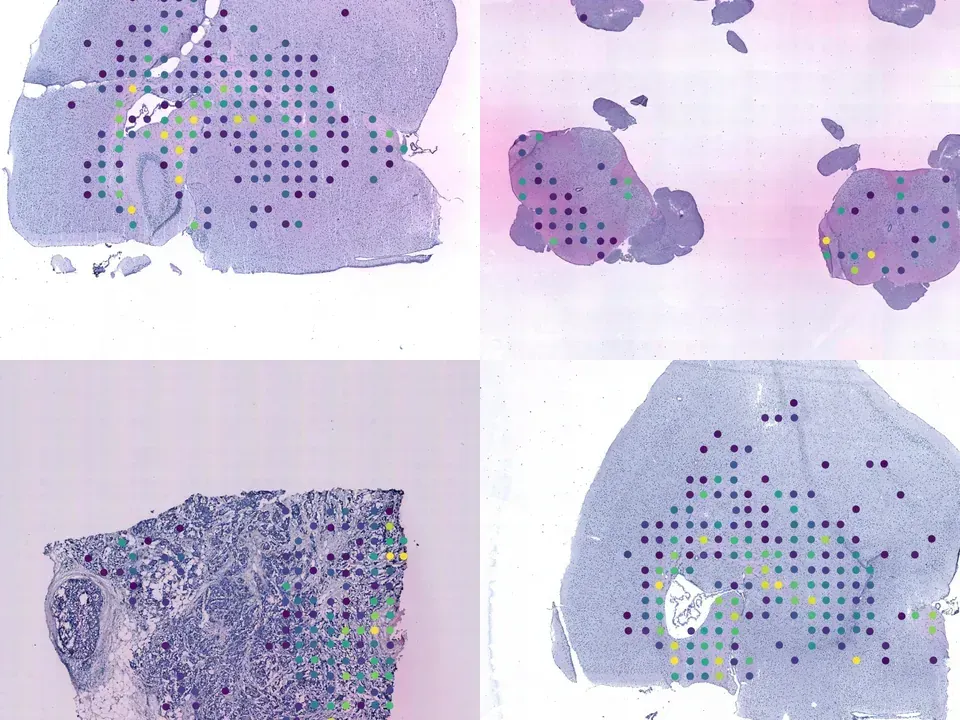
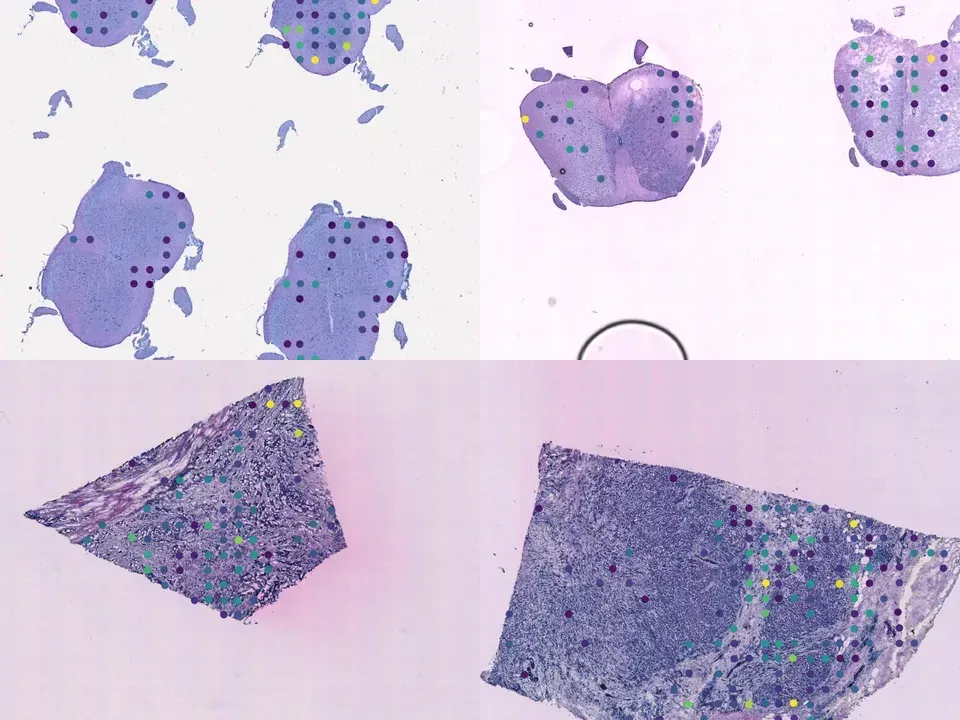
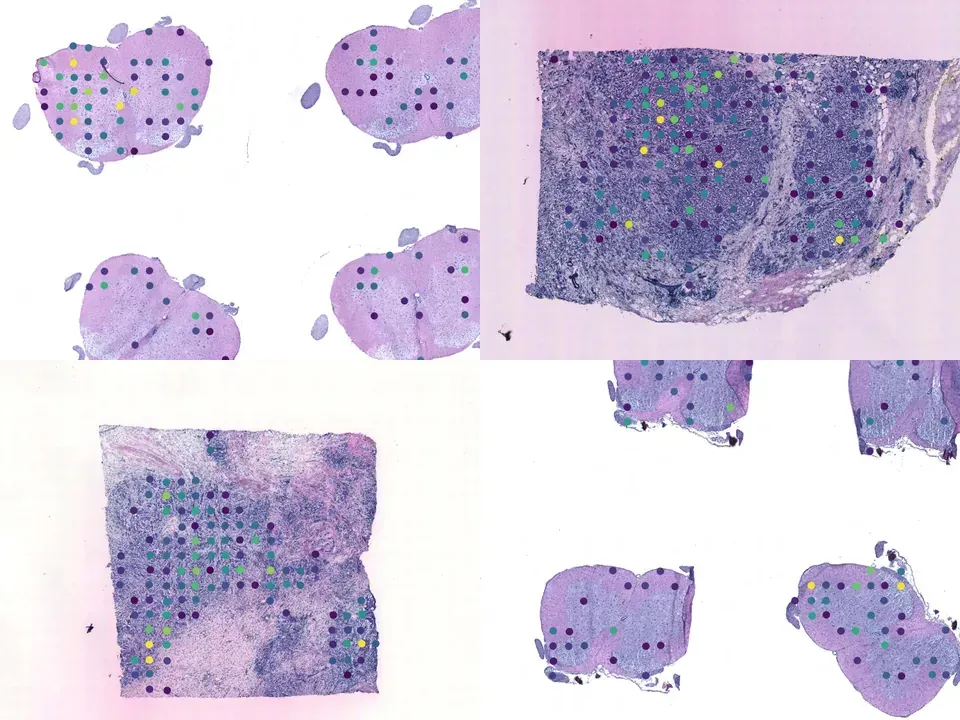
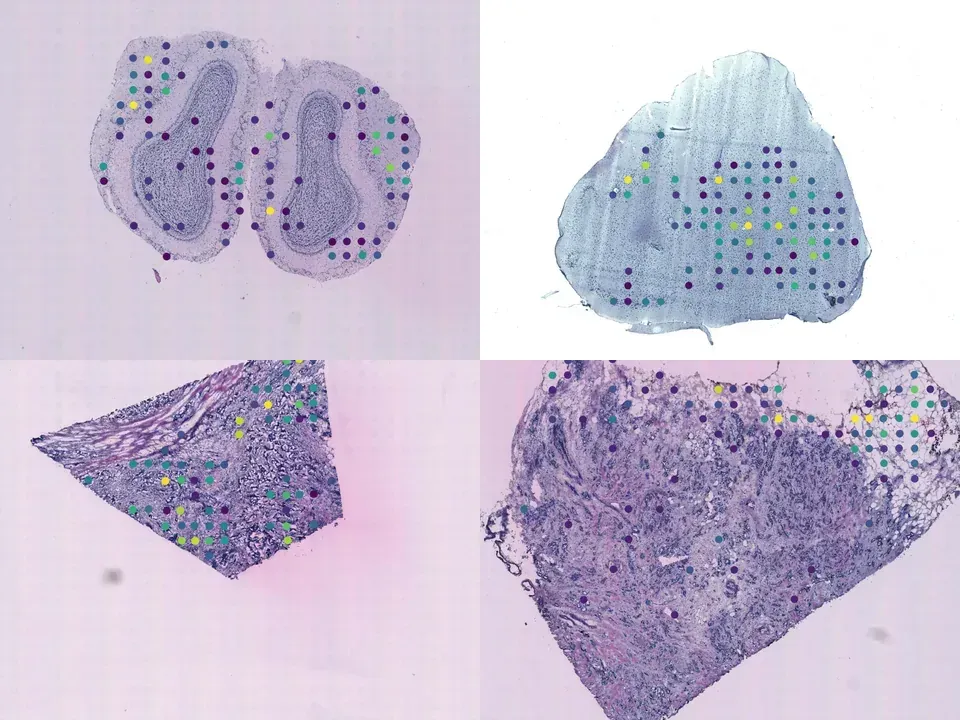
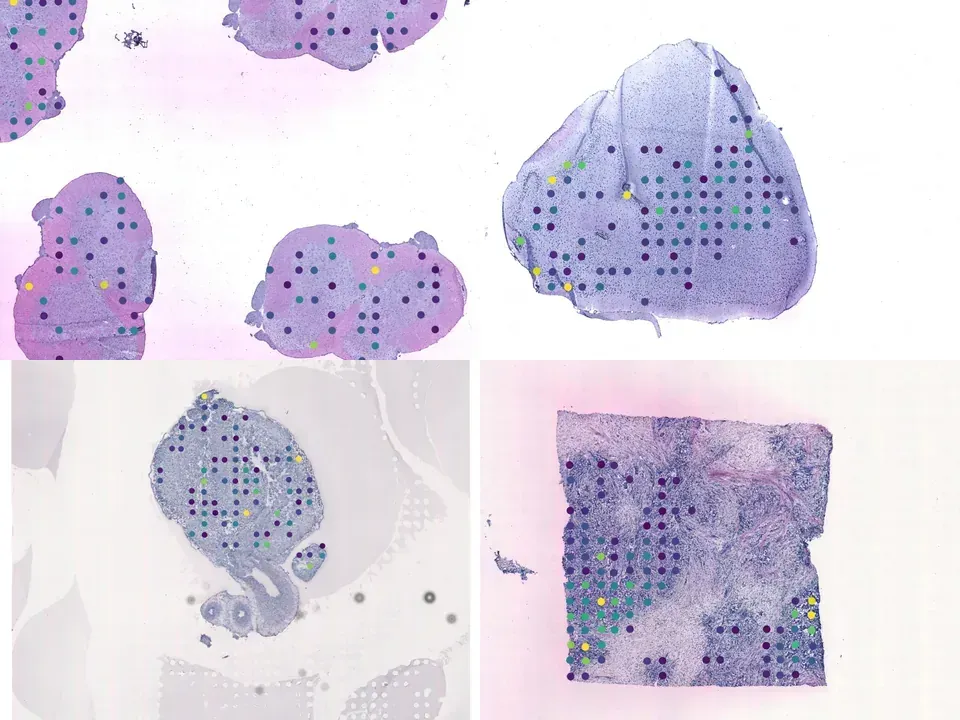
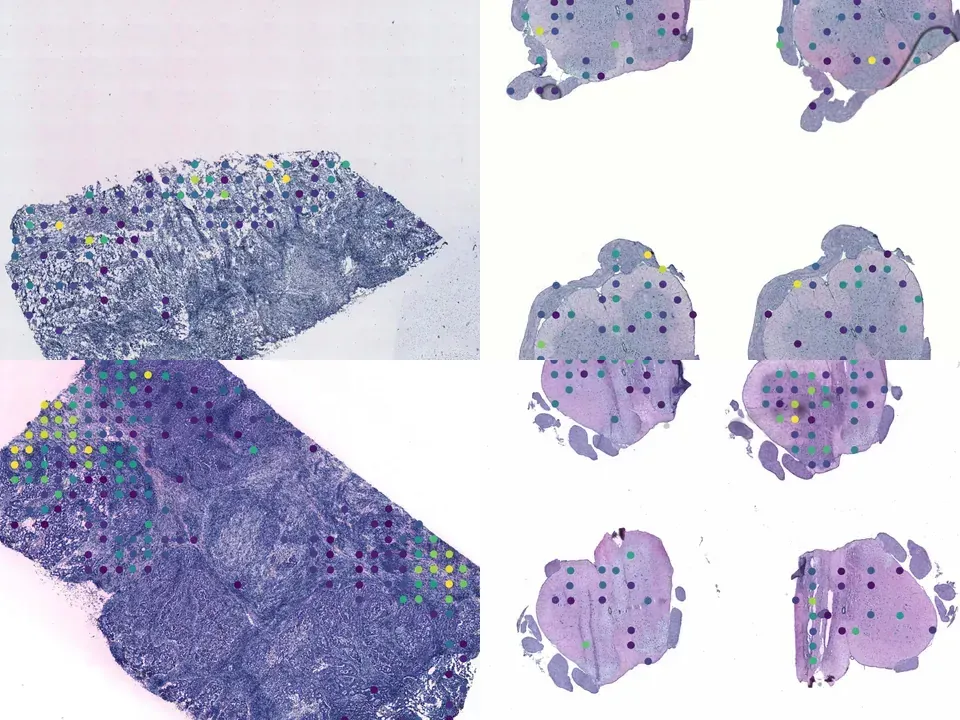
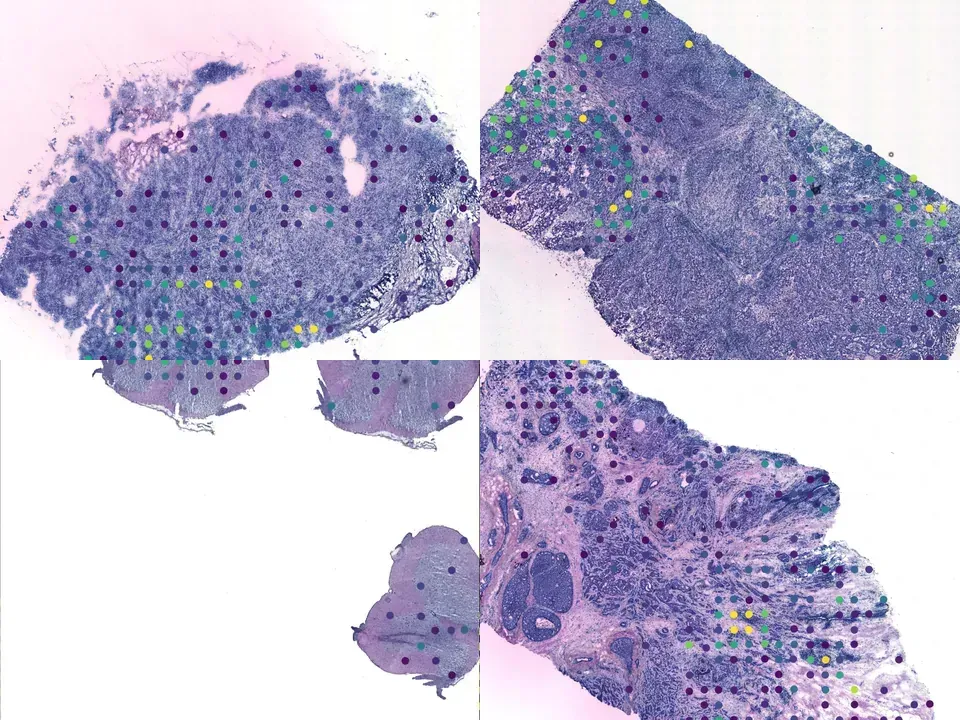
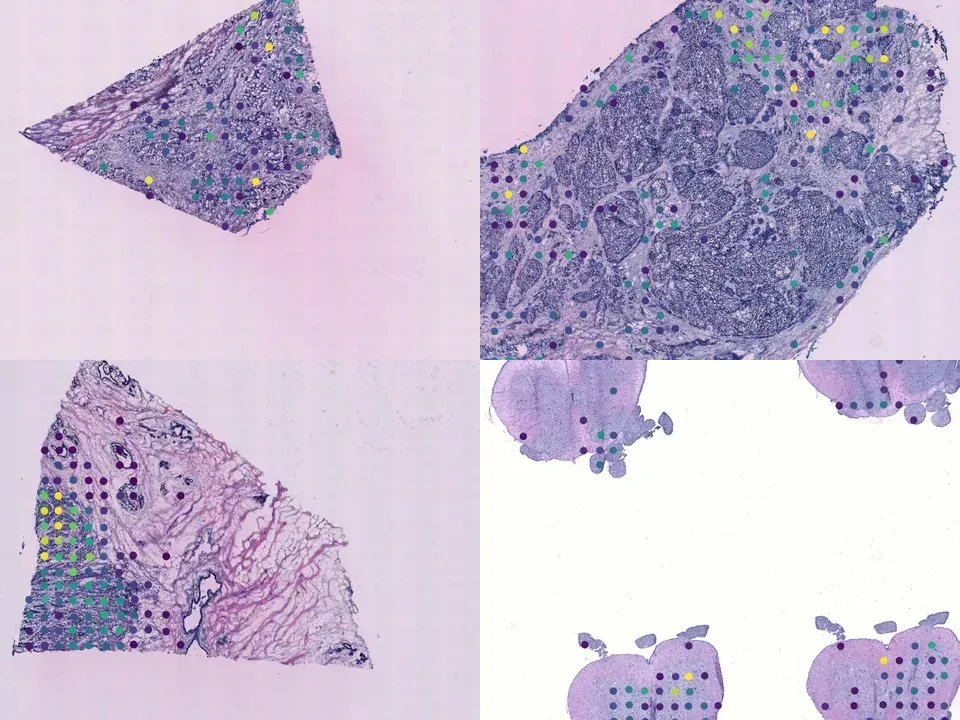
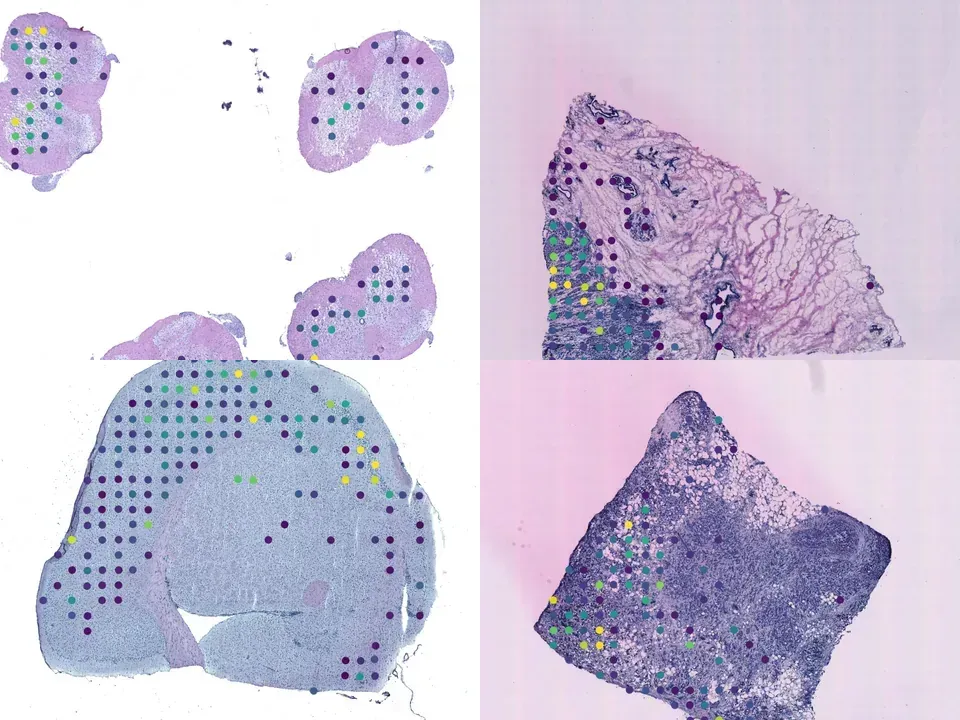
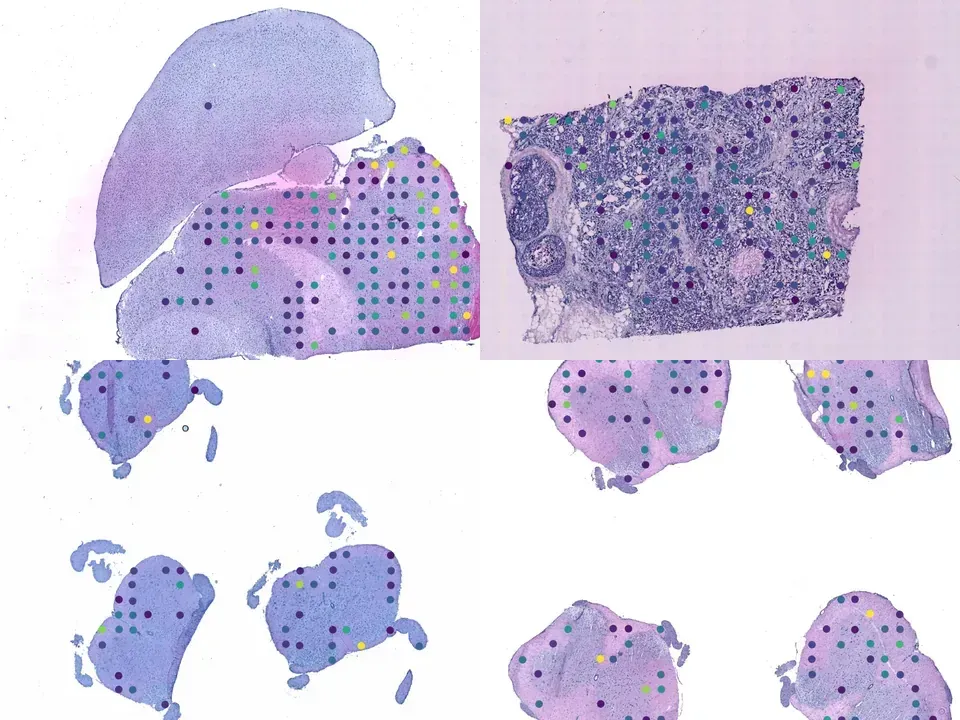
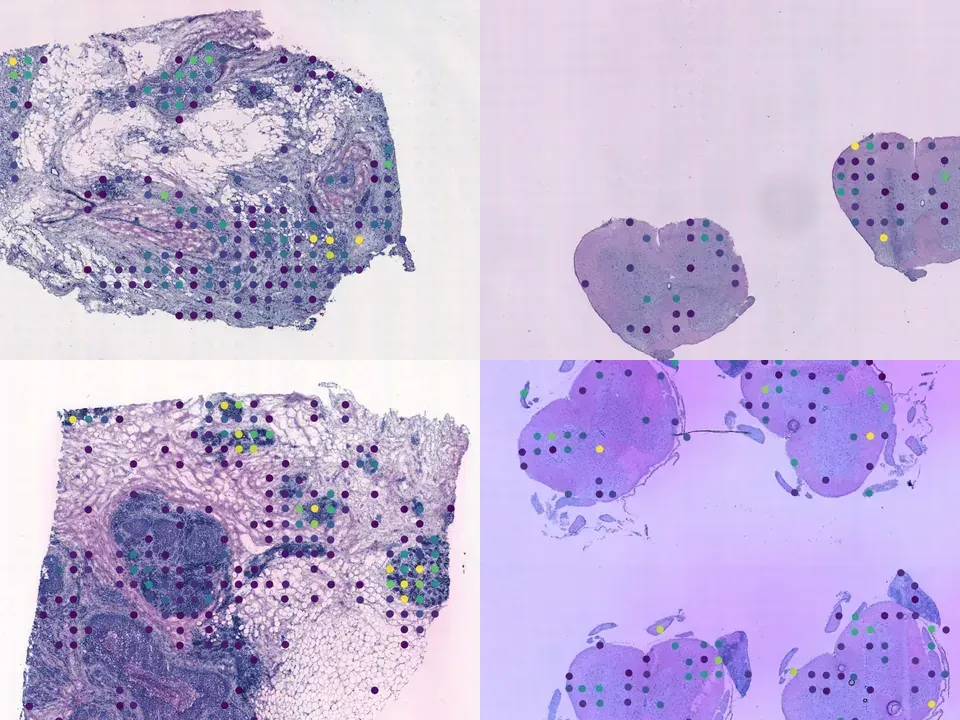
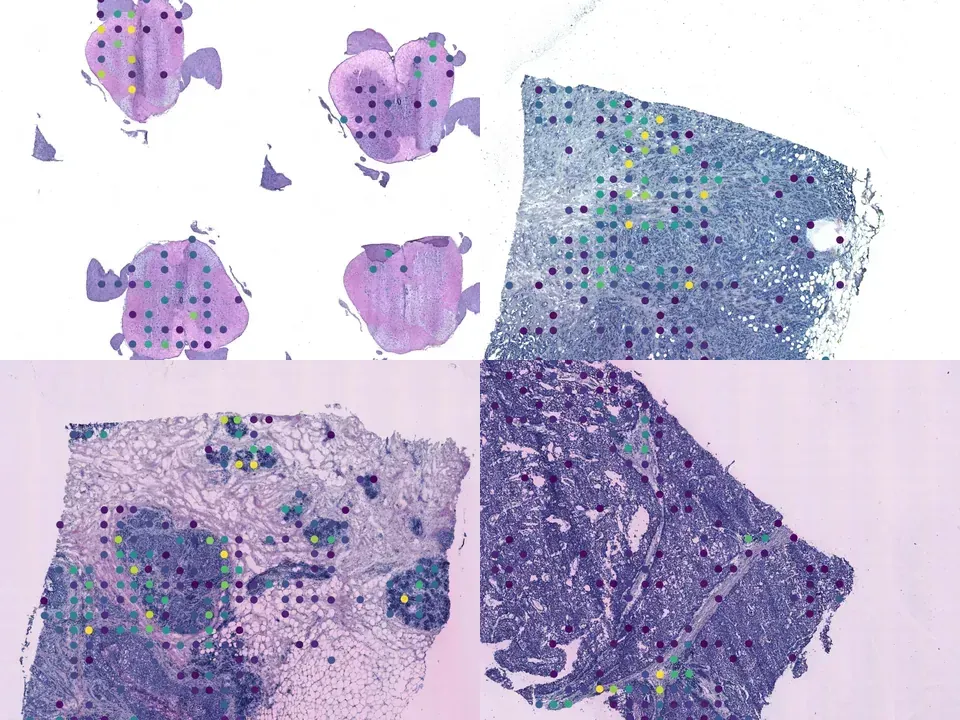
human breast invasive ductal breast carcinoma 143 MB 463 spots silver H&E
Technologyspatial transcriptomics
Organismhuman
Tissuebreast
Conditioninvasive ductal breast carcinoma
Spots463
silver H&E
from sddb import Catalog

cohort = Catalog().collection("doi-10-1038-s41467-021-26271-2")
cohort.members        # the 36 datasets as a table

print(cohort.licenses())              # check the terms before you download

sdatas = cohort.to_dict()             # {uid: SpatialData}, cached locally
# or keep the .zarr files in a folder of your choice:
# sdatas = cohort.to_dict(dest="data/")Needs pip install lamindb and network access to the Lamin database, which is limited during the alpha. If it fails, use the Client tab.
import lamindb as ln

db = ln.DB("scverse/spatialdata-db")
coll = db.Collection.get(key="doi-10.1038/s41467-021-26271-2")
coll.ordered_artifacts.to_dataframe()   # the 36 members, ordered

# download every member .zarr to the local cache:
paths = [a.cache() for a in coll.ordered_artifacts.all()]# sddb client: download every member .zarr into data/
sddb-cli download --collection doi-10-1038-s41467-021-26271-2 --dest data/Licenses: 36 CC BY-NC-SA 4.0
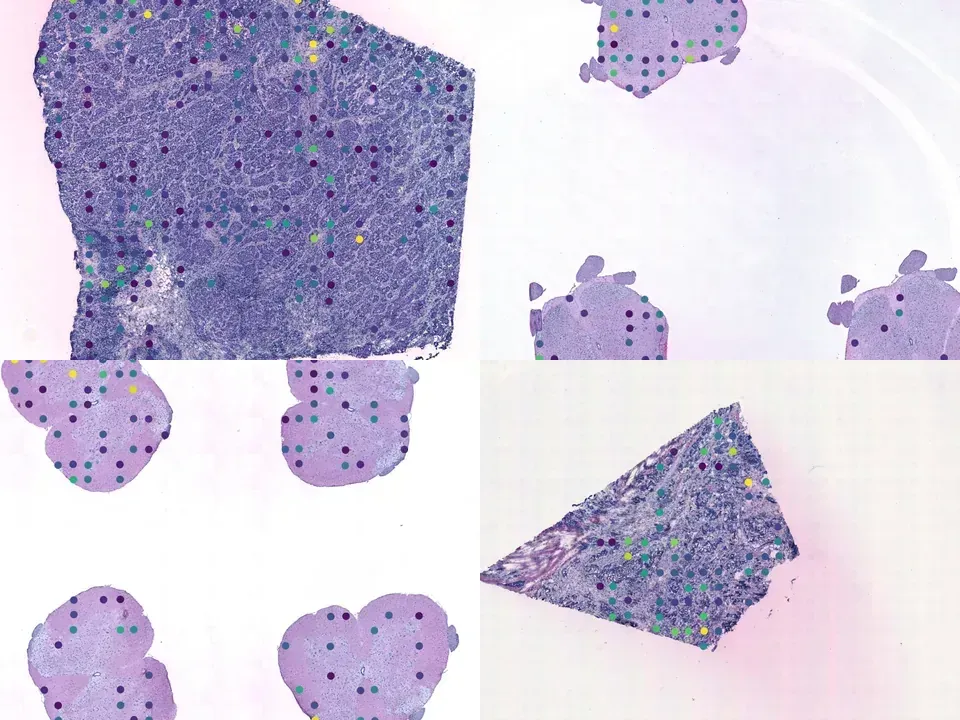
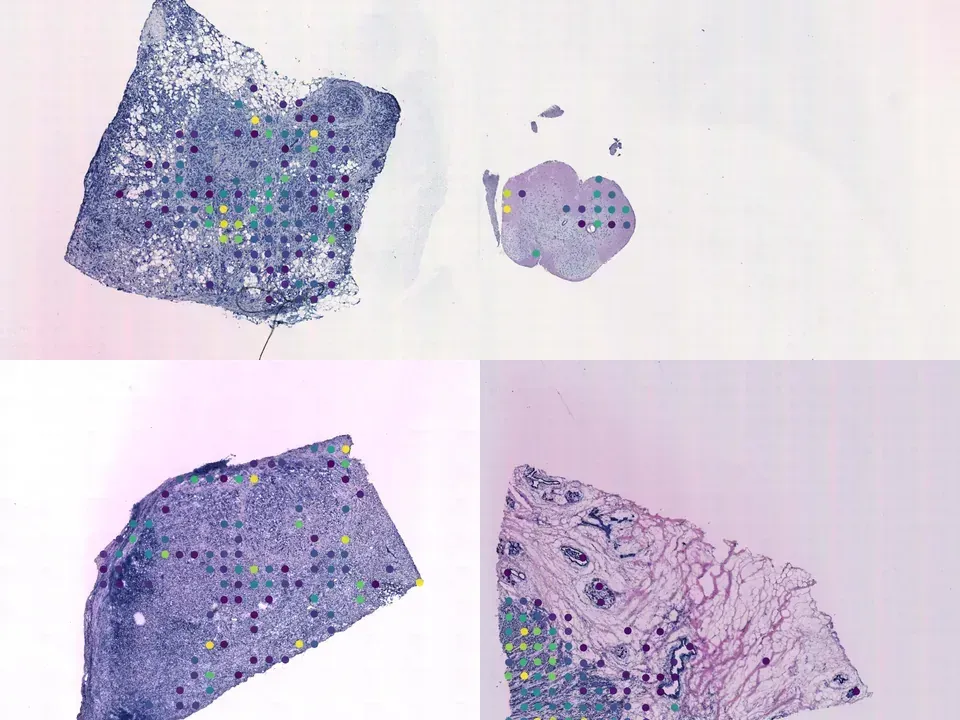
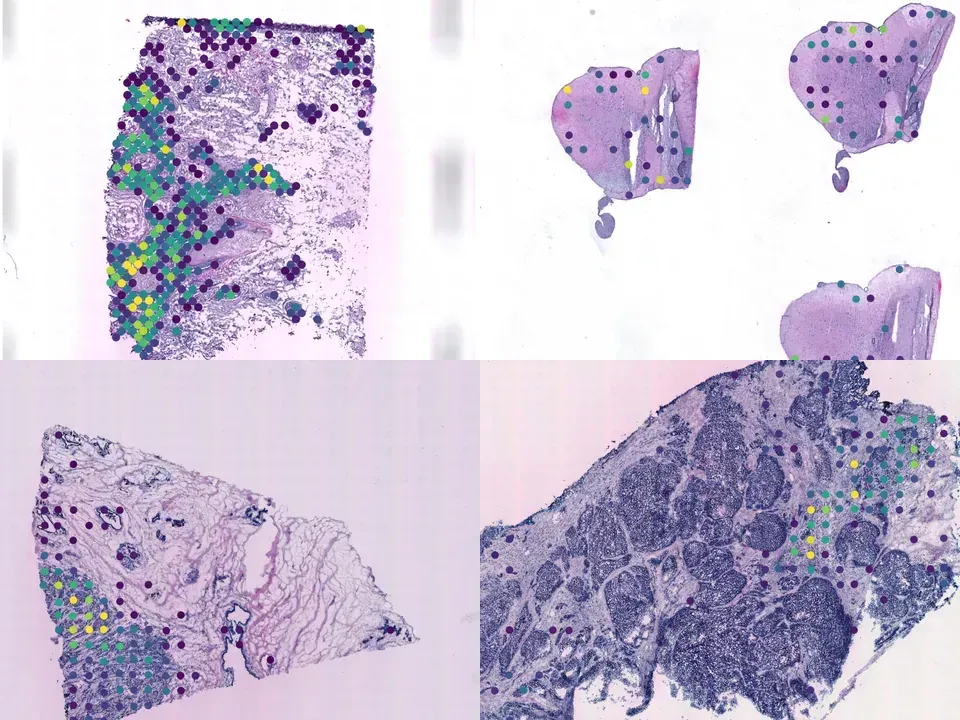
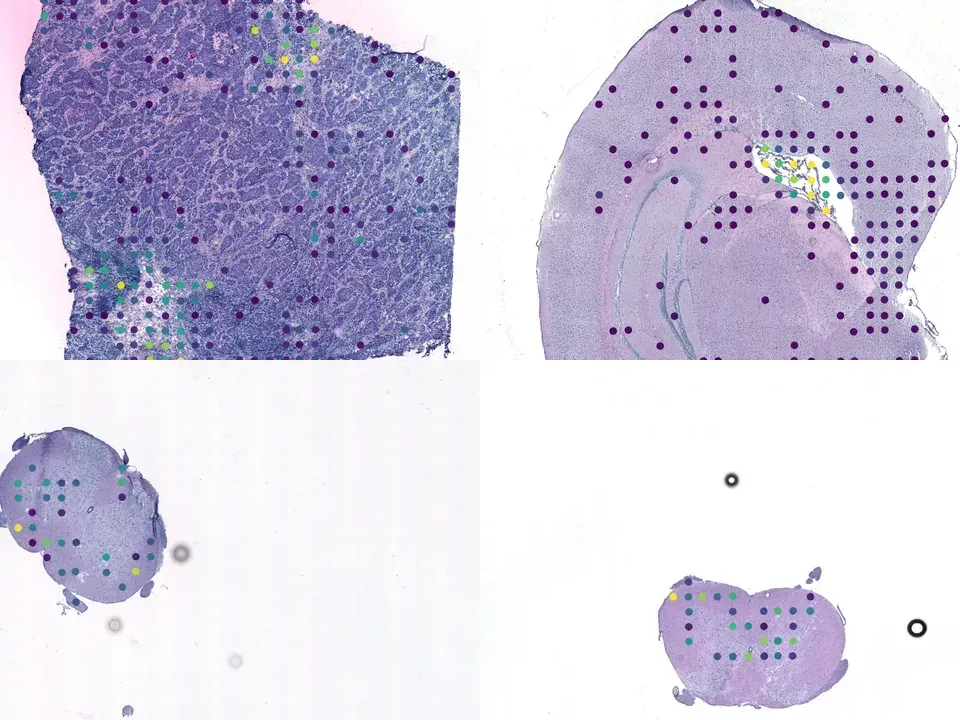
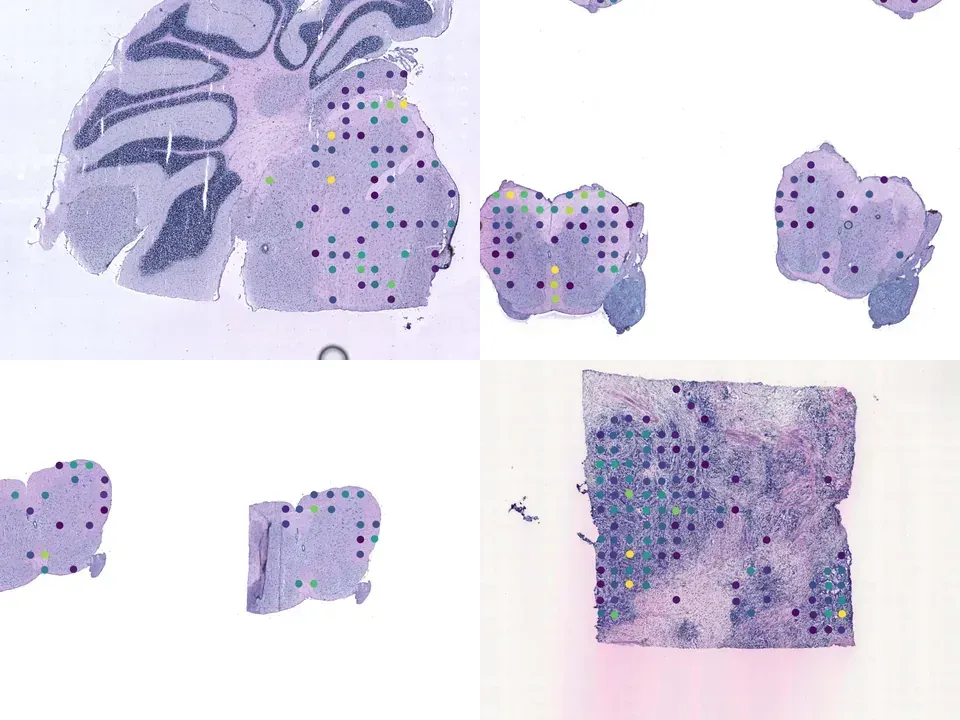
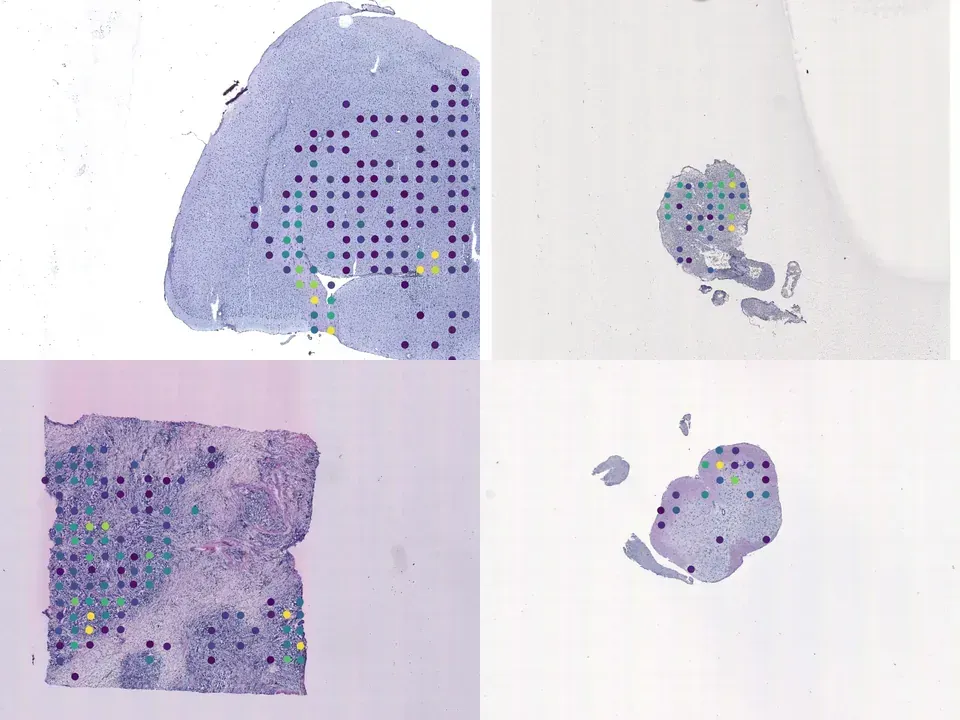
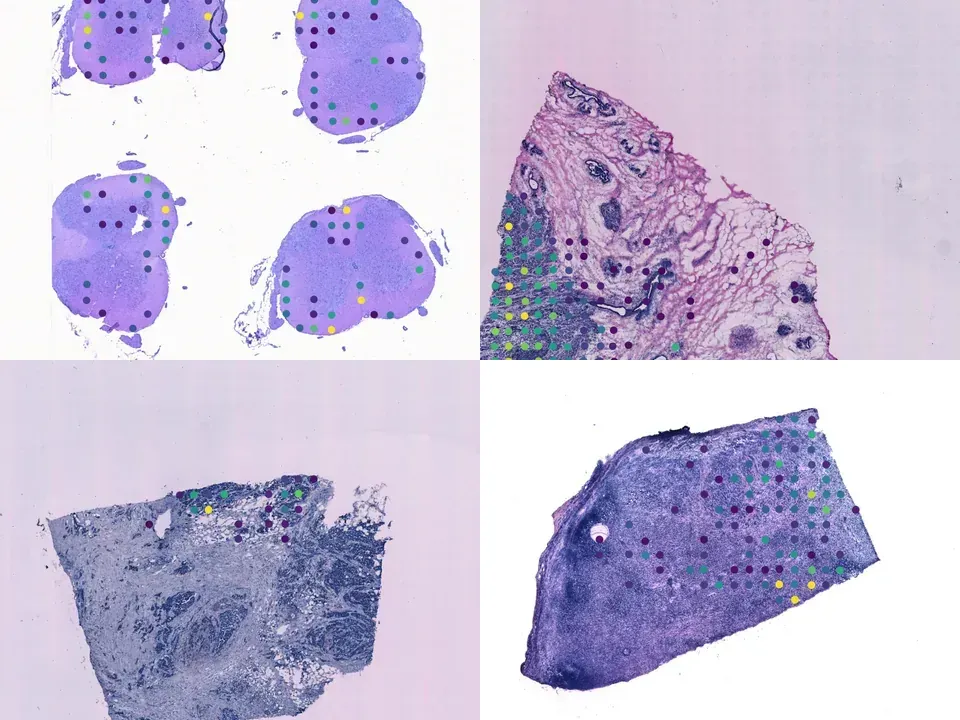
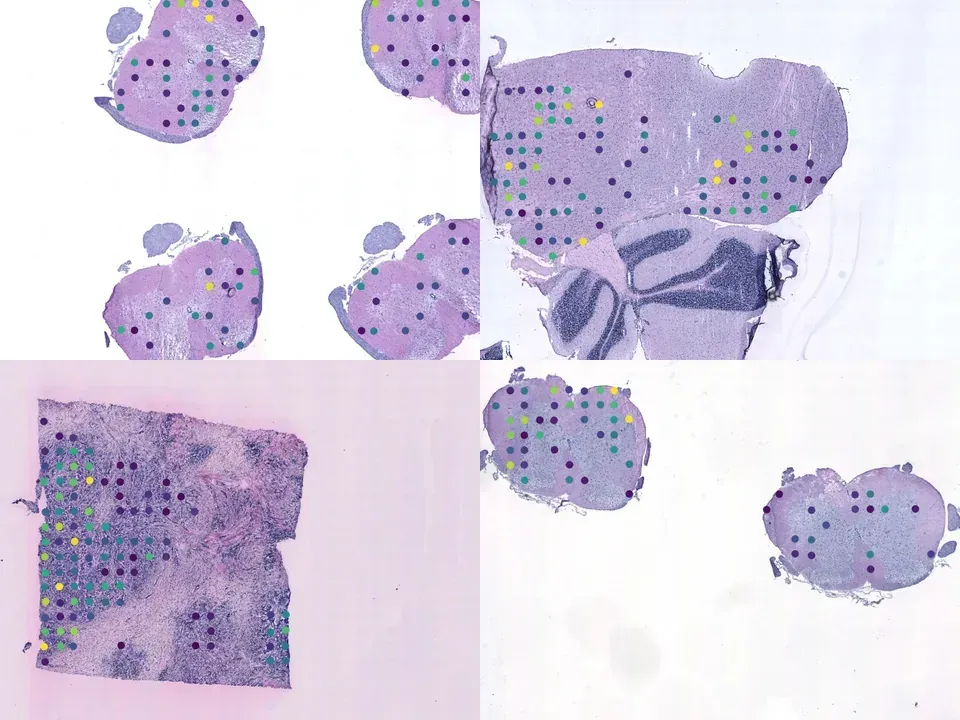
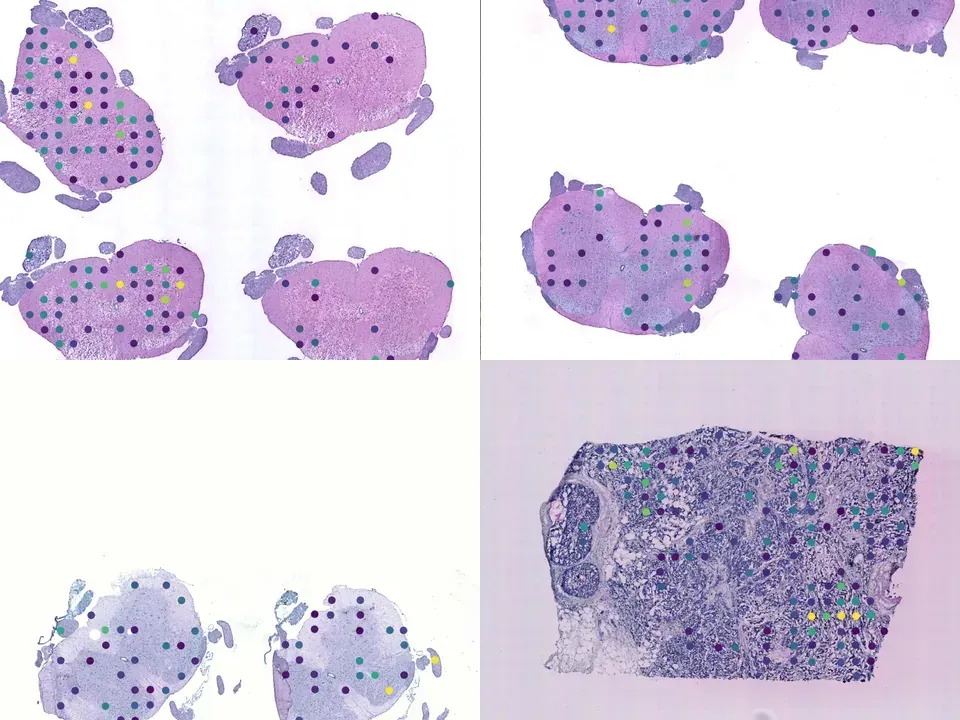
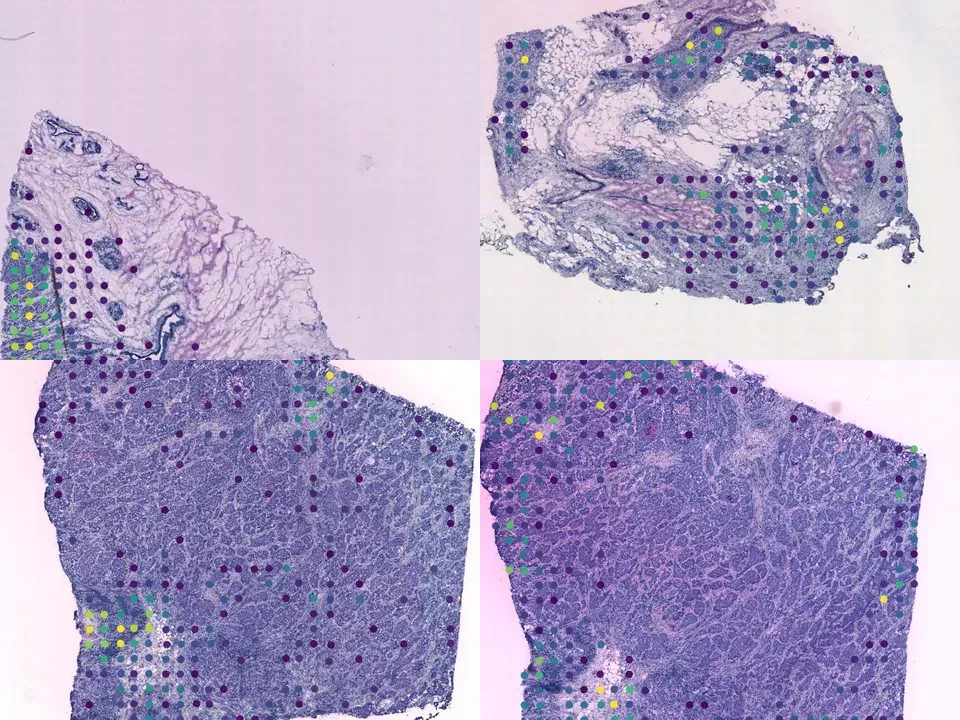
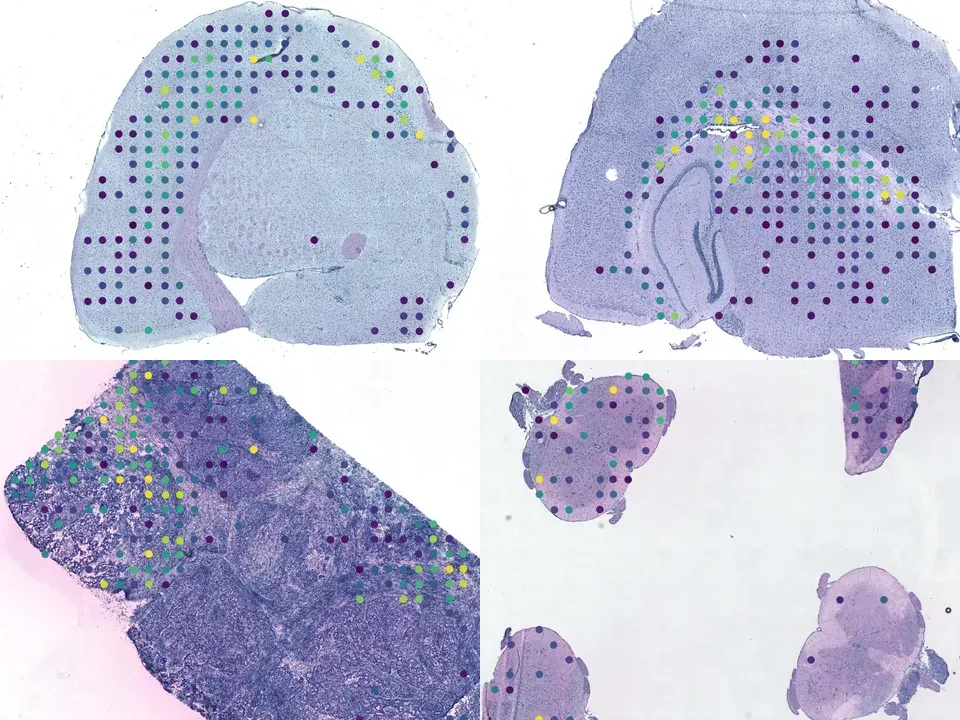
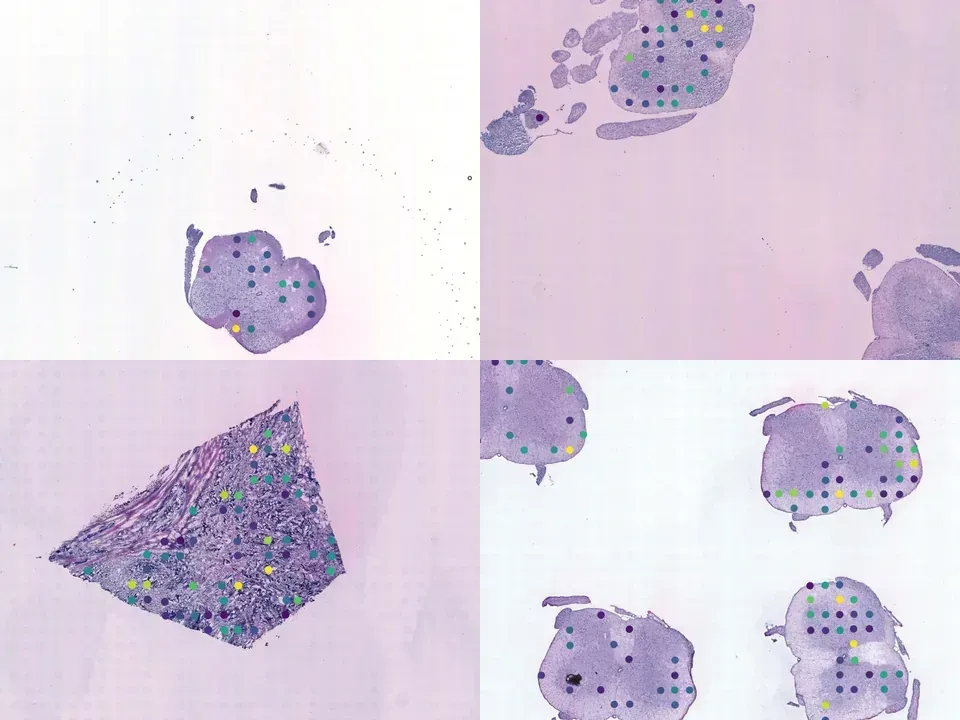
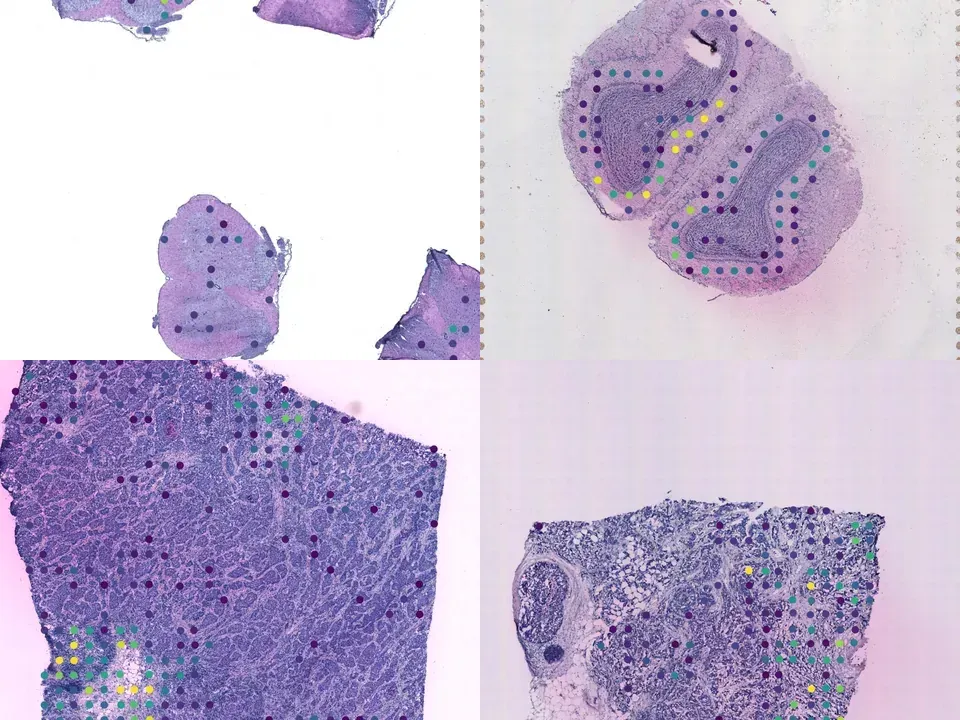
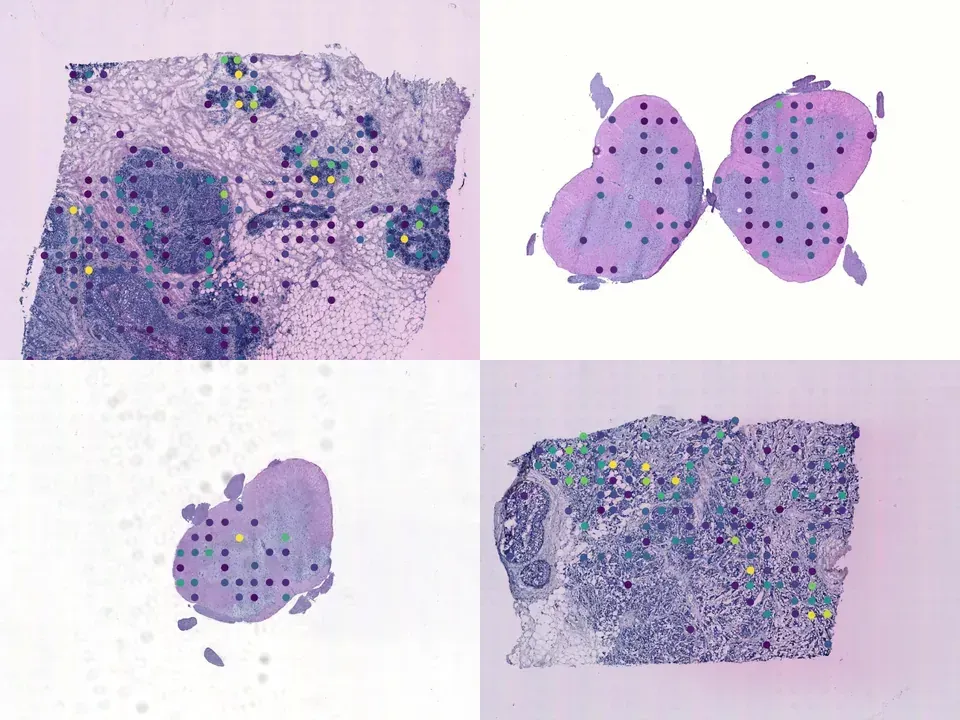
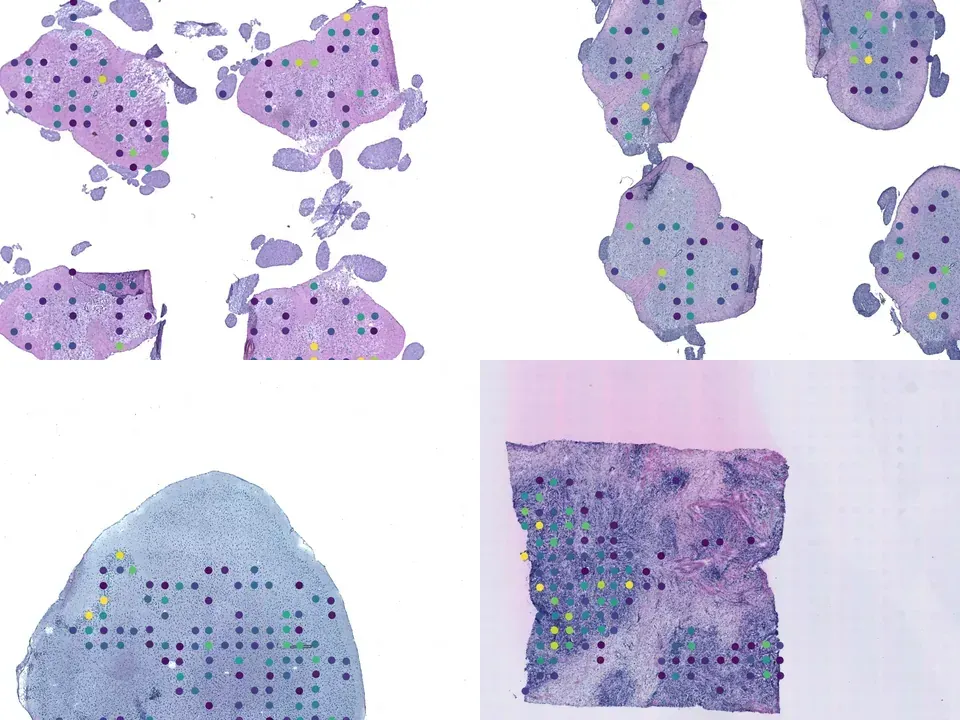
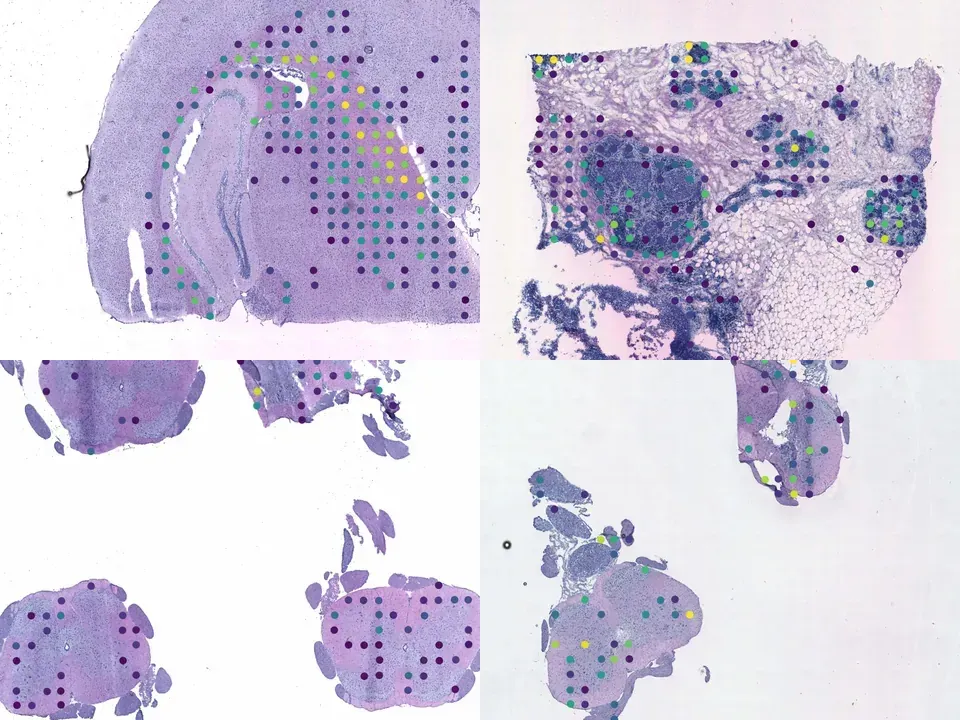
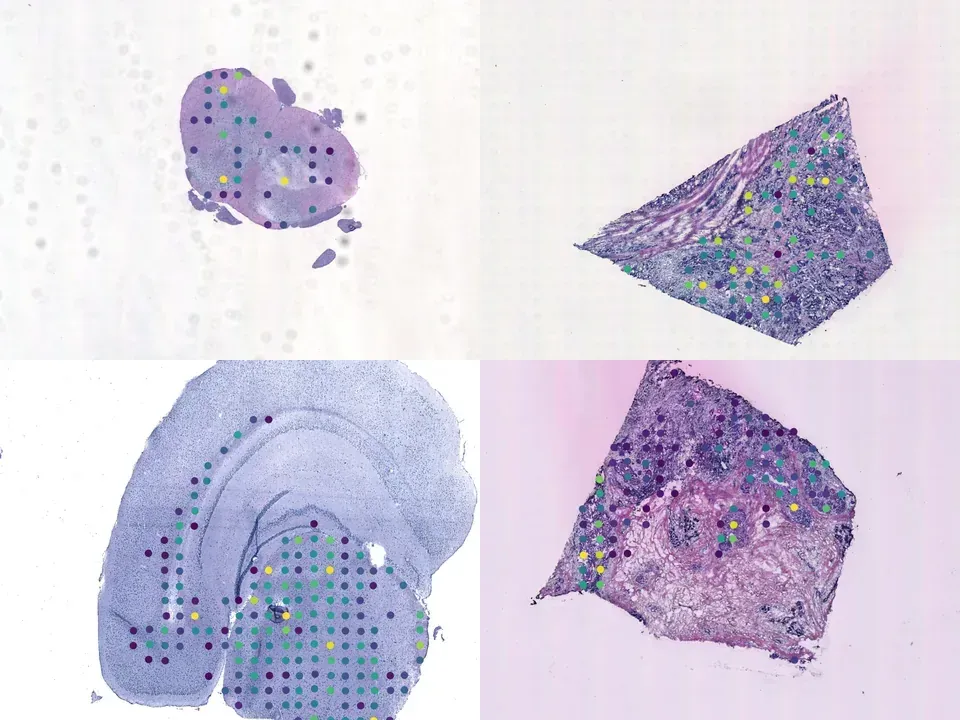
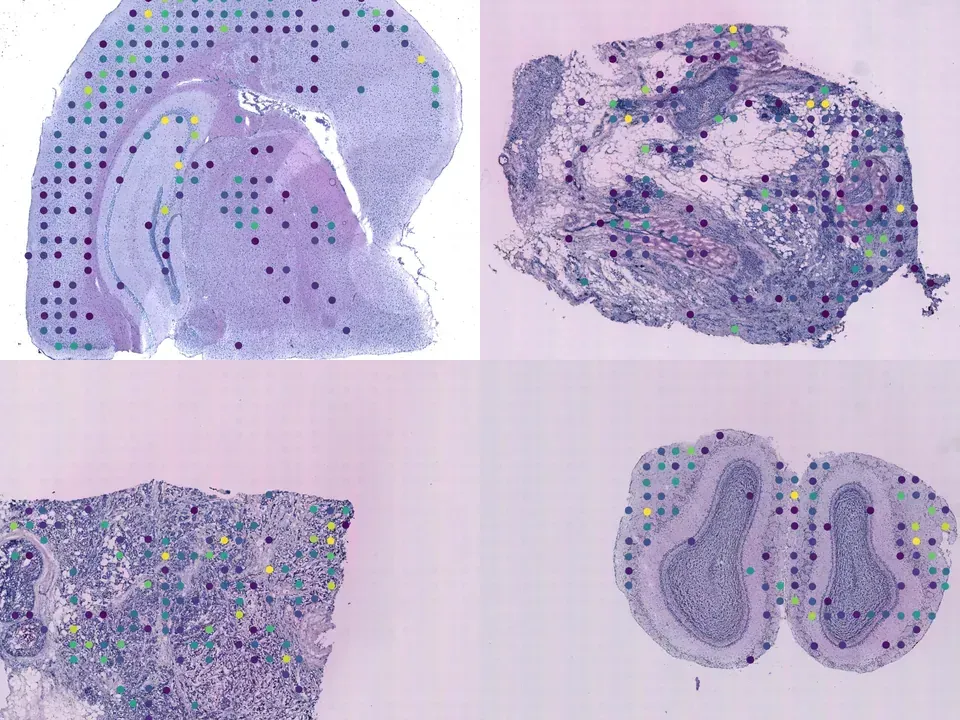
In the past decades, transcriptomic studies have revolutionized cancer treatment and diagnosis. However, tumor sequencing strategies typically result in loss of spatial information, critical to understand cell interactions and their functional relevance. To address this, we investigate spatial gene expression in HER2-positive breast tumors using Spatial Transcriptomics technology. We show that expression-based clustering enables data-driven tumor annotation and assessment of intra- and interpatient heterogeneity; from which we discover shared gene signatures for immune and tumor processes. By integration with single cell data, we spatially map tumor-associated cell types to find tertiary lymphoid-like structures, and a type I interferon response overlapping with regions of T-cell and macrophage subset colocalization. We construct a predictive model to infer presence of tertiary lymphoid-like structures, applicable across tissue types and technical platforms. Taken together, we combine different data modalities to define a high resolution map of cellular interactions in tumors and provide tools generalizing across tissues and diseases.
@article{Andersson_2021,
  title = {Spatial deconvolution of HER2-positive breast cancer delineates tumor-associated cell type interactions},
  volume = {12},
  ISSN = {2041-1723},
  url = {http://dx.doi.org/10.1038/s41467-021-26271-2},
  DOI = {10.1038/s41467-021-26271-2},
  number = {1},
  journal = {Nature Communications},
  publisher = {Springer Science and Business Media LLC},
  author = {Andersson, Alma and Larsson, Ludvig and Stenbeck, Linnea and Salmén, Fredrik and Ehinger, Anna and Wu, Sunny Z. and Al-Eryani, Ghamdan and Roden, Daniel and Swarbrick, Alex and Borg, Åke and Frisén, Jonas and Engblom, Camilla and Lundeberg, Joakim},
  year = {2021},
  month = Oct
}