
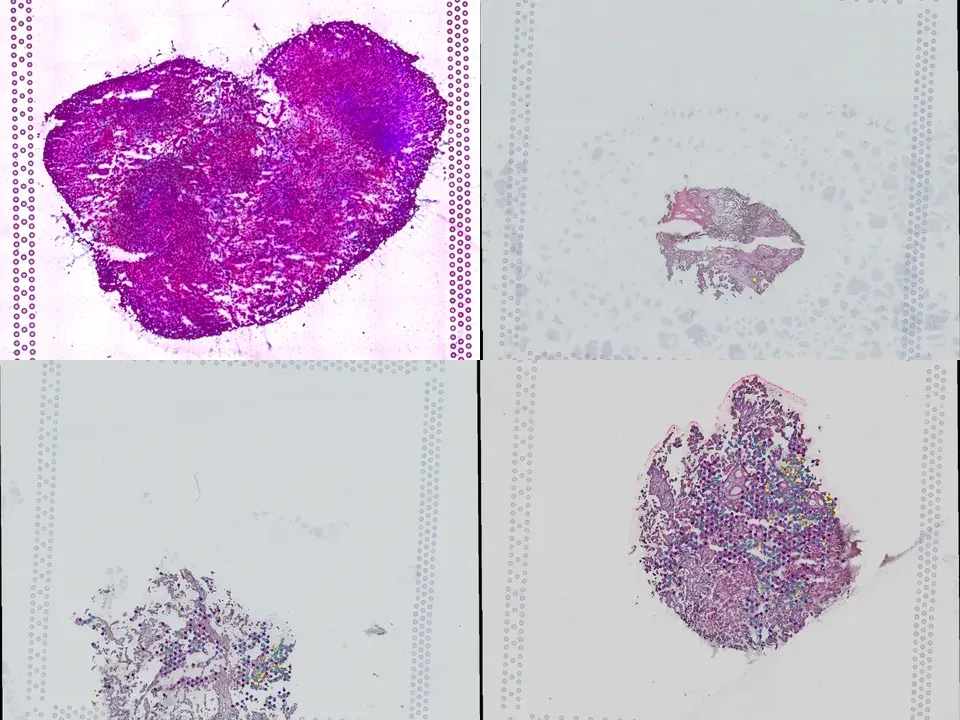
Human placenta
NCBI815
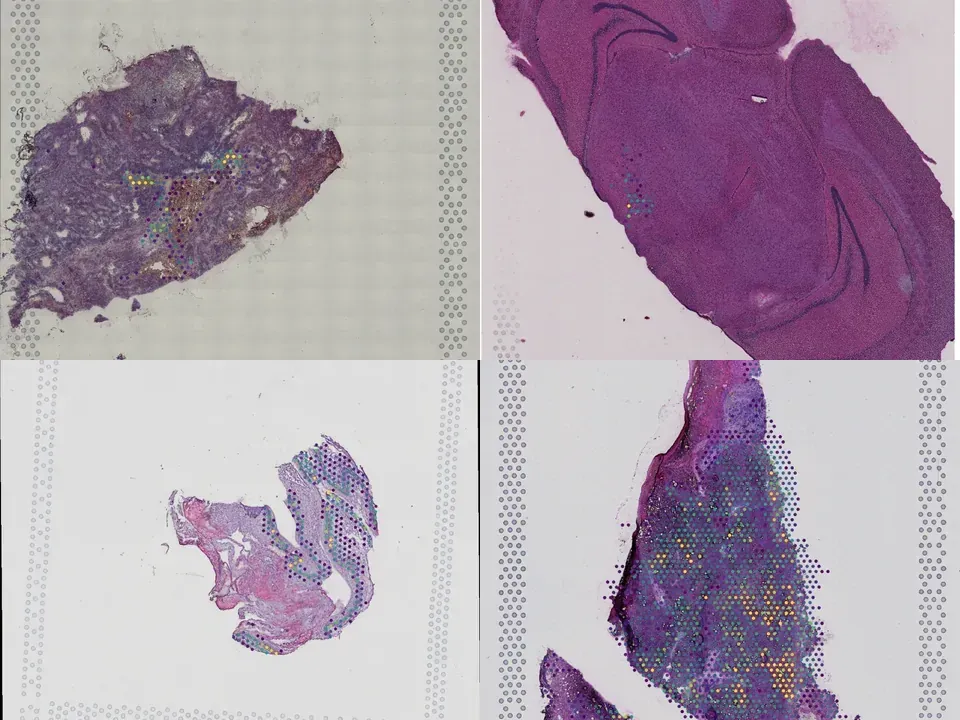
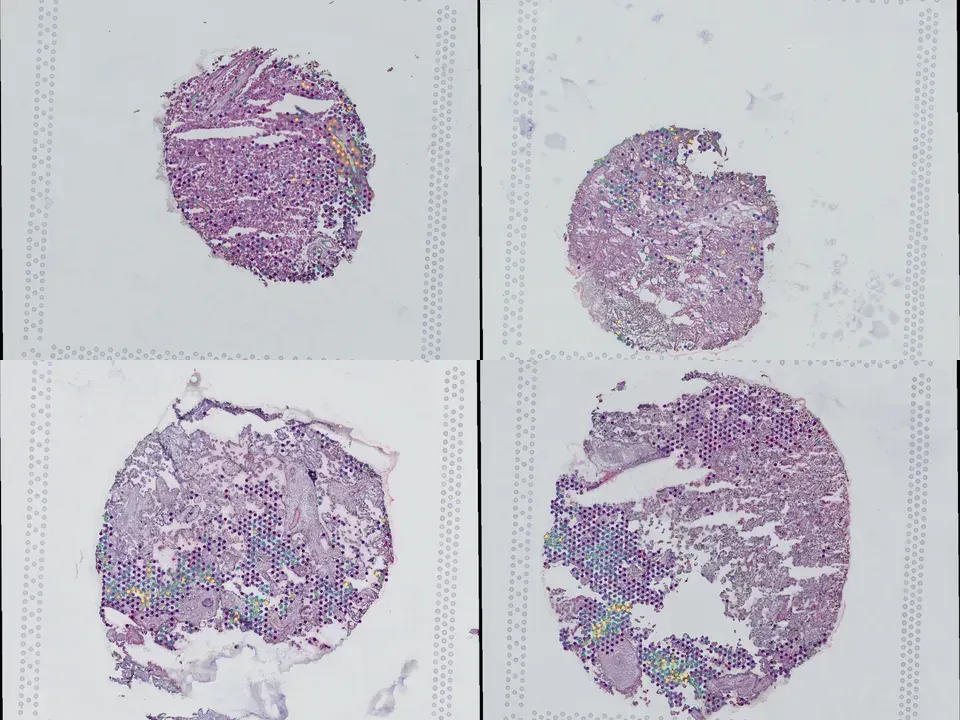
human placenta COVID-19 101 MB 369 spots silver H&E
TechnologyVisium
Organismhuman
Tissueplacenta
ConditionCOVID-19
Spots369
silver H&E
from sddb import Catalog

cohort = Catalog().collection("doi-10-1016-j-medj-2023-06-003")
cohort.members        # the 15 datasets as a table

print(cohort.licenses())              # check the terms before you download

sdatas = cohort.to_dict()             # {uid: SpatialData}, cached locally
# or keep the .zarr files in a folder of your choice:
# sdatas = cohort.to_dict(dest="data/")Needs pip install lamindb and network access to the Lamin database, which is limited during the alpha. If it fails, use the Client tab.
import lamindb as ln

db = ln.DB("scverse/spatialdata-db")
coll = db.Collection.get(key="doi-10.1016/j.medj.2023.06.003")
coll.ordered_artifacts.to_dataframe()   # the 15 members, ordered

# download every member .zarr to the local cache:
paths = [a.cache() for a in coll.ordered_artifacts.all()]# sddb client: download every member .zarr into data/
sddb-cli download --collection doi-10-1016-j-medj-2023-06-003 --dest data/Licenses: 15 CC BY-NC-SA 4.0
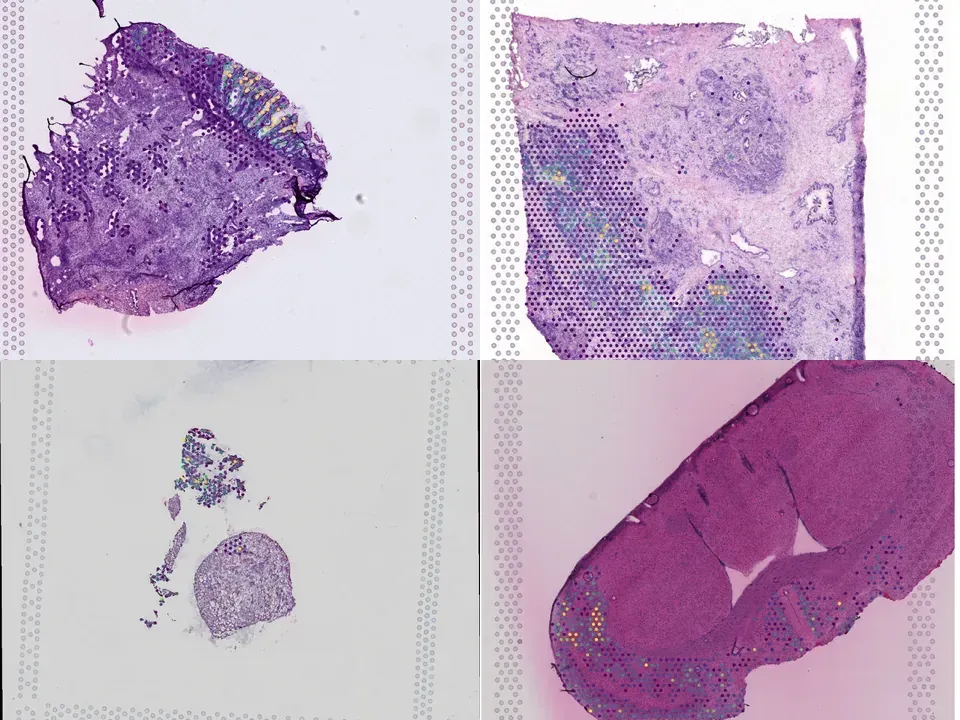
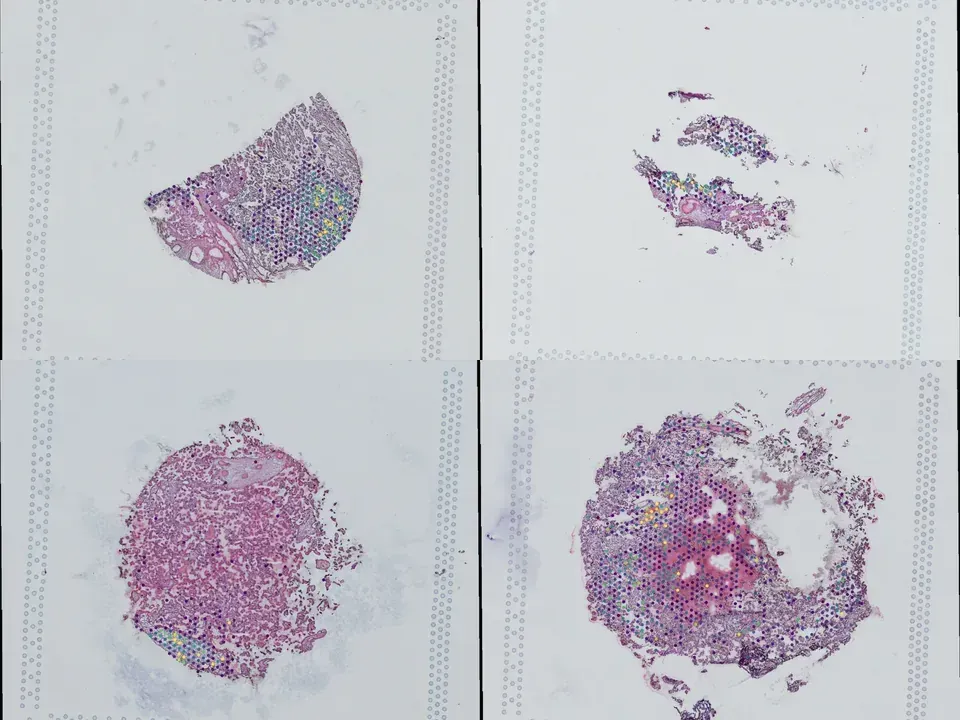
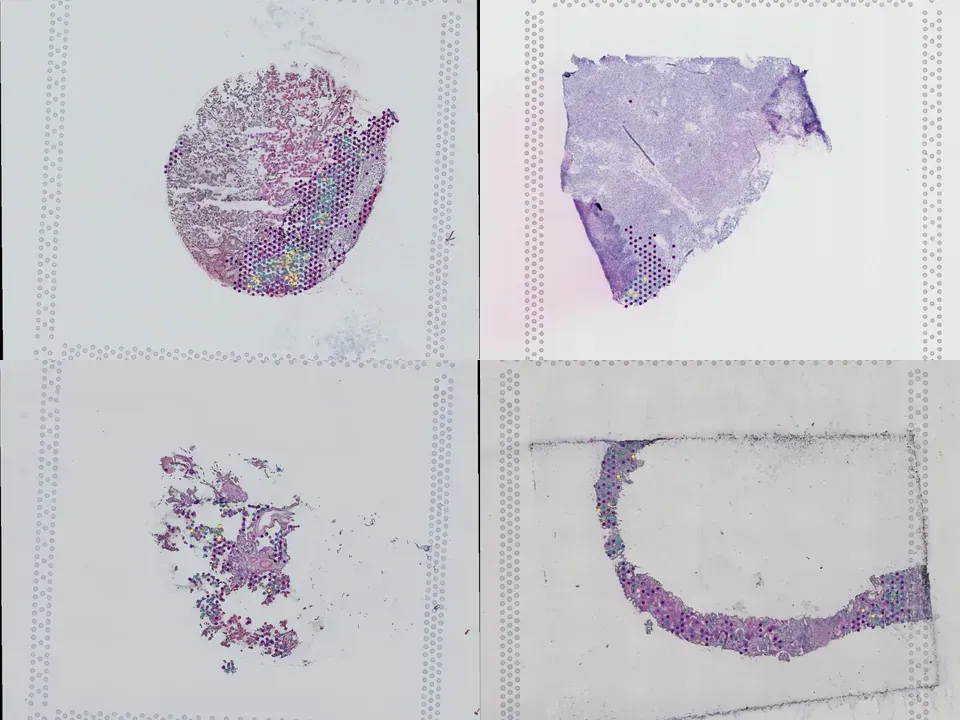
<h4>Background</h4>Functional placental niches are presumed to spatially separate maternal-fetal antigens and restrict the vertical transmission of pathogens. We hypothesized a high-resolution map of placental transcription could provide direct evidence for niche microenvironments with unique functions and transcription profiles.<h4>Methods</h4>We utilized Visium Spatial Transcriptomics paired with H&E staining to generate 17,927 spatial transcriptomes. By integrating these spatial transcriptomes with 273,944 placental single-cell and single-nuclei transcriptomes, we generated an atlas composed of at least 22 subpopulations in the maternal decidua, fetal chorionic villi, and chorioamniotic membranes.<h4>Findings</h4>Comparisons of placentae from uninfected healthy controls (n = 4) with COVID-19 asymptomatic (n = 4) and symptomatic (n = 5) infected participants demonstrated that severe acute respiratory syndrome coronavirus 2 (SARS-CoV-2) detection in syncytiotrophoblasts occurred in both the presence and the absence of maternal clinical disease. With spatial transcriptomics, we found that the limit of detection for SARS-CoV-2 was 1/7,000 cells, and placental niches without detectable viral transcripts were unperturbed. In contrast, niches with high SARS-CoV-2 transcript levels were associated with significant upregulation in pro-inflammatory cytokines and interferon-stimulated genes, altered metallopeptidase signaling (TIMP1), with coordinated shifts in macrophage polarization, histiocytic intervillositis, and perivillous fibrin deposition. Fetal sex differences in gene expression responses to SARS-CoV-2 were limited, with confirmed mapping limited to the maternal decidua in males.<h4>Conclusions</h4>High-resolution placental transcriptomics with spatial resolution revealed dynamic responses to SARS-CoV-2 in coordinate microenvironments in the absence and presence of clinically evident disease.<h4>Funding</h4>This work was supported by the NIH (R01HD091731 and T32-HD098069), NSF (2208903), the Burroughs Welcome Fund and the March of Dimes Preterm Birth Research Initiatives, and a Career Development Award from the American Society of Gene and Cell Therapy.
@article{Barrozo_2023,
  title = {SARS-CoV-2 niches in human placenta revealed by spatial transcriptomics},
  volume = {4},
  ISSN = {2666-6340},
  url = {http://dx.doi.org/10.1016/j.medj.2023.06.003},
  DOI = {10.1016/j.medj.2023.06.003},
  number = {9},
  journal = {Med},
  publisher = {Elsevier BV},
  author = {Barrozo, Enrico R. and Seferovic, Maxim D. and Castro, Eumenia C.C. and Major, Angela M. and Moorshead, David N. and Jochum, Michael D. and Rojas, Ricardo Ferral and Shope, Cynthia D. and Aagaard, Kjersti M.},
  year = {2023},
  month = Sept,
  pages = {612–634.e4}
}