from sddb import Catalog

cohort = Catalog().collection("bia-s-biad3694")
cohort.members        # the 9 datasets as a table

print(cohort.licenses())              # check the terms before you download

sdatas = cohort.to_dict()             # {uid: SpatialData}, cached locally
# or keep the .zarr files in a folder of your choice:
# sdatas = cohort.to_dict(dest="data/")
Needs pip install lamindb and network access to the Lamin database, which is limited during the alpha. If it fails, use the Client tab.
import lamindb as ln

db = ln.DB("scverse/spatialdata-db")
coll = db.Collection.get(key="bia-s-biad3694")
coll.ordered_artifacts.to_dataframe()   # the 9 members, ordered

# download every member .zarr to the local cache:
paths = [a.cache() for a in coll.ordered_artifacts.all()]
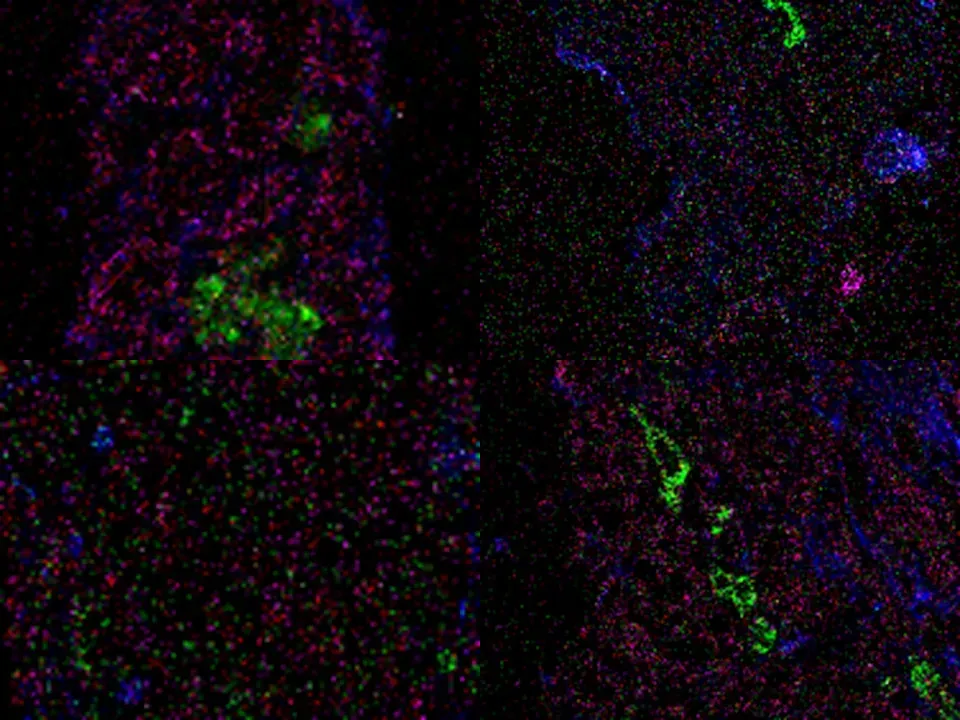
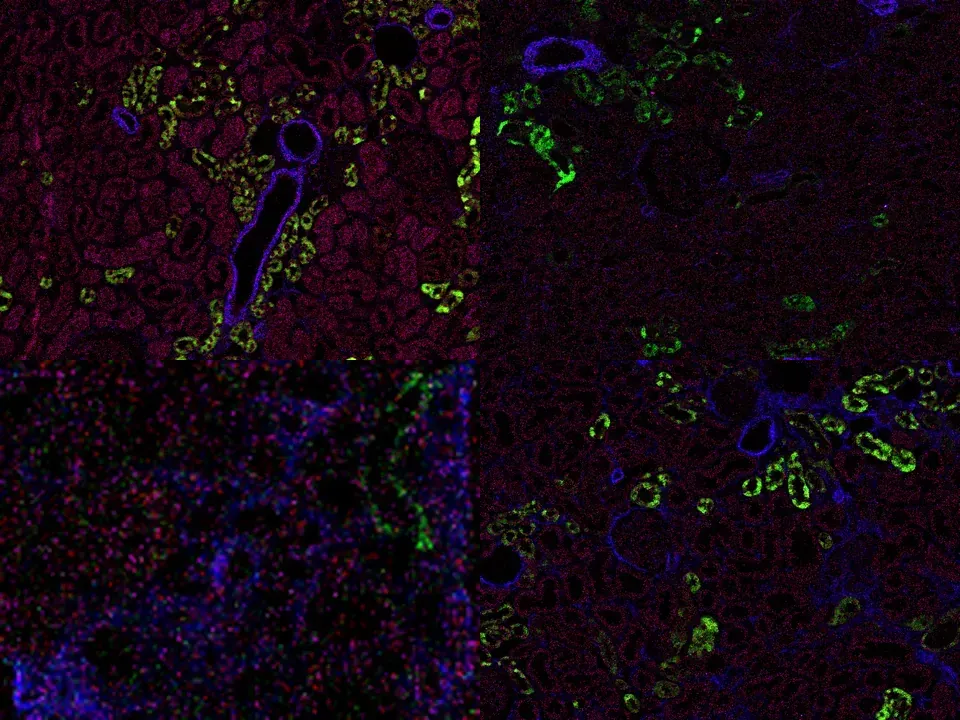
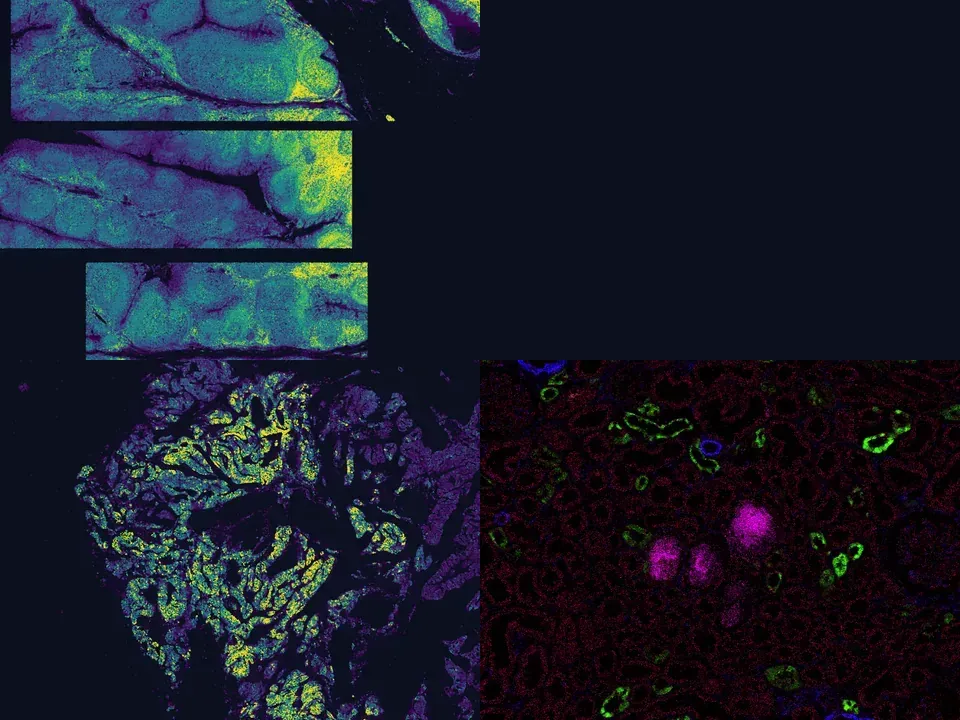
Spatial analysis reveals cellular microenvironments and mechanisms of inflammation and injury in acute interstitial nephritis.
Acute interstitial nephritis (AIN) is present in 15-20% of all acute kidney injury cases but lacks proven effective therapies beyond corticosteroids. Using high-resolution imaging mass cytometry and single-cell spatial transcriptomics to analyze human kidney biopsies with AIN, acute tubular injury (ATI), and reference tissue, we show that interferon-γ-induced CXCL9-CXCR3 signaling is markedly increased in AIN, with significantly more predicted interactions relative to ATI, dominated by homotypic T cell-T cell amplification networks concentrated in lymphoid aggregates. Tubular cells, predominantly VCAM1<sup>+</sup> injured proximal tubules, markedly upregulate complement components, with local enrichment of C3AR1<sup>+</sup> immune cells, linking tubular injury to immune activation in AIN. Nicotinamide phosphoribosyltransferase (NAMPT) is the strongest spatial correlate of VCAM1<sup>+</sup> tubular microenvironments, with expression by both injured tubules and surrounding immune cells coordinating metabolic-inflammatory niches. These findings reveal distinct molecular circuits underlying AIN pathogenesis and nominate potential therapeutic targets for improving clinical management and preventing progression to chronic kidney disease.